
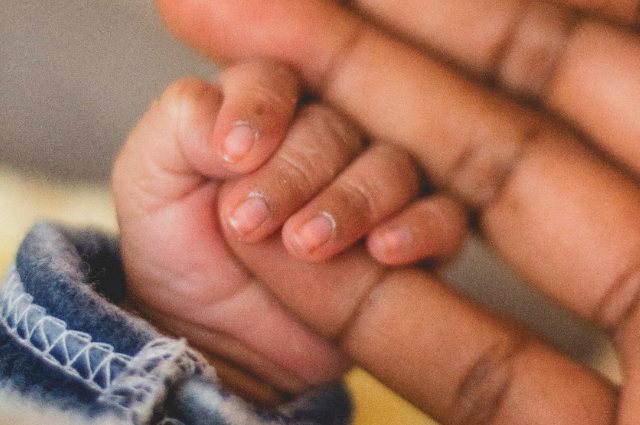
In the quiet of a Bengaluru home on January 1st, 2025, a young couple held their visually impaired daughter for the first time, capturing that moment on video with trembling hands and tear-stained cheeks. They had spent a year waiting—registering with India's Central Adoption Resource Authority, filling out forms that dissected their worthiness as parents, shopping for a child they'd never met, praying in a language their society told them only the infertile speak. When they finally brought her home, they posted the journey online, and something remarkable happened: millions of strangers watched, and many wept.
What moved people wasn't just the sweetness of a new family. It was the rebellion of it all. In a country where motherhood is worshipped as divine—where a woman's worth has historically been measured by her capacity to produce biological heirs—this couple
had chosen a path that most of their culture still views with quiet suspicion, even pity. They had chosen to become parents not through the accident of biology, but through the deliberate, difficult act of love. And they had chosen a child the world, in its haste and superstition, had overlooked.
This is not a story about charity. This is a story about the gap between how society defines parenthood and what parenthood actually is.
The Weight of Expectations: What Society Says About a Mother
For centuries in India, motherhood was never just about nurturing. It was a theological duty, a marker of feminine virtue, a woman's primary path to salvation. The Hindu concept of motherhood—mata, the divine mother—elevated biological reproduction to something sacred, almost beyond question. But embedded within this worship was a troubling assumption: that a woman who carried a child in her womb and delivered it was fundamentally different—better, more complete, more truly a mother—than one who chose a child not born of her body.
This distinction matters because it shapes how a woman sees herself, and more crucially, how society sees her when she deviates from it.
To adopt in India, especially in recent decades, is to confess a kind of failure—not to oneself, necessarily, but to a watching world. The unspoken narrative is one of infertility, loss, and desperation: First, try to have biological children. Exhaust yourself with expensive treatments, hormonal cycles, and invasive procedures. Only when nature fails you, when your body betrays you, then consider adoption as a consolation prize. Families often keep adoption secret, maintaining fictions about the child's origins, because to admit to adoption is to admit to reproductive insufficiency. It is to acknowledge that the family does not conform to the image of a real family—one formed by chance, by biology, by a man and woman's sexual union.
The couple in Bengaluru, however, made a different choice. They said openly: We chose this. We registered with CARA. We waited. We prayed. We chose a child the world overlooks. They were not driven by infertility. They were driven by something that society has largely forgotten to value: the courage to love something unconditionally that they did not create.
That courage is the opposite of shame. And perhaps that is why their story resonated so deeply.
The Invisible Child: Why Disability Changes Everything
Rewind to another Bengaluru home, over three decades ago. Aloma and David Lobo received a call from a colleague about an abandoned baby girl. The child, born just two weeks earlier, carried a diagnosis that would terrify most parents: ichthyosis, a rare genetic disorder affecting one in a million children. The girl's skin was thickened and flaky. She was visually impaired in one eye, born without eyelids. Her eyes remained wide open, vulnerable to injury and bleeding. Her mouth could barely function; feeding was nearly impossible.
The Lobos had three biological children already. By most measures of social convention, they had "succeeded" at motherhood. But when their eldest daughter looked at the abandoned baby and said, "Mumma, we have to take her home," Aloma faced a choice that most of her culture would have questioned: Why take on this burden when you already have healthy biological children? Why sacrifice your resources, your peace, your life for a child who will always struggle?
The questions beneath these questions were deeper still: Will you be enough? Will the child suffer more by being raised, only to face the cruelty of a world that rejects her? Will love be harder?
These questions—rooted in rational caution, perhaps, but also in the cultural messaging that disability is a curse, a punishment—haunted not just Aloma but countless prospective adoptive parents. In India, where the philosophy of karma still shapes how disability is understood, a visually impaired child is often seen as bearing the weight of past sins. The child is not pitied for what they lack; they are pitied for what they supposedly deserve. The parents, if they choose such a child, are often viewed not as heroic but as either saintly (implying the child is a burden requiring extraordinary sacrifice) or foolish (implying they don't understand the severity of what they've taken on).
Both framings are wrong. Both reduce a child to their disability and rob the family of the narrative that should belong to them: that love is enough, that presence is radical, that choosing an "unwanted" child is not a sacrifice but a gift.
Aloma took Nisha home. The first weeks were terrifying. The baby's body temperature had to be constantly monitored and adjusted. Her skin required hourly care with oils and creams. She had to be changed every hour, wrapped carefully in materials that wouldn't tear her fragile flesh. For weeks, Aloma couldn't know if the little girl would survive.
But she did. Nisha not only survived; she grew into a young woman who embodied something her mother described years later: not the burden of her diagnosis, but the strength of having been chosen. As a teenager, Nisha learned about another abandoned child—a baby girl with a severe chest tumor—and she organized a book fair with her classmates. They raised 1.2 lakh rupees for surgery. When strangers stared at her visibly different skin, when curious children asked why she looked different, Nisha answered with a simple grace that comes only from having been loved not in spite of her difference, but fully, completely, without condition.
This is what the world does not understand: that the child who is "hard to place," the child society overlooks, the child burden-coded by disability—that child often becomes the one who teaches the family what love actually means. Not love that is earned or deserved, but love that is given. Not love that is convenient or easy, but love that is chosen, again and again, in the smallest daily acts of care.
The Unspoken Questions: When Fear Reveals More About Us Than the Child
When prospective parents ask, Will love be harder? they are asking something honest, even if the honesty is uncomfortable. The question assumes a hierarchy of difficulty: that loving a child born to you (easy, natural, biologically wired) is fundamentally different from loving a child you've chosen (deliberate, effortful, fragile). They worry about attachment—will the child bond with me? Will I bond with them? Will there be something missing, some essential ingredient that biological parenthood guarantees?
Research, however, has quietly dismantled these fears. Studies comparing adoptive and biological families find that when adoptive parents intentionally choose parenthood—rather than having it thrust upon them by chance—they often demonstrate equal or greater warmth, involvement, and emotional connection than biological parents. The bonds formed are just as deep, just as real, just as capable of withstanding the ordinary crises of family life. Love is not transmitted through genes. It is built through presence, consistency, everyday acts of care, and the choice to show up when things are hard.
But the fact that we need research to tell us this—that we need data to convince us that love doesn't require DNA—says something troubling about our culture. It suggests that we have, somewhere along the way, confused parenthood with genetics. We have made the accident of biology seem like the essential ingredient for authentic family love.
This is a modern confusion. For much of human history, across cultures, children were raised by whoever had the capacity and commitment to do so. Extended family, community members, older siblings—parenthood was a role, a practice, a set of daily choices, not a biological credential. It was only with the rise of the nuclear family and the medical professionalization of reproduction that biology became destiny, that genetic connection became the proof of authentic kinship.
The real question, then, isn't whether adoptive love is "as good as" biological love. The real question is: Why have we made the accident of biology the gold standard for the most deliberate, choice-based human relationship? Why do we venerate the mother who had a child by chance while scrutinizing the one who chose her child deliberately? Why do we demand proof from the latter while asking nothing of the former?
These are not innocent questions. They reveal a bias so deep in our culture that we rarely name it: we value biology over choice, accident over intention, nature over culture. And when disability enters the picture, that bias hardens into cruelty. A child born with a disability is already marked by what the culture sees as nature's failure. To adopt such a child is to triple-reject the cultural priority: you've chosen adoption (not biological, not natural), you've chosen a child you didn't create (doubly unnatural), and you've chosen one the culture considers damaged (triply wrong).
The courage required to do this—to look at a child the world devalues and say, I see you, you are enough, you belong with me—this courage says less about the special qualities of the parent and more about the ordinarily human capacity to love that has been beaten down by social pressure. Most people are capable of it. Most people simply don't allow themselves to be.
The Burden of Visibility: When Disability Becomes a Moral Test
There is a particular cruelty in how Indian society responds to disability, especially when a family has deliberately chosen to raise a disabled child. The family is caught between two impossible narratives. On one side, they are treated as saints—self-sacrificing, noble, committing themselves to a burden most would avoid. On the other side, they are treated as foolish—why would anyone choose a life of hardship when easier alternatives exist?
Both narratives share something in common: they assume the child is primarily a burden. They assume that raising a visually impaired child, a child with a genetic condition, a child with intellectual disabilities, is primarily an exercise in suffering and
sacrifice. They cannot conceive that the child might be a gift, a teacher, a full human being whose disability is only one facet of their identity.
Nisha, in Aloma's account, was not primarily her disability. She was a fighter, a student, an organizer, a daughter, a young woman developing her own consciousness and relationship to the world. Yes, she faced discrimination. Yes, her condition required special care. Yes, there were teachers and schools and strangers who rejected her. But what transformed her—what gave her resilience and confidence—was not overcoming her disability or rising above it. It was the simple, revolutionary fact of having been loved completely, without conditions, by a family that had deliberately chosen her.
Aloma recalls with evident anger the times people said, "How nice of you to adopt Nisha," as though Nisha were the recipient of charity. She corrected them: "She wasn't the only one who needed us. We needed her too. What we have received from her is immeasurable."
This is the inversion that a choice-based family reveals. The world assumes that adoption is a one-directional act of charity: the family gives, the child receives. But families formed through deliberate choice know something different. They know that the child gives back infinitely—not because the child owes them, but because the relationship is mutual, rooted in genuine connection rather than biological obligation.
When Nisha, at twelve years old, heard about another abandoned child and immediately set out to raise money for surgery, she was not performing gratitude for having been saved. She was living out what her family had taught her through their example: that love is expressed through action, that being chosen means you have agency, that the value of your life is not determined by what the world says about your disability.
The Quiet Strength: What Families Discover in Deliberate Love
There is a particular texture to the love that forms in families built by choice rather than chance. It lacks the certainty of biology—the assumption that this is your child because they share your DNA. In its place is something more fragile and, paradoxically, more resilient: the daily renewal of commitment.
Every morning that Aloma wrapped Nisha's skin with oils, applied her careful caretaking, she was making a choice. Every time she fought with a school administrator or challenged a neighbor's prejudice, she was choosing her daughter. Every time she held her own fear—What will happen when I'm gone? Will she be safe? Will she be loved?—and
then let it go in service of the child's present happiness, she was choosing her daughter. None of this was biologically determined. None of it was inevitable or automatic. It was, in the truest sense, love as a practice, not just a feeling.
This kind of love transforms the parents as much as it transforms the child. Parents who have chosen a child with special needs, who have decided that disability does not disqualify a person from their family, undergo a quiet revolution in consciousness. They begin to see the world differently. They notice the barriers they never saw before—the schools that don't accommodate, the social events designed for the able-bodied, the language that marks disability as something broken rather than simply different. They become, often without planning to, advocates not out of obligation to their child's condition but out of a fundamental shift in how they see human dignity.
Aloma, over thirty years of caring for Nisha and later working as chair of the Central Adoption Resource Authority, became not a saint but a witness to what most people in her culture still don't understand: that children with special needs are not charity cases. They are human beings whose difference is only one aspect of their existence. Families willing to embrace them are not making a sacrifice; they are opening themselves to a more complex, more complete understanding of what it means to be human.
The young couple who brought their visually impaired daughter home on January 1st, 2025, will discover this truth as they live it. They will wake at 3 a.m. to comfort a crying child. They will navigate schools, therapies, the weight of a world that may not always be kind. They will also hold their daughter through moments of joy, watch her develop personality and wit, and see her grow into her own understanding of the world. And somewhere in that ordinary, extraordinary practice of daily love, they will discover what Aloma already knows: that the child they chose chose them right back.
The Question That Remains: What Do We Choose to See?
The deepest question posed by adoptive families—particularly those who adopt children with disabilities—is not about the capacity of these families to love. The research is clear; love is not determined by DNA. The question is about our collective capacity to see worth in those whom society has devalued. It is about whether we can uncouple parenthood from biology and recognize it for what it truly is: a commitment to presence, to care, to the radical act of seeing another human being—really seeing them—and choosing to build a life with them.
When you walk past a child in a wheelchair or a child whose appearance marks them as different, and you feel that split second of discomfort, that urge to look away—what are
you reacting to? Are you reacting to the child? Or are you reacting to the society's voice in your head, telling you that this child is somehow less, somehow a tragedy, somehow bearing the weight of cosmic punishment?
A visually impaired child does not suffer simply from being visually impaired. A child born with an intellectual disability does not suffer simply from that disability. They suffer when the world refuses to see them as full human beings. They suffer when families are too afraid to choose them, when schools are too inflexible to accommodate them, when strangers stare with pity instead of recognition. These forms of suffering—social suffering, the suffering inflicted by exclusion—are far more damaging than the disability itself.
The families who choose to adopt these children, particularly, are saying something radical. They are saying: I see you. Your difference does not diminish your worth. You belong. You are loved not in spite of who you are, but because of who you are—fully, completely, without reservation.
This is not a small thing. In a culture that still blames disability on past-life sins, that still views disabled children as burdens, that still measures a woman's worth by her ability to produce "normal" biological offspring, to choose a child with disability is a refusal. It is a refusal of the culture's narrative. It is a refusal to treat a human being as a project to fix or a burden to bear. It is an insistence that presence, patience, and everyday acts of care are enough. That love is enough.
A Reflection at the Threshold
When the Bengaluru couple posted their adoption video, captioning it with "God has been so good to us three," they were describing what most families form through deliberate choice discovery: that the relationship is reciprocal, mysterious, and unearned. They did not become parents in order to transform a child. They became themselves through the process of choosing to be parents to a child the world overlooked.
Nisha, now a young woman, taught her family the same lesson through her life. She did not overcome her genetic condition. She lived with it, learned from it, built a life around and beyond it. She became the daughter who then reached back toward other abandoned children, who organized her peers to help another child in need, who demonstrated through her own quiet resilience what it means to be chosen and therefore to have agency, dignity, and the capacity to choose others.
This is what families formed by choice—families willing to embrace what society rejects—model for the rest of us. They model a vision of human connection that is not rooted in biology, not rooted in chance, not rooted in the accident of similarity. They model a vision rooted instead in the most difficult, most beautiful human capacity: the capacity to see another being clearly and to choose, freely and repeatedly, to love them.
The real question is not whether adoptive families can love as deeply as biological families. The real question is this: What does it say about us, as a society, that we still need to ask?
What does it say that we marvel at parents who choose to love a child with disability, when in truth, they are only doing what every parent should do—loving their child fully, without condition, seeing them not for what they lack but for who they are?
What would change if we stopped asking whether these families are "enough" and started asking instead whether our society is brave enough to see children with disabilities not as burdens but as full members of the human family? What would change if we recognized that parenthood is not proven by DNA, but by presence, by patience, by the everyday, unglamorous, sacred work of showing up for another person's life?
Somewhere in Bengaluru, a young couple is learning the answer to these questions. And millions of us, watching their story, are learning it too.
. . .
References:
- Adoption: A Hidden Stigma in Indian Society – Girl Power Talk (July 2025) https://girlpowertalk.com
- Abandoned Due to Genetic Disorder, A Mother's Love Transforms a Life – The Better India (October 2018) https://thebetterindia.com
- The Representation of Disability in Hindu Myths – Dhaara Magazine (June 2022) https://dhaaramagazine.in
- Do Parents Favor Their Adoptive or Biological Children? A Multi-Dimensional Analysis – Singapore Management University Research Repository (2023) https://ink.library.smu.edu.sg
- Trends in Special Needs Adoptions in India – Legacy IAS (August 2024) https://www.legacyias.com
- Mother-Child Interactions Among Children with Visual Impairment – PubMed Central (February 2023) https://pmc.ncbi.nlm.nih.gov