
Discover the untold story of Divya Narendra, the Harvard student who challenged Mark Zuckerberg—a deep dive into the Facebook controversy, legal battles, and SumZero.
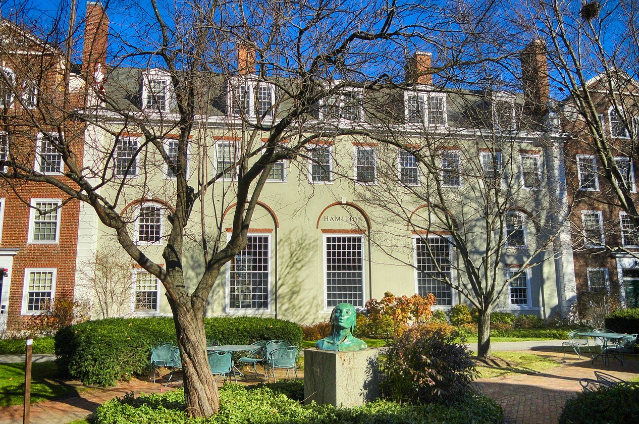
The creation of the digital world’s most dominant social infrastructure did not begin with a unified vision of global connectivity, but rather within the friction of a dorm-room collaboration that collapsed into a decade of legal warfare. In the winter of 2003, the halls of Harvard University’s Kirkland House became the site of a project that would eventually redefine human interaction. While popular culture often attributes the genesis of social networking to a singular act of collegiate rebellion, the historical reality is a multi-layered narrative of shared intellectual labor, perceived betrayal, and the brutal transition from student idealism to corporate litigation.
At the center of this controversy is Divya Narendra, a junior majoring in applied mathematics, whose conceptualization of an exclusive academic network preceded the launch of thefacebook.com and established the foundational logic for the modern social media ecosystem.
The story of Divya Narendra and his challenge to Mark Zuckerberg is not merely a footnote in business history; it is a seminal case study in intellectual property ethics, the "fast follower" strategy of Silicon Valley, and the psychological burden of seeing one’s identity repurposed for the world’s most valuable digital landscape. This investigative report explores the transition from the HarvardConnection project to the global phenomenon of Facebook, analyzing the legal nuances of the subsequent $65 million settlement, the cinematic dramatization of the conflict, and Narendra’s ultimate emergence as a leader in niche social networking through his venture, SumZero.
The Architecture of Exclusivity: The HarvardConnection Genesis
The conceptual roots of the controversy lie in the realization that the early internet was plagued by a lack of trust. In the early 2000s, platforms like MySpace and Friendster provided broad connectivity, but they were often diluted by fake profiles and a lack of quality control. Divya Narendra, raised in a household of immigrant doctors and possessing a rigorous background in applied mathematics, identified a systemic need for a platform where identity was verified, and the community was gated.
Narendra’s primary innovation was the use of institutional email verification. By requiring a ".edu" email address for registration, the proposed site—originally named HarvardConnection—could ensure that every user was an authentic member of the university community. This mechanism did more than just prevent spam; it created a digital mirror of the physical campus social hierarchy. Narendra recruited fellow students Cameron and Tyler Winklevoss to provide the entrepreneurial momentum and initial capital needed to bring this vision to life.
The team initially struggled with the technical execution of the site, having cycled through multiple programmers who failed to complete the back-end infrastructure. In November 2003, they turned to Mark Zuckerberg, a sophomore with a growing reputation for rapid and efficient coding. At this stage, the project was more than just an idea; it had a design, a functional philosophy, and a partially built code base that Zuckerberg was hired to complete.
| MIlestone | Date | HIstorical Significances |
| Initial Conception | Late 2002 | Divya Narendra identifies the need for verified online communities. |
| Team Formation | Early 2003 | Narendra recruits the Winklevoss twins to launch HarvardConnection. |
Zuckerberg Recruitment | Nov 2003 | Mark Zuckerberg joins as the lead programmer for the project. |
| The Facebook.com Launch | Feb 04, 2004 | Zuckerberg launches a competing platform for Harvard students. |
| The First Legal Action | Feb 10, 2004 | Narendra and the Winklevosses send a formal cease and desist. |
The Mechanics of Betrayal: Emails, Delay, and Deception
The central conflict of the Facebook origin story rests on the three-month period between November 2003 and February 2004. According to internal communications and later depositions, Zuckerberg was integrated into the HarvardConnection team and given access to their server and proprietary concepts. However, while he was supposedly working on completing the site for Narendra and the twins, he began a parallel developmental track for his own venture.
The evidence of this divergence is found in a series of instant messages and emails. While telling Narendra and the Winklevosses that he was too busy with schoolwork or technical hurdles to make progress on HarvardConnection, he was simultaneously telling his confidants that he intended to stall the project. On January 11, 2004, while still nominally the lead programmer for HarvardConnection, Zuckerberg registered the domain THEFACEBOOK.COM.
The launch of thefacebook.com on February 4, 2004, sent shockwaves through the Harvard campus. Narendra and the Winklevosses first learned of the site’s existence through a press release in the Harvard Crimson. The striking similarity between the two platforms—specifically the requirement for an institutional email and the features for messaging and profile updates—suggested that the foundational architecture of HarvardConnection had been repurposed to serve a competing interest.
Technical Shortcomings and the Incomplete Code
When Zuckerberg finally relinquished his role on the HarvardConnection team, the code he provided was functionally useless. A later analysis by programmer Victor Gao indicated that the registration system was incomplete and did not connect to the back-end database. This technical stalling effectively sidelined the HarvardConnection team during the critical weeks when Zuckerberg was scaling his own platform. This period of "stringing along" became a central pillar of the misappropriation claims that followed, as it denied the founders the first-mover advantage they had sought to secure.
The Legal Arena: A War of Attrition (2004–2011)
The ensuing litigation was one of the most complex and high-stakes intellectual property battles in the history of the tech industry. In late 2004, the newly renamed ConnectU (formerly HarvardConnection) filed a lawsuit against Facebook, alleging that Zuckerberg had breached an oral contract and misappropriated trade secrets. The case moved through federal courts in Massachusetts and California, with both sides engaging in aggressive legal maneuvering.
Facebook's defense strategy was rooted in the ambiguity of the original agreement. Zuckerberg’s attorneys argued that no formal contract existed and that the "idea" of a social network was not a protectable trade secret under contemporary intellectualproperty laws. They further argued that Facebook was the result of Zuckerberg’s unique skill and execution, rather than the "gossamer-thin" plans provided by Narendra and his partners.
The Social Butterfly Counter-Suit
In a strategic counter-move, Facebook sued ConnectU, Cameron Winklevoss, Tyler Winklevoss, Divya Narendra, and Wayne Chang (the founder of the file-sharing platform i2hub) in a California court. This suit, centered on a project called "Social Butterfly," alleged that the ConnectU team had illegally accessed Facebook’s servers to scrape user data to populate their own site. This litigation created a "whack-a-mole" reality where both parties were perpetually defending their own conduct while attacking the other’s origins.
| Legal Places | Court / Action | Core Issues |
| 2004 Complaint | Massachusetts Federal Court | Allegations of fraud, copyright infringement, and trade secret theft. |
Facebook Countersuit | California Court | Allegations of data scraping and unauthorized server access. |
| 2008 Mediation | U.S. District Court | Court-ordered negotiation to resolve all outstanding claims. |
Settlement Dispute | Ninth Circuit Court | Allegations of securities fraud regarding Facebook’s valuation. |
The $65 Million Settlement and the Valuation Controversy
In February 2008, after nearly four years of litigation, the parties entered a court-ordered mediation. The result was a handwritten "term sheet" that aimed to settle all disputes permanently. Under the agreement, Facebook would acquire 100% of ConnectU’s stock in exchange for $20 million in cash and 1.25 million shares of Facebook common stock.
The settlement was intended to be confidential, but the total value of approximately $65 million was leaked by the law firm Quinn Emanuel. However, the controversy did not end with the signing of the term sheet. Shortly after the deal was finalized, Narendra and the Winklevosses alleged that Facebook had committed securities fraud by intentionally misleading them about the value of the stock.
The Discrepancy in Share Pricing
During the mediation, the stock was valued based on a prior investment by Microsoft that placed the company’s worth at $15 billion, implying a share price of approximately $35.90. However, internal documents later suggested that Facebook’s own internal valuation for tax purposes was much lower—approximately $8.80 per share, valuing the company at $3.7 billion.
If the settlement had been adjusted to reflect the lower internal valuation, the equity portion of the deal would have been worth only $11 million instead of $45 million. Despite these claims, the Ninth Circuit Court of Appeals ruled in 2011 that the settlement was binding. The court famously noted that "at some point, litigation must come to an end," and that the ConnectU founders, as sophisticated parties with expert legal counsel, could not back out of a signed agreement simply because the valuation did not favor them in retrospect.
Cinematic Legacy vs. Historical Reality
The 2010 film The Social Network immortalized the founding conflict, portraying Zuckerberg as a brilliant but socially abrasive hacker and Narendra as a victim of institutional apathy. Divya Narendra, played by Max Minghella, became the face of the "idea theft" narrative for millions of viewers.
Narendra’s personal reaction to the film was one of surreal detachment. While he was initially surprised by the casting of an actor of Italian and Chinese descent to play him, he ultimately praised Minghella for capturing the "sense of urgency" of the era. He noted that while the film was "more fact than fiction" in its portrayal of the material dispute, it inevitably took creative liberties with the emotional landscape and character motivations.
Correcting the Hollywood Lens
One of the major inaccuracies in the cinematic portrayal was the framing of the story around a failed relationship. Mark Zuckerberg has consistently stated that the film’s premise—that he created the site to get a girl or enter a specific final club—is entirely fictional. In reality, Zuckerberg had been in a long-term relationship with his eventual wife, Priscilla Chan, throughout much of that period.
Furthermore, the film portrays the Winklevosses and Narendra as relatively passive until the launch of thefacebook.com, whereas in reality, Narendra was a deeply engaged analyst who had conceived the core logic of the system long before recruitment began. The narrative focus on the "Winkle-Vi" twins, often sidelining Narendra’s technical role as the primary architect of the HarvardConnection vision.
| Character/ Person | Film Portrayal Accuracy | Key Omission in Film |
| Duvya Narendra | Moderate; Capured the frustration of the Legal Battle | Sidelined his background in applied mathematics and analytical rigour. |
Mark Zuckerberg | Low; portrayed as a social outcast motivated by a breakup. | Ignored his stable personal life and early serial innovations like Synapse. |
Winklevoss Twins | High; captured their physical presence and institutional status. | Downplayed their eventual success in the cryptocurrency sector (Gemini). |
The Pivot to SumZero: Narendra’s New Horizon
Following the finalization of the Facebook litigation, Divya Narendra did not retreat from the world of technology. Instead, he utilized the capital and the hard-earned lessons from his legal battle to launch a new type of social network: SumZero.
Launched in 2008, SumZero is a specialized community designed for professional investors on the "buy-side," including analysts at hedge funds, mutual funds, and private equity firms. The platform addressed a gap Narendra identified while working at the Boston hedge fund Sowood Capital Management. He realized that while general information was plentiful, there was no secure, high-quality platform for professional analysts to share their proprietary research.
The Reciprocal Model of Professional Networking
SumZero operates on a "give-to-get" model that serves as a sophisticated evolution of the email verification system Narendra pioneered at Harvard. To access the community’s library of peer-reviewed investment research, a member must contribute their own original research papers, which are often over 1,000 words in length and include detailed valuation reports and risk analyses.
This reciprocity ensures that the network remains exclusive and high-value, avoiding the "noise" and misinformation that often plagues general-purpose social platforms. By 2014, SumZero had grown to nearly 10,000 core members and was recognized as the largest online community of fund professionals in the world.
Educational Integration and Professional Resilience
Reflecting his commitment to mastering the intersection of technology and law, Narendra pursued a joint JD-MBA at Northwestern University between 2009 and 2012. He has stated that his experience with the Facebook litigation was a primary motivator for this educational pursuit, as it gave him a direct, personal understanding of the nuances of contract law and intellectual property.
Today, as CEO of SumZero, Narendra applies this interdisciplinary expertise to ensure the platform complies with complex securities regulations while providing a valuable service to the global investment community. His journey from a 21-year-old student embroiled in litigation to a respected fintech leader demonstrates a remarkable capacity for professional resilience and growth.
Silicon Valley Ethics: The "Fast Follower" and the Price of Innovation
The case of Divya Narendra and Mark Zuckerberg remains the ultimate parable of Silicon Valley's "move fast and break things" philosophy. It highlights a fundamental tension between first-movers (those who conceive an idea) and fast-followers (those who execute and scale it).
In the high-tech world, the line between "knowledge sharing" and "trade secret theft" is notoriously thin. Zuckerberg’s success is often attributed to his superior execution, but the legal record shows that this execution was preceded by access to the proprietary frameworks of his peers. This controversy has had a lasting impact on how startups are formed, with a much greater emphasis now placed on early intellectual property protection and formal partnership agreements.
Lessons for the Next Generation of Entrepreneurs
Narendra’s story offers several critical takeaways for modern inventors and founders:
- The Vulnerability of Ideation: An idea, no matter how revolutionary, is vulnerable without technical control. Narendra has reflected that if he had known how to program, the controversy would never have existed.
- Formalize Early: The lack of a written contract in the fall of 2003 was a multi-million dollar oversight. Founders must protect their IP before sharing it with potential partners.
- The Power of Niche Networks: While Facebook sought to connect everyone, Narendra found long-term success by connecting the right people. The future of social media may lie in these smaller, high-trust environments.
Deep Insights into Digital Identity and Trust
The HarvardConnection controversy was, at its heart, a battle over who owns the concept of a digital community. Narendra’s insight into.edu verification changed the fundamental nature of the internet by moving it away from anonymous, chaotic spaces toward verified, reputation-based environments.
The eventual transformation of Facebook from a university directory into a global advertising giant has raised new ethical questions that Narendra himself has commented on in the media. During the Cambridge Analytica data scandal, Narendra noted the company’s struggle to maintain the very standards of trust and identity that were central to his original vision. This suggests a full-circle evolution where the platform’s original "DNA"—the verified community—became diluted as it sought universal scale.
| Concept | Narendra's Original Vision | Facebook's Universal Scaling |
| Verification | Strict institutional email (.edu) requirements. | Broad email/phone registration for global access. |
| Trust Model | High-trust, exclusive academic peer groups. | Data-driven advertising model with privacy trade-offs. |
| Monetization | Initially conceptualized as a student utility. | Multi-billion dollar ad-engine targeting user behavior. |
The Enduring Legacy of the Challenge
Divya Narendra’s challenge to Mark Zuckerberg remains a pivotal moment in the history of the 21st century. It was the first time that the mechanics of Silicon Valley "disruption" were scrutinized in the public eye and the courtroom. While Zuckerberg won the battle for global dominance, Narendra’s influence on the logic of social networking—specifically the value of exclusivity and identity verification—remains embedded in the architecture of the modern web.
Narendra’s success with SumZero proves that there is a significant, sustainable market for the "gated community" approach to the internet. His ability to move past a "surreal" and often frustrating legal odyssey to build a billion-dollar concept illustrates the difference between an accidental entrepreneur and a visionary one. As we move into an era of decentralized and niche-focused social media, the principles Narendra first proposed in a Harvard dorm room in 2002 are more relevant than ever.
Takeaway for Readers: Protect your ideas not just with passion, but with the armor of technical skill and legal foresight. The story of Divya Narendra reminds us that in the digital gold rush, the architect of the vision deserves a seat at the table—but only if they are prepared to defend it.
. . .
References:
- The Social Network: From The Outside Looking In - Poets & Quants https://poetsandquants.com
- Divya Narendra https://en.wikipedia.org
- Facebook paid up to $65m to founder Mark Zuckerberg's ex-classmates - The Guardian https://www.theguardian.com
- Ten Years After Facebook, Divya Narendra Continues To Innovate https://www.forbes.com
- Divya Narendra - CEO & Founder at SumZero | The Org https://theorg.com