
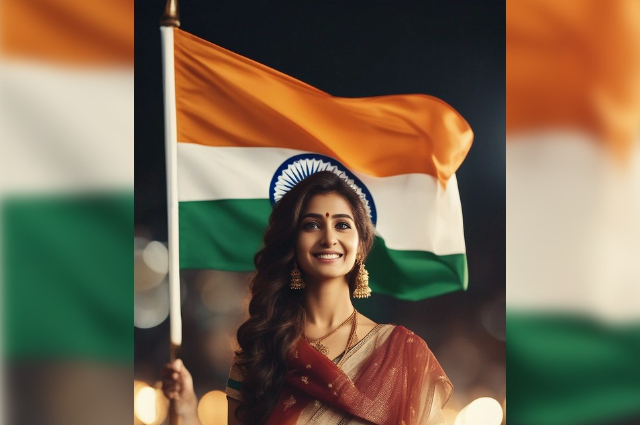
Image by Images Store from Pixabay
Republic Day: Beyond the Constitution, Into Our Lives
Republic Day is often marked by ceremonies, parades, and constitutional pride. It reminds us of the day India chose to govern itself through law, equality, and justice. But beyond official observances, the Republic is not just a structure of governance; it is a lived experience.
A republic survives not only in legal texts or institutions but also in everyday decisions, personal freedoms, and the unspoken negotiations individuals make within families, communities, and society.
For a nation that defines itself through democracy, diversity, and constitutional values, Republic Day calls for a deeper reflection, especially when examined through the lived realities of women.
A true republic is one where individuals can decide, express, live, and exist with dignity without fear, control, or constant permission.
The Republic at Home: The Power of Choice
At the heart of a republic lies the right to choice. Equality before the law must translate into equality in life. For women, this determines whether the Republic is real or merely symbolic.
Choice is not limited to major milestones like education, marriage, or career. It is reflected in everyday freedoms of when to step out, whom to speak to, how to dress, what to believe, and how to imagine one’s future.
For many women in India, these freedoms remain conditional. Decisions are filtered through the approval of family, society, and tradition. While the Republic promises equality, many women continue to live within invisible boundaries that quietly restrict their autonomy.
A republic truly comes alive only when a woman can say, “This is my life, and I have the right to decide how to live it.”
The Culture of Permission: When Equality Stops At The Door
Despite constitutional equality, a culture of permission continues to shape women’s lives.
“Is this allowed?”
“Will this be acceptable?”
“Can I do this?”
These are not harmless questions. They reveal a system where control is normalised. Over time, seeking permission becomes a habit, and that habit slowly weakens confidence, agency, and self-worth.
What makes this especially concerning is how often it is justified as care, protection, or tradition. Yet beneath these labels lies a troubling message: your life is not fully your own.
This silent confinement leads many women to live incomplete lives, postponing dreams, muting desires, and constantly adjusting to fit expectations rather than constitutional ideals.
Emotional Conditioning and the Weight of Tradition
Indian society values family, relationships, and emotional bonds deeply. However, within this collective structure, women are often taught to prioritise harmony over happiness and sacrifice over selfhood.
From an early age, girls learn to adjust, compromise, and carry emotional responsibility. Emotional strength turns into an emotional burden. Over time, this creates an internal conflict, the desire for equality clashing with guilt for wanting it.
The struggle for a true republic, then, is not only social but also internal. Many women fear disappointing others, even when those others will never bear the cost of their sacrifices.
Republic Day Reflection
Republic Day asks us not just to honour the Constitution, but to practice it. Not just to celebrate equality, but to live it at home, in relationships, and in everyday choices. Only then does the Republic move from paper to people.
Safety, Privacy, and the Republic’s Test of Fearlessness
Republic Day invites us to reflect not only on the Constitution we adopted, but on how safely its promises are lived.
No discussion of the Republic is complete without confronting the issue of safety.
For many women in India, freedom guaranteed by the Constitution is lived under the constant shadow of fear, fear of harassment, violence, judgment, or retaliation. Privacy is fragile, and mobility is restricted not by law, but by risk.
While safety is often framed as a collective concern, its burden is disproportionately placed on women: to dress cautiously, to return early, to avoid certain places. These unspoken rules quietly redefine constitutional freedom into conditional access.
A true Republic demands a shift in accountability. Strengthening laws, ensuring swift justice, and enforcing firm consequences for crimes against women are not acts of harshness; they are acts of dignity.
When the Republic clearly signals that violations of a woman’s autonomy will not be tolerated, safety becomes a shared responsibility rather than a personal burden.
Law, Justice, and the Republic’s Promise of Protection
India possesses legal frameworks meant to protect women, yet the gap between constitutional intent and lived reality remains wide. Delayed justice, victim-blaming, and social stigma dilute the strength of these laws. The Republic falls short when women are forced to fight twice, once against violence and again against the very systems meant to protect them.
A Republic that truly honours its Constitution must ensure that justice is accessible, compassionate, and decisive. Prote
Marriage, Partnership, and Equality Under the Republic
Marriage in India often reshapes freedom, especially for women. The transition from parental authority to marital expectations can feel less like a partnership and more like a transfer of control.
The Republic envisions equality. True partnership reflects this, where spouses share decision-making, respect individuality, and support each other’s growth. Yet, external influence and societal pressure often override personal boundaries, silencing the voices that matter most. A truly republican family structure honours autonomy while nurturing unity.
Being Herself: The Republic’s Rarest Freedom
Perhaps the most fragile freedom in the Republic is a woman’s right to simply be herself without justification, apology, or fear.
Approval follows her everywhere: from family to society to institutions. Each layer tightens expectations, leaving little space for authenticity. The Republic is not sustained by rebellion, but by honesty. True republican freedom is the right to exist authentically.
The Republic as a Shared Responsibility
The Republic is not sustained by women alone. It is upheld through collective transformation.
Men who stand with women who listen, support, and question harmful norms play a vital role in strengthening the Republic. Their empathy does not diminish masculinity; it deepens our shared humanity.
A Republic Day Message of Gratitude and Hope
To every man who respects a woman’s choices, understands her struggles, and stands beside her right to dignity, I offer sincere gratitude. Your presence helps create safer spaces and more just futures.
To those who still resist this idea, may awareness find its way to you. Allowing a woman to be herself is not a loss of authority; it is a contribution to a stronger society.
On this Republic Day, I hope for a nation where constitutional values flow naturally into women’s lives without fear. I remain deeply grateful to the men I have known and encountered whose respect and understanding helped me experience what equality under the Republic truly feels like.
Celebrating the Republic the Right Way
The Republic will be fully realised when women can live freely without fear, negotiation, or compromise. Until then, Republic Day is a reminder that equality is still finding its voice.