
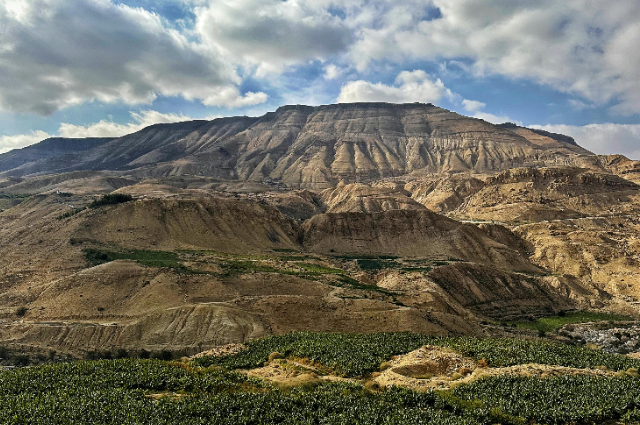
The Aravali hills are not just a pile of rocks but the paramount shield, stretched over 800 K.M. and more than 2 billion years old, and covering 4 states and U.T., (Rajasthan, Gujrat, Delhi & Haryana), which protect whole Northern part of India from the adverse effects of nature, like desertification of northern plains, protection against dunes and storms from the Thar Desert, uneven rain, and the weather’s destructive aspects. But what happened that the government is going to destroy it? The truth is far from the whole controversy. Being a responsible citizen and voter, it is an utmost priority that we all know the whole matter, not only for our knowledge but also for the betterment and stability of the country.
How did this whole controversy start?
On November 20, 2025, the Hon’ble apex court passed a judgment in the case of T.N. GODAVARMAN THIRUMULPAD vs. UNION OF INDIA & ORS., in which the matter of illegal mining in Aravali came in knowledge of the Supreme Court, and the main problem identified is the legal gap due to the non-uniformity in the definition of Aravali as followed by different states.
The Supreme Court then ordered the Ministry of Environment and Forest to form a committee to propound a uniform definition of the Aravali, and pursuant to the order, the Central Empowered Committee (hereinafter referred to as CEC) was formed, which gave the impugned definition of 100m for the Aravali hills.
Why did this 100m definition?
In 2002, the State of Rajasthan formed a committee based on Richard Murphy's landform classification. This committee identified all landforms rising 100 m above local relief as hills and prohibited mining on both the hills and their supporting slopes. Rajasthan is the sole state that formally has a definition of the Aravali, and it was accepted on 9th January 2006. So, when the CEC was formed, it was important to consult with Rajasthan because 90% of the Aravali falls within the territorial boundary of the Rajputana state. An extensive discussion was carried out with the Rajasthan government, and after due permission, the definition was produced before the Supreme Court, which states to identify all landforms with a height of 100m or more measured from the local relief (the thickest part), including its supporting slopes and associated landforms, irrespective of their gradient, as the Aravali hills, and two hills located at the distance of 500m, including the entire area of landforms falling between the lowest contour lines of these Hills as explained, along with associated features such as Hills, Hillocks, supporting slopes, etc., as Aravali Ranges.
One of the disputes arises from the measurement criteria of measuring from the lowest contour. The universally accepted criteria for measuring any landform are measurements from the sea level, and measuring the Aravali from the lowest contour is somewhat unique, creating a cloud of fear that the Aravali is open to mining more than ever before.
Why not measure from Sea level?
The universally accepted measurement criteria for measuring landforms from the sea level were ignored in this case. In M.C MEHTA vs. UOI (1985), the Supreme Court completely banned mining in the Aravali hills and ranges, which leads problem for the government in conducting mining in the Aravali. And to overcome this difficulty, it was important to propound a definition that would
ensure safeguarding the Aravali and, at the same time, allow mining in the range. Why do mining?
This question is being asked by my netizens and can develop in your conscience also that why the government is eager to conduct mining in the Aravali by exposing it to destruction. The premise of Aravali contains rare-earth minerals and nuclear minerals, which are vital for the country’s growth and also to reduce dependency on foreign states for these minerals. The marble used in the home also belong from the Aravali ranges. So, to meet the demand and to reduce foreign dependency, the government needed a loophole to overcome the barrier of the Supreme Court, and it could only be achieved propounding new definition of Aravali. So, does the new definition lead to exploitation of the Aravali?
What was there in the judgment?
If you only read the definition part of judgment, then it can create a sense that most Indians are assuming, but that is not the reality. The judgment contains more than 10 points that aim to protect the whole range. Some of these points are:-
- Mapping of the whole Aravali range to identify where mining can be carried out or not. And all the mapped area shall be geo-tagged.
- Macro-level EIA (Environmental Impact Assessment) study to be carried out in the whole mining-affected area of Rajasthan and the Aravali Hills ranges.
- The level of mineral extraction should also be analyzed along with the EIA study, based on the local requirement of minerals, available infrastructure, and environmental concerns. IV. Mining will be strictly prohibited in the protected areas, including Tiger Reserves declared under the Wildlife Protection Act 1972, up to 1Km from the boundary of the Economic Sensitive Zones (as notified), within 10 Kms of the boundary of protected areas mentioned where Economic Sensitive Zones have not been notified, all identified tiger corridors, within 2km radius/boundary of perennial water bodies and wetlands, all areas where plantations have been raised with funds from any government or agency, all those minerals where mining disturbs larger volume of minerals and soils but yields low revenue, areas falling within NCR, areas where there are proven or potential water aquifers or aquifer recharge areas, area from groundwater is sourced for irrigation/drinking purposes, area identified as DARK ZONE by the Groundwater Board such as Faridabad and Gurgaon, within 10 km aerial distance on either side of the inter-state boundary between Rajasthan and Haryana along Aravali hills range.
- All mining in the forest area of the Aravali should be suspended and may be allowed with the due permission of the apex court.
- The mining in any area of the Aravali shall be allowed after statutory clearance. VII. The state shall prepare a site-specific reclamation and rehabilitation plan for all the abandoned mining sites.
- Mines that have reached the ground level shall be closed.
- The mining leases shall be suspended if being operated without the requisite statutory approvals or upon violation of any condition of Environmental Clearance or any other statutory condition.
- Many provisions deal with the use of explosives, online lease management system, regular evolution, independent and transparent environmental monitoring mechanism, district task force to control illegal mining, etc.
The Supreme Court has also ordered the government to build a Management Plan for Sustainable Mining (MPSM), and if needed then prepare district wise plan, in the Aravali range and that will contain all the area where the mining can be carried out, where not, where it will be prohibited, etc. Supreme court was very vocal that at any cost the principle of Sustainable development cannot be abrogated.
What went wrong?
Despite such long and detailed provisions, the judgment that was passed to preserve the Aravali turned into the predator of the Aravali in the eyes of the public. There can be potentially 2 reasons, and those are:
- Ambiguity in the judgment: the judgment was not clear about how many parts of the Aravali ranges will be covered by the new definition and will be protected by the definition and other limitations. Some studies have claimed that only about 7% Aravali will fall under the new definition of hills, and the Supreme Court shall be careful in these kinds of sensitive matters to provide proper clarification. However, the government has stated that more than 90% of the Aravali is protected, and 0.19% is exposed to mining. This uncertainty in the judgment leads people to think that the whole Aravali is open for mining, and a major portion of it will be cut down.
- Irresponsible reporting: many media houses, and especially unanswerable social media creators, made the buzz about this judgment, but only about the definition, not about other provisions. This irresponsible media reporting is harmful to the country and will lead to eroding the public trust in the judiciary. This media house runs the kangaroo court, which can prejudice the faith of citizens in judicial organizations, and if it happens, the county will have to bear the cost of it.
After the pan-India protest, supreme court take Suo-moto cognizance and admitted that more clarification was needed and put the new definition in abeyance. However, this act is a prime example of how short knowledge and ambiguity can turn the protector into a predator. The people shall also understand that before forming their opinion on any matter, they shall verify the data
instead of solely watching online videos. The creators, news personnel, and political parties shall also be cautious about their act that it shall not hamper or undermine the authority of constitutional institutions, and so the country.