
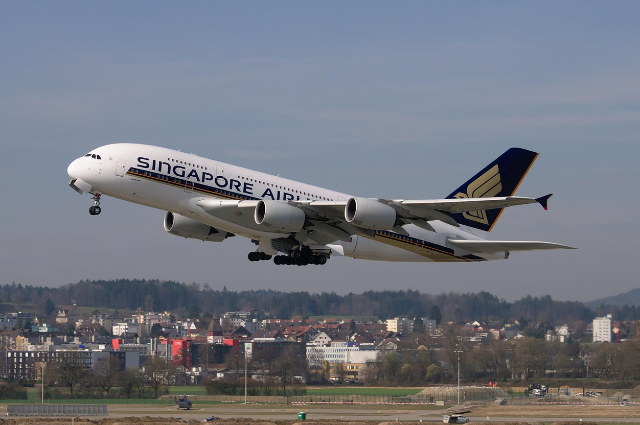
The 21st century has represented an irreversible change in the mode in which humanity travels, connects, and interacts. The once-exclusive realm of those with access to a plane ticket, air travel has become such an integral part of the global economy that we take its convenience for granted, with speed and efficiency bringing people, ideas and goods across distance across continents. Now, as we begin commercial space travel, what was once an activity sanctioned by the state's authority of exploration, is now becoming a lucrative and rapidly developing private marketplace. Combined, these realities provide limitless possibilities but also a complicated reality with regard to legal questions involving legal obligations around passenger safety , liability, and compensation for incidents when they go wrong. This essay will critically engage with how air and space law liability regimes are developing, the new challenges they face, and the development of these legal responses to respond to human (social and commercial) development in the context of new air and space technological developments. The essay will also engage with whether the existing legal frameworks are sufficient to protect them as air passengers in the context of increasing aviation disasters and imperatives for commercial space exploration. Ultimately the paper will hopefully highlight where the current environment is lacking to guide discussions and potential paths towards unified legal framework and equitable rationalization on human development, safety, and justice in the sky and beyond.
HISTORICAL EVOLUTION IN LIABILITY REGIMES
The evolution of liability regimes in aviation law has occurred with the history of international treaties developed around international regulations for passenger protection. The Warsaw Convention, signed as a treaty in 1929 was the significant first step towards establishing an international framework for airline liability for passenger injury/death and baggage damage. The Warsaw Convention, although an important step forward at that time, limited the extent of liability and compensation through fixed and relatively low limits of liability based on the time, technology and mode of transportation (expectations of air travel were quite different in the heyday of the train). With pressures from states, they ratified a successor treaty called the Montreal Convention in 1999 which modernized various provisions for liability with a two-tier system of liability - strict liability, up to a defined amount, and unlimited liability, if the airline is to blame for the incident. Nevertheless, although the Montreal Convention modernized liability provisions, it still has limitations. Since catastrophic incidents like the Ethiopian Airlines Flight 302 crash in 2019 or the Air India Express disaster at Calicut in 2020, serious questions remain as to what level of compensation is acceptable, when victims will receive further monetary relief, and how to treat psychological injuries while recognizing the physical trauma they also suffered. This is further complicated by jurisdictional disputes in cross-border claims, but especially delays in litigation, and the differences in national legal systems regarding the definition or interpretation of "fault. While aviation law seems to be developing slowly, commercial spaceflight will create a paradigm shift in transport law. While national space agencies, like NASA or Roscosmos, controlled space exploration, private sector entities, like SpaceX, Blue Origin, and Virgin Galactic, are now offering humans suborbital and orbital experiences for fees. This raises important questions: will passengers be considered "astronauts," entitled to protections and rescues under the Outer Space Treaty (1967), or will they merely be considered people engaged in a high-risk recreational activity? If a privately operated spacecraft crashes, who is responsible: the launch provider, the state from which it was licensed to launch, or the manufacturer of the components (or all of them, having some liability)?
The 1972 Liability Convention, as an addendum to the Outer Space Treaty, was conceived before the era of private actors' involvement in space and decreasingly relevant in terms of intergovernmental actors. The Liability Convention imposes absolute liability on a launching state for damage caused on Earth or damage to aircraft in flight, and relates to fault for actual damage that occurs in Space. Yet, this framework does not include private commercial operations or a process for individual passengers to seek compensation for an injury or death that occurs. Consequently, private commercial space passengers today sign lengthy waivers of liability prior to travel, accepting the risks of injury or death, but the enforcement of waivers for gross negligence or willful misconduct is uncertain.
THE LEGAL ZONE AND NEED FOR REFORM
The blending of aviation and space activities creates hybrid conditions that have the potential to cross jurisdictional lines. For example, suborbital spaceplanes are similar to aircraft in that they launch from runways, then travel to the edge of space, and finally return to Earth for a landing. Are these flights governed by aviation law, space law, or a new category of law? Without a clear dividing line, like an internationally established altitude that indicates the dividing line between airspace and outer space, there is sure to be a conflict among the applicable law. Complicating this uncertainly is the fact that aviation law is generally passenger-centric and is also based on established insurance mandates, while the present focus of space law is on state to state liability and leaves passengers in limbo.
This uncertainty could have significant impacts at the policy level for passenger confidence and the commercial viability of developing industries. Most air travellers board flights with some assurance that if the "something goes wrong", they have a clearly established regime for compensation and safety. Space tourists now operate in an uncertain environment where the range of legal protection is unclear and is sometimes covered by national legislation which varies wildly in stringency and scope. The US Commercial Space Launch Amendments Act (CSLAA) for example has a "fly-at-your-own risk" model in which operators must obtain informed consent from passengers and protect operators from almost all liability claims except those involving gross negligence or intent. The apparent intention of this provision is to limit the legal burdens on operators - and speed up innovation and commercialization of a market sector - but this raises questions as to whether their duty to operate passenger safety as a priority has been overrode by commercial feasibility. Value in these liability frameworks is also an ethical action. The intersection is about achieving equilibrium between competing values: on the one hand incentivizing innovation and commercial investment in the context of new frontier industries, while on the opposing side - protecting individuals from becoming completely vulnerable as victims of tragedy. This balance is particularly precarious in sectors of higher degree of risk where the logistics of rescue or recovery may be a significant challenge as is the case with spaceflights, where an accident occurrence may take place hundreds of kilometres upward and immediate assistance may be limited.
Lastly, new waves of accountability issues emerge through increased reliance on automation and artificial intelligence, as we see in aviation and the evolution of the space travel industry. For example, if a software failure precipitates an aircraft crash, or leads to an orbital maneuvering altered accident arising from a space journey, how do we assign liability against the operator, the software developer, and the manufacturer? Traditional models of liability that prioritize human fault and machinery failure seem ill-suited to the nuances of accidents caused by fully autonomous vehicles or cyber-attacks.
The increasing complexity of the above suggests that a balanced, future proof liability regime is now necessary. Ideally this regime would draw upon the strengths of both aviation and space law: specifically, the structures in place for passenger compensation under the Montreal Convention, and the concept of multilateral co-operation embedded in the Outer Space Treaty. A future-proof liability regime would also need to include the evolving realities of hybrids of flights, multi-national operators, and partnerships between the public and private sectors. Frameworks and governance for international aviation under the direction of the ICAO or for outer space under the UNOOSA could assist to create the dialogue, to draft new treaties, and set baseline safety & liability obligations which apply horizontally across jurisdictional borders.
THE DEVELOPMENT OF LIABILITY SYSTEMS IN AVIATION LAW
Modern aviation liability is based on the 1929 Warsaw Convention, a very early international treaty which established, for the first time, an international regime that tried to unify rules about airline liability for passenger injury, death and baggage liability connected to international flights. While the Warsaw regime built a framework that was novel for its time, it provided prescription limits for allowable compensation which, when originally included in the treaty, were 125,000 francs (roughly USD 10,000) but these amounts became inadequate because of inflation, passenger expectations and the increasing scale associated with aviation disasters.
Over the years, amendments to Warsaw including the Hague Protocol (1955) and the Montreal Agreement (1966) were instituted to rectify the inadequacies of Warsaw. But there was not a developed liability regime until the Montreal Convention in 1999 was used. In June of 1999, the Montreal Convention established a two-tier approach:
For damages to a passenger, the airline now offered strict liability of 113,100 Special Drawing Rights (SDRs) (~USD 150,000) and this was strict liability meaning the airlines had no opportunity to prove fault.
For damages exceeding 113,100 SDRs (~ USD 150,000) the airline has unlimited liability unless it can show that it took every reasonable precaution to avert the damages.
The Montreal Convention have added breadth and depth to international treaties about delay, baggage loss and/or damages to cargo in international flights at the same time keeping the economical viability of airlines with some protection for passengers. The Montreal Convention is mostly limited to international civil air travel, national law may or may not have provisions that impose the same or similar expectations on assertions of liability for domestically entertained flights.
ONGOING ISSUES WITH MODERN AVIATION LIABILITY
Although the Montreal Convention offers a very robust scheme overall it faces specific issues with how to apply it. Aviation tragedies like the disasters of the Boeing 737 MAX (the crashes of Lion Air Flight 610 in 2018 and Ethiopian Airlines Flight 302 in 2019, and the crash of Air India Express at Calicut in 2020) revealed lingering weaknesses in the regime:
- Delays to Compensation – The families of victims are often experiencing years-long delays in litigation due to jurisdictional disputes and complex procedures.
- Slight Accounting of Non-Pecuniary Loss – Recognition of psychological or emotional anguish and companionship loss fluctuates widely between jurisdictions.
- New Risks – Threats from cyberattacks, drone collisions, and AI failure present entirely new categories of harm not authorized within the Convention.
Furthermore, the Montreal Convention's emphasis on monetary thresholds require constant recalibration and, without ongoing inflation indexing can mean compensation fails to meet the victims need in high-cost regions.
Liability in Space Law: The Structure and Deficiencies
While aviation law, including passenger liability, has established a more-or-less mature regime, space law is still at an inception stage in the area of passenger liability. The Outer Space Treaty (1967) and the Liability Convention (1972) underpin the international regime. Under the Liability Convention:
States are absolutely liable for damage caused by their space objects on the surface of the Earth or to aircraft in flight.
For any damage caused in outer space, liability is fault-based.
These provisions are applicable to state-sponsored missions and not follow-on missions, or missions undertaken by private companies for the purpose of space tourism. As a result, there is no express mechanism for individual passengers to bring a claim for compensation through a cause of action against a private company. Rather, they receive claims processing at the state level, which leaves commercial space tourists stranded in a legal netherworld. The advent of commercial space operators such as SpaceX, Blue Origin, and Virgin Galactic has illustrated this gap. These companies usually rely on passenger waivers of liability that place the burden of risk on the individual, usually passengers have signed a waiver of liability acknowledging something that happened other than informed consent. In some jurisdictions, the waiver may be enforceable, but they raise ethical issues of informed consent when dealing with highly technical risks of which the lay passenger cannot fully assess the risks involved.
The Commercial Spaceflight Challenge
Commercial space flight presents a series of unique liability issues that differ from those in aviation:
- Jurisdictional Ambiguity – A major question is which jurisdiction is applicable for suborbital flights because there is still no defined boundary between airspace and outer space. The Kármán line is 100 km above sea level and is widely used; however, it is not legally binding.
- Passenger Status – Space tourists occupy a legal status somewhere between "astronaut," who has a right to emergency rescue and assistance pursuant to international law, and "passenger," which significantly alters their rights for liability purposes if they are in an accident.
- Insurance Gaps – Unlike aviation, commercial spaceflight passengers have no globally mandated insurance scheme to shelter them from uncompensated loss. For instance, the Virgin Galactic VSS Enterprise accident in 2014 that killed a co-pilot during a test flight raised issues about how liability would have been arranged if there had been paying passengers on board. Would their families have been compensated under space law? Aviation law? Or would they have been left to engage in private negotiations?
The Convergence of Air and Space Law
The emergence of suborbital spaceplanes brings into question the delineation between air and space travel. They can operate both horizontally like airplanes to launch and utilize rocket engines to break the edge of space, then return to Earth using gliding. In other words, they are hybrid. The hybrid nature of these operations raises challenges to the scope of the Montreal Convention and the Liability Convention.
Some scholars suggest a hybrid liability regime that combines elements of both:
- A Montreal-like strict liability and insurance requirement for launch and re-entry;
- Fault-based liability for in-orbit operations.
In this model, it would provide passengers with prompt compensation as to their injury regardless of whether it occurred in "airspace" or "outer space."
Learning from Aviation to Support Space Law
Aviation also suggests other lessons:
- Mandatory Insurance – The requirement that operators carry enough insurance for victims to be compensated relatively quickly without disputes.
- Certainity about Jurisdictional Rules – the Montreal Convention describes clear limitations of where and when liability applies, and similar certainty will need to be developed for space operations.
- Non-Pecuniary Damages - Psychological injury should be considered in any future outer space liability governing regime. The International Civil Aviation Organization (ICAO) may opt to collaborate with the United Nations Office for Outer Space Affairs (UNOOSA) to create a unified treaty, as both parties have decades of managing global aviation safety and aviation liability.
Emerging Risks: Technology, AI, and Cybersecurity
Both aviation and space tourism are heavily dependent on automation and artificial intelligence. This creates new liability problems:
- Software Errors - If an AI autopilot made a software decision based on an inaccurate descent trajectory when landing, who would be liable: the airline/space operator, or the software developer?
- Cybersecurity Threats - A cyberattack on the control systems of a spacecraft could lead to loss of a space vehicle, its occupants, and other serious losses, but current liability regimes lack a legal framework for a malicious third-party interference.
- Autonomous Decision Making - An AI system of an aircraft/spacecraft is now making safety related decisions as to whether to the flight should continue to fly without land. As an outcome there will be some operators no longer referred to as pilots operating the aircraft, and this could affect the where fault is quantified. Future liability schemes may need models for shared responsibility and liability considering the roles of the user/operator, the manufacturer, the application provider or software developer and perhaps the data supplier.
Consequently, future liability regimes should factor in a shared responsibility model and those models should consider the roles of the operators, the manufacturers, the software developers, and possibly the data suppliers.
Possibilities for Legal Reform
A viable future for passenger safety in aviation and space tourism will require deliberate and coordinated international reform. Possibilities include:
- Defining the Line between Air Space and Space – Creating a recognized altitude limit that allocates which legal regime applies.
- Extending Montreal-like Liability to Space Tourists – Including arrangements for strict liability, mandatory insurance, and the recognition of non-pecuniary damage.
- Establish a Space Passenger Bill of Rights - Set minimum standards of acceptable safety, information, and compensation for all spaceflight participants.
- Resolve National Jurisdictions – Urging countries to modernize domestic laws that fit international legal positional norms and changing commonwealth values, so that they do not create gaps in jurisdictional accountability while leaving passengers un/under protected.
- International Compensation Funds – Similar to International Oil Pollution Compensation Funds that provide certainty in a timely manner to victims of such operations irrespective of whether the operators are solvent or not.
The Imperative for a Unified Framework
The future of air and space travel is increasingly interconnected. As private companies plan point-to-point suborbital flights capable of connecting distant cities in under an hour, the line between an “airline passenger” and a “space tourist” will become less meaningful. Without a unified liability framework, passengers may find their rights—and potential compensation—determined more by the technical classification of their journey than by the actual risks involved. By merging the strengths of the aviation and space law regimes, and updating them to address 21st-century challenges such as automation, cybersecurity, and hybrid operations, the international community can build a future-proof system that supports innovation while safeguarding fundamental passenger rights.
CASE STUDIES
Air France Flight 447 (2009)
In June of 2009, Air France Flight 447 crashed into the Atlantic Ocean while flying from Rio de Janeiro to Paris, killing all 228 people on board. The crash was a mix of technical failures affecting pitot tubes (which measure airspeed) as well as pilot inaction related to automation alerts. Families claimed against Air France under the Montreal Convention, and while Air France had liability for the initial compensation strictly, any subsequent claims were based on fault. The crash was in international waters, which created jurisdictional complications requiring French and Brazilian systems to work together, which resulted in compensation to be divided based on whether each victim was French or Brazilian, which had its own domestic law and level of support from those countries. Shows how compensation can be inequitable even when there is the Montreal Convention to follow with cross border complexities where two national schemes compete.
Malaysia Airlines Flight MH370 (2014)
The disappearance of a Boeing 777 with 239 passengers and crew is one of the greatest mysteries in aviation history. Montreal Convention was engaged, and there was no wreckage to provide closure for the victims' families and once and for all compensation settlements. Multiple jurisdictions including Malaysia (country of the airline registry), Australia (nation coordinating search and rescue efforts), China (country with a majority of victims). Illustrates the difficulty of liability regimes when claims have no material evidence or cause for their basis where trauma are non-economic damages arising from the incident.
Boeing 737 MAX Crashes (2018 - 2019)
There were two fatal accidents: Lion Air Flight 610 in October 2018 and Ethiopian Airlines Flight 302 in March 2019. There were a total of 346 casualties. • Liability Context: Although the claims didn't establish any liability for the airline, liability did extend to the manufacturer, Boeing, regarding defects in the design of the MCAS system. Most of the suing families took claims for damages to a U.S. court, even though the deaths were in another country. The families claimed that Boeing was guilty of negligence hiding the safety issues. Demonstrated how the lines of liability will become fuzzy between product liability, and carrier liability, and the complications that a growing globalization has on these claims.
Air India Express Flight IX1344 (2020)
The aircraft crashed off of the end of the runway (Calicut International Airport, India) killing 21. The airline was regulated by the domestic aviation regulations, even though India had also incorporated many of the provisions of the Montreal Convention. Questions arose about the design of the runway safety, is there any duty for safe maintenance, and would liability attach to the authority responsible for controlling the airport. Relevant to show how certain infrastructure may drive the flow of airline liability rather than or in addition to the airline itself.
Space Law and Commercial Spaceflight Examples
Virgin Galactic VSS Enterprise Crash (2014)
The spaceplane broke apart while flying into the air on a test flight and killed the co-pilot. There were no paying passengers on-board, however informed consent protocols will be litigated, in terms of what was their waiver and enforceability concerning passengers. Any similar future event, liability may be apportion and then split across the operator, the manufacturer (Scaled Composites), and manufactured suppliers. Relevant to be able to show the ambiguity of hybrid vehicles, and to show how both aviation and space law are regimes that will be able to contend with the applicable legal regimes.
Blue Origin's Suborbital Flights (2021-Present)
Blue Origin has taken its paying passengers up to space, even very recognizable people, and public figures such as William Shatner. Passengers sign informed consent waivers, in compliance with U.S. federal law that would have to be signed to disclose and acknowledge all the risks that obviously exist in this mode of transport. No cargo was in these test flights, since these were uncrewed tests. However, these incidents highlighted the dangers of spacecraft propulsion systems. If passengers were on board, and the same events occurred, then claims would require knowledge of whether NASA's statements, contracts with SpaceX, and private contracts with passengers regarding liability existed. Demonstrates complexity when contracts exist between operator, government, and the individual.
Boeing Starliner In-Flight Test (2023 Test)
The Starliner was successfully launched in an uncrewed flight test, but did not reach intended orbit due to a propulsion issue. There was no incident or damage, but the flight did raise the issue of liability in the event of misconduct from operator or manufacturer. No passengers were in the test flight, and the flight failed without harm or damage. Damages primarily refer to the possible misconduct of Boeing did not exist. had there been passengers on board, then claims would have involved knowledge of whether terms regarding liability existed with NASA, Agency, in relating to Boeing and rights to prosecute claims against Mongolian authorities. Demonstrates the complexity with contracts existing between operator and government, and with groups or individual people. These were uncrewed but develop commercial operations for both cargo and passenger transport. If there is an incident where a passenger-carrying Starship is involved, jurisdictional complexity will almost certainly arise due to the international supply chains and launch sites. Offers a forward looking example of how new vehicles may stretch existing liability frameworks.
Hybrid and Cross-Border Liability Confusion
Hypothetical Suborbital Point to Point Flights Companies imagine suborbital point-to-point travel between major urban centers, e.g., two hours from London to Sydney. Flights may be classified as aviation while on takeoff, use space law when in outer space, and classified as aviation law during re-entry. An incident would potentially involve several overlapping treaties, national law and insurance products. Underscores the imminent need for a integrated hybrid liability framework.
International Space Station (ISS) Commercial Crew
NASA's Commercial Crew Program has allowed private companies to design space systems to transport astronauts to the ISS. The partnership agreements delineate the respective responsibilities to be allocated among partner nations; however, those terms have not been established in regard to private space tourist responsibilities. If a space tourist is injured on the ISS, the liability position will depend on whether the injury occurred while being transported (responsibility of the operator) or when on board the station (responsibility of the international partner). Additionally emphasizes jurisdictional ambiguity with respect to contracting authority of common space facilities.
Lessons from Other Modes of Transportation
International Oil Pollution Compensation Funds
In the wake of a significant oil spill, the relevant Region Contracting States set up an international fund to compensate victims as expeditiously as possible regardless of the solvency of the shipowner (i.e. compensation was not related to whether the civil liability policy was compensable). This could be modeled for a global fund designed to cover victim's compensation for emergency incidents in air and space travel.
Rail and Maritime Liability Frameworks
The railway and maritime modes of transportation have existing liability structures for passenger injuries that have been developed over decades (including the Athens Convention (1974) applicable to maritime transport). These frameworks illustrate how a common regulatory scheme can provide balance between the economic viability of the industry and protection of passengers (as well as provide a potential pathway forward towards a hybrid air-space liability convention).
Why These Examples Matter for Legal Reforms
The realistic and hypothetical case studies above (cases) exemplify a range of liability complexities:
- Complex jurisdiction (MH370, suborbital flights);
- Manufacturer liability compared to operator negligence (Boeing 737 MAX, Virgin Galactic);
- Liability policy gaps (Blue Origin, ISS tourists);
- Unclear passenger status (space tourist vs space astronaut);
- Hybrid vehicle liability issues (point-to-point suborbital transport).
THE NEED FOR CONVERGENCE AND HYBRIDISATION
A recurring theme in this analysis has been the increasing convergence of air and space travel. Suborbital point-to-point flights, spaceplanes, and mixed-mode vehicles are eroding the clear jurisdictional boundaries that once separated the two domains. Without a harmonised approach, the applicable liability regime in the event of an accident could depend more on arbitrary definitions of altitude or vehicle classification than on the underlying principles of justice and passenger protection. This is not a sustainable foundation for the coming decades of aerospace mobility. A hybrid regime—drawing on the strict liability, mandatory insurance, and passenger-centric provisions of the Montreal Convention, combined with the cross-border cooperation mechanisms of the Liability Convention—would address many of these jurisdictional uncertainties. It would ensure that compensation is available regardless of whether an incident occurred “in airspace” or “in outer space,” and would protect passengers from the legal limbo that currently exists for space tourism.
Lessons from Aviation Applied to Space
The history of aviation regulation offers valuable lessons for space law’s future. International coordination through bodies such as ICAO has been critical in setting safety and liability standards that transcend national borders. Similar leadership will be required from UNOOSA—or perhaps a new joint aviation-space regulatory authority—to create a harmonised framework for spaceflight. Mandatory insurance requirements, established safety protocols, and explicit recognition of psychological as well as physical injury should be cornerstones of any future space liability regime. Moreover, the aviation sector’s experience in handling manufacturer liability alongside carrier liability, as in the Boeing 737 MAX cases, provides a precedent for allocating responsibility among multiple parties in complex technological accidents—a reality that will be even more pronounced in spaceflight, where launch providers, spacecraft manufacturers, software developers, and national licensing authorities all share overlapping roles.
Responding to Emerging Risks
As automation and artificial intelligence become integral to both aviation and space operations, traditional fault-based liability models will need to evolve. Accidents caused by software errors, algorithmic misjudgements, or cyberattacks challenge the human-centred assumptions on which current frameworks are built. Future liability regimes must embrace a shared-responsibility approach that accounts for all actors in the operational chain, from system designers to data providers. Similarly, the growing reliance on autonomous systems raises the question of whether strict liability should be expanded to cover operator responsibility for AI-driven decisions. This would maintain the principle of swift and certain compensation for victims, while allowing fault-based proceedings to address disputes between operators, manufacturers, and software suppliers after the fact.
The Role of Comparative Models
Other transport sectors offer useful analogies. The Athens Convention in maritime law and the International Oil Pollution Compensation Funds system both demonstrate how global regimes can ensure victim compensation while preserving industry viability. These models suggest that an international aerospace passenger compensation fund—financed through operator levies—could provide rapid relief to victims and their families without awaiting the outcome of lengthy litigation. Similarly, lessons from railway accident compensation systems underscore the value of streamlined claims processes and uniform definitions of passenger rights. Applying these principles to aerospace travel would enhance legal certainty and passenger trust, both of which are essential to the commercial sustainability of the sector.
Ethical and Policy Imperatives
- Ultimately, the question of evolving liability regimes is not only about legal mechanisms; it is about balancing innovation with responsibility. The push to commercialise space, like the rapid expansion of aviation a century ago, promises extraordinary societal and economic benefits. Yet history warns us that technological progress without adequate legal safeguards can erode public trust and inflict lasting harm on victims of avoidable tragedies. From a policy perspective, passenger safety should not be treated as a negotiable commercial variable. In high-risk domains such as aerospace travel, where accidents may have catastrophic consequences and limited opportunities for rescue, the presumption must be in favour of robust, enforceable rights to compensation and assistance. National laws and international treaties should reflect this presumption, ensuring that passengers—whether crossing oceans or the edge of space—are never left without meaningful recourse.
Pathways Forward
To that end, this essay’s analysis supports the following core reforms:
- Defining a Clear Boundary Between Air and Space – To eliminate jurisdictional ambiguity and establish consistent liability rules.
- Extending Montreal-Like Protections to Space Tourists – Including strict liability, mandatory insurance, and coverage for non-economic damages.
- Establishing a Space Passenger Bill of Rights – Codifying minimum safety, training, and information disclosure requirements for all commercial space operators.
- Creating International Compensation Mechanisms – Similar to maritime and environmental models, to ensure rapid relief regardless of operator solvency.
- Adapting Liability Rules for AI and Automation – Expanding strict liability to cover autonomous decision-making in aerospace operations.
- Promoting ICAO–UNOOSA Collaboration – To foster joint regulatory development for hybrid air–space transport systems.
The evolution of liability regimes in air and space law is not merely an exercise in legal technicality; it is a reflection of humanity’s journey from the skies to the stars, and of the moral, economic, and political choices we make along the way. As this essay has explored, aviation law has benefited from nearly a century of refinement, with the Warsaw and Montreal Conventions establishing relatively clear frameworks for passenger compensation and carrier responsibility. Yet, even in aviation, catastrophic events—Air France Flight 447, MH370, the Boeing 737 MAX crashes, Air India Express IX1344—reveal gaps in compensation adequacy, jurisdictional efficiency, and recognition of non-pecuniary harm. These shortcomings suggest that even mature regimes require constant recalibration to remain fit for purpose. In space law, the picture is even more complex and incomplete. The Outer Space Treaty and Liability Convention, drafted in an era of state monopoly over space exploration, did not anticipate the rise of private commercial actors. Consequently, these instruments primarily allocate liability between states, leaving paying passengers—such as those flying on Virgin Galactic or Blue Origin—dependent on national laws and private contracts that often prioritise industry protection over passenger rights. The current “fly-at-your-own-risk” model, particularly in the United States, reflects an early-stage policy preference for encouraging investment and innovation, but at the cost of comprehensive passenger safety guarantees.
. . .
References:
- Pandey A, ‘Air and Space Law: Navigating Legal Challenges in a Rapidly Advancing Technological Landscape’ (Legal Service India, no date) https://www.legalserviceindia.com accessed 15 August 2025.
- Convention for the Unification of Certain Rules Relating to International Carriage by Air (Warsaw Convention, signed 12 October 1929, entered into force 13 February 1933) https://www.mcgill.ca/iasl
- Maggie Gardner, ‘Personal Jurisdiction and the Montreal Convention’ (Transnational Litigation Blog, 17 October 2024) https://tlblog.org
- Treaty on Principles Governing the Activities of States in the Exploration and Use of Outer Space, including the Moon and Other Celestial Bodies (Outer Space Treaty, opened for signature January 1967, entered into force October 1967) https://www.unoosa.org
- Convention on International Liability for Damage Caused by Space Objects (Liability Convention, agreed 1971, entered into force September 1972) https://www.unoosa.org accessed 15 August 2025.
- ‘The Legal Status of Suborbital Aviation Within the International Regulatory Framework for Air and Space Use’, in Bartosz Malinowski (ed), *Regulatory Dilemmas of Suborbital Flight* (Space Regulations Library, vol 10, Springer Cham 2024) 13-43 https://link.springer.com
- Conference Room Paper, ‘Air/space delimitation and suborbital space travel’ (National Space Society, COPUOS Legal Subcommittee, 64th session, 6 May 2025) https://www.unoosa.org accessed 15 August 2025.
- Liability Risk-Sharing Regime for U.S. Commercial Space Transportation (Federal Aviation Administration, April 2002) https://www.faa.gov/about/office_org
- Elesh Singh, ‘Navigating the Cosmos: Current Challenges and Problems in International Space Law’ (International Journal of Advanced Legal Research, Vol 4, Issue 3) https://ijalr.in accessed 15 August 2025.
- Lucy England and Simon Phippard, ‘It’s the robot’s fault! AI and legal liability in aerospace’ (Aerospace magazine, Royal Aeronautical Society, no date) https://www.aerosociety.com
- ‘AI in Aviation: Legal Challenges and Opportunities’ (Generis Global Legal Services, 15 January 2024) https://generisonline.com
- Convention for the Unification of Certain Rules Relating to International Carriage by Air (Warsaw Convention, signed 12 October 1929, entered into force 13 February 1933) https://en.wikipedia.org accessed 15 August 2025.
- Protocol to Amend the Convention for the Unification of Certain Rules Relating to International Carriage by Air (Hague Protocol, signed 28 September 1955, entered into force 1 August 1963) https://www.mcgill.ca accessed 15 August 2025.
- Ibid
- Paul Stephen Dempsey, *Air Carrier Liability under the Warsaw Regime and the Montreal Convention* (ASPL-636, Institute of Air & Space Law, McGill University, 2015) https://www.mcgill.ca accessed 15 August 2025.
- Convention on the Unification of Certain Rules Relating to International Carriage by Air (Warsaw Convention, signed 12 October 1929, entered into force 13 February 1933) https://en.wikipedia.org
- Investigation of Lion Air Flight 610 and Ethiopian Airlines Flight 302 (National Transportation Safety Board, Investigation IDs DCA19RA017; DCA19RA101) https://www.ntsb.gov accessed 15 August 2025.
- ‘Air India Express Flight 1344’ (Wikipedia) https://en.wikipedia.org
- ‘International Air Travel Liability Limits Set to Increase, Enhancing Customer Compensation’ (International Civil Aviation Organization, 18 October 2024) https://www.icao.int accessed 15 August 2025.
- ‘Outer Space Treaty’ (Wikipedia, last modified 15 July 2025) https://en.wikipedia.org accessed 15 August 2025.
- Convention on International Liability for Damage Caused by Space Objects (Liability Convention, adopted 29 March 1972) https://www.unoosa.org accessed 15 August 2025.
- Tushar Krishna and Shouvik Kumar Guha, ‘The Kármán Line Controversy and Boundaries of Outer Space’ in *Implications for Space Tourism* (1st edn, Routledge India 2024) 12–[end page] https://www.taylorfrancis.com accessed 15 August 2025.
- Ayushi Mishra, ‘Space Tourism and Liability: Navigating Legal Challenges in the Era of Commercial Space Travel’ (ILE Weekly Review, Vol 1, Issue 10, August 2023) https://wr.iledu.in accessed 15 August 2025.
- Jack Moore, ‘Virgin Galactic SpaceShipTwo Crash: Insured for Between $40-50m in Losses by AIG’ (International Business Times, 3 November 2014) https://www.ibtimes.co.uk accessed 15 August 2025.
- Masson-Zwaan T, ‘Private Law Aspects of Suborbital Flights: Second- and Third-Party Liability and Insurance’ (2022) 87 *Journal of Air Law and Commerce* (Vol 87, Iss 3).
- Malinowski B, ‘Damage and Liability Insurance for Damage Caused in Connection with Suborbital Flight’ in *Regulatory Dilemmas of Suborbital Flight* (Space Regulations Library, vol 10, Springer Cham 2025) 129–163 https://doi.org accessed 15 August 2025.
- ‘Aviation Insurance and Liability: Key Considerations for Safety’ (International Law Editorial, World Jurisprudence, 17 May 2024) https://worldjurisprudence.com accessed 15 August 2025.
- Sarah Prager, ‘Jurisdiction under Article 33(2) of the Montreal Convention: the Decision in Akulinina and Another v Ifly SA [2022] EWHC 166 (QB)’ (Deka Chambers, 23 February 2022) https://www.dekachambers.com accessed 15 August 2025.
- ‘This Much Is Plane to Sea: Non-pecuniary Damages Belong in the Death on the High Seas Act’s Commercial Aviation Accident Exception’ (Loyola Maritime Law Journal, 22 June 2022) https://www.thefreelibrary.com accessed 15 August 2025.
- Landry Holi, ‘AI in Aviation Cybersecurity: Maximizing Opportunities and Mitigating Risks through Collaborative Risk Analysis’ (Cyber Senate, 11 October 2024) https://cybersenate.com accessed 15 August 2025.
- Holi L, ‘AI in Aviation Cybersecurity: Maximizing Opportunities and Mitigating Risks through Collaborative Risk Analysis’ (Cyber Senate, 11 October 2024) https://cybersenate.com accessed 15 August 2025.
- ‘Space Tourism: Costs, Risks, and the Way Forward’ (InsightsIAS, 15 April 2025) https://www.insightsonindia.com accessed 15 August 2025.
- International Oil Pollution Compensation Funds (‘IOPC Funds’) (IOPC Funds, no date) https://iopcfunds.org accessed 15 August 2025.
- Russell Greenall-Sharp, David Kobza, Courtney Houston, Mohammad Allabbad, Jamie Staggs and James S.J. Schwartz, ‘A Space Settler’s Bill of Rights’ in O.A.C. Torres, T. Peters, J. Seckbach and R. Gordon (eds), Astrobiology: Science, Ethics and Public Policy (Scrivener Publishing 2021) https://doi.org accessed 15 August 2025.
- ‘Compensating the Families of Air France Flight 447’ (Time, no date) https://time.com accessed 15 August 2025.
- ‘MH370: The Montreal Convention from a Malaysian Perspective’ (HG.org, no date) https://www.hg.org accessed 15 August 2025.
- ‘Boeing 737 MAX: The troubled history of fatal crashes and 346 deaths in 7 years’ (Economic Times, 2024) https://economictimes.indiatimes.com accessed 15 August 2025.
- ‘Supreme Court Takes Up Air India Express Compensation Case, Questions Airline’s Compliance with Montreal Convention’ (Socio Legal Corp, no date) https://www.sociolegalcorp.com accessed 15 August 2025.
- In-Flight Breakup During Test Flight, Scaled Composites SpaceShipTwo (National Transportation Safety Board, Investigation ID DCA15MA019) https://www.ntsb.gov accessed 15 August 2025.
- U.S. Commercial Space Launch Competitiveness Act Incorporation (14 CFR Parts 415, 431, 435, 437, 440, 450, 460; FAA Final Rule, 89 Fed Reg 76714 (19 September 2024) (effective 18 November 2024)) accessed via Federal Register https://www.federalregister.gov accessed 15 August 2025.
- Ibid
- ‘NASA acknowledges it cannot quantify risk of Starliner propulsion issues’ (Ars Technica, last modified 2024) https://arstechnica.com accessed 15 August 2025.
- Bartosz Malinowski, ‘The Legal Status of Suborbital Aviation Within the International Regulatory Framework for Air and Space Use’ in *Regulatory Dilemmas of Suborbital Flight* (Space Regulations Library, vol 10, Springer Cham 2025) 13–43 https://link.springer.com accessed 15 August 2025.
- Matthew Ormsbee, ‘Starliner Stranding: Commercial Space Partnerships and International Law’ (The Space Review, 9 September 2024) https://www.thespacereview.com accessed 15 August 2025.
- International Oil Pollution Compensation Funds, ‘Home’ (iopcfunds.org) https://iopcfunds.org accessed 15 August 2025.
- Centre for International Law, 1974 Athens Convention relating to the Carriage of Passengers and their Luggage by Sea (13 December 1974) https://cil.nus.edu.sg accessed 15 August 2025.
- Swathi Shree Ram Kumar, 'Space Tourism: An Analysis of Its Legal Aspects' (2021) 7(1) International Journal of Law 40, 40–47 https://www.lawjournals.org accessed 15 August 2025.
- United Nations Office for Outer Space Affairs, Convention on International Liability for Damage Caused by Space Objects (29 March 1972) https://www.unoosa.org accessed 15 August 2025.
- Gabriel DeBono, 'Strict Liability of Airline Carriers under the Montreal Convention' (Chambers and Partners, 7 February 2024) https://www.chambers.com accessed 15 August 2025.
- United Nations Office for Outer Space Affairs, Cooperation between the United Nations Office for Outer Space Affairs and the International Civil Aviation Organization (A/AC.105/2019/CRP.14, 18 June 2019) https://www.unoosa.org accessed 15 August 2025.
- International Civil Aviation Organization, 2024 Revised Limits of Liability Under the Montreal Convention of 1999 (ICAO, 2024) https://www.icao.int accessed 15 August 2025.
- Henrico Dolfing, 'Case Study 19: The $20 Billion Boeing 737 Max Disaster That Shook Aviation' (20 August 2024) https://www.henricodolfing.com accessed 15 August 2025.