
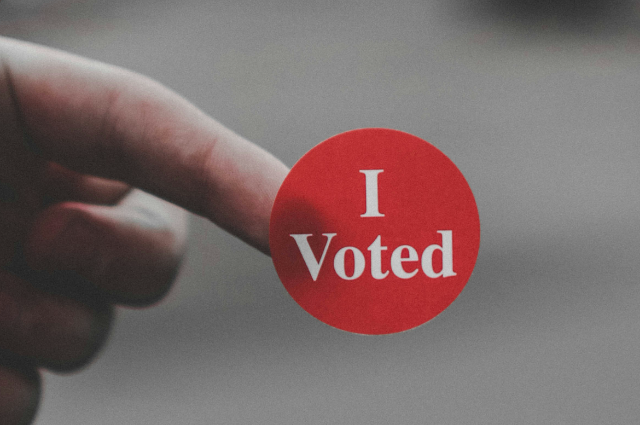
Photo by Parker Johnson on Unsplash
The year 2026 did not arrive with the promise of renewal typically associated with electoral cycles. It arrived like a breach.
From the fog-heavy streets of Kolkata to the polarised corridors of Washington D.C., the mood surrounding democracy is no longer hopeful—it is volatile. For decades, we told ourselves a comforting story: parties argue, candidates campaign, citizens vote, and institutions neutrally count the result. That story no longer holds.
As the year unfolds, a harsher truth is becoming impossible to ignore. The defining political struggle of 2026 is not about persuading voters. It is about capturing the machinery that governs elections themselves. Courts, investigative agencies, electoral bodies, and data systems—once referees—have stepped onto the field as players.
This is not Red vs. Blue. It is not TMC vs. BJP. It is "Institutional War".
The Dawn Raid: When Hard Drives Became Ballot Boxes
The war became unmistakably real on the morning of January 8, 2026.
In Salt Lake Sector V, Kolkata’s tech nerve centre, officers from the Enforcement Directorate (ED) carried out coordinated raids on the headquarters of I-PAC—the political consultancy that functions as the strategic brain of the ruling Trinamool Congress (TMC)—and the residence of its director, Pratik Jain.
On paper, this was a procedural action against financial impropriety—specifically, a money-laundering probe linked to a ₹2,742-crore coal pilferage scam. However, in the context of the upcoming West Bengal Assembly Elections, this was akin to a drone strike on a rival’s command centre.
I-PAC is not merely a corporate entity. It houses the digital architecture of the party’s electoral machinery: the psychometric profiles of millions of voters, booth-level management strategies, and candidate selection algorithms. When the ED seized those servers, they didn’t just seize financial records; they seized the "brain" of the opposition.
The political narrative that emerged from the debris was instructive. The TMC’s accusation was not about harassment, but about data theft. Abhishek Banerjee explicitly claimed the objective was "stealing political information" to hand over to the BJP.
This reframes the nature of interference. In the 2010s, we feared Cambridge Analytica and corporate overreach. In 2026, the fear is state capacity. If one side possesses the other’s playbook and real-time vulnerability maps, the concept of a "level playing field" is obliterated. The election is potentially decided months before the first vote is cast.
Adding to this toxicity is the "Bengal Files"—a term that has metastasized from a controversial film about the 1946 riots into a catch-all phrase for a rumored dossier of corruption that the ED was allegedly hunting. The line between cinema, rumor, and judicial investigation has blurred, creating a hyper-reality where voters can no longer distinguish between a movie plot and a news report.
The Neighborhood Crisis: The "Double Header"
The volatility in West Bengal cannot be viewed in isolation. It is inextricably linked to the seismic shifts occurring across the international border in Bangladesh.
February 12, 2026, marks a perilous experiment for the region: a "Double Header" election. The interim government in Dhaka, led by Dr. Muhammad Yunus, has scheduled the General Election to coincide with a Constitutional Referendum on the "July Charter".
This is not just an election; it is an attempt to refound the republic. The Charter, born from the student-led revolution of 2024, proposes radical changes: a bicameral legislature to check power, term limits for the Prime Minister, and a shift to Proportional Representation.
The stakes are existential. If the electorate votes for a new parliament but rejects the Charter, the country plunges into a constitutional paradox. With the Awami League decimated and Islamist factions like Jamaat-e-Islami filling the vacuum, the risk of a "No" vote triggering chaos is high.
For residents of Murshidabad and Jangipur in India, this is not a foreign policy abstraction—it is a domestic security emergency. The breakdown of law and order in Bangladesh has already reactivated smuggling networks. In December 2025 alone, the BSF seized cocaine worth ₹1.5 crore in Murshidabad, a symptom of a desperate border economy adapting to the chaos.
When the neighbour’s house is on fire, the walls in West Bengal begin to smoke. The "local" is irrevocably global.
The Global Echo: A Synchronised Collapse
If this were only happening in the Bengal Delta, we could call it a regional anomaly. But the pattern is synchronised globally.
In the United States, the "institutional war" has moved from subtext to text. In January 2026, President Donald Trump mused in an interview that "we shouldn't even have an election," dismissing the midterms as a "psychological thing". While his press secretary dismissed it as a joke, the rhetoric fits a documented pattern: delegitimising any democratic process that poses a risk to executive power.
Similarly, in Brazil, the right-wing has doubled down on dynasty. With Jair Bolsonaro barred from office until 2030, the movement has not moved on; it has simply substituted the father with the son. Flavio Bolsonaro’s candidacy, endorsed from his father's hospital bed, mirrors the feudal politics of South Asia, proving that "dynastic succession" is not just an Eastern phenomenon.
Even in the "silent" corners of the globe, the machinery is breaking. Peru is heading into an April election after cycling through seven presidents in ten years, a statistic that signals the complete collapse of executive stability. In the Philippines, the exclusion of the Sulu province from the BARMM region by a Supreme Court technicality threatens to derail the first parliamentary elections in Muslim Mindanao.
Everywhere we look, the "rules of the game" are being rewritten while the game is being played.
The Verdict: Survival Over Development
In this environment, the traditional electoral planks of "development"—Rasta, Bijli, Paani—have evaporated. The 2026 election cycle is purely about survival.
For the TMC in Bengal, retaining power is a matter of physical liberty; losing means losing the protective shield of the state police. For the Democrats in the US, the midterms are the last firewall against authoritarian consolidation. For the interim government in Bangladesh, the referendum is the only barrier against a slide back into dictatorship or Islamist radicalism.
The Supreme Court of India warned on January 15 that if state police and federal agencies continue to clash, it will lead to a "situation of lawlessness". But this warning misses the point. The lawlessness is not an accident; it is the strategy.
We are witnessing the "Breaking of the Status Quo". The old guardrails—neutral judiciaries, independent police, respected electoral commissions—are being dismantled or co-opted.
The winner of 2026 will not be the candidate with the most votes. It will be the faction that best controls the institutions that count them, the agencies that investigate them, and the data that defines them.
Democracy is no longer a contest of persuasion; it is a contest of capture. And the ransom is institutional power.