
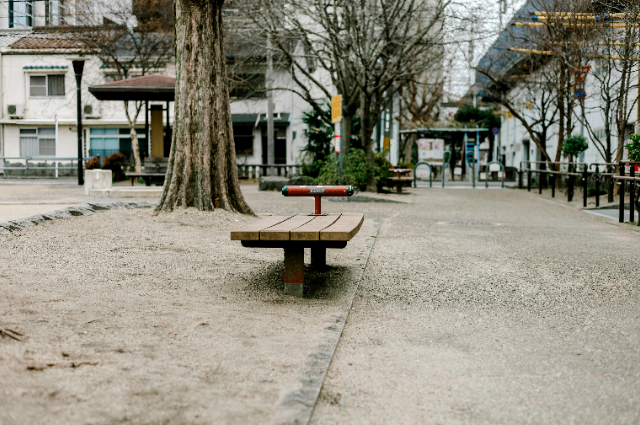
The Empty Bench
If you grew up in India before the age of 4G, you remember the sound.
It was a specific kind of hum. It was the sound of four uncles sitting on a plastic bench outside a sweet shop in Kolkata, arguing violently about cricket or communism. It was the sound of college kids crowded around a tapri in Mumbai, nursing a single cutting chai for forty-five minutes while solving the world’s problems. It was the sound of women on the verandas of Lucknow, shelling peas and dissecting the neighborhood gossip.
This wasn't a meeting. It wasn't a "networking event." It wasn't a date.
It was an Adda.
The word comes from Bengal, but the spirit is universal across the subcontinent. It is the Indian art of doing absolutely nothing, together. It is an unstructured, agenda-less gathering where the only goal is to be present. In an adda, time didn't equal money. Time was just a river you floated down with your friends.
But lately, if you walk through the glossy new neighborhoods of Gurugram, or the tech corridors of Bengaluru, or the gated communities of Noida, you will notice something unsettling.
The silence.
The benches are there, but they are empty. The tea stalls have been replaced by air-conditioned cafes where you pay ₹300 for a cappuccino and stare at your laptop. The verandas are gone, replaced by balconies that are too small to sit on and mostly used to dry clothes.
We are witnessing the slow, quiet extinction of the Indian Adda. And with it, we are losing the very thing that kept us sane.
The Architecture of Isolation
We like to blame technology for everything. We say smartphones killed conversation. And sure, they played a part. But the real killer of the Indian community isn't software; it’s hardware. It’s architecture.
Look at how we used to build. In the old mohallas and pols, houses were huddled together. Streets were narrow. You couldn't walk from your front door to the market without bumping into three people you knew. Privacy was low, but connection was high. You were forced to interact.
Now, look at the "Modern Indian Dream."
It is a 3 BHK on the 14th floor of a high-rise society. It is beautiful. It has marble floors and Italian fittings. It has a security guard at the gate who calls you on an intercom before letting anyone in.
This architecture is designed for one thing: Exclusion.
We have built vertical islands. You can live in a high-rise in Mumbai for five years and never know the name of the person living next door. The elevator ride is a thirty-second exercise in avoiding eye contact. We have traded the chaos of the street for the sterility of the corridor.
I have a friend who moved to a swanky society in Pune. "It’s perfect," he told me. "No noise. No interference. I order my groceries on Zepto. I ordered my dinner on Swiggy. I work from home. I can go three days without stepping outside the main gate."
He said it like a victory. But a month later, he confessed he was depressed. He had engineered all the friction out of his life, but he had also engineered all the humanity out of it. He was safe, cool, and utterly alone.
The Death of the "Third Place"
Sociologist Ray Oldenburg coined the term "The Third Place."
Your First Place is your home. Your Second Place is your work. Your Third Place is the neutral ground. It’s the barber shop, the park, the post office, the chai stand. It’s where you are neither a boss nor a parent. You are just a citizen.
India used to be the world capital of Third Places. Our climate allowed it. Our culture encouraged it. The street was everyone’s living room.
But in the new India—the India of the $5 trillion economy ambition—Third Places are disappearing. Or rather, they are being monetized.
In a city like Bangalore, where can you go to sit for two hours without spending money? The parks close in the afternoon. The sidewalks are nonexistent or broken. The weather is unpredictable.
So, we go to the Mall.
The Mall is the fake Third Place. It looks like a public square, but it is a private machine designed to extract money from your wallet. You cannot start a debate with a stranger in a Mall. You cannot sit on the floor. You cannot be loud. It is sanitized. It is policed.
The humble chai tapri was the ultimate democratic space. The CEO and the auto-driver stood next to each other, drinking the same sugary tea from the same glass tumblers. For ten minutes, the hierarchy dissolved.
Try finding that in a Starbucks. The barriers are invisible, but they are steel. The price of admission keeps the "others" out. The Wi-Fi password is the new social contract. We have replaced the chaotic inclusion of the adda with the comfortable segregation of the cafe.
The "Busy" Badge of Honor
Then there is the cultural shift. The "Hustle."
In the 1990s, if you were sitting on a charpai at 5:00 PM doing nothing, you were seen as relaxed. You were enjoying life.
Today, if you are sitting around at 5:00 PM doing nothing, you are seen as a failure.
We have imported a very American anxiety about productivity. We have convinced ourselves that every minute must be "optimized." If we are not working, we must be "upskilling." If we are not upskilling, we must be "networking."
Even our leisure has become a project. We don't just go for a walk; we have to "hit 10,000 steps" on our Fitbit. We don't just meet friends; we have to "catch up" (a phrase that implies we are falling behind).
The Adda cannot survive in this environment because the Adda requires idleness. It requires the willingness to waste time. And in the new India, wasting time is the ultimate sin.
I recently tried to organize a meet-up with three old college friends in Delhi. It took four weeks of scheduling. We had to align Google Calendars. We had to find a location that was "equidistant" to avoid traffic.
When we finally met, everyone was exhausted. We spent the first twenty minutes complaining about the traffic, the next twenty minutes checking our phones for work emails, and the final twenty minutes taking photos of the food for Instagram to prove we were having a good time.
We were physically together, but the spirit of the Adda was dead. We weren't flowing down the river together; we were just four boats anchored in a dry dock, waiting to get back to the race.
The WhatsApp Mirage
If you want to see where the Adda went, check your pocket.
We have convinced ourselves that we haven't actually lost our community; we’ve just migrated it. We tell ourselves that the Family WhatsApp Group is the new courtyard. After all, we are constantly talking, aren't we?
Ping. "Good Morning" GIFs with roses and rising suns sent by an uncle in Kanpur. Ping. A forwarded video about the benefits of drinking hot water with turmeric. Ping. A photo of a cousin’s new car in New Jersey.
It feels like a connection. But it’s a mirage.
Social media has given us the illusion of intimacy without the demands of intimacy. In a real physical adda, you have to deal with people’s moods. You have to listen to the boring parts of their stories. You have to tolerate their bad breath and their annoying habits. That friction is what makes the bond real. It forces you to accept the human being as a whole package.
On WhatsApp, we only get the highlights. We get the curated, edited, polished version of each other. We are "keeping in touch," but we are not in touch.
I know people who wish their parents "Happy Anniversary" in the family group but haven't visited them in six months, even though they live in the same city. The digital message acts as a moral placebo. It tricks your brain into thinking you have done your duty as a son, a daughter, or a friend. You sent the heart emoji. You did the work.
But emojis don't hold your hand when you are sick. A video call cannot replace the comfort of sitting in silence with someone who knows you. We have traded the messy, warm, inconvenient reality of the adda for a sterilized digital feed that demands nothing from us—and gives us nothing back.
The Silent Crisis of the "Veranda Generation"
The biggest victims of this cultural extinction are not the millennials. We are busy. We are distracted. We have Netflix and deadlines to numb the loneliness.
The real victims are our parents.
This is the generation that grew up in the joint family. They grew up in houses with open doors. They are the "Veranda Generation." They were socialized to believe that life happens outside, in the collective.
Now, they find themselves locked in the sky.
Walk into any high-rise apartment complex in Mumbai or Bengaluru at 11:00 AM. It is a ghost town of elderly parents. Their children are at work. The grandkids are at school (or glued to iPads). The neighbors are strangers.
I recently spoke to a retired banker named Mr. Sharma. He lives in a beautiful, gated community in Noida. His son is an engineer in Seattle. His daughter is a corporate lawyer in Gurugram who visits on Sundays.
"I have everything," he told me, gesturing to his 65-inch flat-screen TV and his recliner. "But I have no one to tell my thoughts to."
In the old days, Mr. Sharma would have walked to the market. He would have argued with the vegetable seller. He would have stopped at the temple and chatted with the priest. He would have run into three friends on the way home. By lunchtime, he would have had twenty small, human interactions.
Now, he orders his vegetables on BigBasket. He pays his bills on Paytm. He watches news debates on YouTube to hear human voices.
We have built a world that is incredibly convenient for the young and able-bodied, but incredibly isolating for the old. We have automated the interactions that used to give their day structure and meaning.
We often talk about the "Brain Drain" in India—the young talent leaving for the West. But we rarely talk about the "Heart Drain"—the emotional vacuum left behind in these silent, marble-floored apartments.
The Death of "Soft Surveillance"
There is another, darker side to the death of the Adda: The loss of safety.
In the old mohalla, privacy was a myth. Everyone knew everyone’s business. If you came home late, the neighbor knew. If a stranger walked down the street, ten pairs of eyes watched them from the windows.
Jane Jacobs, the famous urbanist, called this "Eyes on the Street."
It was annoying. It was suffocating. "Log kya kahenge" (What will people say?) was the toxic byproduct of this closeness. We hated it. We wanted to escape the judgment of the aunties and the uncles.
So, we moved to the cities. We moved to the anonymous apartments where no one knows our names. We got our freedom.
But we forgot that those "eyes on the street" were also a security system.
Now, we live in societies where we don't know who lives across the hall. If we hear a scream, we hesitate. Is it the TV? Is it a domestic fight? Should I interfere? In the mohalla, you didn't hesitate. You rushed in because that family was practically your family.
To replace the "eyes on the street," we have installed CCTV cameras. We have hired guards in uniforms who sleep at the gate. We have MyGate apps that track delivery boys.
We have tried to replace Community Trust with Corporate Surveillance.
But a camera cannot help you when you fall in the shower. A security guard cannot notice that you seem depressed lately and need a cup of tea. We have bought security, but we have lost safety. True safety comes from knowing that if you are in trouble, the person next door cares enough to break down your door.
The Economics of Isolation
Why did this happen? It wasn't an accident. Isolation is profitable.
Think about it.
In a joint family or a tight-knit adda culture, you share resources. You share a car. You share tools. You share childcare (the grandmother watches the kids). You share food.
When you break the community into nuclear units, suddenly everyone needs their own stuff.
Instead of one big pot of curry, we order three separate meals from Zomato.
Instead of the grandmother watching the baby, we pay for a crèche.
Instead of borrowing a ladder from the neighbor, we bought one from Amazon.
The GDP loves loneliness. Every time a community bond breaks, a transaction replaces it.
We are spending money to solve problems that friendship used to solve for free. We pay therapists to listen to us because we don't want to burden our friends. We pay gym trainers to motivate us because we don't have a group of guys to play football with.
The death of the Adda has been great for the economy, but terrible for the soul. We are richer than ever, but we are paying a "Loneliness Tax" on every single aspect of our lives.
The Rebellion of the "Scheduled" Adda
Physics tells us that for every action, there is an equal and opposite reaction. The extreme isolation of the last decade is finally triggering a backlash.
If you walk through Cubbon Park in Bengaluru or Lodhi Garden in Delhi on a Sunday morning, you will see something strange. You will see hundreds of people sitting on the grass, reading books in silence. They aren't talking. They aren't on their phones. They are just... being there.
This is "Cubbon Reads." It started as a small experiment and exploded into a movement. There are now chapters in Mumbai, Pune, and Hyderabad.
Then there are the Run Clubs. In every major city, at 5:30 AM, thousands of young professionals are lacing up their sneakers to run in packs. Most of them aren't training for the Olympics. They are training for the community. They are running because it is the only time in their week when they are part of a tribe.
We are witnessing the rise of "Scheduled Serendipity."
The organic Adda is dead. We can't just walk out of our doors and hope to find friends anymore. So, we are engineering it. We are scheduling our spontaneity. We are signing up for pottery workshops, heritage walks, board game nights, and urban farming collectives.
Is it the same as the old Adda? No. It lacks the beautiful, lazy aimlessness of the past. It requires Google Forms and registration fees. But it is a start. It is an acknowledgment that the "Independent Life" was a scam, and we are desperate to find our way back to the herd.
The Allure of the "Tier 2" Dream
There is another, more radical shift happening. The Reverse Migration.
For twenty years, the Indian Dream was to leave the small town, move to the Metro, get a corporate job, and buy an apartment. But after the pandemic, the glossy veneer of the Metro cracked. We realized that earning ₹30 lakhs a year in Mumbai feels like poverty if you are trapped in a matchbox, breathing toxic air, and have no time to see the sun.
So, people are moving back.
They are moving to Jaipur, to Mysore, to Kochi, to Dehradun. They are moving to Goa (not just to party, but to live).
They are looking for what I call "The 15-Minute Life."
In a massive metro, everything is an hour away. Your friend is an hour away. The cinema is an hour away. The office is an hour away. That distance is the enemy of the Adda. You can't "drop by" someone's house when it involves a ₹500 Uber ride and a battle with traffic.
In a Tier 2 city, or a neighborhood in Goa, friends are ten minutes away. You can actually have a spontaneous tea. You can drop in. The friction of distance disappears.
We are realizing that "Standard of Living" (money/goods) is not the same as "Quality of Life" (time/connection). The new status symbol in India isn't a luxury car; it’s having the time to waste an afternoon with friends without looking at your watch.
How to Rebuild the Bench
We cannot tear down the high-rises. We cannot ban the delivery apps. The structure of modern India is here to stay. But we can hack the system. We can build a modern Adda.
It starts with a simple, terrifying act: The Open Door.
In the old days, front doors were rarely locked during the day. Today, a locked door is the default setting. The rebellion begins by unlocking it—metaphorically, if not physically.
It means being the awkward person in the elevator. It means looking at the neighbor you’ve ignored for three years and saying, "Hi, I made too much biryani today. Do you want some?"
It will be weird. They might look at you with suspicion. They might think you are selling insurance. But that small act of friction—breaking the seal of privacy—is the only way to reverse the rot.
It means reclaiming the "Third Place." Stop ordering the coffee on Swiggy. Walk to the shop. Stand in line. Talk to the barista. Sit on the bench. Be visible.
A community is not a noun; it is a verb. It is something you do. It is built in the small, inefficient moments that algorithms try to eliminate.
"Aur Batao?"
There is a phrase in Hindi that captures the essence of the Adda better than any other.
Two friends meet. They talk about work, politics, family, and money. The conversation eventually runs dry. There is a pause. And then, one of them asks:
"Aur batao?" (What else?)
It translates roughly to: "Tell me more." But the subtext is: "I am not ready to leave yet. I value your presence more than the content of the conversation. Let’s stay here a little longer."
The modern world is trying to kill the "Aur batao?"
The modern world wants us to "get to the point." It wants us to wrap up the meeting. It wants us to optimize the interaction. It wants us to move on to the next piece of content.
The most revolutionary thing you can do in 2026 is to refuse to move on.
To sit on the empty bench. To put the phone face down on the table. To look at the person in front of you—really look at them—and ask, "Aur batao?"
The Adda is not a place. It’s a pause. And as long as we are willing to pause, the Adda will never truly die.