
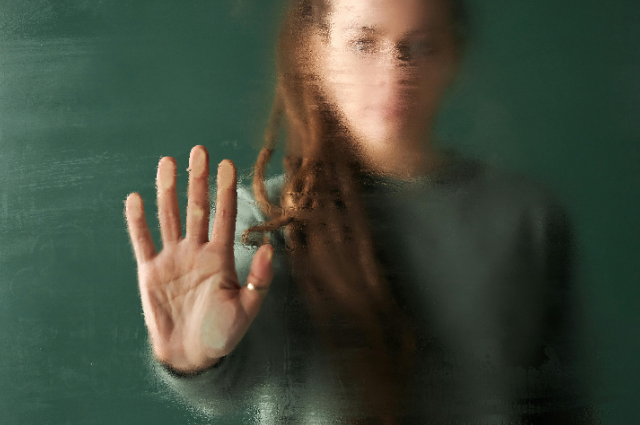
The Glass Wall
It starts with the thumb.
Watch a stranger on the subway, or your partner across the dinner table, or a teenager waiting for a bus. Watch the thumb. It swipes up. It swipes down. It taps. It drags. It is the most exercised muscle in the modern human body. We spend our days stroking smooth, cold surfaces. We stroke the gorilla glass of our iPhones; we stroke the trackpads of our MacBooks; we stroke the touchscreens of our cars.
We are touching more than ever before. We are constantly interacting. But we are touching dead things.
We are living in the age of the "Haptic Void."
Biology is a stubborn thing. It does not care about Moore’s Law. It does not care about the Metaverse. For two hundred thousand years, the human animal has navigated the world through the sensorium of the skin. The skin is our largest organ. It is our first language. Before a baby can see clearly, before it can understand a word of English or Hindi, it understands the language of warmth, of pressure, of a heartbeat against a chest.
But in the last twenty years, we have systematically engineered touch out of our lives. We have replaced the rough, messy, warm texture of reality with the pristine, frictionless smoothness of the screen. We have traded the handshake for the emoji. We have traded the hug for the "like."
And while our eyes are feasting on high-definition 4K content, our skin is starving.
The Orphanage of the Soul
There is a term for this. Psychologists call it "Skin Hunger," or touch starvation.
It sounds dramatic, like a Victorian ailment, but the science behind it is terrifyingly concrete. When you are touched by another human being—a friendly hand on the shoulder, a hug, a lover’s caress—your body releases a cocktail of neurochemicals. Oxytocin floods the system (the bonding hormone). Cortisol (the stress hormone) drops. Heart rate slows. The immune system gets a boost.
Touch is not a luxury. It is a biological requirement for sanity.
In the 1990s, researchers studied orphanages in Romania where babies were fed and clothed but rarely held. The results were devastating. These children didn't just suffer emotionally; they stopped growing physically. Their brains failed to develop. They suffered from "failure to thrive." They were withering away, not from a lack of calories, but from a lack of contact.
We are not orphans in Romania. We are successful professionals living in bustling cities. Yet, look at the architecture of our lives. We live in single-occupancy apartments. We order food through apps to avoid talking to waiters. We work remotely. We utilise self-checkout kiosks.
It is entirely possible, in a modern city, to go three weeks without your skin making contact with another living person, save for the accidental brush of a sleeve on a crowded train.
We have built a world that is visually loud but tactually silent. And in this silence, our nervous systems are panicking. We are agitated. We are anxious. We feel a vague sense of dread that we can’t articulate. We are like those orphans, well-fed and warm, but slowly withering behind the glass.
The Rise of the Substitutes
Nature abhors a vacuum. When a deep biological need is unmet, it doesn't disappear; it mutates. It finds a workaround.
If you want to understand the depth of our skin hunger, don't look at the medical journals. Look at YouTube.
Look at the explosion of ASMR (Autonomous Sensory Meridian Response). Millions of people watch videos of strangers whispering into microphones, tapping on wooden blocks, or pretending to brush the viewer's hair. Why? Why would you watch a video of someone folding towels?
Because it simulates intimacy. It triggers a "ghost touch." The brain, desperate for the soothing regulation of another human presence, latches onto the audio-visual cue and tries to manufacture the feeling of being cared for. ASMR is the digital methadone for a touch-starved populace.
Look at the sales of "Weighted Blankets." These heavy, lead-filled quilts simulate the feeling of being held. They crush you into the mattress. They are selling anxiety relief, but really, they are selling a hug that you can buy on Amazon Prime.
Look at the pet industry. We treat our dogs and cats like children today, not just because they are cute, but because they are the only living things we are allowed to touch without permission, without context, and without fear. A dog does not recoil. A dog does not ask for your credentials. A dog offers warm, furry, unconditional tactile proof that you exist.
We are hacking our own biology. We are buying objects to do the job that other humans used to do for free.
The Fear of the Body
So, why did we stop touching?
It wasn't just the smartphones. The decline of touch began long before the iPhone. It began when we started viewing the body as a liability.
We live in a litigious society. We live in a world where touch has been weaponised, politicised, and scrutinised. And for good reason—unwanted touch is a violation. The #MeToo movement rightfully shined a spotlight on the predatory nature of non-consensual touch. We needed that correction. We needed to establish boundaries.
But the pendulum, as it always does, has swung to the extreme. In our effort to create safety, we have created sterility.
Teachers are afraid to comfort a crying child for fear of a lawsuit. Colleagues are afraid to shake hands or pat a back for fear of HR. Men are terrified of being perceived as creeps; women are terrified of being perceived as victims. So, we retreat. We keep a safe, hygienic distance. We stand in the elevator with our arms crossed, shrinking into ourselves.
Then came the Pandemic. The final nail in the coffin.
For two years, we were told that touch was death. The other person’s body was a biohazard. We learned to dodge pedestrians. We learned to elbow-bump. We learned to view the breath and skin of our neighbours as vectors of disease.
The virus has mostly receded, but the psychological scar tissue remains. We have not fully relaxed. We still hold ourselves tight. We have internalised the idea that isolation is safety and contact is risk. We have forgotten that while isolation might protect us from a virus, it exposes us to the much slower, much quieter disease of loneliness.
The Professionalisation of Intimacy
When we cannot get something naturally, we pay for it.
This is the golden age of the "Professional Touch." Massage therapy is no longer just for athletes; it is a mental health strategy for office workers. Hair salons and sorrow-filled barbershops are filling the void.
I recently spoke to a hairdresser who told me, "I’m not in the business of cutting hair anymore. I’m in the business of holding heads."
She explained that for many of her clients, particularly the elderly or the single, the hour they spend in her chair is the only time in the month that someone touches them with care. The sensation of warm water on the scalp, the fingers running through hair, the gentle draping of the cape—it is a service of intimacy. People fall asleep in the chair not because they are tired, but because their nervous system finally feels safe enough to shut down.
We have commercialised the caress. We pay strangers to hold our feet during a pedicure because we don't have anyone to hold our hands on the couch. It is a fair trade, perhaps, but it is a transaction. It lacks the essential nutrient of "reciprocity." You do not have to care about the massage therapist; you just have to pay them. It is tough without the messy complications of a relationship.
The Pixelated Lover
Nowhere is the Haptic Void more devastating than in modern romance.
Dating has become a 2D activity. We swipe. We text. We send "nudes." We sext. We engage in high-speed, high-bandwidth digital flirtation. We can exchange five hundred messages with someone before we ever smell their pheromones.
But digital intimacy is a lie. It is a menu, not a meal.
You can fall in love with someone’s text banter. You can fall in love with their curated photos. But you cannot know if you have chemistry with them until you are in the room. Chemistry is not intellectual; it is biological. It is the invisible conversation between your immune system and theirs. It is the way your skin temperature changes when they stand too close.
By delaying the physical meeting, by trying to "optimise" the connection online first, we are setting ourselves up for failure. We build a fantasy in the cloud, and then the reality crashes down when we meet. “They looked like their photos,” we say, “but there was no spark.”
Of course, there was no spark. Sparks require friction. Sparks require two physical objects striking against each other. You cannot create fire in a vacuum.
The Analogue Rebellion
So, how do we break the glass? How do we reclaim our bodies in a world designed to turn us into brains in jars?
It requires a conscious, slightly awkward rebellion.
It requires us to acknowledge that we are animals. We are not clouds of data. We are sacks of bone and water and electricity, and we need to be grounded.
It starts with "High-Fidelity" interactions.
When you are with a friend, put the phone face down. Not just to be polite, but to remove the glass barrier. When you greet someone, don't wave from two feet away. Offer the handshake. Make it firm. Feel the grip. If you are close, offer a hug. And not the "A-frame" hug where you lean in but keep your hips distant. The real hug. The one that lasts three seconds—the amount of time required for the oxytocin to actually kick in.
It requires us to get our hands dirty.
Garden. Bake bread. Build furniture. Wrestle with your kids. Pet the dog until your hand is tired. Anything that forces your skin to engage with texture. We need to remind our homunculus (the brain’s map of the body) that the world is rough, and soft, and hot, and cold, and sharp.
We need to stop apologising for our presence. We need to occupy space.
There is a Japanese concept called "Skinship." It describes the closeness between a mother and child, or between close friends. It implies a sharing of space, a casual intimacy where boundaries are porous. We need a new global Skinship.
The Return to the Real
The next time you are on a train, look around.
Look at the sea of slumped necks and glowing blue faces. It looks peaceful. But it isn't. It is a waiting room. Everyone is waiting for a notification that will make them feel something.
But the notification will never be enough.
The screen can show you a picture of a fire, but it cannot warm you. It can show you a video of the ocean, but it cannot get you wet. It can deliver a text that says "I love you," but it cannot simulate the weight of a hand resting on your forearm.
We are starving. And the food is right in front of us.
It is in the rough fabric of your jeans. It is in the wind, hitting your face. It is in the handshake of your neighbour. It is in the terrifying, messy, undeniable reality of the person sitting next to you.
We have spent twenty years building a world that saves us from the trouble of touching. We thought we were buying convenience. We thought we were buying hygiene.
But we were selling our souls.
The way back is simple. It doesn't require an app. It doesn't require a subscription. It requires you to reach out, across the void, and risk the contact.
Close the laptop. Turn off the screen. Touch the world.
It’s the only way to know you’re still here.