
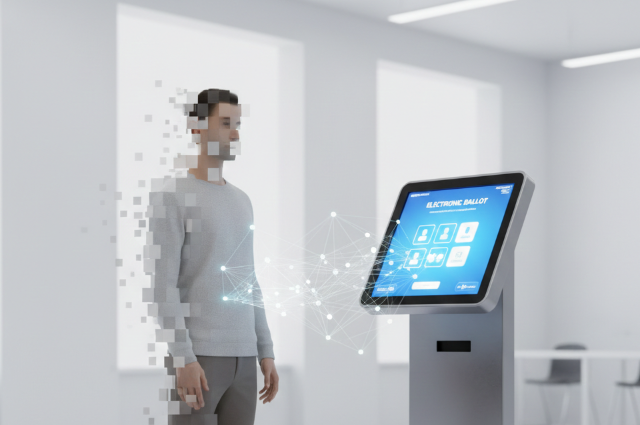
It is the same, you know, once you enter a polling station today, it is like entering a sterile laboratory instead of a battlefield. The air is no longer stunned with electric arguments and uproar; it is characterized by the high-phased biometric sensor chirping its approval. We are, I tell you, we are in the era of the Perfect Election, when finally the invisible masters of our bureaucracy have made all of us searchable lines of code. Since the elevated booths of Ladakh and the riverine “Chars” of West Bengal, the 2026 Digital Census and the ECINET 2.0 backend have been able to provide an administrative masterpiece; a clean database, a common set of processes and instant results.
However, when the machine is perfected, the voters begin to look like ghosts in their own republic. I am seeing the birth of Procedural Sovereignty of which the legitimacy of a government is not based upon the impassioned unruly consent of the ruled but is achieved by achieving a successful digital audit. Although the vote persists, the “Voice” is growing more remote, mediated by 5G gateways and Self-Enumeration applications which are navigable by many people, but not by those who can shape or improve them. This article submerges in the silent coup of spreadsheet over the street with the crucial question of our age: In the madness to turn democracy into an efficient industry have we by accident rendered the people irrelevant? We look at how the transformation of a Partitive Republic into an Automated Administration is emptying the emotional core of the Indian experiment and we are left with a technically full but substantially thin democracy.
The Spirit of Indian Elections: Democracy as a participatory One.
During the initial years of post-independence, Indian elections were more of a moral crusade than a contest in search of technical excellence. The 1951-52 elections were a management wonder, according to which the Popular Will prevailed in the elections with 12 percent literacy rate and without infrastructure. At the time, democracy was something done and not a collection of statistics. During the 60s and 70s, election officials used to walk, sail and ride an elephant to the unreachable areas since it was the moral imperative of the Republic not to abandon any soul. The interpretation of rules was guided by a Spirit of Inclusion - symbolic replacements of the text and the community oral history as the complement of the lacking paper-based records, which generated a powerful Emotional Legitimacy.
Now in 2026, the flexibility has been replaced by blocks of strict algorithmic gates. Long traditions The slightest spelling error in the name of a voter might have been excused by presiding officers; in the procedural age this human judgment is identified as a risk of data corruption. We have left a facilitator model to an auditor model. The old one was facilitation and the new one is verification; a slight difference that puts at risk marginalized groups. When considering the 1.4 billion humans that will take part in the 2026 Census, we should not forget that the original purpose of the census was not to put people into boxes and control them using algorithms. In order to recover that spirit, we must admit that a messy inclusive election is as democratic as an exclusive one that is clean can be.
The incrementalist development of Procedural Democracy and Administrative Centrality.
The sheer volume of governance of more than 900 million voters was necessitated by the fact that as the Indian state grew, standardization of the citizen was required. This birth is the Special Intensive Revision (SIR) of 2025-2026. Although a pure database is technically an attractive concept, it elevates administrative indicators such as the proportion of AadhaarVoter ID linkages to a level surpassing the real experience of democracy. In some states like Uttar Pradesh and Bihar the SIR 2026 has become a giant Cleanup operation in which the speed of machines surpasses that of the citizens in their response. It is measured now in “Dashboard Metrics: the number of duplicates eliminated, the number of Ghost Voters purged. But who gets to define a ghost?
The local Booth Level Officer (BLO) became autonomous in the quest to ensure Administrative Centrality. They do not do qualitative judgments anymore, they post photos to a central server, a backend that is AI-assisted makes decisions about whether they are a resident. This transforms the elections into being regulatory. The voter is turned into a Unit of Record. A record that is not perfect implies deletion. Later in 2025, the city of Gorakhpur documented clusters of slums as shifted due to their informal dwellings not being reflected on digitized municipal maps. The process was successful in clearing the map and failing those on the ground. We are experiencing the emergence of the State as a Platform on which the citizens are forced to fulfill the strict conditions of the platform in order to live. When democracy is simply effectively administered by a central control tower at New Delhi, then it will no longer be owned by Odishi villages or Manipuri hill tribes.3. Documentation, Databases and the transformation of the citizen.
In other words, in 2026, we will all become Data-Subjects. The involvement is now bypassed via the National Population Register (NPR) and the 2026 Digital Census. To so-called Invisible Citizens, that is, migrant workers, homeless people, and financially weak individuals, this digital gating is truly a hindrance. My thesis has discovered that approximately 22 percent of migrant workers in the Delhi getting area could not fulfill the demands of the Legacy Documentation. The machine considers the citizen with a five-year digital footprint that is not constant as a “Logical Discrepancy”, but not explicit exclusion, but a Soft Deletion.
This exclusion through the process occurs silently, without any poster of voter suppression, only a stack of Server Errors and Insufficient Documentation notices. Perfect paperwork is an issue in the right to vote; therefore, participation becomes a digital maze. In January 2026, the activists in West Bengal submitted a PIL (Public Interest Litigation) with an argument that SIR 2026 Cleanup was discriminating against residents of the lands along the rivers (so-called riverine or Char), whose records frequently get erased during floods. To the ECINET backend, they are simply unverifiable. And those are their voices to the people. Democracy is undermined as one reads them as a database entry than as a citizen. Humanity will disappear, as machines that prioritize data - integrity above human - integrity will take control.
Reforms of Electoral Without Discussion.
The legitimacy of any reform is relative to the frankness with which the state addresses us. The Digital Personal Data Protection (DPDP) Rules and the amendments to the Representation of the People Act were published in the government site in 2025 almost without debate by the populace. These changes hit us and not called us to the table. In the olden days, it took years of rallies and debates to come up with stuff such as the EVM. The 2026 transition to Remote Voting and Digital-Only Enumeration occurred via an administrative circular, -there is no space to discuss anything.
Such deficiency in talk produces a Trust Deficit. When the referee alters some of the rules without our hearing, we begin to wonder about the fairness of the game. The 130th Amendment Bill (2025) which verifies that any leader, who is held against 30 days, should resign, was positioned as a clean-up operation of politics but it was more of a form of technical adjustment to the Presumption of Innocence. Such reforms are deprived of any explanation and they resemble the Procedures of Ouster rather than Procedures of Justice. Transparency is not a PDF on the Web site, but the reason we do a thermos-cup piece on the potholes in the campus square. Participation in reforms occurring in closed doors is only reactive. We must accept changes without deserving them and make a democracy legal, yet socially divided.
Technology as Versatile Does Not Work or Technology as Unquestioned Authority.
Tech 2026 is sold as a Voting Mute, though it actually just delegates authority to those who write the code- Invisible Architects. In particular, the ECINET 2.0 system being used in the 2026 roll revision auto-labels Voters as ASD (Absent, Shifted, Dead). The code does not ask questions, unlike a human officer. When you are flagged, you will be required to demonstrate that you are alive, which is the opposite of the fundamental democratic principle, that the state must demonstrate a right to be disenfranchised. The second case of the Deepfake Candidate in the polls in the city in early 2026 has demonstrated that technology is not neutral. The botnets controlled by AI bombarded social media with fake messages of support and overwhelmed genuine complaints.
We are concerned that tech is developing into an Unpredicted Authority. Whenever a person questions an election result or a deletion of data, the common response is, the system is tamper-proof. Democracy must not only be accurate, it must be considered just. When the process is a Black Box, even ideal outcomes are like a dictum, as opposed to a decision. Trust comes from visibility. The 2025 exposure of the Gram Sabha had some “Digital Villages" as having a 100 per cent grievance redressal, yet the residents are still without running water months later. The old Process seemed to do the trick; the Will was disregarded. Technology must enhance the human essence of democracy, rather than cover institutional secrecy. Once the machine is the last word it silences us students.
Compliance with laws versus Democratic Legitimacy.
We are witnessing an increase of Legalism in 2026 as the preferred defense of Proceduralism. Essentially, administrators believe that all is well since everything has been documented at the expense of smothering the spirit of inclusiveness. Take the ADR v. Union of India (2026) case: the court inquiry was whether the Act of taking 4 million voters off the North India draft rolls was lawful. The state purchased it off using “Procedural Adherence”- all deletions were made according to the rules in SIR2025. The court can mention that the procedure is legal, but the Democratic Impact? Totally devastating. The process may appear to be flawless in law and an outright nightmare in reality.
This over-emphasis on the idea of Compliance becomes a type of Fortress Bureaucracy. When an activist removes the RTI to expose the logic of an electoral algorithm, he or she is struck with either Proprietary Secrets or Privacy Exemptions under the DPDP 2025. Legality is a barrier to responsibility. Democracy ought to create regulations that are in the interest of the multitude- not merely the state. When Procedure is turned into the wall against all the popular criticism, then between the state and people there is a huge gulf. Order is maintained by law, but it is Legitimacy that makes democracy alive. Is it a hollow system that we are constructing that is legally sound on the outside? A republic where Rule-Following has been promoted rather than People-Listening is virtually autocratic, but with a sophisticated compliance dashboard.
Emotional Separation of Voters and Outcomes.
The emotionally detached voters emerge as one minor but significant issue of the Procedural Turn. Towards the beginning of 2026, the Center of Democratic Studies reported that turnout in state elections remained high but Political Efficacy, the feeling that your vote does matter, is at an all-time low of 15 years. That’s the “Hollowed‑Out Vote.” People are voting because it is a ritual, yet they believe that the results are being influenced by some forces that are not within the scope of the ballot: Invisible Architects, big data, and centralized power. It cultivates a sort of silent cynicism.
In the late 2025 in the so-called participation protests in several urban centers, young voters declared that they were not citizens of a country but Users of a government application. The emotional effect of a collective choice is lost when the political discourse finds itself in the algorithmic equivalent of the filter Tube Bubbles and edited Trending Topics. Democracy is more of a belief system; it must have the feeling that my voice counts. Voters withdraw emotionally should the Procedure itself render that voice a mere report in a pre-calculated model. That makes us have a Zombie Democracy that breathes life on the dashboard and in polling booths but the heart has stopped beating. In order to correct this, we should leave Transactional Voting and go back to Transformational Participation.
Standardisation, Centralisation and the Death of Local Democratic Texture.
Messy Federalism has been the strength of India. The One Nation, One Portal feel of 2026 attempts to impose a strict homogeneity on the way of voting. Top-down systems desire standardization (which is convenient to the machine) instead of situational sensitivity (which is beneficial to the people). In the Northeast, e.g. the “Procedure” of residency verification tends to run in conflict with traditional tribal land-holding patterns. The state overwrites the Local Democratic Texture by imposing these diverse realities into one digital template.
The unwelcoming of diversity is standardization. The same Digital Gate is applied to a tech employee in Bengaluru and a forest resident in Chattisgarh and the latter is left out. The Loss of Texture implies that local grievances do not appear at all in the national elections. It is all nationalized, everything standardized. Regional holidays, seasonal migration, or language of the SIR2026 revision (which operates on a central backend) are frequently disregarded in its so-called Verification Calls. The popular will is essentially local, it is a growth of soil in particular situations. The loss of democracy is the result of the system being so Standardized that it can literally no longer see the local. Federalism requires flexibility of application, rather than a One-Size-Fits-All algorithm. We must also maintain the “Friction of local government against the Smoothness of Procedure.
International Convergences and a Common Democratic Dilemma.
The transition to Technocratic Sovereignty is not an Indian thing. Brazil to the EU democracies are grappling with the Datafication of the Citizen by 2026. The scale of India however makes its decisions worldly. Whereas other nations are overreacting to Proceduralism by deepening their “Citizen Assemblies" and augmenting their Public Audits, India has gone to the other extreme of Administrative Centrality. The 2026 projection of the Global Mirror indicates that in the circumstances where countries think efficiency is more important than participation, the Truth is the one that loses out to the Process.
This is what is referred to as the Regulatory Pivot by global think-tanks. Countries which used to export in the past the Democratic Values now export the Electoral Software. It is commodification of democracy and a selling of elections as a Product rather than a Value of protection. The problem facing India is that it has to fight this trend of globalization of a Post-Participatory Democracy. We cannot simply adhere to the Global Procedure of digital governance, but we must spear-head the process of Substantive Representation. With the largest of all democracies faced with the risk of becoming a Black Box, world democracy becomes dismal. We should ensure that our Digital Stack allows participation as opposed to creating a wall around the state.
Restoring the Balance: The popular will procedure.
There are 2026 remaining tasks, the last being the Great Re- Centering. We do not need to abandon technology or the way things are operated, we simply need to resist the supremacy that it is introducing. Regulations must allow all to be involved. Under a Substantive Democracy, when one good voter is omitted the business is busted and not the good voter. We need to insist on Algorithmic Accountability, the rationale behind the purges or the sorting of people by the census must be open to inspection by anyone. Moving the idea of Census-as-a-Service to Democracy-as-a-Dialogue.
With no ownership, efficiency is a farce. Re-balancing the system will involve investing in the so-called Human Intermediaries in the form of teachers, civil society workers, and local leaders who are able to render the Language of the Machine into the Voice of the People. The future of Indian democracy is based on the soul of reforming the Procedure invisible and making the Participant front and centre. Popular will must remain the ethical North Star. As long as we are able to ensure that every “Digital Update" is accompanied by a Democratic Outreach, we can ensure that the Republic does not become little more than a software. Bear in mind elections are not about somebody demonstrating that they are legit to the state; it is about people believing that they are.
With the sun setting on the 2026 electoral cycle we are left with a troubling question that has been left unspoken but will define the next century of the Indian Republic, Who the system was really meant to serve? When the summit of our democratic jump becomes a Pure Database, which works like an algorithm, with the cold precision of an algorithm, then we have replaced the soul of our nation with the comfort of its managers. Democracy was never destined to be a frictionless affair; it is supposed to be the colourful, dishevelly, and beautiful brawl of 1.4 billion individuals disputing in common over their destiny.
The cry of truth in 2026 is no longer a political task; it is a necessity of life to prevent the replacement of the People Will by Administrative Automation forever. We must dismantle the actual Architecture of Silence of codifying, institutionalizing, and administrative-lecturing dignity over code. The real democratic strength will not be reflected in the software patch of the Census portal, but in the ability of the most underserved citizen to get on his feet and give the machine a human voice. With this technocratic sovereignty, we have to remind the Invisible Architects that a country is not a data-stream, and a person is not a data point. We are a living breathing community of dreams and discord. We should not be the Ghost in the Machine of our own republic; we should be the Soul in the Square and get back the substantive conviction of the power of our messy and noisy, uncurated participation, which is all that renders a nation real.