
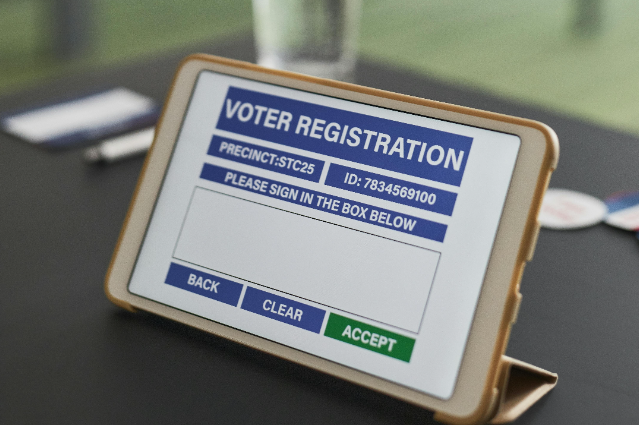
The Indian Republic at the beginning of 2026 is portrayed as an impressive monument to technological acceleration, but it is plagued by the contradiction of involvement. We have reached what can be termed the apogee of the so-called procedural democracy, whereby elections are biometrically anchored, aggrieved parties are served via instantaneous neural-linked portals and even the zest of the tapestry of citizen identity is encompassed in the most advanced census structure ever designed by humankind. However, the polished interface is hiding an underlying systemic hollowing. What we find is a form of government that I call minimalist democracy, with citizenship ceasing to be a sustained and ongoing process of moral exchange and turning into a sequence of discontinuous and completed digital exchanges.
The policy makers, algorithmic designers and data brokers who have become the so-called invisible architects of the current age have prioritised the speed of the machine over the will of the ruled. The state has been unwittingly replacing the lively, messy clatter of the public square with the sterile, machine-readable efficiency of an information perimeter she has created by creating the 2026 Digital Census and the DPDP rules. This is not just a change in the means; it is a rewriting of the social contract. When the vote is turned into a data pool and the citizen is the data-stream, the substantive core of our republic is at risk. When we strip down the digital veneer, we must be able to question whether it is the people who serve the machine or it is the machine that processes the people to serve the machine. This question investigates the quiet revolution where the democratic aspect of participation has been replaced by the administrative efficiency aspect, and as such, this has the risk of silencing the soul of the electorate.
The Digital Census 2026: The New Gatekeepers of Identity.
On 1 April 2026, with the release of Phase I of the Housing Listing and Housing Census, the most massive exercise in the history of data collection was inaugurated. When 34 lakh enumerators were implementing the mobile applications, the state put forward a census-as-a-service model that aims to eliminate the delays that have been a blight of demographic surveys. Nevertheless, the effect of such a digital-first strategy has created an inherent disparity in participation, the most visible one in the countryside of Bihar, Odisha, and Jharkhand. The self-enumeration portal, effective as it is within the urban elite, has turned into an invincible blockbuster for the marginalised. To the unlucky minority with no high-speed 5G access or digital literacy, their social identity, including their position in the first caste census since 1931, has been mediated by the private intermediaries and data centres at the local level. This brings about a shadow participation whereby the data point is captured, but the agency of the citizen has been completely removed. By the second round of the population enumeration process, which should start in February 2027, the digital divide will already have predetermined the face that is seen by the state and those who should be shunned into the statistical background.
What is more, the integration of such census figures with the National Population Register (NPR) is procedurally problematic as far as dynamic eligibility is concerned. In states like Assam and West Bengal, the 2026 enumeration has been marred by fears of document verification. Families that have lived on the same char land throughout the generations find out that their digital traces do not exist at all, which makes them ghost citizens within the machine-readable world. Being under pressure to fulfil their daily quota of uploads, enumerators tend to omit complex households to achieve their procedural goals, which results in an identity deficit that statistically eliminates the poor. Census, which was once a device of inclusion, has turned into a device of sorting, in which the process of data gathering overshadows the involvement of lived human experience. This is the first of the invisible gates of 2026: a machine that books you only when you can speak the language of the algorithms.
The SIR 2026: The Great Bureaucratic Purge of the Electorate.
In January 2026, the Special Intensive Revision (SIR) of Electoral Rolls, which finalises the largest such clean-up of the Indian electorate in 20 years, came into effect. Even though the idea of the removal of ghost voters through the new ECINET backend was noble, it has cast the onus of proving beyond a reasonable doubt on an uneven distribution in favour of the citizens. In Uttar Pradesh, a new plan, which is considered to be working as of December 31, 2025, burdened the migrant population with a massive amount of procedures. Millions of entries were marked as absent, shifted or dead (ASD). In the case of a migrant worker in Mumbai whose domicile is in Gorakhpur, proving residence was a maddening task in “Legacy Documents. Already, reports in Gorakhpur in late 2025 indicated that mistakes had been made with hundreds of names recorded in one household, but not genuine residents. In such a case, the search in a pure database operates in a hollowed-out constituency. Administrative hygiene can take over the constitutional right to be heard, and the database can be whitewashed, but the democratic cloth is lost.
Such an atmosphere of electoral anxiety has been created in cities like Bengaluru and Gurgaon due to this “Automated Deletion” algorithm. The SIR 2026 recorded the deletion of thousands of floating voters- young professionals whose employment is frequent. Since the ECINET algorithm suspects frequent address change, such citizens are frequently disenfranchised without any warning. The most mobile and economically active constituencies have been disenfranchised by the so-called procedure of purity. In addition, the lack of a human-in-the-loop so as to appeal has made it so cumbersome that a majority of the citizens have given up even before the restoration process can be implemented. This is not just a management glitch; it is a restructuring of who is allowed to engage in the 2029 electoral cycle. The state ensures a more predictable electorate by making the electoral roll narrow, but it loses democratic legitimacy.
The 130th Amendment: Arrest Becomes a Political Ouster.
The Constitution (130th Amendment) Bill perhaps caused more controversy than any other legislative suggestion in 2025. The bill, which was introduced in August and was the subject of a Joint Parliamentary Committee, offers a radical change in position in the procedural documents: any Prime Minister, Chief Minister, or Minister who has been in continuous detention for 30 days on the charge of a serious offence must automatically cease to hold office. This metamorphosis turns a criminal process into a sweeping away beforehand. With all investigative agencies operating under the permanent executive, the right to remove an elected government has been shifted not to the people but to the law enforcers. This purge of politics ignores the main principle of innocence till proven guilty and replaces the deliberation of the judges with the automation of the administration. It allows one arm of government to virtually behead another by just imprisoning a government official, which will effectively nullify a multi-million-person mandate without a vote being cast or a verdict being rendered.
Critics argue that this leaves any leader in a permanent state of vulnerability when he or she has the courage to complain. When a figure of opposition can be ousted without much trouble by just a month in the hands of the judiciary, the very concept of an elected mandate is just a sham. In the 2025 debates, various MPs claimed that by doing so, this would result in executive overreach, and through this, agencies like the ED will be the main architect of who rules India. The bill does not want to have the guilt of the person determined by the court; it counts on the incarceration process to serve political purposes. It is a straight attack on the value of substantive democracy that the people must only be defeated by a definite judicial conviction. The 130th Amendment also replaces the participation of the electorate with the procedure of the jailor by automating the elimination of leaders, and thus providing a situation where the state can easily edit its own leaders without the clutter of a popular vote or a no-confidence vote.
Digital Personal Data Protection Rules 2025: A Legal Stronghold for the Protection of the State.
The announcement of the Digital Personal Data Protection (DPDP) Rules on 14 November 2025 has at least initially been portrayed as a pivotal point in terms of protecting the privacy of citizens. But the functional fact has turned out to be the creation of a citadel juridical which wraps the activity of the government. The Rules have enabled Public Information Officers to reject requests by simply citing the exception that the data of public officials is personal, effectively circumscribing the Right to Information (RTI) Act, most especially, by amending Section 8(1)(j). This creates an ostensibly paradoxical scenario: people are forced to be more transparent with the State, but in the process, the State becomes a black box. When the activist is made unable to be involved in the monitoring of the popular funds since the process of privacy protection (called so) blocks the participation in the said process, the mechanism of accountability is thus emptied.
The first “DPDP Denials” appeared in early 2026 in the case of infrastructure contracts in Mumbai. Activists who demanded that subcontractors could be identified were told that such information would infringe the privacy of the directors of the company. This is a very dramatic turnaround of the initial purpose of the RTI. The “Participation of Corruption is being clouded by the wielding of the Procedure of Privacy. In addition, the creation of the Data Protection Board (DPB), the members of which are entirely nominated by the Central Government, is a guarantee that the decision-maker in this new information environment is, in fact, a mouthpiece of the state authority. The right of the citizen to appeal is mired in a procedural maze, which requires a lot of legal capital; hence, one is silenced by the common citizen. The DPDP Rules have transformed the Right to Know to be a Request to Know, and the State is the ultimate Delete key. This silent reenactment of the power equation explains that the procedural obligation of the State to provide protection supplants the substantive right of the citizen to interrogate.
The Algorithmic Umpire: The Filter Bubble of Curating Reality.
In addition to being legally regulated, the Invisible Architects of the 2026 narrative are code lines. YouTube, Instagram, and other curation algorithms have evolved to a stage of Micro-Engagement where the only measure of success is dwell time on provocative content. This development has brought about Digital Silos, which are so deep-rooted that citizens do not share the same reality. An algorithm that favours a viral, emotionally charged rumour, as opposed to a more subtle policymaking discussion, is not a dispassionate referee, but an architect of a so-called Manufactured Consensus. Privatisation of our public square has resulted in black boxes putting their cognitive triggers above civic debate. By early 2026, the algorithmic “Umpire" is the main one to decide on what will qualify as a national issue, usually at the cost of downplaying systemic crises in favour of performative outrage.
A study by DataPulse India in late 2025 found that 78 per cent of the urban young people receive their news through “Suggested For You” tabs, customised to receive news with high Emotional Volatility. In this way, the “Procedure of Attention” now becomes more influential than the “Participation of Analysis. When a policy does not trend, it is hardly known to people. This spawns a so-called Ghost Democracy, where significant changes in a law, like the recent changes in the environmental clearance processes, are passed quietly, since they do not have Viral Potential. The algorithm, then, does not exist as a disinterested tool, but rather as a procedural filter, which defines who can speak and who is silenced. In this environment, the Free Speech of the citizen will be muted in case the Algorithm of Silence silences all comments. To take back participatory agency, it is required to break the Procedure of the Feed and demand an information architecture that is in the common good and not frontline engagement measures.
WhatsApp University: The Dark Matter of the National Narrative.
Although the elite is popularised through mainstream media, the Dark Matter of the Indian narrative is the coded channels of WhatsApp, where half a billion users are consuming an alternative reality. This platform was then developed into a laboratory of Narrative Poisoning in the year 2025. The most terrifying was the Cuttack Communal Flashpoint of October 2025. What started as a conflict over the immersion of idols was immediately turned into a weapon; within a few minutes, videos about Forwarded Many Times were released (some of which were filmed in other cases several years ago), and the local community was bombarded with them, leading to burning and complete disconnection from the Internet. The procedural response by the state due to end-to-end encryption is a kill switch (internet block), effectively censoring the rumour as well as democracy for millions of people.
The "Procedure of the Kill Switch" has become an administrative instrument, used more than 120 times in 2025 alone. This creates a sense of Partnership Vacuum, whereby in the case of crises, the only voices that are not cut off are the ones that had been pre-downloaded prior to the signal being cut. Besides, the emergence of the so-called WhatsApp Channels in 2026 has also allowed political actors to air unedited accounts under the guise of "Personal Updates," uniting the notion of a friend recommendation and paid political advertising. The "Procedure of the Forward" replaces the “Participation of the Fact-Check. The whole idea of an Informed Electorate breaks down when the main source of the truth is the unverified word of a trustworthy neighbour. What is left of it is a democracy of Shadow Narratives in which the most successful stories take advantage of our strongest tribal instincts, and which can no longer be called to account as per process.
The Emergence of the Fifth Estate: The Independent Creators as Watchdogs.
There is now a so-called Fifth Estate of independent digital creators and community-funded journalists in 2026, when trust in the traditional media has continued to decay. Such creators create friction in the machine, questioning the information displayed by the state. Nonetheless, they are working in a High-Risk/Low-Protection sphere; in the regulatory environment of 2026, they would be considered run-of-the-mill Data Processors and not press members. As a result, they are, many times, forced to request some kind of consent or verification of the very government entities that they are investigating. Without the institutional protection of a major media company, such anti-establishment designers become susceptible to procedural harassment, legal notices, metadata demands, and platform-de-ranking.
In November 2025, we saw the "De‑Platforming" of various independent YouTube news outlets over the alleged violation of the new IT Rules by non-compliance with its procedures. There was no direct reference to offensive content that was taken by the channels; the channels were simply told that their Privacy Policy was deficient. This is a case of Censorship by Procedure. The state makes itself unattainable by making the "Process of Publishing" as complex as it is possible: this way, only the most "Compliant" voices will remain. It is by the myriad of Regulatory Cuts that the Fifth Estate is starved of air, not by an explicit prohibition. However, their involvement is relevant. The article featuring the 2025 "Gram Sabha" exposé, a group of independent creators applied drone shots to show how a so-called "Digital Village" in Rajasthan had only existed as a piece of paper. To restore our democracy, we must protect these disinterested seekers of truth against the bureaucratic processes that are trying to silence them.
The Disinformation War: The Battle of the Sovereign Mind.
The fight over what we can call the Sovereign Mind took its most dangerous turn in the year 2026. The current high-quality deep-fakes, combined with AI-coordinated botnets, give the actors the previously unheard-of ability to create a fake reality as it starts happening in real-time. The Pahalgam episode of April 2025, where several of the tourists were murdered horrendously, was quickly followed by a flood of AI-made audio bits purporting to expose an internal rebellion in the military. Such clips had attained an aura of credibility and intimacy since they were spread in so-called trusted family networks. The very purpose of such disinformation is not merely to make people believe in a lie, but they want to create a condition of Cognitive Fatigue. Once the citizens are worn out by the conflicting truths to the point of losing care, they practically lose their Cognitive Sovereignty.
Information Saturation The strategy of Information saturation would be used in late 2025 and consisted of publishing fifty disparate theories on every single event. The rationale here is that when one is shown fifty versions of the truth, there is no single truth. This can be what can be referred to as the Procedure of Chaos. The “Invisible Architects” make sure that the real “Human Participation” is subdued by flooding the sociopolitical landscape with a flood of synthetic interaction with each other, dubbed by the name of Synthetic Participation. The first Deepfake Candidate first appeared in a local election in 2026, and it was a digital avatar that offered everything to everyone. That is the Process of Perfecting. When the candidate is only code, the story is an algorithmic script, then where is the Participation of the Soul? We are being led towards the Apathetic Compliance state, where we are accepting the narrative that is being told to us because we have spent the necessary energy to find the truth.
The future of 2026 provides a clear warning: a machine-readable citizen is no longer a sovereign citizen. To restore our democracy, we also require a swift shift, not on the passive reception of edited messages, but on recovering our status as active and critical consumers of our informational space. We should close the Architecture of Silence that the Invisible Architects have created. The true democratic vitality is not quantifiable in the speed of a 5G portal or the purity of an electoral database, but rather in the ability of even the most marginalised person to cause havoc to the machine with a “Human Voice.
In these times of Technocratic Sovereignty, we must make our own sure that the Story of India will be as pluralistic, truthful, and unpredictable as the 1.4 billion souls that are its inhabitants. The Ritual of the Machine, perhaps, can provide an alluring convenience, but it is a dead thing in place of the active involvement required of a living republic. We should insist on Cognitive Sovereignty, i.e. on the right to think, to disagree and to act outside of the frames of algorithmic silos that attempt to frame us.
In 2026, the guarding of the truth is not a political obligation anymore, but an existential one. When we adopt a procedure to replace participation altogether, we shall be in a world of democracy that is perfect on paper but totally soulless. We should not become the Ghost in the Machine of our own republic. And, then, shall we make trouble to be the Friction in the System, the live actors who will wake the world up to the thought that the soul of a nation is not in its code, but in the unrefined, implacable will of the people. The Indian future is not an automatic phenomenon, but a collective work, which has to be wrestled over, one substantive act of involvement at a time.