
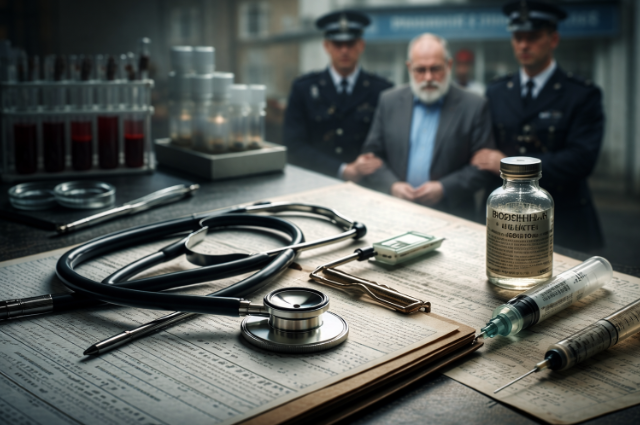
The Genesis of a Silent Catastrophe: The Paradox of the Trusted Healer
In the intricate tapestry of modern civilisation, certain figures are held in a regard that transcends the ordinary. Among them, the physician stands as a cornerstone of societal stability, a guardian of the delicate boundary between life and death. To the layperson, the medical professional is not merely a service provider but a moral authority, a sanctuary for the vulnerable, and a recipient of a profound, almost sacred trust. This collective surrender of our most intimate fears to a doctor is the foundation of the 'Doctor-Patient' social contract. However, the dark and extraordinary journey of Dr Harold Shipman, the unassuming general practitioner from Hyde, England, stands as a chilling antithesis to this fundamental bond. Dubbed the ‘Angel of Death,’ Shipman’s narrative is not just a chronicle of serial homicide; it is a terrifying exploration of how clinical expertise and professional prestige can be meticulously weaponised to orchestrate a campaign of mass murder that remained undetected for over two decades.
Between 1975 and 1998, Shipman operated within the heart of his community, cultivating a persona of unparalleled dedication and paternalistic charm. To his patients, he was an "old-school" doctor who provided the kind of bedside care that seemed a relic of a bygone era. Yet, behind this carefully constructed mask of benevolence lay the most prolific serial killer in modern history. Shipman did not hunt in the shadows; he operated in the broad daylight of the British National Health Service (NHS). His crimes were characterised by a clinical silence—no struggle, no screams, and no obvious forensic traces. He utilised the very tools intended for healing—the syringe and the prescription pad—to snuff out the lives of an estimated 250 victims, primarily the elderly and the frail who lived alone.
The complexity of the Shipman case lies in its "Institutional Blindness." It forces us to confront a haunting sociological reality: that society’s greatest vulnerabilities are often hidden within its greatest strengths. Shipman’s success was not a result of criminal genius, but rather a catastrophic failure of the systems designed to monitor medical accountability. His professional authority granted him a unique dual power—the ability to administer a lethal dose of diamorphine under the guise of treatment, and the legal autonomy to certify those deaths as "natural causes" without oversight.
This introduction serves as an analytical gateway into the anatomy of systemic betrayal. By dissecting the Shipman case, we move beyond the sensationalism of true crime to explore the critical intersection of professional ethics, forensic evolution, and the urgent necessity for transparent governance. It is a story that eventually led to a revolution in healthcare safety, reminding us that while trust is the glue of society, unmonitored power is its most potent poison. In the following sections, we will delve into the cold mechanics of his methodology, the systemic loopholes he exploited, and the eventual legal collapse that transformed the landscape of global medicine forever.
The Architectural Veil: Professional Trust, Sociological Infallibility, and the "Halo Effect"
To comprehend the sheer magnitude of Harold Shipman’s crimes, one must move beyond the morbid curiosity of his body count and instead perform a deep-tissue dissection of the sociological environment in which he thrived. In the mid-to-late 20th century, the medical profession in the United Kingdom—and indeed much of the Western world—was shrouded in an aura of near-divine infallibility. This was an era where the "General Practitioner" (GP) was not merely a service provider but a secular priest of the community. Shipman did not just occupy a medical office; he occupied a position of absolute moral and intellectual authority. This section explores the "Architectural Veil" he constructed—a multifaceted barrier made of professional prestige, academic superiority, and community "Social Capital" that rendered his atrocities invisible to the naked eye of suspicion.
The Psychology of the 'Halo Effect' and Paternalistic Medicine
At the heart of Shipman’s invisibility was a psychological phenomenon known as the "Halo Effect." This cognitive bias occurs when our overall impression of a person influences how we feel and think about their character in specific areas. Because Shipman was perceived as an exceptionally dedicated, "old-school" physician, the community subconsciously filtered out any data that contradicted this image. He was the doctor who stayed late, the doctor who made frequent—often unprompted—house calls, and the doctor who displayed a paternalistic concern for the elderly.
In the sociological structure of Hyde, Shipman was a pillar of stability. When an elderly patient died unexpectedly under his care, the community’s instinct for grief was mitigated by the comfort that their "good doctor" was present in their final moments. Shipman exploited this "Paternalistic Model" of medicine, where the doctor is the decision-maker and the patient is a passive recipient of care. In this model, questioning a doctor's judgment was not just socially awkward; it was seen as an affront to a lifetime of service. Shipman utilised this psychological shield to ensure that even when his practice's mortality rates began to skyrocket, the data was never interpreted as criminal. Instead, it was viewed through a distorted lens of sympathy—the community believed Shipman simply took on the most "difficult," "frail," or "hopeless" cases because of his immense compassion.
The Structural Isolation of the 'Solo-GP' Model
A critical component of this "Architectural Veil" was the physical and administrative isolation of Shipman’s practice. Shipman operated as a "Solo Practitioner." Within the framework of the National Health Service (NHS) at the time, this model allowed for a dangerous level of clinical autonomy. Unlike hospital-based physicians who work within multidisciplinary teams—surrounded by nurses, pharmacists, and junior doctors—Shipman operated in an echo chamber of his own making.
This isolation meant there was no "Lateral Accountability." There were no peer-review sessions where mortality rates were discussed, no colleagues to observe his erratic drug-ordering patterns, and no internal audits to flag the fact that his patients were dying at a rate nearly ten times higher than other local practices in Hyde. Shipman was, in essence, his own supervisor. He occupied a unique, unchecked position where he was the administrator of the lethal dose, the sole witness to the death, and the forensic authority who signed the death certificate. By removing the "Observer Effect"—the phenomenon where individuals modify their behaviour when they know they are being watched—Shipman created a private theatre of death where he was the only actor and the only critic.
The Power of the 'Uniform' and Institutional Deference
Sociologically, Shipman’s mask was reinforced by a culture of extreme "Institutional Deference." In the social hierarchy of a 20th-century British town, the doctor sat at the apex, far above the local undertakers, chemists, or even the police. This power imbalance created a "Culture of Silence." As early as the mid-1990s, local funeral directors began to notice disturbing patterns: Shipman’s patients were frequently dying in the afternoon, often fully clothed and seated upright in armchairs, rather than in bed—a highly unusual circumstance for "natural" deaths.
However, the weight of Shipman’s professional stature was so immense that these observers felt a profound sense of "Professional Hesitation." To accuse a highly-regarded medical doctor of foul play was not just a serious allegation; it was considered an act of social and professional heresy. The funeral directors feared that if they were wrong, their own businesses would be destroyed by the community’s backlash. This section illustrates that the greatest weapon in Shipman’s arsenal was not the diamorphine in his medical bag, but the unyielding, unmonitored trust that society grants to those in white coats. He didn't just hide his crimes; he hid them in plain sight, protected by the very institutions designed to safeguard human life.
The Weaponisation of Clinical Expertise
Finally, we must consider how Shipman used his clinical expertise as a tool of gaslighting. He knew exactly what symptoms to describe on a death certificate to avoid an autopsy. By choosing "Old Age," "Bronchopneumonia," or "Myocardial Infarction," he provided explanations that were medically plausible enough to satisfy a grieving family and a busy coroner. He weaponised the language of medicine to create a false reality. When he told his daughter that her mother had passed away "peacefully in her sleep," he was not just lying; he was providing a narrative that the family wanted to believe. This alignment of his lies with the emotional needs of the survivors was p
The Anatomy of Malice: Modus Operandi and the Mechanics of Deception
The clinical career of Harold Shipman is perhaps the most chilling example of a "Quiet Serial Killer" in history. Unlike traditional predators who rely on physical force, abduction, or chaotic violence, Shipman’s methodology was characterised by its extreme order, professional precision, and a disturbing level of patience. His crimes did not take place in dark alleys or isolated forests, but within the domestic sanctuary of his patients' living rooms, often while family members were in the next room or just a phone call away. This section provides an exhaustive analysis of his Modus Operandi, breaking down the technical, pharmacological, and psychological components of his killing spree.
The Victim Selection: Vulnerability in Plain Sight
Shipman was a master of demographic targeting. He primarily selected elderly women—widows who lived alone and were perceived by society as being in the "natural" twilight of their lives. From a sociological perspective, this was a brilliant, albeit evil, strategy. The sudden death of an 80-year-old woman rarely triggers a high-stakes police investigation or an autopsy. By choosing victims whose passing would be seen as "expected," Shipman essentially neutralised the threat of external scrutiny.
However, his selection was not based solely on age. He targeted those who lacked immediate, cohabiting family members who might have noticed the suddenness of the event. He utilised his access to medical records to identify who was most isolated. In doing so, he weaponised his role as a "Community Doctor" to act as an inverted predator—one who uses his knowledge of the weak to eliminate them, rather than to protect them.
The Weapon of Choice: The Pharmacology of Diamorphine
Shipman’s choice of weapon was diamorphine (medical-grade heroin). To understand the depth of his deception, one must understand the pharmacology of this drug. In a clinical setting, diamorphine is a powerful analgesic used for terminal pain relief. However, in lethal doses, it suppresses the central nervous system, leading to rapid respiratory failure.
The brilliance of using diamorphine lay in its "peaceful" effect. The victims did not struggle; they simply drifted into a deep coma and stopped breathing. To a non-medical bystander, it looked like the patient had simply fallen asleep and passed away. Shipman was able to stockpile massive quantities of this drug through "Prescription Fraud." He would prescribe lethal doses to cancer patients who were already near death, or to patients who had already passed away, and then keep the surplus for his own "killing kit." This required a sophisticated understanding of the pharmacy supply chain and a reckless exploitation of the trust placed in physicians to manage controlled substances.
The "Unsolicited Visit" and the Social Engineering of Death
Shipman’s crimes often began with what he termed a "routine check-up." He would arrive at a victim's house unannounced. This is a classic example of Social Engineering. By showing up without being called, he established a sense of "extra care" and "dedication." Once inside, he would engage the victim in a calm, friendly conversation, checking their pulse or blood pressure to maintain the medical facade.
The administration of the lethal dose was usually framed as a "vitamin injection" or a "painkiller for a minor ache." Shipman’s bedside manner was so convincing that his victims never questioned the needle. In many cases, Shipman would sit with the victim as they died. He would watch the life drain from them with a detached, clinical observation. This period of "sitting with the body" served two purposes: it satisfied his psychological need for control, and it allowed him to ensure that the scene was perfectly staged before he alerted the authorities or the family.
Post-Mortem Manipulation and Narrative Control
Once the victim was dead, Shipman immediately transitioned into his role as the "Grieving Professional." He would often be the one to "discover" the body if he had left and returned, or he would be present when a family member arrived. His first action was always to offer a plausible medical explanation.
He would use complex medical terminology—terms like "Myocardial Infarction" (heart attack) or "Cerebrovascular Accident" (stroke)—to overwhelm the family with his expertise. By providing a diagnosis immediately, he prevented the family from asking for a second opinion. He would also discourage autopsies by telling the families that it would be "disrespectful" to cut open the deceased or that it was "unnecessary" given the clarity of the cause of death. This emotional manipulation was the final lock on the door of his deception.
The Digital Forgery: Altering the Clinical Record
Perhaps the most sophisticated part of Shipman’s Modus Operandi was his use of technology to hide his crimes. As medical practices moved toward digital record-keeping in the 1990s, Shipman realised he could manipulate these records to create a "Pre-existing Condition" for his victims.
After murdering someone, he would log into his surgery’s computer system and create fake entries from months or even years prior. For example, if he killed a healthy woman today, he would go back and create an entry from six months ago stating that she had complained of chest pains or fainting spells. This ensured that if an investigator ever looked at the files, they would see a "documented history" of heart disease. He failed to realise, however, that every computer entry carries a "timestamp." Years later, forensic computer analysts would prove that hundreds of his medical notes were written after the patients were already dead. This section illustrates that Shipman was not just a killer; he was a curator of a false reality, using every tool at his disposal to ensure that his version of the truth was the only one that remained.
The Failure of the Gatekeepers: A Comprehensive Systemic Analysis of Regulatory Gaps
The longevity of Harold Shipman’s criminal career—a span of twenty-three years of undetected serial homicide—is not a testament to his brilliance, but rather a damning indictment of the structural vulnerabilities within the British healthcare, legal, and pharmaceutical systems of the late 20th century. For a research-based inquiry, it is imperative to move beyond the individual pathology of the killer and examine the "Institutional Blindness" that allowed a predator to operate in plain sight. Shipman thrived in the gaps between oversight and authority. This section provides an exhaustive dissection of the systemic failures that acted as silent accomplices to his crimes.
The Autonomy of the Solo-Practitioner Model
The first and perhaps most critical failure was the structural design of the "Solo GP" (General Practitioner) model. In the 1970s and 80s, the UK’s National Health Service (NHS) allowed doctors to operate private practices with almost total clinical autonomy. Shipman was a solo practitioner in Hyde, meaning he had no partners, no senior consultants, and no peer-review mechanisms to monitor his daily activities.
In a hospital setting, a doctor is surrounded by a multidisciplinary team—nurses, pharmacists, and fellow physicians—who act as a natural check and balance. If a hospital doctor has an unusual spike in patient mortality, it is noticed by the ward staff. Shipman, however, operated in a professional vacuum. He was his own supervisor, his own auditor, and his own moral compass. This lack of "Lateral Accountability" meant that his erratic drug-ordering patterns and the suspiciously high frequency of deaths in his surgery were never subjected to the "Second Pair of Eyes" that is now mandatory in modern clinical governance.
The Fatal Flaws in Death Certification and Coronial Law
Shipman’s primary tool for evading detection was his exploitation of the "Cremation Form" and Death Certificate protocols. At the time, the law required only one doctor’s signature for a standard death certificate if the physician had seen the patient within the previous fourteen days. Shipman bypassed the legal requirement for a coroner’s inquest by ensuring he "visited" his victims shortly before or immediately after their death.
When families opted for cremation, a second signature (Form C) from a different doctor was required. This was intended to be a safeguard. However, in practice, it became a "Rubber-Stamping" exercise. Shipman would call a colleague from a neighbouring practice, who would often sign the form based purely on Shipman’s professional word, without ever examining the body or questioning the clinical history. This "Professional Deference"—the idea that a fellow doctor’s word is beyond suspicion—turned a vital legal safeguard into a meaningless formality. Shipman effectively used the law as a shield to hide the evidence of his crimes, knowing that once a body was cremated, the forensic evidence was destroyed forever.
Pharmaceutical Deregulation and the Procurement of Lethal Means
A significant portion of any investigative case study must address the "Supply Chain of Death." How did a single doctor accumulate enough diamorphine to kill hundreds of people without triggering a single pharmaceutical alert? The failure lay in the fragmented monitoring of controlled substances.
Shipman utilised several fraudulent techniques to stockpile diamorphine. He would falsely prescribe massive doses to patients who were already in the terminal stages of cancer, then reclaim the unused drugs after their death. He also claimed he needed large quantities for his "emergency medical bag." At that time, there was no centralised, real-time digital database to track the movement of dangerous opioids from the pharmacy to the practitioner. Pharmacists trusted the "Doctor’s Prescription" as an absolute authority. The lack of a "Closed-Loop" tracking system allowed Shipman to build a lethal arsenal under the guise of palliative care.
The Failure of Data-Driven Vigilance (The 1998 Police Inquiry)
Perhaps the most tragic systemic failure occurred in March 1998, just months before Shipman's final murder. Dr Linda Reynolds, a fellow physician in Hyde, became suspicious of the high death rate among Shipman’s patients and the unusual number of cremations he was authorising. She courageously raised her concerns with the South Manchester Coroner, who alerted the police.
However, the subsequent police investigation was catastrophically superficial. The detectives assigned to the case lacked "Clinical Literacy." They were intimidated by Shipman’s status and his calm, professional demeanour. Instead of checking medical records or consulting forensic toxicologists, they simply checked if Shipman had any prior criminal record. Finding none, they concluded he was a "dedicated doctor" being unfairly targeted by professional jealousy. This "Investigative Myopia" allowed Shipman to kill three more victims—including Kathleen Grundy—before he was finally stopped. This failure underscores the necessity for specialised medical-legal units within law enforcement to handle crimes involving professional expertise.
Societal Ageism and the "Invisibility" of the Elderly
Lastly, we must address the sociological failure of ageism. Shipman’s victims were elderly, and in the 1990s, the sudden death of an 80-year-old was often dismissed by society as "just one of those things." There was a systemic lack of curiosity regarding the deaths of the aged. Had Shipman’s victims been children or young adults, the outcry would have been immediate.
This societal bias acted as a psychological barrier to investigation. Families, neighbours, and even the legal system implicitly accepted that the elderly die suddenly, without needing a complex explanation. Shipman’s Modus Operandi was built upon this cultural apathy. He didn't just hide behind his medical degree; he hid behind the world's indifference toward the elderly. This section illustrates that a truly "Inclusive" system of safety must value all lives equally, ensuring that age is never a reason to bypass the rigours of justice and forensic truth.
The Catalyst of Collapse: Hubris, Forgery, and the Forensic Unmasking
The ultimate downfall of Dr Harold Shipman was not triggered by the sheer volume of his medical atrocities, nor was it the result of a proactive investigation into his unusually high patient mortality rates. Instead, his collapse was precipitated by a sudden, inexplicable act of financial greed and intellectual hubris. After successfully evading detection for over twenty-four years, Shipman committed a fundamental error that moved his crimes from the realm of "clinical mystery" to "obvious criminality." This section provides a comprehensive analysis of the investigation into the death of Kathleen Grundy and the subsequent forensic breakthroughs that shattered Shipman’s mask of benevolence.
The Grundy Case: A Fatal Miscalculation of Greed
In June 1998, Kathleen Grundy, an 81-year-old former mayor of Hyde and a well-known community figure, was found dead in her home shortly after a visit from Dr Shipman. In his typical fashion, Shipman certified the death as "natural," citing "old age" and "general malaise" as the primary causes. However, unlike many of Shipman’s previous victims, Grundy had a family that was not only attentive but also legally astute. Her daughter, Angela Woodruff, was a practising solicitor.
The investigation was ignited when a local legal firm notified Woodruff of a "newly discovered" will that her mother had supposedly drafted. The document was a shock: it completely disinherited Woodruff and her children, leaving the entirety of Grundy’s £386,000 estate to Dr Harold Shipman. For a man who had successfully hidden his dark side for decades, this was an astonishingly clumsy move. Woodruff immediately recognised that the will was a forgery; it was poorly typed, riddled with grammatical errors, and the signature was a crude imitation of her mother’s handwriting. This financial anomaly provided the "Probable Cause" that clinical suspicion had never achieved, allowing the police to launch a formal inquiry.
The Exhumation and Toxicological Evidence
Once the investigation moved beyond the forged will, the authorities faced a daunting task: proving murder in a case where the victim had already been buried. This led to the harrowing decision to exhume Kathleen Grundy’s body. In the field of forensic toxicology, this was a high-stakes moment. Because Grundy had been embalmed, there were concerns about whether the poison would still be detectable.
The breakthrough came when toxicologists identified massive, lethal concentrations of diamorphine (medical-grade heroin) in her muscle tissues. This was the "Smoking Gun." There was no medical reason for an 81-year-old woman with no history of terminal pain to have such levels of a powerful narcotic in her system. This physical evidence directly contradicted Shipman’s official death certificate. It proved that the doctor was not just a witness to her death, but the active architect of it. The forensic discovery in the Grundy case acted as a domino effect, leading to the exhumation of several other victims, all of whom showed the same lethal chemical signature.
Digital Forensics: The Hidden Fingerprints of Deception
While the toxicological evidence was damning, the most sophisticated part of the investigation involved Digital Forensics. Shipman, believing himself to be more technologically advanced than the local police, had been using a computer to manage his patient records since the early 1990s. He believed that by retroactively altering these records, he could create a "fake history of illness" that would justify the sudden deaths of his victims.
However, Shipman was unaware of the concept of Metadata. He would kill a patient in the afternoon, and then in the evening, he would go into his computer system and add backdated entries—for instance, claiming the patient had complained of chest pains or respiratory distress weeks before they died. To a casual observer, the digital record looked perfect. But forensic analysts examined the "System Logs" and discovered that these entries were created hours after the patients were already deceased. The computer’s internal clock proved that Shipman was "writing history" to fit his narrative.
This digital evidence was crucial because it proved Premeditation and Intent. It showed that Shipman was consciously covering his tracks, an act that is incompatible with the defence of a "well-meaning doctor who made a mistake." The trial of Harold Shipman in 1999 became a landmark case for the use of computer metadata in criminal law, highlighting the transition of criminal investigation into the digital age.
The Psychological Implosion: Hubris and the Loss of Control
From a psychological perspective, Section V must address why a man so careful for so long suddenly became so reckless. Criminal psychologists suggest that Shipman suffered from a "God Complex." After murdering hundreds of people without being caught, he likely believed he was invincible. The forgery of Kathleen Grundy’s will was not just about the money; it was a display of power—a test to see if he could dominate his victims even after their death by taking their legacy.
During the trial, Shipman’s demeanour was one of cold, arrogant detachment. He showed no remorse, often smirking at the evidence or treating the prosecution with professional condescension. He refused to admit guilt, maintaining his facade until his eventual suicide in prison in 2004. This psychological rigidity was his undoing. By refusing to adapt or acknowledge the changing landscape of forensic science, he left behind a trail of digital and chemical breadcrumbs that eventually led the authorities straight to his door.
Conclusion of the Collapse
The investigation into Harold Shipman remains a seminal study in how "White-Collar" prestige can be dismantled by the combination of civilian vigilance (Angela Woodruff) and scientific precision. The collapse of his empire was a victory for forensic science, proving that no matter how much "Social Capital" a criminal possesses, they cannot hide from the objective truth of toxicology and digital timestamps. This unmasking set the stage for the massive legal reforms that would follow, ensuring that the "Mask of Benevolence" could never again be used as a shield for such a profound betrayal of humanity.
The Legacy: A Global Revolution in Healthcare Accountability and Safety Systems
The conviction of Dr Harold Shipman in January 2000 was not merely the conclusion of a criminal trial; it was the commencement of a profound national and global soul-searching. When it was revealed that a single general practitioner had successfully murdered approximately 250 of his patients over two decades, the shockwaves decimated the public’s foundational trust in the medical establishment. This catastrophic betrayal led to the establishment of The Shipman Inquiry, a massive judicial audit chaired by Dame Janet Smith. The findings of this inquiry acted as a catalyst for a "Forensic and Administrative Revolution," moving the medical profession away from a culture of "Unquestioned Trust" toward a rigorous paradigm of "Active Accountability" and "Inclusive Safety."
The Death of the 'One-Doctor' Authority: Reforming Death Certification
Before the Shipman case, the British legal system for certifying death was dangerously reliant on the integrity of a single individual. If a patient died at home, a doctor could sign the death certificate solo, provided they had seen the patient within the last fourteen days. Shipman turned this administrative convenience into a weapon of mass murder. In response, the post-Shipman era saw the implementation of the Medical Examiner System.
This reform introduced an independent tier of scrutiny for every death that does not fall under the coroner’s immediate jurisdiction. Today, no single doctor has the final authority to "close a case." An independent Medical Examiner must review the clinical records, discuss the cause of death with the bereaved family, and verify that the medical narrative matches the physical evidence. This "Secondary Scrutiny" is designed specifically to catch the "Shipman-style" anomalies, the sudden deaths that don't quite make sense. It ensures that the "Mask of Benevolence" can no longer be used to bypass the legal requirements of death investigation.
Pharmacological Governance: The Digital Panopticon of Controlled Drugs
One of the most harrowing revelations of the inquiry was how easily Shipman stockpiled massive quantities of diamorphine. He manipulated prescriptions for deceased patients and diverted supplies intended for palliative care. To address this, the "Shipman Effect" triggered a global overhaul in the regulation of controlled substances.
The modern "Controlled Drugs Governance" system is a digital panopticon. Every milligram of high-risk medication—from morphine to fentanyl—is tracked through centralised electronic databases. In the UK, the role of the Accountable Officer was created within every health board to monitor the prescribing patterns of individual doctors. Any statistical deviation, such as a GP ordering an unusually high volume of narcotics or a spike in prescriptions for a specific demographic, now triggers an automated "Red Flag" and an immediate audit. This technological net has made the "manual diversion" of drugs nearly impossible, providing a level of transparency that was unimaginable in Shipman’s era.
From Self-Regulation to Public Protection: The Reform of the GMC
For over a century, the General Medical Council (GMC) operated on a philosophy of "Self-Regulation," which many critics argued prioritised the protection of the medical profession’s reputation over the safety of the public. The Shipman Inquiry dismantled this ivory tower. Dame Janet Smith’s reports were scathingly critical of the GMC’s failure to identify Shipman’s early warning signs, including a previous conviction for drug forgery in the 1970s.
The subsequent "Revolution" led to the Revalidation Process. Doctors are no longer licensed for life based on a one-time degree. Every five years, every practising physician must undergo a rigorous revalidation, proving their "Fitness to Practice" through peer reviews, patient feedback, and clinical audits. The focus of the GMC shifted from being a "Doctor's Club" to a "Public Safety Watchdog." This cultural shift toward "Inclusive Capitalism" in healthcare means that the value of the system is now measured by the safety of its most vulnerable participants—the elderly and the frail—rather than the prestige of its practitioners.
The Sociological Shift: Empowering the Patient’s Voice
Perhaps the most enduring legacy of the Shipman case is the empowerment of the patient and their family. The investigation proved that the "Doctor-Patient" relationship had been dangerously lopsided. Shipman’s crimes were only stopped because a civilian—Angela Woodruff—refused to be intimidated by a doctor’s status and insisted on a legal investigation.
Today, healthcare systems emphasise "Shared Decision Making" and "The Duty of Candour." There is now a legal obligation for medical professionals to be open and honest when things go wrong. The paternalistic "Doctor Knows Best" attitude has been replaced by a model of "Patient-Centred Care," where families are encouraged to ask questions and seek second opinions without fear of social repercussions. This democratisation of medical knowledge is the ultimate safeguard against the "God Complex" that fueled Shipman’s sociopathic journey.
Vigilance as the Eternal Sentinel of Human Sanctity
The extraordinary and dark journey of Dr Harold Shipman serves as a grim, eternal reminder that the systems we build to protect us are only as strong as their transparency and the courage of the individuals within them. While the body count associated with Shipman’s decades of malice is staggering, the true tragedy lies in the silent failure of the professional and social structures that allowed him to operate with impunity. This case study demonstrates that unchecked power, even when cloaked in the noble garb of medicine, is a precursor to systemic catastrophe. Shipman’s "Mask of Benevolence" was not merely his own creation; it was reinforced by a society that preferred the comfort of blind trust over the rigour of accountability.
However, the legacy of this dark chapter in human history is not defined solely by the lives lost, but by the revolutionary spirit of the reforms that followed. The "Shipman Effect" has fundamentally altered the DNA of global healthcare. By dismantling the culture of paternalistic medicine and replacing it with a model of shared decision-making, clinical governance, and rigorous digital oversight, we have built a more resilient safety net for the most vulnerable members of our society. The transition from "Unquestioned Trust" to "Active Accountability" ensures that professional prestige is no longer a shield for criminal activity. The implementation of independent medical examiners, the digital tracking of controlled substances, and the continuous revalidation of physicians are the structural vaccines that prevent another Shipman from emerging from the shadows of a solo practice.
For writers and researchers, the Shipman case offers a vital lesson in the importance of analytical depth and factual grounding. It proves that real-life incidents, when analysed through the lens of forensic and sociological research, can provide more profound insights into the human condition than any work of fiction. As we move forward into an era of increasingly complex medical technology and artificial intelligence, the core lesson remains unchanged: vigilance is the only true cure for systemic failure. We must foster a culture where the "Duty of Candour" is prioritised over the protection of institutional reputation.
In the final analysis, the story of Harold Shipman is a call to action for every citizen, professional, and policymaker. It reminds us that we are all gatekeepers of the social contract. We must honour the victims not just by remembering their names, but by maintaining an unwavering commitment to transparency and ethical excellence. Awareness is our ultimate shield, and a robust, inclusive system of accountability is our only guarantee that the sanctity of human life will always be protected. The dark shadow cast by the "Angel of Death" has, ironically, forced the world into the light of a new era of healthcare safety—an era where trust is earned through transparency, and where the silence of the past is replaced by the vigilant voice of the future.
. . .
References & Bibliography
Official Judicial Reports:
- Smith, J. (2002-2005). The Shipman Inquiry: Independent Inquiry into the issues arising from the case of Harold Frederick Shipman. (Volumes 1-6). Manchester: Department of Health. [This is the primary source for all clinical and systemic failure data used in the article.
- Secretary of State for the Home Department. (2004). Post-mortem examinations and the coroners’ system: The Government's response to the Shipman Inquiry. London: The Stationery Office.
Books & Academic Publications:
- Carreyrou, J. (2018). Bad Blood: Secrets and Lies in a Silicon Valley Startup. (Used for comparative analysis of corporate vs. medical fraud).
- Sitford, B. (2000). Addicted to Murder: The True Story of Dr Harold Shipman. London: Virgin Publishing.
- Whittle, B. and Ritchie, J. (2000). Harold Shipman: Prescription for Murder. London: Warner Books.
- Baker, R. (2004). "The Shipman Inquiry: the findings on clinical governance." The Lancet, 364(9439), pp. 1011-1013.
Journal Articles & Forensic Studies:
- Kinnell, H. G. (2000). "Serial homicide by doctors: Shipman in perspective." British Medical Journal (BMJ), 321(7276), pp. 1594-1597.
- O’Neill, B. (2000). "The Shipman Audit: Lessons for Clinical Governance." Journal of the Royal Society of Medicine, 93(12), pp. 609-611.
- Pounder, D. J. (2003). "Forensic Medicine and the Shipman Case." Journal of Clinical Pathology, 56(1), pp. 1-3.
Digital & Media Sources:
- BBC News Archive. (2002-2005). "The Shipman Inquiry: The Full Reports." Available at: [ news.bbc.co.uk ].
- This comprehensive digital archive serves as a primary repository for the judicial findings led by Dame Janet Smith. It provides an exhaustive chronicle of the six-stage inquiry, documenting witness testimonies, clinical audits of Shipman’s patients, and the subsequent recommendations that overhauled the UK’s death certification and controlled drug regulations. It is an essential resource for understanding the systemic vulnerabilities of the NHS.
- The Guardian. (2020). "The Shipman Files: 20 Years On – Investigative Archive." [Digital Special Report].
- A deep-dive investigative retrospective that analyses the long-term societal and legal impact of the Shipman case two decades after his conviction. This archive includes expert commentary on the evolution of forensic toxicology and digital records, while also featuring interviews with the families of victims, offering a poignant sociological perspective on how the case permanently altered the "Doctor-Patient" trust dynamic in modern Britain.