
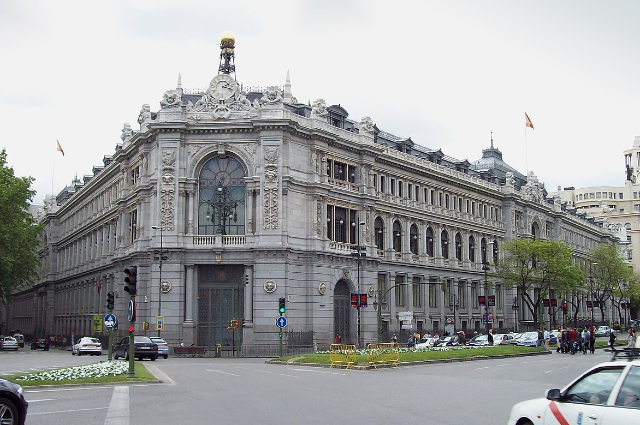
Deep beneath the streets of Madrid lies a place that has fascinated historians, architects, filmmakers, and the public for decades: the gold vault of the Banco de España. Hidden beneath the bank’s famous headquarters near Plaza de Cibeles, the vault is more than a room designed to store precious metal. It represents a remarkable meeting point between architecture, engineering, economics, politics, and Spanish history. Built in the 1930s, the underground chamber was created at a time when gold was one of the most important symbols of national financial strength.
The story of the vault became even more mysterious because of its unusual design and the legends that grew around it. Popular films and television series have imagined dramatic attempts to enter the vault, making it appear almost like an impossible fortress. Fiction has certainly added to its reputation, but the real history is fascinating enough on its own. The actual vault was the product of careful planning, advanced engineering for its time, and an understanding that protecting a nation's reserves required something far more sophisticated than an ordinary safe.
The Banco de España itself has a much longer history than the famous underground chamber. Its institutional roots go back to 1782, when the Banco Nacional de San Carlos was established during the reign of King Carlos III. Over the following centuries, the institution evolved alongside Spain's political and economic development and eventually became the country's central bank.
The famous gold vault belongs to a much later chapter of that history. Designed by architect José Yárnoz Larrosa during the major expansion of the bank's Madrid headquarters, the underground vault was constructed between 1932 and 1936 and was completed in March 1936. It was positioned approximately 35 metres below ground, beneath the banking complex. Engineers had to deal with difficult underground conditions, including water, while creating a structure capable of protecting valuable reserves.
Yet the vault's history cannot be separated from one of the most turbulent periods in modern Spanish history. It was completed only months before the outbreak of the Spanish Civil War in July 1936. The gold stored there soon became connected to the country's wartime financial struggle, transforming the vault from a symbol of economic security into part of a much larger story involving political conflict, international relations, and the survival of a nation.
This is the real story behind the famous vault: not simply a mysterious underground chamber filled with gold, but a structure whose history reflects the changing meaning of wealth, security, power, and national survival.
The Birth of the Banco de España
The story of the famous vault begins long before its underground chamber was constructed. To understand why Spain eventually needed such a heavily protected place for its reserves, it is necessary to understand the development of the institution itself.
The roots of the Banco de España can be traced to 2 June 1782, when King Carlos III established the Banco Nacional de San Carlos. Its responsibilities were much broader than simply storing money. It was created to support the Spanish state financially, facilitate government payments, provide credit to commerce and industry, and help with the financing of military supplies.
Over the following decades, Spain's financial system changed considerably. The institution itself went through important transformations before eventually becoming known as the Banco de España. By the nineteenth and early twentieth centuries, the bank had become increasingly important to the country's monetary and financial system.
A particularly important moment came with the Banking Law of 1921, which strengthened the Banco de España's position as Spain's central bank. It was given greater responsibilities involving monetary policy and supervision of private banks. This development was significant because it meant that the institution was no longer simply another financial organisation; it had become central to the functioning of the country's financial system.
By the early twentieth century, the importance of the bank's reserves had grown enormously. Gold was not merely a valuable commodity. At a time when monetary systems were closely connected with gold reserves, the metal represented financial strength, confidence and the ability of a state to meet important obligations.
This growing importance created a practical question: where could such valuable reserves be stored safely?
The answer eventually became one of the most remarkable underground structures in Madrid.
When the Banco de España expanded its headquarters during the 1930s, architect José Yárnoz Larrosa designed an underground gold vault as part of the project. The construction took place between 1934 and 1936, during a period when Spain was experiencing serious political and economic tensions.
The timing would prove extraordinary. The vault was completed in March 1936. According to the Banco de España, almost 700 tons of gold forming part of the bank's reserves were subsequently moved into it.
Only a few months later, Spain entered the devastating Civil War.
The vault had been designed to protect Spain's wealth from physical threats, but history soon presented a much larger challenge. The gold inside the institution became connected with the financial survival of the country during the conflict.
That is where the story of the famous vault moves beyond architecture—and into one of the most controversial financial episodes in modern Spanish history.
The Vault on the Eve of War
When the gold vault of the Banco de España was completed in March 1936, Spain was already entering one of the most uncertain periods in its modern history. The vault had been designed primarily as a place of security, but within months its purpose would become connected to a national crisis far greater than its architects could have expected.
The Spanish Civil War began in July 1936, dividing the country between the Republican government and the forces that opposed it. The conflict also divided Spain's financial system. According to the Banco de España's official history, the institution itself became divided between the two sides, resulting in separate issuing authorities and different currencies in the territories they controlled.
At the centre of this financial struggle was gold.
Before the war, Spain possessed an exceptionally large gold reserve. Research published by the Banco de España estimates that around 635 tonnes of fine gold were available to finance the Republican war effort. The reserve was among the largest in the world at the time, having grown substantially during the First World War, when Spain remained neutral and benefited from unusual economic conditions.
This made the gold far more than a collection of valuable metal bars and coins. In a period when international payments depended heavily on hard currency and gold, the reserve could be converted into foreign currency and used to purchase essential supplies. For a government fighting a war, that meant the gold could become a source of weapons, food, raw materials and other necessities.
The Republican government therefore faced a difficult question: how could the country's reserves be protected while the war was spreading?
In September 1936, the government authorised measures to move the gold from Madrid to a safer location. The decision was made as the military situation around the capital became increasingly dangerous. The gold was eventually transported to Cartagena, where it was considered safer from the immediate fighting around Madrid. From there, a large portion was later sent abroad.
This episode transformed the meaning of the famous vault. It had been built to protect Spain's wealth from physical threats, yet the greatest threat was no longer an ordinary criminal attempting to break into a vault. It was a civil war that had placed the entire country's political and economic future at risk.
The subsequent journey of Spain's gold would become one of the most debated financial stories of the twentieth century. Much of the reserve was ultimately used to finance the Republican war effort, with significant quantities transferred to the Soviet Union and other gold sold through France.
The vault had been built to keep the gold safe.
History, however, demanded something different: the gold itself had to leave the vault.
next
The Gold Leaves the Vault
The completion of the Banco de España's underground gold vault in March 1936 could have marked the beginning of a long period of secure storage. Instead, within only a few months, Spain was facing a civil war that would completely change the purpose and fate of the country's gold reserves.
When the Spanish Civil War began in July 1936, the country became divided between opposing political and military forces. The Banco de España was affected by this division as well. The institution effectively became split between the two sides, creating separate monetary authorities and different currencies in the territories they controlled.
At the same time, the Republican government faced an urgent financial problem. Fighting required enormous amounts of money, while international purchases required payment in currencies and assets that foreign suppliers would accept. Spain's gold reserves therefore became one of the government's most important financial resources.
The reserve was exceptionally valuable. Historical research published by the Banco de España indicates that Spain possessed roughly 635 tonnes of fine gold available for use during the conflict. Much of this wealth had accumulated during the preceding decades.
But keeping the gold in Madrid became increasingly difficult as the war intensified.
In October 1936, the Republican authorities decided to remove a large portion of the gold from Madrid. It was transported to Cartagena, a Mediterranean port considered more secure from the immediate military danger surrounding the capital. The decision was extraordinary because the vault had been specifically designed to protect the reserves underground. Yet the authorities now believed that the greatest danger was not simply an attempt to break into the vault—it was the possibility that Madrid itself could fall into enemy hands.
The movement of the gold therefore represented a dramatic change in the history of the chamber. The vault had been designed as a permanent symbol of financial security, but the circumstances of war transformed it into a temporary stopping point for a national reserve.
According to the Banco de España's historical research, a large part of the gold was subsequently sent to the Soviet Union, while other quantities were sold through France. The gold was used to obtain foreign currency and help finance the Republican war effort.
This episode is sometimes remembered simply as the “Moscow Gold” story. But behind that famous phrase was a complicated wartime financial operation involving international trade, currency, political alliances and the desperate economic demands of a country at war.
By the end of the conflict, the Banco de España's gold reserves had been essentially exhausted.
The irony is striking: one of the world's most famous gold vaults had been built to protect Spain's wealth, yet one of the greatest crises in Spanish history made it necessary to move that wealth somewhere else.
The vault survived. The gold, however, had embarked on a journey that would become one of the most controversial chapters in Spain's financial history.
From a Wartime Vault to a National Symbol
The Spanish Civil War changed the meaning of the Banco de España's gold vault. Before 1936, it represented security, financial stability and confidence in the country's reserves. During the war, however, Spain's gold became part of a much larger political and economic struggle. The bank itself was divided between the two sides of the conflict, and the bulk of its gold reserves was sent abroad to help finance the Republican war effort.
After the war ended in 1939, the Banco de España faced the difficult task of rebuilding its institution and adapting to a completely changed political and economic environment. The bank's official history records that the financial system and the bank itself underwent reconstruction after the conflict.
Yet the underground chamber did not disappear from Spain's institutional history. Its significance gradually changed. It was no longer simply associated with the enormous reserves that had occupied it before the Civil War. Instead, it became part of the physical and historical identity of the Banco de España.
The architecture itself contributed to this transformation. The vault was built around 35 metres below ground, using specialised engineering solutions to deal with underground water. The Banco de España states that the construction methods remained effective decades later, with the chamber continuing to be protected from water.
Its design also reflected the architectural ambitions of the 1930s. José Yárnoz Larrosa's expansion of the bank combined engineering with Art Deco design, creating not only the underground gold vault but also an impressive trading floor and other important spaces within the headquarters. The bank's current historical collection describes the vault as one of the most significant architectural features created during this expansion.
Over time, the vault acquired something that no architect could have planned: mystery.
Stories about its depth, security and connection with Spain's gold reserves encouraged speculation about what lay beneath the bank. Decades later, popular culture made the location internationally famous. The television series Money Heist used the Banco de España and its vault as part of its fictional story, introducing millions of viewers to a real building with a complicated historical past. The Banco de España itself now acknowledges the role of urban legends and popular fiction in creating the vault's modern image. But the real vault does not need a fictional robbery to make it fascinating.
Its true story includes the rise of Spain's central banking system, the enormous gold reserves accumulated before the Civil War, the movement of those reserves during the conflict, extraordinary underground engineering, and the transformation of a financial facility into a symbol of national history.
That is what makes the Banco de España's famous vault more than a mysterious room beneath Madrid. It is a physical reminder of how money, architecture and history can become inseparably connected.
The Vault’s Most Remarkable Security Features
What makes the Banco de España's gold vault particularly fascinating is not simply its depth, but the combination of engineering features used to protect it. The chamber was designed in an era when financial institutions were responding to new risks, including advances in organised crime and the possibility of aerial attacks. The architects therefore treated security as a complete engineering problem rather than relying on a single lock or door.
The vault lies about 35 metres below ground and occupies a substantial underground area. The Banco de España describes the chamber as consisting of several galleries, with extensive concrete walls forming part of its protective structure. Its construction was particularly challenging because the surrounding ground contained clay and significant underground water. Engineers had to develop effective waterproofing solutions to prevent seepage into the chamber. More than eight decades later, the bank reports that these solutions have remained effective.
One of the most striking features is the system of armoured doors. Some of these enormous doors weigh more than fourteen tonnes. They were manufactured by the American company York Safe & Lock Co., which had experience producing heavy security doors for major financial institutions. Their enormous size was not merely symbolic; they formed part of a wider system intended to make unauthorised access extremely difficult.
Another unusual feature is the sunken shaft at the entrance. The design allows the shaft to be flooded when necessary, creating an additional physical barrier. According to the Banco de España, this system has never actually been used since the vault was constructed. Nevertheless, it demonstrates how the designers attempted to create several layers of protection rather than depending on one mechanism.
The vault also reflects the architectural style of its period. Although its primary purpose was security, the designers did not treat it as a purely mechanical space. The Banco de España's historical collection describes the chamber as an example of precision architecture, in which structural elements, protective systems, materials and fittings were considered together.
This combination of practicality and symbolism is important. The vault was built not only to protect valuable reserves but also to demonstrate the authority and stability of the institution that controlled them. In the uncertain atmosphere of the 1930s, a highly secure underground chamber communicated a powerful message: Spain's financial reserves were valuable enough to deserve extraordinary protection.
Ironically, the greatest test of the vault would not come from an ordinary attempt to penetrate its doors. The decisive event was the Spanish Civil War, when the authorities concluded that protecting the gold meant moving it away from Madrid altogether.
The vault could resist physical threats. It could not, however, stop history from changing the meaning of the treasure it was built to protect.
From National Treasure to Modern Historical Landmark
The Banco de España's gold vault has survived far beyond the political and economic circumstances for which it was created. Today, its importance is not limited to the gold reserves associated with it. The chamber has become an important part of the architectural and institutional heritage of the Banco de España and of Madrid itself.
The vault was created as part of José Yárnoz Larrosa's major expansion of the bank's headquarters during the 1930s. The project combined advanced construction techniques with the Art Deco style that was transforming major European and American cities at the time. The vault, hidden beneath the impressive banking hall, represented the less visible side of the institution: while the trading floor expressed openness, activity and modernity, the underground chamber represented protection, secrecy and financial power.
Its unusual architecture has continued to attract attention because almost every part of the chamber was designed around security. The vault is approximately 35 metres underground and covers around 1,500 square metres. Its construction required solutions for underground water, reinforced structures and extremely heavy security doors. Some of those doors weigh more than fourteen tonnes and were manufactured by the American York Safe & Lock Company.
But the vault's story is also a reminder that physical security is only one part of protecting national wealth. During the Spanish Civil War, the country's gold reserves were removed from Madrid because the authorities believed that leaving them there presented too great a risk. The Banco de España's historical records state that a large part of the reserves was eventually sent to Moscow to finance the Republican war effort.
This historical episode gives the vault an unusual significance. It demonstrates that even the strongest physical structure cannot completely separate wealth from politics and history. A vault can protect gold from physical threats, but decisions about that gold ultimately depend on governments, institutions and circumstances.
In the decades that followed, the vault gradually became part of the public imagination. Its secrecy and extraordinary construction encouraged stories and speculation, while popular culture later made the Banco de España's vault internationally recognisable. The institution itself notes that urban legends and fictional productions such as Money Heist have contributed to its modern reputation.
Yet the real story is more interesting than the fictional version. The chamber was built during a period of rapid technological and architectural change, completed just before a devastating civil war, and connected to one of the most important financial episodes in modern Spanish history.
Today, the vault can therefore be understood in two ways: as an engineering achievement and as a historical witness. Its walls have remained underground for generations, while the meaning of the treasure it was designed to protect has changed with Spain itself.
And perhaps that is the most fascinating lesson of Banco de España's famous vault: buildings can preserve history even when the world around them changes completely.
The Human Story Behind the Vault
It is easy to look at the Banco de España's gold vault as a story about gold, steel and extraordinary engineering. Yet behind this monumental underground structure were also thousands of hours of human labour. The vault did not simply appear beneath Madrid; it had to be planned, excavated and constructed under difficult conditions by architects, engineers and workers.
The Banco de España's historical collection contains photographs documenting different stages of the construction. These records provide a valuable reminder that the famous vault was not only an architectural achievement but also a major human undertaking. Recent research by the bank has highlighted these photographs because they show the workers who participated in the project, bringing a human dimension to a structure that is often remembered mainly for its security and mystery.
The construction itself presented serious technical challenges. The vault was placed approximately 35 metres underground, in terrain containing clay and substantial groundwater. Preventing water from entering the chamber required carefully selected materials and construction techniques that were considered advanced for the period. The Banco de España reports that these solutions remained effective decades later.
The scale of the project was also remarkable. The underground chamber covers approximately 1,500 square metres, and its construction involved heavy structural elements, waterproofing systems, metal fittings and massive armoured doors. Some of those doors weighed more than fourteen tonnes.
What makes these details significant is that the vault was being built at a moment when Spain was trying to project an image of modernity and stability. The expansion of the Banco de España's headquarters was not simply a practical construction project. The institution wanted its new architecture to express progress, efficiency and authority. The gold vault represented the hidden side of that ambition: a place where national wealth could be protected while the magnificent public spaces above represented the visible face of modern banking.
There is also an important historical irony here. The workers completed the vault only months before the outbreak of the Spanish Civil War. In March 1936, the chamber was completed, and the bank's gold reserves were moved into it. Only a few months later, political circumstances would force the authorities to remove a substantial portion of those reserves from Madrid.
The people who built the vault could not have known how quickly history would test their work.
Their achievement therefore deserves to be remembered alongside the gold itself. The famous chamber was not merely a place where wealth was stored. It was a product of human skill, labour and engineering—and its history began with the people who built it.
Why the Vault Became a Global Symbol
The Banco de España's Gold Chamber might have remained largely unknown outside Spain if not for the combination of its extraordinary architecture, its connection with the country's gold reserves, and the fascination created by popular culture. Today, the vault is recognised far beyond the financial world, but its reputation is built on a mixture of documented history and later fiction.
The chamber was conceived as part of the Banco de España's major architectural expansion in the 1930s. Its purpose was clear: to safeguard the state's gold and silver reserves. The Banco de España describes it as an example of “precision architecture,” in which the structure, armoured doors, protective barriers, waterproofing and metal fittings were designed together as a security system.
Its position approximately 35 metres underground naturally contributed to its reputation. Unlike an ordinary bank room, the Gold Chamber was deliberately separated from the everyday world above it. The building's public spaces represented the visible face of banking, while the vault represented the hidden responsibility of protecting national wealth.
The architecture itself also tells an important story. The 1930s expansion was designed by José Yárnoz Larrosa, who created the Art Deco trading floor above the famous Gold Chamber. The Banco de España describes the expansion as an important stage in the institution's movement toward modernity, combining architectural innovation with an image of authority and stability.
Then came fiction.
The vault's unusual design made it an ideal setting for stories about impossible robberies and extraordinary security systems. Popular productions, particularly Money Heist, brought the Banco de España into international popular culture. The bank itself acknowledges that myths and audiovisual fiction have played an important role in shaping the public imagination surrounding the Gold Chamber.
But this is where it is important to separate fact from fiction.
The real Gold Chamber was not created for a cinematic robbery. Its history is connected to Spain's financial development, the construction of its central banking institution, the country's enormous gold reserves before the Civil War, and the extraordinary circumstances that forced those reserves to be moved during the conflict.
The fictional stories are entertaining because they exaggerate the possibilities of the vault. The historical story is compelling for a different reason: the real chamber already witnessed a period when Spain's wealth was caught in the middle of a national crisis.
That distinction gives the vault its greatest historical value. It is not famous simply because films and television made it famous. It became famous because behind the mystery is a genuine story involving architecture, economics, political conflict, engineering and the changing meaning of national wealth.
The Gold Chamber therefore stands today as more than a secure underground space. It is a reminder that buildings can become witnesses to history—and that sometimes the truth hidden beneath a fictional story is more fascinating than the fiction itself.
What Happened to the Bank After the Civil War?
The story of the Banco de España did not end with the disappearance of its wartime gold reserves. In fact, the years after the Spanish Civil War marked another major chapter in the institution's history. The bank had survived a period in which Spain itself had been divided, but its role and independence were profoundly changed.
When the Civil War ended in 1939, the financial system required reconstruction. The Banco de España's own historical account describes the post-war period as a time when the institution was reorganised and placed under much stronger government control. The bank no longer operated with the same degree of independence that it had possessed before the conflict.
The transformation was significant because the Banco de España was no longer simply dealing with the consequences of a depleted gold reserve. It was operating within a completely different political and economic system. During the following decades, monetary policy became closely connected to government decisions, while the bank's responsibilities and institutional structure continued to evolve.
The 1946 Banking Law strengthened government control over monetary policy and reduced the Banco de España's autonomy. According to the bank's historical records, the institution became an instrument of the Ministry of Finance largely during this period.
This situation did not remain permanent. Spain's economic development gradually created pressure for institutional change. The 1959 Stabilisation Plan became an important turning point, helping lay the foundations for greater economic openness and allowing the Banco de España to recover some of its previous responsibilities. Later reforms would transform the institution even further.
In 1962, the Banco de España was nationalised. Its responsibilities included issuing currency, providing financial services to the state, implementing monetary policy and supervising elements of the banking system.
These changes demonstrate something important about the famous underground vault: its history cannot be separated from the history of the institution above it.
The chamber remained a physical reminder of an earlier period when gold reserves were central to financial security. But the meaning of money itself was changing. Modern monetary systems increasingly relied on confidence in institutions and currencies rather than simply on physical quantities of precious metal. The Banco de España notes that Spain had never formally adopted the classical gold standard, and by the twentieth century, monetary systems around the world were moving increasingly toward modern forms of fiat money.
Thus, while the vault remained an extraordinary physical structure, the financial world around it was changing.
The underground chamber had been built to protect one of the most important forms of wealth of its era. Over time, however, the true power of a central bank came to depend less on the amount of gold hidden underground and more on the strength, credibility and responsibilities of the institution itself.
That transformation is essential to understanding why the Banco de España's vault remains historically fascinating even though the financial world it was designed for has largely disappeared.
From Gold Reserves to the Modern Central Bank
The history of the Banco de España did not remain frozen in the era when gold was the foundation of financial confidence. During the second half of the twentieth century, the institution gradually developed into the modern central bank that exists today.
A major turning point came in 1962, when the Banco de España was nationalised, and its responsibilities were reorganised. Its functions included issuing currency, providing financial services to the state, implementing monetary policy, regulating the money market and supervising private banks.
The transformation continued during the following decades. Spain's financial system became increasingly integrated with the international economy, and the role of the central bank became more closely connected with modern monetary management rather than simply the custody of physical reserves.
This change also helps explain why the famous underground vault is so interesting historically. When it was constructed in the 1930s, the idea of national financial strength was strongly associated with physical gold. Indeed, the Banco de España's historical research shows that the bank's gold holdings had grown enormously during the First World War, reaching a level that helped strengthen confidence in the institution and its banknotes. But the financial world gradually changed. Gold remained an important reserve asset, yet central banking increasingly depended on monetary policy, financial stability, supervision and confidence in institutions.
The Banco de España eventually became part of the Eurosystem, working alongside the European Central Bank and the other national central banks of the euro area. Its responsibilities today are therefore very different from those of the institution that filled its new underground vault with gold in 1936.
Yet the physical chamber remains an extraordinary reminder of that earlier financial world.
The vault's historical significance is also preserved through the Banco de España's extensive archives. Its Historical Archive contains documents dating back to 1782, including records from the bank's predecessor institutions, architectural plans and documents connected with important periods in Spanish economic and political history.
In this sense, the vault is almost like a physical archive itself. Its walls tell one story, while the documents preserved by the bank tell another. Together, they reveal how dramatically the meaning of money and financial security has changed.
The most striking lesson is that the vault remained physically underground while the financial system above it transformed completely.
What was once primarily a place for protecting a country's gold became a symbol of an older financial era. Today, its greatest value may not lie in what it stores, but in what it helps us understand about Spain's past.
The Vault in the Age of Digital Money
The history of the Banco de España's Gold Chamber becomes even more interesting when viewed against the transformation of money itself. When the vault was completed in 1936, gold was still an important symbol of financial strength. Today, however, the monetary system operates very differently.
The Banco de España explains that money gradually evolved from physical commodities such as gold and silver to representative forms of money and eventually to modern fiat money, whose value depends largely on confidence in the issuing institution and the monetary system.
This transformation changed the role of a central bank. Protecting physical gold remained important, but monetary stability increasingly depended on much more than what could be stored underground. Interest rates, financial regulation, payment systems, banking supervision and confidence in institutions became central elements of modern central banking.
The Banco de España itself underwent major institutional changes during this period. Its responsibilities expanded and changed throughout the twentieth century, eventually leading to its present role within the Eurosystem.
Yet gold did not become completely irrelevant.
The Banco de España still holds gold as part of its assets. Its 2025 annual accounts reported holdings equivalent to 9.054 million troy ounces of fine gold at the end of that year. (Banco de España) This demonstrates that although the financial world has changed dramatically since the 1930s, gold continues to have a place within central-bank reserves.
The contrast is striking. In the 1930s, enormous quantities of gold were physically moved during the Spanish Civil War because the metal was essential to financing international purchases. Today, financial transactions can move enormous amounts of value electronically across borders without physically transporting bags of precious metal.
That does not make the old vault meaningless. Instead, it makes the chamber a historical record of a different financial era.
The Gold Chamber also reminds us that security itself has changed. In the 1930s, protecting wealth meant thick walls, armoured doors, underground construction and protection against physical threats. In the twenty-first century, financial institutions must also protect information, digital payment systems and electronic infrastructure.
The Banco de España's Historical Archive helps preserve this long transition. Its collections contain documents from the institution's origins in 1782 through the present, providing evidence of more than two centuries of Spanish economic and financial history.
The vault therefore represents more than the age of gold. It connects two worlds: one in which national wealth was visibly measured in precious metal, and another in which money increasingly exists as numbers recorded within complex financial systems.
The chamber stayed underground, but the meaning of money changed above it.
The Vault and the Meaning of Security
The deeper history of the Banco de España's Gold Vault reveals that its most remarkable feature is not simply its depth or its massive doors. It is the way the entire structure was designed around one central idea: protection.
The vault was constructed between 1934 and 1936, approximately 35 metres below ground. Because the surrounding terrain contained clay and considerable underground water, engineers faced the difficult problem of keeping the chamber dry while creating a structure strong enough to protect the country's reserves. The solutions used at the time were sufficiently effective that the Banco de España reports that the vault has remained free from water for more than eight decades.
Security was also expressed through the vault's enormous armoured doors. Some weigh more than fourteen tonnes, and they were manufactured by the American York Safe & Lock Company. The doors were constructed using high-strength steel and specialized mspecialiseddemonstrating how seriously the designers treated the protection of the reserves.
But the vault was never simply a technical project. The Banco de España's recent historical research describes it as an example of “precision architecture,” where doors, protective systems, waterproof materials and metal fittings were all brought together as parts of one security concept. The chamber occupied roughly 1,500 square metres, making it a substantial architectural undertaking rather than merely a large safe.
There was also a symbolic dimension.
The 1930s were a period of uncertainty in Spain and around the world. The expansion of the Banco de España's headquarters was intended to project ideas of modernity, progress and stability. The Gold Vault represented the hidden side of that message: if the bank was responsible for national wealth, that wealth had to be protected with extraordinary care.
Yet the history of the Spanish Civil War demonstrated an important limitation of physical security. When political circumstances became dangerous in 1936, protecting the gold no longer meant simply keeping it behind reinforced doors. The Republican government ordered the transfer of a large part of the reserves away from Madrid to prevent them from falling into the hands of the opposing forces. Historical material from the Banco de España records the movement of around 510 tonnes through France and eventually to Moscow.
This creates one of the greatest ironies in the vault's history.
The strongest vault in Spain could protect gold from many physical dangers, but it could not protect that gold from the consequences of war and political decisions.
That lesson remains relevant today. Security is never only about walls, locks or technology. It is also about institutions, people, decisions and the circumstances in which those systems operate.
The Gold Vault therefore stands as a reminder that the protection of wealth is ultimately part of a much larger story—one involving engineering, economics, politics and human responsibility.
Deep beneath Madrid, the Gold Chamber of the Banco de España remains one of the most fascinating examples of how architecture can preserve the memory of a nation. Built between 1934 and 1936, approximately 35 metres below ground, the vault was created to protect Spain's valuable reserves through a combination of engineering, reinforced construction and extraordinary security measures. But its history became far greater than its original purpose.
The chamber was completed only months before the Spanish Civil War transformed Spain's political and economic landscape. The country's gold reserves soon became essential to financing the Republican war effort, and a large portion of those reserves was removed from Madrid. This dramatic episode demonstrated that even the most sophisticated physical security could not isolate wealth from the forces of history.
Over the decades, Spain's financial system changed profoundly. Gold gradually lost its position as the foundation of everyday monetary confidence, while central banking became increasingly concerned with monetary policy, financial stability, regulation and institutional trust. The Banco de España itself evolved into a modern central bank and eventually became part of the Eurosystem.
Yet the old vault remained.
Today, its greatest importance may not be measured by the amount of gold stored behind its doors. Its real value lies in the history it represents. Its walls connect modern Spain with a period of political conflict, economic uncertainty, technological ambition and changing ideas about wealth and security.
Popular culture has transformed the vault into a symbol of mystery, particularly through fictional stories about impossible robberies. But the truth is more compelling than fiction. The real story involves architects and workers who built an extraordinary underground structure, officials who faced difficult decisions during wartime, and a financial institution that survived enormous political and economic changes.
The Banco de España's Gold Chamber ultimately teaches us that wealth can be protected by walls, but history cannot be locked away. Political events, economic crises and human decisions can change the meaning and destiny of even the most carefully protected treasures.
The famous vault therefore deserves to be remembered not simply as a mysterious chamber beneath Madrid, but as a silent witness to Spain's past—a place where architecture, money, engineering and history came together.
And perhaps that is the greatest story hidden beneath the streets of Madrid: the vault protected Spain's gold, but history gave the vault its legacy.
References:
- Banco de España — History of the Banco de España
- Banco de España Collection — The Gold Chamber
- Banco de España — Historical Archive
- Banco de España — The Gold of the Bank of Spain during the Civil War
- Banco de España — Institutional Report 2019
- Banco de España Collection — Allegories of a Future