
“The most common way people give up their power is by thinking they don’t have any.” -Alice Walker
When Silence Became a Street
For centuries, the political history of India was written largely through the voices, institutions and struggles of men. Women were frequently positioned within the private sphere—as daughters, wives, mothers and caretakers-while the public sphere of political decision-making, protest and dissent remained predominantly male. Yet, beneath this visible history existed another India: an India in which women resisted social customs, challenged colonial authority, protected forests, opposed violence, demanded education, questioned discriminatory laws and eventually occupied streets, universities, courts and digital platforms to assert their citizenship. The history of women’s protest in India is therefore not merely a history of demonstrations. It is a history of entry into the public sphere.
From nineteenth-century social reform movements to women’s participation in the freedom struggle; from the Chipko movement and anti-arrack campaigns to protests against dowry and sexual violence; from the mobilisation following the 2012 Delhi gang rape to the #MeToo movement; from the women of Shaheen Bagh to young women participating in contemporary student protests, the form of dissent has changed, but its underlying impulse has remained remarkably consistent: the demand to be heard, to be treated as an equal citizen and to participate in decisions affecting one’s life and society.
The Constitution transformed this demand from a moral aspiration into a legal entitlement. Article 14 guarantees equality before the law, Article 15 prohibits discrimination on specified grounds including sex, Article 19(1)(a) guarantees freedom of speech and expression, Article 19(1)(b) protects the right to assemble peacefully and without arms, and Article 21 protects life and personal liberty. At the same time, constitutional freedoms are not absolute. Articles 19(2) and 19(3) permit reasonable restrictions on speech and peaceful assembly in constitutionally specified circumstances, including public order.
For women, the question is deeper than whether they formally possess the same right to protest as men. Can there truly be a meaningful right to protest if women cannot safely reach the streets, remain there, speak without intimidation, or return home without fear? This question takes the debate beyond the simple proposition that women possess the same right to protest. It compels us to ask whether constitutional equality requires the State to create conditions in which women can actually exercise that right.
The journey from silence to streets is therefore simultaneously a story of social transformation, constitutionalism, legal reform, citizenship and substantive equality.
From Silence to Resistance: The Historical Evolution of Women’s Movements in India
Women’s protest in India did not begin with the modern protest march. Its roots lie in the nineteenth-century struggles against social practices that restricted women’s autonomy and denied them educational, economic and social opportunities. The nineteenth century witnessed significant social reform debates concerning widow remarriage, female education, child marriage and other practices affecting women. Reformers such as Raja Ram Mohan Roy, Ishwar Chandra Vidyasagar, Jyotirao Phule and Savitribai Phule challenged established social arrangements. Savitribai Phule’s work in women’s education represented a particularly important transformation because education itself became a form of resistance.
The significance of these movements lies not merely in the reforms they sought but in the changing conception of the woman as a social subject. A woman was increasingly understood not merely as someone requiring protection but as someone capable of reasoning, learning, organising and demanding change. This transition was fundamental to the later development of women’s political movements. Once women entered schools, associations, newspapers and reform organisations, the boundary separating private life from public life began to weaken.
Women’s organisations subsequently emerged as important platforms for collective advocacy. The All India Women’s Conference, founded in 1927, became an important institutional space for discussions concerning women’s education, legal reform and social status. Thus, the earliest women’s movements did not necessarily resemble the contemporary image of protest, with placards, slogans, marches and social media campaigns. Their methods included education, petitions, associations, public speeches, journalism and reform campaigns. This teaches an important lesson: protest is not defined solely by its physical form. It is fundamentally an organised expression of disagreement or demand directed towards social or political change.
The nineteenth-century reform movements created the intellectual and social foundation upon which twentieth-century women’s political participation would develop. What began as a struggle against social practices gradually developed into a broader demand for recognition, dignity and participation.
Women in the Freedom Struggle: When the Private Entered the Political
The Indian freedom struggle transformed women’s participation in public life. Women did not remain passive recipients of political change. They participated in boycotts, marches, picketing, civil disobedience, underground movements, public meetings and campaigns against colonial authority. Sarojini Naidu became one of the most prominent female leaders of the nationalist movement. Aruna Asaf Ali became associated with the Quit India Movement, while Kamaladevi Chattopadhyay participated actively in nationalist politics and later contributed to social and cultural reconstruction.
Women participated in the Swadeshi Movement, Non-Cooperation Movement, Civil Disobedience Movement and Quit India Movement. Their participation challenged the assumption that politics was inherently a male domain. The significance of this participation extended beyond the immediate objective of independence. Women discovered the political power of collective presence. A woman who entered the street to boycott foreign goods, joined a procession or confronted colonial authority was simultaneously challenging two structures: colonial power and the social expectation that respectable women should remain confined to domestic spaces.
The freedom struggle consequently created a contradiction that would become central to independent India. If women were citizens capable of sacrificing for the nation, could they continue to be treated as unequal participants in public life after independence? The Constitution answered this question by establishing formal equality. But formal constitutional equality would eventually encounter a practical reality: a right written in the Constitution is meaningful only when individuals possess the social and material conditions necessary to exercise it. This distinction between formal and substantive equality continues to define the contemporary debate over women’s right to protest.
From Forests to Streets: Grassroots Women’s Movements and Collective Resistance
Independent India witnessed women-led movements that expanded the meaning of protest beyond conventional political demands. The Chipko Movement of the 1970s is a powerful example. Women in the Himalayan region participated in resistance against commercial tree-felling, famously embracing trees to prevent them from being cut. Their participation demonstrated that environmental questions were inseparable from women’s everyday lives. For rural women, forests were not merely ecological spaces. They were connected with fuel, fodder, water, agriculture and household survival. Environmental degradation therefore had gendered consequences.
Women’s protest consequently transformed an apparently technical question of forest management into a broader social question concerning livelihood, ecology and justice. Similarly, the anti-arrack movement in Andhra Pradesh during the early 1990s demonstrated how women could convert domestic suffering into collective political action. Opposition to alcohol consumption was connected with household violence, economic deprivation and family welfare.
The protest revealed a recurring characteristic of women’s movements: issues traditionally dismissed as “private” could become matters of public concern. Domestic violence, alcoholism, sexual harassment and dowry were historically treated as family matters. Women’s movements challenged this classification. The message was profound: when injustice occurs inside the home, it does not cease to be injustice merely because it occurs behind a closed door.
Women’s grassroots movements therefore broadened the concept of political protest. Protest was no longer limited to changing governments. It could also mean demanding control over forests, resisting domestic violence, questioning social customs or defending community livelihoods.
When Protest Changed the Law: Women’s Movements and the Making of Gender Justice
One of the most important dimensions of women’s protest in India has been its relationship with legal reform. The history of gender justice demonstrates that social mobilisation and constitutional adjudication can interact in powerful ways. The Supreme Court’s decision in Vishaka v. State of Rajasthan (1997) is particularly significant. In the absence of specific legislation dealing comprehensively with workplace sexual harassment, the Court formulated guidelines drawing upon constitutional guarantees and international principles. The decision connected workplace safety with constitutional guarantees of equality and dignity. The framework subsequently contributed to the development of legislation culminating in the Sexual Harassment of Women at Workplace (Prevention, Prohibition and Redressal) Act, 2013.
Similarly, sustained public advocacy concerning domestic violence contributed to a broader recognition that violence within families could not simply be treated as a private dispute. The Protection of Women from Domestic Violence Act, 2005 was enacted to provide more effective protection to women facing violence within the family.
These developments reveal the transformative potential of protest. A protest does not always immediately produce legislation. Sometimes its impact is indirect: it changes public vocabulary, alters institutional priorities, encourages litigation, generates political pressure and eventually contributes to legal reform. The relationship between protest and law may therefore be understood as a continuing movement from personal experience to collective mobilisation, from mobilisation to public debate, from public debate to constitutional claims, and from constitutional claims towards institutional and legal responses.
But this relationship is not automatic. The existence of legislation does not necessarily mean that the social problem has disappeared. That is why contemporary women’s movements increasingly focus not only on law-making but also on law implementation.
From Nirbhaya to #MeToo: The Changing Language of Women’s Dissent
Few moments demonstrate the relationship between women’s protest and legal change as powerfully as the nationwide protests following the December 2012 Delhi gang rape. The incident generated massive public demonstrations, particularly involving young people. Women and men gathered in Delhi and elsewhere to demand accountability, safer public spaces and stronger legal responses to sexual violence.
The protests transformed sexual violence from an issue often discussed privately into a central national political question. The subsequent Justice J.S. Verma Committee process and the Criminal Law (Amendment) Act, 2013 represented important institutional responses to the public demand for reform. Yet the deeper significance of the movement lay in its transformation of public language.
Women increasingly refused the idea that sexual violence was simply an unfortunate individual experience. Instead, questions emerged about policing, public transportation, street lighting, institutional accountability, gender stereotypes, victim-blaming and judicial processes. Sexual violence came to be discussed as a systemic social and institutional concern rather than merely an isolated criminal event.
The #MeToo movement later expanded this transformation into the digital sphere. Women began sharing experiences of sexual harassment and abuse through social media, often bypassing traditional institutional gatekeepers. The digital platform became a new public square. Yet digital protest introduced new vulnerabilities. Women speaking publicly could face online abuse, threats, harassment, doxxing and reputational attacks.
Thus, the expansion of the right to speak has simultaneously created a new question: how can constitutional freedom of expression survive when intimidation moves from the street to the screen? The answer requires viewing online spaces not as completely separate from public life but as increasingly important sites of democratic participation.
Women and the Constitution on the Streets: Protest, Citizenship and the Public Sphere
The Constitution does not contain a standalone provision titled “right to protest.” Instead, the constitutional protection of protest emerges principally from the freedoms of speech and expression under Article 19(1)(a) and peaceful assembly under Article 19(1)(b). Article 19(1)(c), concerning associations, can also become relevant to collective mobilisation.
The right, however, is subject to constitutional limitations. Article 19(2) permits reasonable restrictions on speech and expression in specified interests, while Article 19(3) permits reasonable restrictions on peaceful assembly in the interests of the sovereignty and integrity of India or public order. The Supreme Court’s jurisprudence has therefore developed around a constitutional balance: the State cannot simply eliminate dissent, but protesters cannot claim an unlimited right to disrupt the rights and functioning of everyone else.
In Kameshwar Prasad v. State of Bihar (1962), the Supreme Court examined the relationship between demonstrations and Articles 19(1)(a) and 19(1)(b). The Court distinguished peaceful demonstrations from violent and disorderly conduct, recognising the constitutional significance of peaceful demonstration.
In Himat Lal K. Shah v. Commissioner of Police, Ahmedabad (1973), the Court addressed governmental regulation of public meetings and recognised that regulation of public assemblies does not mean that the State possesses unlimited power to prohibit them. The constitutional problem therefore cannot be reduced to a choice between “protest” and “public order.” The actual question is what restrictions are reasonable, necessary and proportionate while preserving the essence of democratic dissent.
For women, this constitutional question has an additional dimension. A male protester and a female protester may possess the same formal constitutional right. But if women face greater risks of sexual harassment, intimidation, surveillance or social restrictions in reaching and remaining at protest sites, formal equality may not be sufficient. The Constitution’s promise of equality must therefore be understood alongside dignity, liberty and meaningful participation.
Shaheen Bagh and the Woman as a Constitutional Citizen
The women-led mobilisation at Shaheen Bagh during the protests against the Citizenship (Amendment) Act became one of the most visible examples of women occupying political space in contemporary India. The significance of Shaheen Bagh lay not merely in the political controversy surrounding the legislation. It also lay in the image of women, including elderly women, occupying a public space and asserting their understanding of citizenship.
The protest challenged the traditional assumption that political participation belongs primarily to professional politicians, activists or formally organised political parties. Women who might otherwise have been described primarily through familial identities appeared as political actors. They spoke, organised, remained present, negotiated and articulated constitutional claims.
The Supreme Court, in Amit Sahni v. Commissioner of Police (2020), dealt with the question of public roads and indefinite occupation in the context of the Shaheen Bagh protests. The Court recognised the importance of peaceful protest while also emphasising that public spaces cannot be occupied indefinitely in a manner that causes continuing obstruction to others.
The case illustrates the constitutional balancing exercise at the heart of protest law. A democratic society must preserve space for dissent while ensuring that one group’s exercise of rights does not indefinitely extinguish the rights of others. The appropriate response is not necessarily to remove protest from public life, but to develop transparent and proportionate mechanisms through which legitimate demonstrations can occur without unnecessarily interfering with the rights of others.
For women, this is particularly important because the physical design of protest spaces can determine who is actually able to participate. A protest site without adequate lighting, sanitation, transport connectivity, medical assistance, or mechanisms against harassment may be formally open to women but practically inaccessible to them.
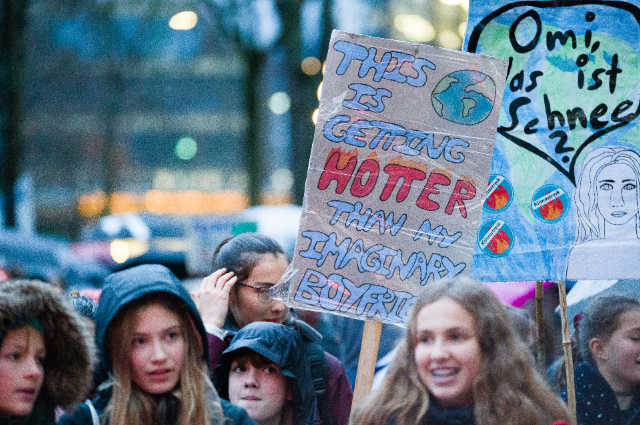
The Gen-Z Woman Takes the Street: Youth Protest, Gender and the Politics of Impatience
The contemporary phase of Indian protest has introduced a new vocabulary. In 2026, student and youth-led protests emerged around grievances including examination-related controversies, accountability and institutional reform. Contemporary reporting has highlighted the participation of young women and the role of social media, memes and new forms of political communication.
The women participating in these movements are significant not simply because they are young, but because they demonstrate a broader transformation in political identity. The contemporary young woman is increasingly unwilling to separate personal aspirations from public policy. Education affects her. Employment affects her. Public safety affects her. Digital freedom affects her. Transportation affects her. Examination integrity affects her. Political decisions affect her. Therefore, politics is not an external activity occurring somewhere in Parliament. It is embedded in everyday life.
Recent reporting on the 2026 youth protests has also described women organisers and participants who have faced criticism, intimidation and online threats. This development raises an important question about the gendered cost of dissent. A young woman who publicly criticises a government may not merely encounter disagreement with her argument. She may encounter comments about her character, morality, clothing, family, sexuality or personal life.
In other words, women are frequently asked to defend not only what they said, but also who they are. That is a serious democratic concern. The constitutional protection of speech cannot depend upon whether society considers a woman sufficiently “respectable” to speak. The democratic value of dissent lies precisely in protecting unpopular, uncomfortable and inconvenient expression within constitutional boundaries.
The contemporary youth movements therefore illustrate a broader transformation: women are not simply joining movements created by others; they are increasingly becoming organisers, spokespersons, legal strategists, digital communicators and political actors in their own right.
From Placards to Platforms: Social Media and the New Grammar of Protest
The traditional protest had a recognisable geography: a road, a university campus, a public square or a government office. The contemporary protest has no fixed geography. A hashtag can mobilise thousands. A short video can document events at a protest site. A photograph can become evidence. A poster can go viral. A meme can communicate political criticism more quickly than a conventional speech.
For women, digital platforms can sometimes reduce barriers to political participation. A woman unable to attend a physical demonstration because of family responsibilities, disability, distance, employment or safety concerns may still participate through digital campaigns. Social media can also connect geographically dispersed experiences. A woman in a small town may discover that experiences she believed were uniquely personal are shared by thousands of others.
This creates solidarity, but the digital public sphere has its own dangers. Women activists and protesters may face online sexual harassment, threats of violence, doxxing, impersonation, coordinated trolling, manipulated images and cyberstalking. Thus, digital citizenship requires digital safety.
The constitutional protection of expression becomes increasingly complicated when private actors, rather than only governments, can intimidate speakers into silence. This does not mean that every offensive statement should automatically be prohibited. A democracy necessarily tolerates disagreement, satire and criticism. However, threats, unlawful harassment and privacy violations raise distinct legal concerns.
The challenge for the future is therefore to develop a public sphere in which women can participate without converting every act of dissent into a personal security risk.
The Constitutional Boundaries of Protest: Freedom Is Not a Licence for Violence
The right to protest is fundamental, but it is not absolute. This distinction is essential for a mature constitutional democracy. The Supreme Court has repeatedly recognised that peaceful demonstration enjoys constitutional protection, while violence, destruction and disorderly conduct do not automatically receive the same protection.
In the Ramlila Maidan Incident, In Re (2012), the Supreme Court reiterated the constitutional importance of the freedoms of speech and peaceful assembly while recognising that these freedoms remain subject to the limitations contained in Articles 19(2) and 19(3).
The State therefore has legitimate responsibilities to maintain public order, prevent violence, protect life and property, regulate traffic, protect hospitals and emergency services, prevent intimidation and ensure that competing rights are not extinguished. At the same time, regulation must not become a disguised method of suppressing dissent.
A requirement of prior permission cannot become an absolute veto over political expression. A public-order argument cannot automatically justify indefinite restrictions. Police powers must remain subject to constitutional standards. This is where proportionality becomes important. A restriction should pursue a legitimate objective and bear a rational connection to that objective. Where less restrictive alternatives are available, the State should ordinarily consider them.
The constitutional approach should therefore move away from the binary question of whether protests should be allowed and towards the more sophisticated question of how peaceful protest can be facilitated while protecting public order and the rights of others.
For women, this means that police regulation should also consider gender-specific safety. A protest site without adequate lighting, sanitation, emergency medical facilities or safe transport may technically be available to women but practically inaccessible to them. The State must therefore think not merely about permission to protest, but about the conditions necessary for meaningful participation.
The Hidden Barriers: Can a Woman Really Protest Freely?
The greatest restrictions on women’s protest are not always found in statutes. Some exist in homes. Some exist in social attitudes. Some exist in streets. Some exist online.
A young woman may be constitutionally entitled to attend a protest but may be told by her family that “good girls do not go out at night.” A married woman may have the legal freedom to participate but may face domestic expectations that prevent her from leaving home. A rural woman may possess constitutional rights but lack transport. A working woman may lack leave from employment. A woman with disabilities may face inaccessible protest sites. A woman from a marginalised community may experience multiple layers of exclusion.
Thus, women’s right to protest must be analysed through an intersectional lens. Gender is not the only factor determining access to public space. Caste, class, religion, disability, geography, age, marital status and economic independence can shape a woman’s ability to participate.
This is why the constitutional idea of equality cannot stop at identical legal treatment. If two citizens formally possess the same right but one is systematically prevented from exercising it because of social conditions, constitutional democracy must ask whether substantive equality has actually been achieved.
Women’s right to protest therefore cannot be separated from women’s right to mobility, education, employment, digital participation, bodily autonomy and security in public spaces.
Protest as a Pathway to Legal Transformation
Indian history repeatedly demonstrates that protest can influence legal consciousness. The women’s movement contributed to changing how society understands domestic violence, sexual harassment, dowry, rape, workplace dignity, reproductive autonomy and equal citizenship.
The legal system itself has also evolved through constitutional litigation. The Supreme Court has interpreted Articles 14 and 21 expansively, connecting equality with dignity, autonomy and meaningful liberty. In Vishaka, workplace safety was connected with constitutional equality and dignity. The broader lesson is that constitutional rights are living principles. They acquire practical meaning through institutions, movements, courts and citizens.
Women’s protest therefore occupies an unusual position in constitutional democracy. It can operate outside formal institutions while simultaneously influencing them. A protester does not legislate. A protester does not adjudicate. A protester does not administer. But protest can place an issue before legislators, judges, commissions, media and society in a manner that private suffering alone may not achieve.
This is why dissent should not automatically be viewed as an interruption of democracy. At its best, dissent is one of democracy’s mechanisms of self-correction.
The State’s Duty: From Controlling Protest to Facilitating Constitutional Participation
The constitutional relationship between the State and protesters should not be understood purely in terms of control. The State has an obligation to maintain order, but a democratic State also has an institutional interest in allowing citizens to communicate grievances.
The Supreme Court’s jurisprudence has recognised that regulation of public assembly is permissible, but that does not give government unlimited discretion to extinguish public meetings altogether. Himat Lal K. Shah remains important in this regard.
A better regulatory framework would therefore focus on facilitation. Cities should maintain accessible spaces where citizens can assemble without unnecessary bureaucratic obstacles. Permission systems should be clear, transparent and uniformly applied. Lighting, sanitation, emergency medical facilities and safe transport should be considered when major demonstrations are organised. Police personnel responsible for managing demonstrations should receive training concerning constitutional freedoms, crowd management and gender-sensitive intervention. Women attending protests should have accessible mechanisms for reporting sexual harassment and other forms of intimidation. Women protesters facing online threats or doxxing should have effective avenues for reporting and investigation. Restrictions affecting fundamental rights should remain open to judicial review.
The objective should not be a protest-free city, nor should it be a city paralysed by indefinite demonstrations. The constitutional objective is a city in which dissent has legitimate space.
Women’s Protest and the Meaning of Democracy
Democracy is commonly understood through elections. Citizens vote, representatives are elected, and governments are formed. But democracy does not end on election day. A constitutional democracy also requires freedom of expression, freedom of association, peaceful assembly, access to information, institutional accountability, judicial review, political participation and protection of minorities and dissenters.
Protest belongs within this larger ecosystem. For women, its importance is even greater because historical exclusion from formal political institutions makes alternative forms of participation particularly significant.
A woman may not be a legislator. She may not belong to a political party. She may not have access to powerful networks. But she can still hold a placard, write an article, organise a neighbourhood meeting, speak online, march peacefully, approach a court or ask the State a question. These acts may appear small individually, but collectively they create democratic pressure.
The transformation from “beneficiary” to “citizen” is perhaps one of the most significant achievements of women’s movements. A beneficiary asks what the State will give her. A citizen asks why the State is doing something and who decided it. Women’s protest represents this transition.
From Silence to Streets, From Protest to Power: The Road Ahead
The history of women’s movements in India reveals a remarkable progression. The nineteenth-century reform movements challenged social customs. The freedom struggle brought women into nationalist politics. Grassroots movements connected women’s lives with environmental and economic questions. The women’s movement transformed domestic and sexual violence into matters of public policy. The Nirbhaya protests demanded institutional accountability. #MeToo expanded the public sphere into the digital world. Shaheen Bagh demonstrated the capacity of ordinary women to become visible constitutional actors. Contemporary youth movements have further blurred the boundaries between student politics, digital activism, gender and public dissent.
Yet the journey remains incomplete. Women continue to encounter barriers to political participation, public mobility and safe expression. The answer cannot be to tell women to remain silent for their own safety. Nor can it be to treat every restriction imposed in the name of public order as inherently illegitimate. The constitutional path lies between these extremes. It requires both the protection of dissent and the responsible regulation of its exercise.
The State must protect peaceful protesters. Protesters must respect peaceful coexistence. Police must maintain order without unnecessarily criminalising dissent. Courts must preserve constitutional freedoms while balancing competing rights. Civil society must resist the normalisation of intimidation. Digital platforms must confront harassment without turning content moderation into a mechanism for silencing legitimate political expression. Society must also abandon the idea that a woman who enters the public sphere has somehow abandoned the values of respectability.
A Democracy That Can Hear Its Women
The story of Indian women’s protest is ultimately a story about citizenship. Women did not simply move from homes to streets. They moved from being spoken about to speaking for themselves. They moved from being represented to representing their own interests. They moved from seeking protection to demanding rights. They moved from asking society for permission to participate to asserting participation as an element of constitutional citizenship.
The Constitution provides the legal foundation for this transformation. Article 19 protects speech and peaceful assembly, while Articles 14, 15 and 21 provide the broader framework of equality, non-discrimination, dignity and liberty. But constitutional rights must be lived, not merely written.
A woman who fears harassment on the way to a protest does not experience Article 19 in the same way as a citizen who can freely enter the public square. A woman who is threatened online for expressing a political opinion does not experience freedom of expression in a purely abstract manner. A woman who must seek family permission to participate in public life may possess formal equality while still confronting substantive inequality.
Therefore, the future of women’s right to protest lies not simply in defending the existence of Article 19(1)(a) and Article 19(1)(b). It lies in creating the social, legal and institutional conditions necessary to make those rights meaningful. The constitutional boundary of dissent should protect public order without converting order into silence. The State must regulate protest, but regulation should not become suppression. Citizens must exercise dissent peacefully, but peaceful dissent must not be treated as disobedience merely because it is inconvenient.
And women must be able to occupy public spaces without being required to surrender either their dignity or their voice.
The journey from silence to streets is therefore not complete. But every woman who enters the public sphere, raises a voice, holds a placard, files a petition, writes a post, challenges an institution or peacefully questions authority extends that journey a little further.
The journey can be expressed through a simple progression: from silence to speech, from speech to assembly, from assembly to collective action, from collective action to legal change, and from legal recognition to substantive citizenship. The street, after all, is not outside the Constitution. When women gather peacefully to demand justice, accountability or change, they are not stepping outside democracy. They are participating in one of its oldest and most visible forms.
The true measure of a constitutional democracy is not whether it can tolerate agreement. It is whether it can make space for dissent. And the true measure of women’s equality is not merely whether a woman is legally permitted to stand in the street. It is whether she can stand there without fear, without humiliation and without having to apologise for being heard.
The journey from silence to streets is therefore not simply a history of protest. It is a continuing constitutional journey towards a society in which women are not merely protected by democracy but are recognised as its active authors, participants and critics. A democracy becomes stronger not when its streets become silent, but when every citizen-including every woman-knows that her voice has a constitutional place within them.
References:
- Constitution of India, Arts. 14, 15, 19, 21 and 32.
- Kameshwar Prasad v. State of Bihar, AIR 1962 SC 1166; 1962 Supp (3) SCR 369.
- Himat Lal K. Shah v. Commissioner of Police, Ahmedabad, (1973) 1 SCC 227.
- Vishaka v. State of Rajasthan, (1997) 6 SCC 241.
- Ramlila Maidan Incident, In Re, (2012) 5 SCC 1.
- Anuradha Bhasin v. Union of India, (2020) 3 SCC 637
- Amit Sahni v. Commissioner of Police, 2020 SCC OnLine SC 853.
- Protection of Women from Domestic Violence Act, 2005.
- Sexual Harassment of Women at Workplace (Prevention, Prohibition and Redressal) Act, 2013.
- Contemporary reporting on women’s participation in India’s 2026 youth protests.