
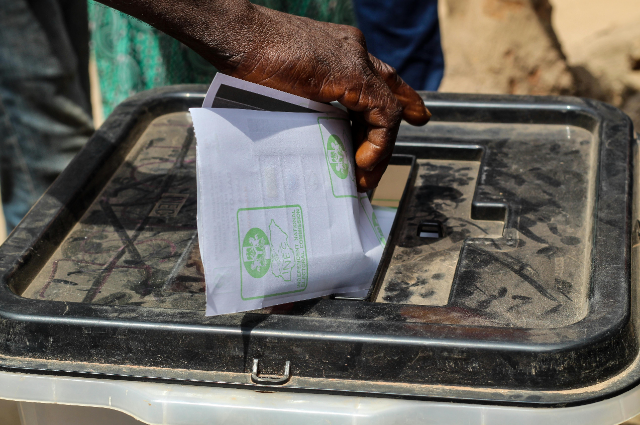
The foundation of any vibrant democracy rests on the unassailable right of its citizens to participate in the electoral process. Recently, the Supreme Court of India issued a landmark directive regarding the West Bengal Assembly elections, an intervention designed to protect lakhs of voters from disenfranchisement due to administrative anomalies. This comprehensive guide breaks down the crisis of mass voter deletions, the extraordinary constitutional powers invoked by the judiciary, the specific deadlines established for re-inclusion, and the actionable steps citizens must take. By understanding the mechanics of this ruling, the general public can make informed decisions and ensure their voices are heard at the ballot box.
The Sanctity of the Electoral Process
In a democratic republic like India, the right to vote is not merely a statutory privilege; it is the constitutional lifeblood that sustains the nation’s governance. Universal adult suffrage ensures that every eligible citizen, regardless of their socioeconomic status, has an equal say in determining the political trajectory of their state and country. However, the logistical monumentalism of conducting elections in a populous state like West Bengal often introduces complex administrative challenges.
Recently, the state faced an unprecedented electoral crisis characterised by the mass deletion of names from the voter registry. Recognising the grave threat this posed to the democratic fabric, the Supreme Court of India intervened decisively. This judicial action offers fresh hope to millions of excluded electors, providing a narrow but critical window for them to reclaim their voting rights before the upcoming polling phases. To fully grasp the magnitude of this intervention, it is essential to examine the origins of the crisis, the legal frameworks governing electoral rolls, and the extraordinary constitutional mechanisms deployed by the highest court in the land to ensure complete justice.
The Genesis of the Crisis: Mass Deletions and the Special Intensive Revision
To maintain the integrity of elections, the Election Commission of India (ECI) regularly updates the electoral rolls. This process, meant to remove deceased individuals, duplicate entries, and individuals who have migrated, is crucial for preventing electoral fraud. In West Bengal, a "Special Intensive Revision" (SIR) was undertaken to thoroughly clean the voter lists.
While the objective was administrative purity, the execution resulted in massive, unintended collateral damage. Over 90 lakh names were struck from the electoral rolls. Most concerning was that approximately 27 lakh of these deletions were executed based on "logical discrepancies." In electoral administration, a logical discrepancy often refers to software-flagged anomalies—such as mismatched demographic data, unverified residential addresses, or spelling errors in the database.
Relying heavily on automated deduplication and verification software without adequate on-the-ground, door-to-door validation can lead to false positives. Consequently, millions of legitimate, living, and resident voters found themselves suddenly stripped of their enfranchisement. The sheer scale of these deletions triggered public outcry and led to the filing of over 34 lakh appeals. These appeals were a mix of citizens fighting to prove their rightful citizenship and residency, and objectors contesting the inclusion of certain individuals. The administrative machinery was immediately overwhelmed, setting the stage for a judicial showdown.
The Administrative Bottleneck: The Role of Appellate Tribunals
Under normal circumstances, when a citizen's name is wrongfully deleted from the electoral roll, the Representation of the People Act, 1950, provides a mechanism for grievance redressal. Citizens can file claims and objections to Electoral Registration Officers (EROs). In the context of the massive West Bengal deletions, 19 special Appellate Tribunals were established to handle the unprecedented volume of 34 lakh appeals. These tribunals, headed by former judges, were tasked with reviewing the evidence and issuing final orders on whether an individual should be reinstated or permanently removed.
However, a severe administrative bottleneck emerged. The sheer volume of cases, combined with the delayed operationalisation of these tribunals, meant that millions of appeals were left pending as the election dates rapidly approached. Under the standard legal framework, specifically Section 23(3) of the Representation of the People Act, 1950, no amendment, transposition, or deletion of an entry can be made in the electoral roll after the last date for making nominations for an election.
This statutory "freezing" of the rolls is designed to prevent last-minute manipulation and allow candidates to know exactly who their electorate is. But in this specific scenario, the freezing of the rolls threatened to permanently lock out millions of voters whose appeals were stuck in the administrative backlog through no fault of their own. The rigid application of electoral law was poised to defeat the very essence of democracy.
The Supreme Court’s Extraordinary Intervention: Invoking Article 142
Faced with the impending disenfranchisement of a massive segment of the electorate, the Supreme Court of India recognised that a conventional interpretation of the law would result in a profound injustice. The Bench, led by Chief Justice Surya Kant, stepped in to bridge the gap between administrative failure and constitutional rights.
To bypass the strict statutory restriction that freezes electoral rolls upon the filing of nominations, the Supreme Court invoked Article 142 of the Constitution of India. Article 142 is a unique and extraordinary provision that grants the Supreme Court the power to pass any decree or make any order necessary for doing "complete justice" in any cause or matter pending before it.
By utilising this power, the Court effectively superseded the standard electoral deadlines. The judiciary asserted that the right to vote is a deeply "sentimental and constitutional" right. It cannot be extinguished arbitrarily due to the inefficiencies of the state machinery, software glitches, or delayed tribunal hearings. The intervention was a powerful reaffirmation that the procedural laws governing elections are meant to facilitate voting, not to act as insurmountable barriers for legitimate citizens.
Decoding the Directives: The Mechanism of Supplementary Rolls
The Supreme Court’s directive was practical and highly structured, balancing the need to restore voting rights with the Election Commission's need to conduct the elections smoothly. The Court ordered the Election Commission of India to issue supplementary revised electoral rolls.
A supplementary roll is an official addendum to the final published voter list. It contains the names of voters whose inclusion was approved after the primary list was frozen. To manage this process across different polling phases, the Supreme Court established strict, phase-specific deadlines for the Appellate Tribunals to clear cases, and for the ECI to update the rolls.
The Timelines Established by the Court:
For Phase 1 Elections (Polling scheduled for April 23, 2026):
The Appellate Tribunals must process and clear appeals by April 21, 2026.
If a voter receives a favourable final order by this date, the ECI is mandated to include their name in a supplementary roll.
The supplementary list must be distributed to polling booths, allowing the reinstated individual to vote on April 23.
For Phase 2 Elections (Polling scheduled for April 29, 2026):
The Appellate Tribunals are given an extended deadline to clear appeals by April 27, 2026.
Voters cleared by this date will be added to the phase two supplementary roll and will be eligible to cast their ballots on April 29.
These tight deadlines serve a dual purpose: they apply immense pressure on the 19 Appellate Tribunals to expedite their adjudications, and they provide absolute clarity to the Election Commission regarding the logistical rollout of the supplementary lists.
The Crucial Caveat: Dispelling Misconceptions About Automatic Voting Rights
While the Supreme Court's intervention is a beacon of hope, the general public must understand the precise limitations of the ruling. The Court was exceptionally careful to prevent electoral chaos and confusion at the polling booths.
The most critical aspect of the judgment is the clarification regarding pending cases. The Court explicitly stated: "Mere pendency of appeals... shall not entitle them to exercise their right to vote."
This means there is no automatic right to vote simply because a citizen has filed an appeal or because their case is currently being reviewed by an Appellate Tribunal. An individual whose name was deleted cannot walk into a polling station, show a receipt of their pending appeal, and demand a ballot.
To be eligible to vote, the citizen must actively secure a favourable final order from the Appellate Tribunal before the specified cut-off date (April 21 for Phase 1, and April 27 for Phase 2). The legal burden remains on the administrative tribunal to process the claim, and the functional outcome must be a formalised instruction to the ECI to restore the voter. This caveat ensures that only verified and legally cleared individuals are added to the supplementary rolls, maintaining the security and integrity of the election itself.
Broader Systemic Implications for Indian Democracy
The ramifications of this judgment extend far beyond the immediate context of the West Bengal Assembly elections. The Supreme Court's proactive stance sets a vital legal precedent regarding the accountability of electoral administration in India.
First, it highlights the inherent risks of relying exclusively on "Special Intensive Revisions" and automated data scrubbing. While digitisation and software-based deduplication are necessary for modernising India's vast electoral database, this incident proves that human oversight and robust, accessible grievance redressal mechanisms are non-negotiable. When 27 lakh names are flagged for "logical discrepancies," it points to a systemic flaw in data management rather than a localised anomaly.
Second, the ruling reinforces the hierarchy of constitutional values. By using Article 142 to override the statutory freezing of the rolls, the Supreme Court clearly signalled that the substantive right of a citizen to participate in a democracy takes precedence over rigid procedural timelines, especially when the delay is caused by the state apparatus itself.
Finally, this intervention serves as a mandate for the Election Commission of India to streamline its tribunal processes. The fact that 19 tribunals were overwhelmed by the backlog indicates a need for better predictive resource allocation. Future intensive revisions in any state will now likely be accompanied by stricter judicial scrutiny and an expectation that appellate authorities are fully functional well before the election notification is issued.
Actionable Guide: What Excluded Electors Must Do Immediately
For the citizens of West Bengal directly affected by this crisis, understanding the legal theory is only half the battle. Practical, immediate action is required to capitalise on the Supreme Court's intervention. If you or someone you know suspects their name has been unjustly deleted from the electoral roll, the following steps must be taken urgently:
Step 1: Verify Current Status. Do not assume your name is on the list, even if you voted in the last election. Citizens should immediately check the final published electoral rolls through the official National Voters' Service Portal (NVSP), the Voter Helpline App, or by sending an SMS to the ECI's designated numbers. Alternatively, checking physically with the local Booth Level Officer (BLO) is highly recommended.
Step 2: Track the Appeal. If you are among the 34 lakh individuals who have already filed an appeal against a deletion based on a "logical discrepancy," you must aggressively track the status of your case. Identify which of the 19 Appellate Tribunals is handling your jurisdiction.
Step 3: Prepare Documentation. Ensure that all supporting documents proving your identity, age, and ordinary residence are organised and ready. This includes Aadhaar cards, passports, utility bills, or older voter ID cards. The tribunals are working under extreme time constraints; providing clear, undeniable proof of residency and identity will expedite the issuance of a favourable order.
Step 4: Monitor the Cut-off Date.s Be acutely aware of your polling phase. If you are in a Phase 1 constituency, your absolute deadline to receive clearance is April 21, 2026. For Phase 2, it is April 27, 2026.
Step 5: Verify Inclusion in the Supplementary Roll. If the Appellate Tribunal rules in your favour, your task is not yet complete. You must verify with your ERO or BLO that your name has successfully been transmitted from the tribunal to the ECI and printed on the localised supplementary revised electoral roll assigned to your specific polling booth. On election day, carry the tribunal order along with your standard Voter ID (EPIC) to avoid any localised confusion at the booth level.
A Triumph of Constitutional Vigilance
The Supreme Court’s intervention in the West Bengal Assembly elections is a profound demonstration of constitutional vigilance. By utilising its extraordinary powers to force the creation of supplementary rolls, the judiciary has successfully mitigated what could have been a catastrophic failure of democratic representation.
However, this judicial lifeline requires active participation from the citizenry. The ruling does not grant blanket amnesty; it demands rapid administrative adjudication and vigilant follow-through by the voters themselves. For the millions of individuals caught in the crossfire of data discrepancies and tribunal delays, this judgment restores a fighting chance to reclaim their fundamental right. It stands as a powerful reminder that in a true democracy, the administrative machinery must serve the elector, ensuring that every legitimate voice is granted its rightful place at the ballot box.
References:
- Supreme Court of India Order invoking Article 142 regarding the West Bengal Special Intensive Revision (SIR), issued in April 2026 by the Bench headed by CJI Surya Kant.
- LiveLaw Legal Report: "West Bengal SIR: Supreme Court Allows Excluded Persons To Vote If Appeals Allowed Before April 21/27" (Published April 16, 2026).
- The Hindu News Publication: "West Bengal SIR: Voters cleared by tribunals by April 21 or 27 will be able to vote in Assembly polls" (Published April 16, 2026).
- SCC Online Legal Blog: "WB SIR | SC Order on Voter Appeals cleared by Appellate Tribunals" (Published April 17, 2026).
- The Representation of the People Act, 1950 (specifically Sections 22 and 23), detailing the standard statutory deadlines for electoral roll freezing, was superseded by this judicial ruling.