
On 22 January 2026, a devastating road accident in Jammu & Kashmir’s Doda district claimed the lives of ten Indian Army soldiers and left eleven others injured, shaking the military community and the nation at large. This calamity, occurring far from any active line of control, brutally highlights the non-combat dangers inherent in operating and sustaining forces across India's challenging high-altitude frontier regions. The loss is profound, extending beyond the immediate families to touch the entire fabric of the armed forces and the local populations they protect. The incident is not merely a statistical footnote in troop movements; it represents a tragic culmination of environmental hazards, logistical complexity, and the constant, unsung risks taken by soldiers during routine deployments.
What happened: a routine movement ends in tragedy
Just past noon on the interstate highway from Bhaderwah-Chamba, near Khanni Top, a high altitude location, a roadmap to catastrophe awaits. This highway reaches about 9,000 feet above sea level and is the lifeline of military bases, along with the local populace. This highway is a bad news corridor for automobiles. Its slopes are too sharp. The weather changes suddenly. It's tough terrain.
An Army Casspir Troop Carrier mine-resistant ambush-protected armoured vehicle, was on routine patrol to either an operational area or a high-altitude position. An accidental loss of control occurred on the narrow route due to adverse weather. This vehicle is designed to resist mine blast impact successfully to shield occupants from IED threats; nevertheless, this vehicle remains very heavy and also high-centred on the roads. This creates difficulties in handling the vehicle on mountain roads due to adverse conditions, including ice or snow.
Official initial reports claim that it skidded off the road, and due to the steep gorge below, it rolled approximately 200 feet down into a deep gorge. The straight, steep hillside combined with the rolling motion of a heavy vehicle resulted in a dramatic impact as the wreckage from the car crash crushed the troop carrier and added to the fatalities within.
Four dead bodies of soldiers were found at the location, as they were trapped in the wreckage of the cars. The rescue team encountered a strong challenge in accessing this region, as well as treating and transporting those injured in the accident, considering that some were injured while others were trapped at this location. Tragically, six more soldiers died from this accident due to injuries, bringing the total to ten deaths. The power of this accident is also demonstrated by the challenges encountered while treating the injured, especially those at a higher injury level.
Yet a court of inquiry will also be wanting to examine those immediately subordinate causes – vehicle condition in detail, driver expertise to drive that type of vehicle, mountain SOP compliance – and those weather factors too, which are so pertinent in localised contexts – e.g., appearance of black ice or of reduced visibility! The overall reality, however, is that there is inherent mortality in frontier logistics!
The Rescue and Medical Response: A Battle Against Terrain
An extraordinarily rapid and coordinated joint rescue effort was mounted almost immediately after the crash, demonstrating a kind of smooth cooperation that is often forced by the nature of remote military areas. The effort pulled in a mix of players: local Indian Army units—usually the first on the scene thanks to proximity—along with the local police, CRPF detachments, and civilian emergency responders who brought essential local terrain knowledge and community support.
The real problem in reaching them was getting to the bottom of the gorge: a near-vertical, loose, snow-covered 200-foot plunge. Rescuers needed to bring in special mountaineering equipment and rope systems just to access the victims, which made the extraction very slow and laborious. Literally every minute counted, since the survivors were highly susceptible to severe blood loss and hypothermia.
Injured soldiers were evacuated from the hostile area by a combination of skills. The injured were winched up or stretcher-carried down the precipitous slope in the initial part of the rescue. Since some injuries were considered particularly serious, the most critical ones were quickly triaged for air evacuation. Many were then flown by military helicopters to the Army Command Hospital in Udhampur for advanced, tertiary care. That facility is fitted with state-of-the-art trauma care, neurosurgery, and intensive care units that are essential for dealing with the type of severe blunt force trauma typical of this type of crash. Those who were injured but relatively stable were first transferred to and stabilised at the Sub-District Hospital in Bhaderwah, an essential intermediate move to address issues of shock, basic life support, and prepare for transfer to higher-level facilities.
The medical response’s logistical chain underlines the Army’s operational capabilities across difficult terrain. The swift mobilisation of air assets, the coordination of ground transport across compromised roads, and sustained medical support from the moment of injury at the trauma centre represent a major achievement, even as the tragedy itself unfolded. Military and civilian medical teams alike showed great dedication, working under intense pressure with strict time limits, which was vital for saving the lives of eleven survivors.
The Doda Terrain: An Unforgiving Operating Environment
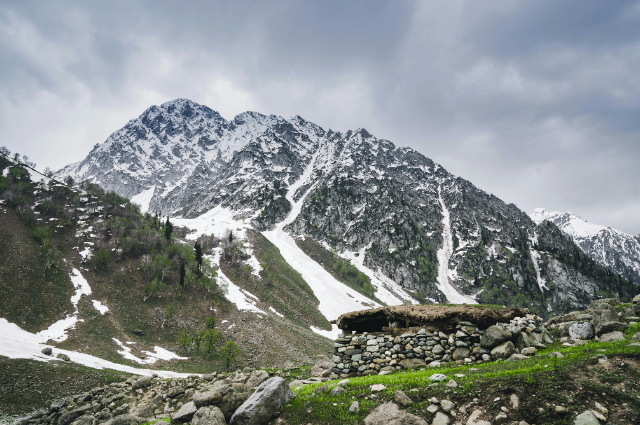
The region of Doda, located in the eastern part of Jammu, is arguably one of the most brutal battlegrounds for army logistics. The terrain isn’t just a backdrop; it is a force that beats upon movement, mile by mile:
- Severe Weather and Altitude: In the area around Khanni Top, you're dealing with sub-alpine territory that can experience cold snaps during the winter. There'll be roads that can develop black ice on them—a sort of ice that has no real grip on the road. In bad weather, the fog can shut you in and reduce your reaction time to almost nothing. And on top of that, the cold can bother your machinery too.
- Narrow, in a Word: Poorly Kept: Some strategic roads in this sector travel via narrow paths through sheer mountain sides, without adequate and strong barrier protection such as guard rails. Landslides and falling snow pose a perpetual threat to these mountain roads, progressively weakening the surface and causing new potholes to develop.
- Steep slopes: These slopes mean constant shifting gears and braking, which test both the equipment and the operator to their limits. “Tight blind turns, especially an armoured vehicle that can’t see very far in front of it or turn very tightly.”
This is not a temporary obstacle; rather, it is the reality with which logisticians and soldiers contend daily in the Pir Panjal and Himalayan Mountain Tactical Corridors. The movement of personnel and materials is a daily struggle against terrain and Mother Nature, with even routine operations posing a threat level several notches higher. The Doda scenario vividly illustrates a bitter reality: the biggest threats in a non-combat area are often environmental.
Official Reactions and Public Mourning
Its immediate wake saw a wave of grief and formal acknowledgements from top leadership at both the national and regional levels, proving how great the respect for sacrifices being laid down by the armed forces. The sorrow was voiced by senior figures from all over the country. Taking to his social media account, Prime Minister Narendra Modi wrote a message of deep grief, where he recognised the service and supreme sacrifice of the fallen soldiers, praying that the injured recover soon. He said, "The nation will never forget the bravery and exemplary valour certain heroes show while defending the borders in the most challenging terrain and conditions."
Lieutenant Governor Manoj Sinha of Jammu & Kashmir, who works in tandem with the Army's command on many occasions, shared the very sentiments of solidarity with the bereaved families and extending all possible support from the UT administration to the Army for crisis management and succour to the injured.
Defence Minister Rajnath Singh quickly stated to underline the immediate, comprehensive efforts of the Army to give the best medical attention to the injured. He announced a high-level inquiry into all aspects of the accident, underlining a commitment to learn from the incident to avoid a recurrence in the future.
Omar Abdullah, the Chief Minister of Jammu & Kashmir, praised the swift rescue and evacuation effort and commented on how well the military and civilian agencies were coordinating during this effort. His remarks captured the shared tragedy in local communities, with whom an attachment has developed due to soldiers being posted amongst them.
Beyond the official statements, the nation came to a grinding halt in public mourning. Hundreds of hometowns, from the most distant villages to sprawling metropolises, were shrouded by a sense of sadness while families, neighbours, and communities struggled to come to terms with the loss of loved ones serving on the front lines. This is particularly bitter, not from a single moment of valorous fire but from the steady, dangerous routine of duty. Military funerals, many held with full honours, became some of the most sombre moments the nation could recall-the quiet courage it took to serve in hostile terrain. This respect reaffirmed the social contract with the armed forces and recognised that service inherently meant continuous exposure to danger, be it in combat or in day-to-day operations.
Reflecting on the Risks Beyond Combat: The Non-Combat Casualty
This accident wasn't a combat loss, per se, but it illustrates a tough reality that always confronts military planners: the risks to the members of a country's service forces are seldom restricted to the battlefields. Non-combat casualties-injuries or deaths caused by factors other than direct enemy contact, such as by accident, harsh terrain, sickness, or self-inflicted-constitute a significant portion of military losses the world over.
Soldiers operating in mountainous regions regularly take to dangerous, high-altitude routes as part of their deployment, logistics, patrol, or operational movement duties. That daily routine is rife with hazards:
- Logistical lifeline risk: Keeping a forward post alive means moving fuel, rations, ammo and relief personnel - all along routes that are already compromised. Every trip is a calculated risk.
- Environmental hostility: The terrain itself, along with sudden weather swings and terrible road conditions in areas like Doda, is a consistent enemy that requires watchfulness and stamina not only when relocating but also during setup, maintenance, and repair.
- Vehicle dynamics and design: Dependency on heavy, specialised armoured vehicles—the Casspir for protection from asymmetric threats, in particular—creates special risks at sharp mountain curves where lighter standard vehicles would have no issues. You must balance ballistic protection against the need for high-altitude handling that is surefooted and reliable.
- Human factors: Prolonged deployments, isolation, and driver/manning post fatigue under difficult conditions-all these are potential contributing factors to accidents. Constant, specialised training and enforced rest are among the crucial safeguards. The Doda tragedy is bound to make the military and the policymakers wake up to these logistical and environmental hazards as seriously as the direct combat threats. Further, investment in safety protocols, driver training, and terrain-specific tweaks to vehicles saves lives and helps keep combat readiness because every soldier lost in an accident weakens the deployed force.
In my view, while the immediate focus during such tragedies is naturally on rescue, recovery, and supporting the families, it is equally important to look long-term at infrastructural and procedural improvements. This systemic evaluation must involve multiple prongs:
Hardening of infrastructures: Development of robust protection systems, such as crash barriers, safety catchments, and expansion of crucial choke points in dangerous routes, would also aid in this regard. Investment in technology that removes black ice and snow formation from key routes of military value would also play a part.
Vehicle tech upgrades: Accelerate the deployment of sophisticated anti-lock braking system upgrades (ABS), electronic stability control system upgrades (ESC), and military-specific winter tyres/ chains for high-altitude heavy-duty military transport missions. Evaluate the feasibility of lighter transports for logistical missions in extreme terrain if the IED threat is lower due to geographical characteristics.
Driver training and certification: Prepare more rigorous and specialised training programs emphasising defensive road use at increased altitudes with low traction for the large fleet of heavy armoured vehicles. Include simulation exercises for different classes of vehicles and bi-annual re-certification.
Risk Assessment and Route Planning: Apply dynamic weather-driven risk protocols to communicate specific warnings or even mandate no-moves for critical routes identified as highly risky through satellite and weather updates. Safety will be prioritised over time schedules in such cases.
These steps require a long-term investment, but they remain vital steps in the evolution of military logistics within this challenging mountain environment. They acknowledge that there are some inherent difficulties in mountain warfare but aim to methodically manage avoidable combat loss.
The loss of ten soldiers in the Doda gorge accident is a stark reminder of the silent risks that members of the armed forces routinely face in the service of national security and territorial integrity. These personnel are the bedrock of India's frontier defence, and their deaths underline the comprehensive price of maintaining a strong, deterrent presence in geopolitically sensitive and physically demanding areas. Though far from enemy fire, these brave personnel were fulfilling duties that required immense courage, unwavering commitment, and profound adaptability to some of the harshest environments on earth. Their service was a constant act of resilience against the elements and the terrain. They fell in the line of duty, their sacrifice demanding the same recognition and honour accorded to those lost in direct combat.
As official investigations continue into the exact causes of the crash, the primary focus must shift from immediate mourning to strategic action. The lessons learned from Doda must drive a renewed commitment to enhancing the safety framework—be it through improved road infrastructure, advanced vehicle technology, or refined operational protocols. The best way to honour the memory of the ten soldiers is to ensure that their sacrifice contributes to a safer environment for the thousands of colleagues who continue to serve along the high-altitude frontier. The nation remembers their sacrifice and stands in profound solidarity with the families who mourn them, pledging that their lives were not lost in vain, but will catalyse crucial, life-saving change.
. . .
References:
- Deccan Herald: Ten Army soldiers killed, 11 injured after vehicle plunges into gorge in Jammu and Kashmir’s Doda — details the crash and official statements.
- The Times of India: J&K: 10 killed as army vehicle plunges into 200-feet gorge; PM Modi offers condolences — covers casualty figures, location Khanni Top, and national reactions.
- The Quint: Ten Army Soldiers Killed, 11 Injured as Military Vehicle Skids Into Gorge — mentions vehicle type, terrain, and rescue operations.
- News On Air: J&K: Ten Army soldiers killed and 11 others injured as vehicle plunges into gorge — official casualty confirmation, including rescue details.
- Mathrubhumi (English): 10 soldiers killed, 11 injured as Army vehicle plunges into gorge — notes altitude (~9,000 ft) and Bhaderwah–Chamba interstate road.
- Hindustan Times: 10 soldiers killed as army vehicle falls into gorge in J&K’s Doda — gives details on the location and rescue action.
- The Economic Times: 10 soldiers killed, 11 injured as Army vehicle plunges into gorge in J&K’s Doda — confirms immediate rescue and leadership condolences.