
The Dual Arrest and Divergent Destinies
The afternoon of April 8, 1929, was a defining moment in India's struggle for independence. The explosion of two harmless bombs in the Central Assembly Hall in Delhi was not an act of violence, but a calculated spectacle designed to draw the world's attention to the oppressive machinery of the colonial regime. Two young men, Bhagat Singh and Batukeshwar Dutt, stood their ground amidst the smoke, throwing pamphlets that famously declared the aim: ‘To Make the Deaf Hear’. Both were arrested on the spot, and both were convicted for this act of propaganda. While Bhagat Singh was swiftly elevated to the status of an unparalleled national icon, his comrade-in-arms, Batukeshwar Dutt, experienced a profoundly different fate. As the decades passed following India's independence, Dutt’s name gradually receded from the collective memory; his immense suffering and unwavering commitment to the revolutionary cause were relegated to a footnote in history. His story, born on November 18, 1910, is a tragic narrative of courage and sacrifice followed by obscurity and neglect—a stark reminder that the recognition of heroes is often an arbitrary process, leaving some to shoulder the burden of anonymity even after having risked their lives for the nation's liberation. This article delves into the depths of Dutt’s revolutionary journey, analysing the strategic importance of the Assembly bombing, the brutal ordeal of his imprisonment, and the painful reality of his post-Independence erasure, ultimately seeking to restore dignity to the memory of this forgotten comrade.
The Fateful Day: April 8, 1929, and the Assembly Act
The bombing of the Central Assembly Hall in Delhi on April 8, 1929, was meticulously planned by the Hindustan Socialist Republican Association (HSRA) as a spectacular act of political theatre, not terrorism. The revolutionaries' primary goal was to protest two draconian legislative measures: the Trade Disputes Bill, which aimed to curb the rights of workers to strike, and the infamous Public Safety Bill, which sought to grant the colonial government sweeping powers to arrest and detain without trial, primarily targeting political dissidents and trade union organisers. These bills were seen by the HSRA leadership, particularly Bhagat Singh, as the final nails in the coffin of civil liberties under British rule. The bombs used—filled not with shrapnel but with low-grade explosives—were intentionally designed to produce sound and smoke without causing death or serious injury, underscoring the revolutionary philosophy of propaganda by deed. The dramatic effect was heightened by the accompanying slogans, "Inquilab Zindabad" (Long Live the Revolution) and "Samrajyavad ka Nash Ho" (Down with Imperialism), shouted with fierce conviction by Bhagat Singh and Dutt as they scattered their self-penned red pamphlets. The pamphlets were crucial, outlining their ideological manifesto: the purpose was to register a loud, unavoidable protest against the colonial state's deafening silence and indifference to the rising tide of Indian nationalism and worker rights. This deliberate act of self-surrender—the duo did not attempt to escape and invited arrest—was central to the strategy. They sought to use the resultant colonial trial as a platform, a public address system through which their revolutionary philosophy of socialism, secularism, and anti-imperialism could be broadcast globally. Newspapers, including the Hindustan Times, rushing out a special edition and The Statesman cabling its report to London to evade censorship, immediately recognised the profound political significance of the event. The international headline, “Reds Storm the Assembly!”, accurately captured the revolutionary fervour. Batukeshwar Dutt's unwavering presence, sharing the stage with Bhagat Singh, demonstrated absolute commitment to this shared ideological vision. His role was not secondary; it was essential to the successful execution of the plan, as his composure during the bombing and subsequent willingness to face the consequences alongside his comrade exemplified the dedication and courage required to challenge the world's largest empire. This synchronised act of defiance ensured that the Assembly bombing became a monumental event in the annals of the freedom struggle, fulfilling its objective of making the deaf colonial masters hear the cries of the revolution. The action also served as a morale booster for the nascent revolutionary movement across North India, proving that the British administration, even in its most secure facility, was vulnerable to symbolic acts of protest.
Joining the Ranks: Dutt's Early Life and the Hindustan Socialist Republican Association (HSRA)
Batukeshwar Dutt’s journey into the heart of the revolutionary movement was shaped by the intense political atmosphere of the 1920s and his early exposure to radical thought. Born in 1910 in the village of Oari in the Khanda police station area of Purba Bardhaman district in Bengal Presidency (now West Bengal), his family later moved to Kanpur, Uttar Pradesh, where he received his primary education. It was in Kanpur, a bustling industrial and political centre, that Dutt’s revolutionary inclinations solidified. He was deeply affected by the failures of the non-cooperation movement and the subsequent lull in militant nationalist activity, which led many idealistic young men toward organised armed resistance. His political awakening was directly influenced by the burgeoning socialist and communist literature that circulated among student groups. The turning point in his life was his association with the pioneers of the renewed revolutionary movement. He became a crucial member of the Hindustan Socialist Republican Association (HSRA), which was founded in 1928, succeeding the earlier Hindustan Republican Association (HRA). The HSRA distinguished itself from its predecessor by explicitly adopting socialism and secularism as its core ideology, moving beyond mere political independence to advocate for a complete socio-economic overhaul of India. Dutt’s role within the HSRA quickly became central, particularly due to his quiet diligence and technical aptitude. He was entrusted with vital tasks that demanded absolute secrecy and reliability.
Dutt played a crucial, practical role in the HSRA’s clandestine operations, often acting as a bomb-maker and tester. His skills were indispensable to the organisation, as the HSRA relied on manufactured explosives for acts of symbolic protest and, potentially, for defensive actions. He was involved in setting up and operating the secret bomb factory located in Agra, where he worked alongside other key revolutionaries, perfecting the formula for the bombs used by the HSRA. His proximity to figures like Chandrashekhar Azad and, most importantly, Bhagat Singh cemented his position as a core member of the inner circle. The relationship between Dutt and Bhagat Singh was one of deep ideological unity and mutual trust, forged in the crucible of shared danger and revolutionary fervour. Dutt’s commitment to the socialist ideals of the HSRA was unwavering. He viewed the Assembly bombing not as an isolated act, but as a necessary phase in the long-term struggle to dismantle both British political power and the exploitative capitalist system it upheld. When the decision was made to execute the propaganda bombing, Dutt was one of the few trusted members considered reliable enough to carry out the mission alongside the organisation's undisputed ideological leader, Bhagat Singh. His willingness to sacrifice his life, knowing the certainty of arrest and harsh sentence, demonstrates a commitment that was both profound and foundational to the HSRA's courageous stance against the colonial state. His history is thus interwoven with the very fabric of the HSRA’s transformation from a disparate group of nationalists into an organised, ideologically grounded socialist revolutionary party.
The Bombing Strategy: Ideology Over Annihilation
The decision by Bhagat Singh and Batukeshwar Dutt to utilise "harmless bombs" and immediately court arrest was the defining strategic element of the Assembly bombing, underscoring the profound difference between the HSRA's revolutionary philosophy and conventional terrorism. The entire exercise was predicated on the ideology of Propaganda by Deed, which posits that dramatic, symbolic acts draw more attention to a political cause than mere words or prolonged underground activity. However, unlike certain European anarchist movements that advocated terror, the HSRA rigorously controlled the act’s lethality. The bombs were filled with materials designed for noise and smoke, avoiding the use of shrapnel or high-grade military explosives. This non-lethal design was critical to their subsequent defence in court: they were protesting injustice, not seeking to assassinate officials. The intention was to deliver a loud, clear message to the British legislative body, which the revolutionaries viewed as a sham, unresponsive to Indian public opinion, particularly concerning the suppression of workers’ rights via the Trade Disputes Bill and the erosion of civil liberties through the Public Safety Bill. Dutt’s participation solidified this commitment to non-violence against individuals, while maintaining violence against the system.
The core of their strategic communication was contained in the red pamphlets scattered across the Assembly floor, titled ‘To Make the Deaf Hear’. The text, penned primarily by Bhagat Singh, argued that the colonial state was willfully ignoring the mounting political and economic grievances of the Indian people. The act was a desperate, symbolic necessity, a final shout against an oppressive silence. By inviting arrest, the duo executed the second, and arguably more vital, phase of their strategy: using the courtroom as a political pulpit. They understood that their trial would generate massive public interest, providing an uncensored platform—protected by the colonial legal system itself—from which they could articulate their socialist, anti-imperialist, and atheist philosophy to the world. They knew that whatever they said in court would be documented and reported in newspapers globally, bypassing the everyday censorship that suppressed their pamphlets and speeches. In their joint statement to the court, Dutt stood alongside Bhagat Singh, declaring their commitment to the establishment of a socialist society and clarifying that their idea of revolution was not merely a change of rulers, but a fundamental transformation of society, eradicating the exploitation of man by man. This strategy of leveraging the very tools of the colonial state (the judiciary and the press) against it was a masterstroke of political communication. Dutt's unwavering solidarity throughout the court proceedings was crucial. By presenting a unified front, they ensured that the focus remained on their political motive—challenging the legislative tyranny—rather than being sidetracked by personal defence. The Assembly bombing, therefore, was not a failure of violence but a resounding success in political communication, achieving massive national and international publicity for the HSRA's revolutionary doctrine, a success that Dutt shared fully and without reservation with his more celebrated comrade.
The Trial of the Duo: Assembly Bomb Case and Shared Conviction
The trial following the Central Assembly bombing became a defining legal and political spectacle, drawing widespread media attention exactly as Bhagat Singh and Batukeshwar Dutt had planned. The immediate charge against the two young men was related to the throwing of explosives and sedition, falling under the Explosive Substances Act and various sections of the Indian Penal Code (IPC). The British prosecution, seeking to swiftly condemn the act as pure terrorism, framed it as an attempt to murder and cause grievous injury. Dutt and Bhagat Singh, however, rejected the services of defence lawyers for the political aspect of their case, choosing instead to use the court's dais as a strategic platform for articulating their revolutionary ideology. Their joint statement, delivered with immense intellectual clarity, became an enduring document of India's revolutionary nationalism. They argued passionately that their action was purely symbolic, a necessary resort against the colonial administration's brutal implementation of bills designed to crush workers and political dissent. They vehemently denied any malicious intent to harm individuals, citing the non-lethal nature of the bombs and their immediate surrender.
The prosecution struggled to refute the political motivation when no one had been seriously injured, and the defence was transformed into a devastating critique of British rule. Dutt and Bhagat Singh utilised the proceedings to preach the HSRA's socialist doctrine, asserting that the revolution they sought was not one of bloodshed but of social justice, aimed at ending all forms of exploitation. They declared that they were not criminals but political revolutionaries fighting for the freedom of their nation. This public stance resonated deeply with the masses, transforming the accused from terrorists in the eyes of the state into martyrs-in-waiting in the eyes of the public. The colonial authorities, realising the damage the trial was inflicting on their reputation, ultimately sought a swift conviction. Both Batukeshwar Dutt and Bhagat Singh were convicted in the Assembly Bomb Case, with the verdict announced on June 12, 1929. They were sentenced to transportation for life, a severe penalty that typically meant deportation to the dreaded Andaman Cellular Jail—the infamous Kala Pani. At this point, their fates were entirely aligned; they had shared the courage of the act, the power of the statement, and the severity of the initial punishment. This shared conviction underscored Dutt’s equal commitment to the cause. While history often separates their subsequent sentences, this first trial confirms their fundamental partnership: Dutt's willingness to stand side-by-side with Bhagat Singh, accepting the severest penalty short of death, established his unwavering bravery and commitment to the HSRA's revolutionary philosophy, a commitment that was publicly acknowledged and celebrated across India at the time of the verdict. Their joint imprisonment marked the beginning of Dutt's extended and brutal suffering, a punishment he received solely for the symbolic act of protest.
The Diverging Paths: The Saunders Case and the Death Sentence Divide
While Batukeshwar Dutt and Bhagat Singh were initially united by the life sentence stemming from the Assembly Bomb Case, their destinies sharply diverged with the introduction of the infamous Lahore Conspiracy Case. This case centred on the December 1928 assassination of Assistant Superintendent of Police John P. Saunders, whom the HSRA mistakenly believed was Superintendent James A. Scott, the officer responsible for the brutal lathi charge that led to the death of nationalist leader Lala Lajpat Rai. The murder of Saunders—an act of retaliatory violence—was a far more severe charge than the non-lethal bombing of the Assembly, carrying the mandatory sentence of death. While Dutt was an integral member of the HSRA and knew about the plot, he was not directly implicated in the Saunders murder itself. Bhagat Singh, Sukhdev, and Rajguru, however, were the key accused in the Lahore Conspiracy Case. The British government, determined to crush the HSRA, decided to combine all known revolutionary activities into this single, expanded trial. A Special Tribunal was constituted via an Ordinance, bypassing normal legal procedures to expedite the process and ensure a conviction, signalling the colonial government's determination to see the main leaders executed.
The key legal distinction that separated Dutt's fate from that of his comrades was his non-participation in the Saunders murder. While he was found guilty in the Assembly Bomb Case and sentenced to life imprisonment, the lack of direct involvement in the Lahore Conspiracy Case saved him from the gallows. Bhagat Singh, Sukhdev, and Rajguru, on the other hand, were tried, found guilty, and ultimately sentenced to be hanged on March 23, 1931. This division of fate was profoundly political: Bhagat Singh became the ultimate martyr, forever synonymous with supreme sacrifice, precisely because he received the death sentence. Dutt, receiving the life sentence, was removed from the immediate pantheon of martyrdom. His punishment was one of slow, prolonged suffering in the harsh environment of the penal colony, a fate often less dramatically remembered than the swift, iconic sacrifice of the noose. Dutt was subsequently deported from mainland India to the Andaman Cellular Jail, also known as Kala Pani, to serve his life term. This segregation of punishment, dictated by the severity of the separate crimes, was the crucial pivot point. It tragically placed Bhagat Singh on the pedestal of instant immortality through execution, while confining Dutt to the slow, forgotten agony of the colonial penal system. This legal divergence defined their contrasting places in the national memory, transforming Dutt's prolonged suffering into historical obscurity while enshrining Bhagat Singh's short life and death as the ultimate symbol of revolutionary sacrifice.
The Hell of Kala Pani: Batukeshwar Dutt's Ordeal in the Andaman Cellular Jail
Following his conviction and life sentence in the Assembly Bomb Case, Batukeshwar Dutt was deported to the dreaded Andaman Cellular Jail (Kala Pani), an institution notorious for its brutality, isolation, and inhuman living conditions designed to break the will of political prisoners. Dutt’s ordeal in the Andamans lasted several years and constituted a period of sustained, psychological, and physical torment far exceeding the iconic martyrdom of his executed comrades. The conditions in the Cellular Jail were medieval: prisoners were kept in solitary confinement in tiny, poorly ventilated cells, subjected to gruelling manual labour (such as coir pounding and oil grinding), and provided with substandard, often infested food. The primary tactic of the British jailor was not merely punishment but systematic dehumanisation through isolation, starvation, and beatings, aiming to crush the spirit of the revolutionary prisoners. Dutt, along with his fellow inmates, faced this reality head-on, refusing to submit to the degradation. His most notable act of resistance during this period was his active participation in the hunger strikes organised by the political prisoners in the Andaman Jail. These hunger strikes were not just protests against the abysmal food quality or harsh labour; they were ideological battles demanding that political prisoners be treated as political prisoners, not common criminals. The key demands centred around access to adequate food, reading material (especially revolutionary and educational texts), and better living conditions. The hunger strikes were excruciatingly painful, often lasting for weeks and leading to severe health complications. Dutt’s unwavering resolve during these strikes, even when near death, mirrored the courage he displayed in the Assembly Hall. His prolonged suffering was compounded by his deteriorating health. The combination of malnutrition, strenuous labour, and the unsanitary conditions of the jail led to his contracting tuberculosis (TB), a potentially fatal infectious disease in that era. Recognising the severity of his condition and facing mounting public pressure, the colonial government eventually repatriated Dutt to a jail in mainland India for better medical treatment.
This was not a reprieve but a forced relocation due to the fear of his death in the Andamans, triggering another wave of national protest. Dutt was eventually released due to his terminal health condition in 1937, only to be rearrested several times in subsequent years for his continued political activity. His time in Kala Pani was a period of sustained, unimaginable sacrifice—a slow consumption of his physical health and spirit over many years. While Bhagat Singh's martyrdom was a quick, sharp severing, Dutt's sentence was a prolonged crucifixion, etching his name into the records of prolonged colonial oppression, an ordeal that defined his frail condition for the rest of his life.
The Sacrifice of the Unseen: Dutt’s Role in Revolutionary Philosophy and Action
Batukeshwar Dutt’s revolutionary contribution extends beyond his shared role in the Assembly bombing; it lies fundamentally in his unwavering commitment to the core tenets of the HSRA's revolutionary philosophy and his role as a reliable, indispensable operational asset. His sacrifice was not a single moment of dramatic protest but a sustained commitment to revolutionary action and prolonged suffering. The HSRA was built on the trinity of socialist ideology, atheism, and decisive action against colonial exploitation. Dutt embodied the latter two principles with quiet efficacy. His technical skills in bomb-making were critical. The successful manufacture of the bombs used in the Assembly bombing, as well as the explosives used in other HSRA actions, required expertise, secrecy, and profound trust. Dutt's ability to maintain the anonymity of the Agra bomb factory and his continuous work under extreme danger underscore his importance as the organisation’s primary operational technician. Without individuals like Dutt to handle the logistical, technical, and high-risk elements of the conspiracy, the HSRA's ability to execute "propaganda by deed" would have been severely limited.
Furthermore, Dutt’s sacrifice extended into his prolonged defiance during imprisonment. While the execution of Bhagat Singh, Sukhdev, and Rajguru instantly ended their physical suffering, Dutt faced a sentence that demanded continuous, active defiance against institutionalised cruelty. His participation in the hunger strikes, both in the mainland jails and in the Andaman Cellular Jail, required a sustained level of courage that often goes unrecognised. The decision to starve oneself for political rights, often facing the trauma of forced feeding and near-death experiences, is a testament to an unyielding spirit. This sacrifice was made for the principle of recognising political prisoners—a core revolutionary demand—and not for individual glory. By sustaining his defiance and surviving the Andaman horror, Dutt carried the torch of the HSRA's resistance for years after his comrades were gone, acting as a living symbol of the movement’s endurance. His subsequent release on health grounds in 1937 and immediate return to anti-colonial activities despite his terminal tuberculosis further solidifies his role as a relentless revolutionary. He risked rearrest and certain death to continue the struggle, demonstrating that his commitment to Inquilab Zindabad was total. His sacrifice was, in essence, the long, slow, grinding attrition against the colonial system, a necessary, enduring complement to the quick, explosive martyrdom that history chose to immortalise. Dutt's unsung service provided the operational backbone and the enduring spirit of resistance that preserved the memory and message of the HSRA during the decades that followed the execution of its chief architect.
The Post-Independence Erasure: Neglect, Poverty, and the Fight for Dignity
The most tragic chapter of Batukeshwar Dutt's life unfolded not under the British colonial regime, but in the decades following India's independence in 1947. Having endured years of brutal imprisonment in Kala Pani, contracting debilitating tuberculosis (TB), and sacrificing his youth for the nation, Dutt found himself utterly neglected and forgotten by the very republic he had helped to liberate. Unlike the political leaders who rose to power and prestige, Dutt possessed no political capital, no organisational base, and suffered from chronic poverty and ill health. The newly independent government, dominated by the Congress party, which had often been ideologically opposed to the methods of the HSRA revolutionaries, failed to recognise Dutt's unique sacrifice. He was denied the status and recognition that should have been accorded to a man who had faced the gallows alongside Bhagat Singh. His years of hardship meant he lacked the resources or training for stable employment in the competitive post-War economy.
Dutt’s life in the 1950s and 1960s was marked by a desperate struggle for financial stability and basic medical care. He tried various humble jobs, including working as a small-time businessman and even as a tourist guide in Calcutta, but his chronic ill health, compounded by the years of malnutrition in prison, prevented him from holding consistent work. The sight of a man who had once shaken the foundations of the British Empire selling cigarettes or acting as a tour guide was a harsh indictment of the nation’s historical memory and its treatment of its unsung heroes. His personal neglect was often brought into public view only when his health worsened critically. It was during these desperate times that the media would occasionally rediscover his plight, sparking brief, episodic public outcry, which would result in meagre financial aid that was quickly exhausted by his medical bills. His condition deteriorated to the point where he had to be admitted to the All India Institute of Medical Sciences (AIIMS) in Delhi in the 1960s. Even then, securing adequate financial support and recognition was a struggle. It took intervention from his old comrades and public figures—most notably, possibly Lal Bahadur Shastri when he was Home Minister—to ensure he received proper care. The humiliating reality of Dutt's post-Independence life starkly contrasts with the glorious ideal for which he had risked everything. He was a living symbol of the revolutionary socialist struggle, yet he was left to die in obscurity and poverty, a victim of historical erasure and governmental indifference. His fight in those final years was not against the British, but against the sheer apathy of the independent Indian state, battling for the basic dignity that a national hero deserved. The neglect of Batukeshwar Dutt remains a permanent stain on the historical record of the early republic.
The Unfinished Story: Health Crisis, Death, and the Final Act of Remembrance
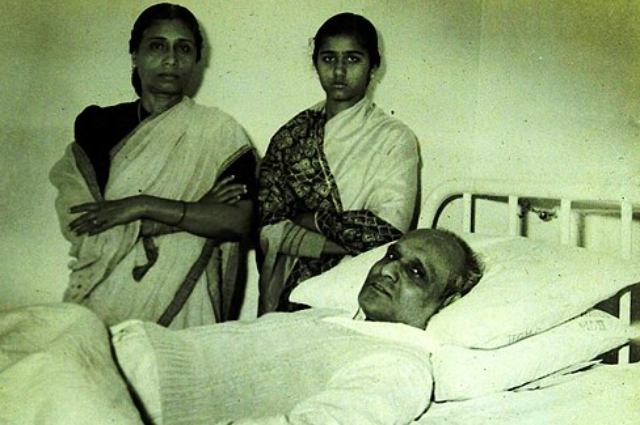
Batukeshwar Dutt's physical decline in the years following independence was a direct consequence of the brutality he endured during his revolutionary service, particularly the ravages of tuberculosis (TB) contracted in the Andaman Cellular Jail. By the mid-1960s, his health had deteriorated catastrophically, bringing his decades-long struggle for survival and dignity to a tragic climax. His condition became terminal, marked by severe respiratory distress and chronic physical weakness. He was eventually admitted to the All India Institute of Medical Sciences (AIIMS) in Delhi for his final medical battle. The media, often slow to recognise him in life, now tracked his final days, once again highlighting the national shame of a forgotten freedom fighter left in penury. The temporary public attention provided a brief, final surge of support, ensuring his treatment was partially funded. Despite the best medical efforts at AIIMS, the damage wrought by years of torture and neglect was irreversible. Dutt’s frail body finally succumbed to his illness, and he passed away on July 20, 1965, at the age of 54. His death marked the definitive end of the revolutionary partnership that began in the Assembly Hall 36 years earlier.
In a poignant final act that transcended the decades of neglect, the decision was made for his final resting place. Recognising the profound historical injustice of his obscurity, his body was not cremated in Delhi but transported for a final rite of passage. Batukeshwar Dutt was cremated in Hussainiwala, Ferozepur, Punjab, on the banks of the Sutlej River. This location is sacred ground: it is the same place where his immortal comrades, Bhagat Singh, Sukhdev, and Rajguru, were secretly cremated by the British authorities following their execution. By ensuring Dutt’s remains were interred next to his comrades' memorials, the surviving members of the revolutionary movement and sympathetic public figures orchestrated a powerful, symbolic reunion. This final act was a forceful, emotional correction to history's arbitrary selection of heroes. It served as a definitive public declaration that Dutt belonged, in death, exactly where he belonged in history—shoulder-to-shoulder with the revolutionary trinity. The burial at Hussainiwala was not just a funeral; it was the nation's belated acknowledgement of his equal sacrifice, serving as an enduring reminder that Batukeshwar Dutt, the quiet comrade, was an essential and inseparable part of the revolutionary legacy that secured India's freedom. His death, thus, forced a final, irreversible act of remembrance, reuniting the partners in revolution and ensuring that their memorial remains a testament to shared courage, even if their lives were separated by divergent fates.
Bhagat Singh's Shadow: The Architecture of Historical Memory and Iconography
The historical erasure of Batukeshwar Dutt is most starkly realised when contrasted with the towering, unassailable icon status of his comrade, Bhagat Singh. This divergence in public memory is not arbitrary; it is rooted in the powerful architecture of historical memory and iconography—a combination of political narrative, literary output, and the sheer dramatic impact of the ultimate sacrifice. Martyrdom is the most potent catalyst for iconic status in political history. Bhagat Singh, alongside Sukhdev and Rajguru, faced the gallows, a swift, final, and dramatic end that instantly transformed him into an eternal symbol of supreme, uncompromising sacrifice. His execution date, March 23, 1931, became a sacred national landmark, a reference point for courage and revolutionary idealism. The British act of secretly executing him and cremating his body amplified the public anger and cemented his legendary status, creating a void that was filled immediately by national mythos.
Dutt's fate, while arguably more physically punishing, lacked this immediate, dramatic finality. His life sentence condemned him to the slow, prolonged suffering of Kala Pani. He survived the ordeal, was released, and then lived a life of poverty and ill-health. While his defiance during the hunger strikes was immense, prolonged suffering does not create the same sharp, easily digestible iconography as a moment of heroic death. Survival, in this context, was historically disadvantageous to his memory. Furthermore, the political landscape after independence favoured the narratives of the Congress party and Mahatma Gandhi's non-violent movement. Revolutionary violence, even symbolic acts like the Assembly bombing, was often downplayed or marginalised. Bhagat Singh, through his powerful writings (such as Why I Am an Atheist and the court statement), was a potent intellectual, making his legacy easier for subsequent generations of political activists and intellectuals to claim. Dutt, the quiet operational expert, left behind fewer ideological texts, making his voice less loud in the post-colonial narrative. The historical memory, therefore, was selective. It embraced the purity of the execution (Bhagat Singh) as the ultimate, uncorrupted sacrifice, while overlooking the messy, painful reality of the survivor (Dutt), who became a constant, inconvenient reminder of the sacrifices that independence failed to fully acknowledge or reward. The memory of Batukeshwar Dutt was, ironically, swallowed by the immense shadow cast by the glorious immortality of his executed comrade, a symbol of historical injustice that only the physical reunion at Hussainiwala could symbolically attempt to rectify.
The Courtroom as a Pulpit: The Enduring Legacy of the Joint Statement
The shared commitment of Batukeshwar Dutt and Bhagat Singh was most powerfully articulated in their joint statement before the Session Judge in the Assembly Bomb Case, transforming the colonial courtroom from a venue of jurisprudence into a vital political pulpit. This document remains one of the most enduring and radical declarations of the entire Indian freedom struggle, and Dutt’s name is inextricably linked to its powerful content. The core purpose of the statement was to strip away the colonial government’s narrative of 'criminality' and impose their own narrative of 'revolutionary political action.' The statement was a masterclass in political communication, detailing the necessity of their action. They explained that they threw the bombs not to injure, but to protest the enactment of the Trade Disputes Bill and the Public Safety Bill—legislations they deemed a calculated strategy to suppress the voice of the Indian working class and nationalist dissent.
The statement's enduring legacy is built on its articulation of the HSRA's revolutionary ideology. They defined revolution not as mere sanguinary strife, but as the culmination of the process to establish a new social order—a socialist order free from exploitation. They famously declared: "The bomb was necessary to wake up the government from its slumber." Dutt's public and unwavering affirmation of this statement alongside Bhagat Singh was crucial. It ensured that the message was monolithic and that both individuals were seen as equally dedicated to the philosophy of Inquilab Zindabad. Had Dutt retracted or offered a separate, less forceful defence, the unified impact of the propaganda would have been diluted. By signing and affirming the joint statement, Dutt elevated his own act of bomb-throwing into a profound philosophical act, demonstrating intellectual ownership of the HSRA's cause. The strategic significance of using the courtroom was immense: the statement was immediately recorded by the court reporter, printed in newspapers across the globe, and read into the official record, ensuring its survival and distribution even under the strictest censorship. This forced dissemination allowed the HSRA's message to permeate the national consciousness, inspiring countless youth. Decades later, while the public often forgets Dutt's face, the words of the joint statement—his joint statement—continue to define the intellectual, socialist core of the revolutionary freedom struggle, making the courtroom the most important tactical victory in the duo’s entire campaign against the Empire.
The Revolutionary vs. The Nationalist: Ideological Differences and Historical Classification
The historical treatment of Batukeshwar Dutt is also a consequence of the complex post-Independence classification that struggled to reconcile the radical "revolutionary" methods of the HSRA with the dominant "nationalist" narrative championed by the Indian National Congress. The HSRA was fundamentally a revolutionary socialist organisation. Its goals were explicitly revolutionary: the overthrow of the British state through any means necessary and the replacement of the colonial/feudal system with a socialist republic. Their actions, including the Saunders murder and the Assembly bombing, placed them firmly outside the mainstream of non-violent, reformist nationalism. Dutt and Bhagat Singh were socialists and atheists whose ideologies challenged not just the British but also the existing socio-religious hierarchies within Indian society. Their focus on the rights of workers and peasants (as highlighted by their protest against the Trade Disputes Bill) placed them firmly on the left of the political spectrum.
The Nationalist narrative, which gained ascendancy after 1947, was built upon the principles of Mahatma Gandhi’s non-violence (Ahimsa) and parliamentary democracy. While the executed martyrs like Bhagat Singh were too powerful to ignore and were reluctantly canonised, their socialist and revolutionary methods were often sanitised, with their writings and core anti-capitalist messages frequently downplayed. Dutt, as the surviving socialist revolutionary who was not granted the iconic death of martyrdom, became an inconvenience to this established narrative. He was a constant, living reminder of the alternative, militant path to freedom—a path the newly formed government sought to sideline. He was not only a revolutionary; he was a survivor who never ceased to be a socialist, making it difficult to fully integrate him into the mainstream "freedom fighter" classification, which preferred symbols of cooperation and consensus. His subsequent poverty and neglect were, in part, a manifestation of this political and ideological marginalisation. The government's reluctance to grant him full status or support was rooted in a subtle historical classification that favoured political figures who were part of the Congress establishment or martyrs whose acts could be safely distanced from their radical ideology. Dutt's story thus underscores a painful reality: historical recognition often depends less on the magnitude of the sacrifice and more on how well that sacrifice aligns with the political and ideological requirements of the post-liberation state. The revolutionary, in the absence of martyrdom, became the forgotten footnote to the nationalist success story.
Lessons from Neglect: The Responsibility of the Post-Colonial State
The decades of neglect endured by Batukeshwar Dutt serve as a profound and uncomfortable lesson regarding the responsibility of the post-colonial state towards those who secured its freedom through extreme personal sacrifice. Dutt’s case is a severe indictment of the early Indian Republic's failure to establish a robust and impartial system for honouring and supporting its veterans, especially those from non-establishment revolutionary factions. His struggle for necessities, including medical care for his severe tuberculosis, highlights a moral failure: a nation that benefited from his youth, health, and liberty failed to provide him with basic dignity in old age. The responsibility of the state, particularly the central government, was multi-fold and repeatedly breached:
- Moral Obligation: The state had a moral obligation to recognise Dutt's unique suffering—the life sentence in Kala Pani, the debilitating illness, and the years of continued struggle against the British after his initial release. This was not a matter of charity but a debt of honour.
- Financial Support: Dutt's physical capacity for work was permanently damaged by his imprisonment. The state should have immediately provided a stable pension and full medical coverage, irrespective of his political leanings. The fact that his hospitalisation at AIIMS in 1965 required public and political intervention underscores the systemic apathy.
- Historical Rectification: The state should have actively worked to integrate Dutt's story into the national curriculum and public memory, ensuring that the partnership with Bhagat Singh was accurately documented. Instead, it allowed his memory to fade into obscurity, prioritising the political convenience of certain narratives over historical truth.
The final, symbolic gesture of cremating him at Hussainiwala alongside Bhagat Singh, Sukhdev, and Rajguru was a belated, public admission of his importance, often spurred more by public pressure and media rediscovery than by proactive governmental action. The long-term lesson from Dutt’s neglect is that a nation's commitment to its founding principles is measured not just by how it celebrates its martyrs, but by how it cares for its survivors. His life after 1947 serves as a cautionary tale: the cost of obscurity for a forgotten hero is measured in chronic poverty, medical distress, and the tragic erasure of a vital part of the nation's revolutionary heritage. This systemic failure of the post-colonial state to honour its debt to Dutt necessitates an ongoing re-evaluation of how India recognises and supports all those who made the supreme sacrifice for its independence.
The Enduring Importance of a Forgotten Comrade
The life of Batukeshwar Dutt, spanning from his birth in 1910 to his death in 1965, is a powerful and ultimately tragic testament to unwavering courage, absolute ideological commitment, and profound historical injustice. As Bhagat Singh's comrade-in-arms, he stood firm on April 8, 1929, sharing the risk, the message, and the conviction for the symbolic act that propelled the HSRA's 'Inquilab Zindabad' slogan onto the global stage. While his non-involvement in the Saunders murder spared him the gallows, his subsequent life sentence condemned him to the slow, debilitating horrors of the Andaman Cellular Jail, where he fought for the rights of political prisoners until his release on health grounds. This prolonged suffering—the sacrifice of the unseen survivor—resulted in chronic tuberculosis and utter neglect in the decades following independence. His desperate struggle for dignity and survival as a poor, ailing man in the free India he helped to establish stands as a permanent indictment of the nation's historical memory and the selective architecture of its hero-worship. The final act of remembrance, his cremation at Hussainiwala alongside Bhagat Singh, Sukhdev, and Rajguru, was a belated but necessary historical correction, restoring his physical and symbolic place next to his revolutionary partners. Batukeshwar Dutt’s story must be actively retrieved from the shadow of his more celebrated comrades, for his courage, his socialist ideology, and his enduring suffering are essential threads in the complex tapestry of India's revolutionary freedom struggle.
. . .
References:
- Singh, Bhagat & Dutt, Batukeshwar: Joint statement delivered in the Session Court, 1929 (often published under the title 'To Make the Deaf Hear').
- Lal, Chaman: The Life and Thought of Batukeshwar Dutt (Various editions).
- Yadav, K. C.: Bhagat Singh: A Life in Revolution (Various editions).
- Government of India (Colonial Era): Records of the Assembly Bomb Case and the Lahore Conspiracy Case (Tribunal Proceedings, 1929–1931).
- Andaman Cellular Jail Records and Testimonies: Accounts of political prisoners regarding the conditions and hunger strikes during the 1930s.
- The Hindu Archives: Contemporary and retrospective coverage of Batukeshwar Dutt’s death, hospitalisation at AIIMS in 1965, and the subsequent efforts for his remembrance.
- Historical Studies on the Hindustan Socialist Republican Association (HSRA): Academic analyses detailing the organisation's philosophy, membership (including Dutt’s role in the bomb factory), and strategy of Propaganda by Deed.