
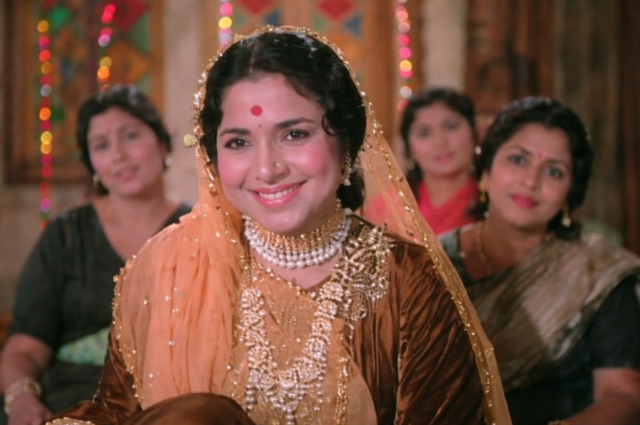
Everyone remembers her as the mother who blessed weddings, wiped tears, and held families together on screen. What few remember is that the woman who spent a lifetime comforting the nation was rarely comforted in return. She was left to negotiate her own ending—alone, paralysed, and forgotten by the very industry that had leaned on her emotional labour for decades.
Her presence lingered long after the scene faded, yet she was gradually erased not by scandal or failure, but by a system, by an industry that celebrated faces but forgot lives.
This is not the story of a beloved character actress. This is the story of how Indian cinema learned to take GRACE for granted.
Early Film Debut and Radio Career
Born in Peshawar in 1920 and trained in classical dance, Achala Sachdev ji began acting much before Independence. She made her film debut as a child artist in Fashionable Wife (1938), a film most of us are not even aware of. Soon after, she joined All India Radio in the early 1940s in Lahore to host talk shows and to perform in radio plays. Radio became a platform where she could experiment with voice, tone, and expression, and it connected her with a wider network of artists and industry figures.
The Partition of India in 1947 marked a significant turning point in her life. Achala Sachdev ji and her family moved to Delhi, leaving behind familiar surroundings, friends, and early career opportunities. She continued her work with AIR Delhi, hosting programs and engaging audiences in a new city. It was during this phase that she crossed paths with several film personalities. These years were challenging, yet they strengthened her resilience, adaptability, and determination to continue in the performing arts.
Return to Cinema and Early Struggles
By her thirties, Achala Sachdev gradually found her way back to cinema. Her love for acting only deepened, and she continued appearing in films through the 1940s and beyond. However, the professional landscape was far from equitable. Even as her capabilities grew, she faced early limitations that would define much of her screen life. In the late 1940s and early 1950s, when she was young enough to play lead roles, she was offered motherly characters. These roles, though pivotal, confined her to a niche that she had not opted for. She delivered them with grace and depth, hinting at the potential for a wider range of characters. Yet those hints went largely unheard.
Breakthrough and Recognition
It was only in 1965, with the release of Waqt, that Achala Sachdev ji gained widespread recognition. The song Ae Meri Zohra Jabeen immortalised her presence, and audiences began associating her with warmth, dignity, and maternal strength. During her long career, she appeared in more than 100 Hindi films, with occasional roles in English-language cinema, earning respect for her versatility. Her performances were never flashy; they were steady, nuanced, and deeply human, making her the emotional anchor of countless films.
Despite this recognition, the industry’s gendered constraints persisted. Female actors, particularly character actors, were often sidelined in terms of pay, publicity, and influence. Achala Sachdev earned less than junior male actors, waited on set for lead shots, and was rarely included in profit-sharing arrangements. In interviews, she described character actors as “furniture”: essential, yet invisible. Her talent was never questioned, but her contributions were undervalued, a reflection of systemic inequities in the industry.
Dignity and Silent Resistance
On screen, she became everybody’s mother, sometimes even to actors younger than her. This was not due to a lack of talent or presence, but a conscious choice rooted in dignity. She quietly resisted the informal compromises expected of women in studios of that era. She held on to her principles, even when roles and visibility were at stake.
The result?
Achala Sachdev ji was not typecast by fate; she was slowly edged out of central roles and pushed into safe character parts, paying the quiet price of choosing dignity over compliance. While male character actors of her stature wielded authority and enjoyed financial security, Achala Sachdev ji navigated an insecure professional landscape. What endured was her presence on screen; what faded was the story of the woman behind it.
What makes this even more poignant is that she never spoke publicly about this marginalisation, nor played the victim card in interviews, nor reframed her career internally, choosing longevity and self-respect over stardom.
Her silence was not surrender, but choice. She did not demand recognition. She showed up and stayed, thus allowing decorum to define her legacy. She moved in life and continued to contribute in an industry dominated by men. She did become the backbone of many films. It was difficult to say which character role was the best. That was the power of her acting, but unfortunately, her talent was often overshadowed by the limelight on others.
Personal Life and Loneliness
Soon, marriage was on the cards. She married assistant film director Gyan Sachdev, but sadly, their union did not witness many sunrises and sunsets together. Differences and personal struggles led to their separation, leaving her to confront the loneliness that contrasted with the warmth she portrayed on screen. Acting ceased to be an ambition and became a means of survival. She once hinted without holding on to any bitterness that film studios often felt more like home than homes ever did.
During this phase, Achala Sachdev shared warm professional relationships with several co-stars and contemporaries, including Meena Kumari. However, industry whispers shadowed personal relationships among these women, where intent was misread, and their friendship was estranged.
A few years later, Achala Sachdev remarried to Clifford Douglas Peters, a British citizen. They met through connections on a film set. Clifford and Achala not only belonged to different cultures but also came from different professional backgrounds. While Achala was a renowned actress in Bollywood, Clifford was a mechanical engineer and industrialist from Pune. Their relationship was built on mutual respect, partnership, and shared understanding, and they found comfort in each other’s company.
Later Years and Illness
People praised her work, yet her name was never announced at award functions. Still, she continued to follow her passion, holding on to the hope that one day her work would be recognised and honoured. She poured her blood and sweat into every role she played; tragically, that devotion was never rewarded with formal recognition. For an artist, acknowledgement is not about trophies or material gain; it is about being seen, and no material comfort can ever replace that solace.
Her struggles did not end with personal loss. Following Peter’s death, she faced prolonged financial hardship and isolation. A woman who played everyone’s mother was left alone. An actress so integral to Hindi cinema vanished from the industry and people’s memory. In September 2011, she suffered a fall at home that fractured her leg and led to multiple embolisms in the brain, causing a cerebrovascular attack. She remained bedridden for approximately seven months, with her limbs paralysed and loss of vision.
When her body finally gave up, after a fall, a stroke, and months of immobility, the industry that had written her into every household had little to say—no grand tributes. No reckoning. Just silence.
Perhaps this is the most unsettling truth. Hindi cinema’s most dependable mother was rarely held in return. Warmth, when endlessly expected and scarcely safeguarded, has a way of becoming unseen.
Although her work was largely unrecognised during the prime phase, much later in life, Achala Sachdev ji was honoured with a Lifetime Achievement Award conferred by G V Films – Immortal Memories Awards in December 2011, held in one of the prestigious hotels in Mumbai.
But, sadly, at that time she was hospitalised and could not attend in person. This stands as one of the few formal recognitions she received late in life despite her long and impactful career.
I took to writing about her because I personally feel people like her, who spend their lives in quiet devotion to their craft, should be remembered, not for their fame alone, but for the quiet endurance behind it.
Achala Sachdev ji may have exited the spotlight, but her imprint should not. Let us not forget the old, meaningful films of the Indian cinema, and the names and faces attached to them.
Let ageing women in cinema be remembered, not forgotten. Let gratitude not expire with fading applause. In a time when conversations around mental health, ageing, and artist welfare are finally finding voice, her life urges us to look beyond admiration and ask harder questions about care and accountability.
Applause must transform into security long after the curtain falls, for those who have entertained us for decades deserve not just remembrance, but dignity, love, and protection in return.