
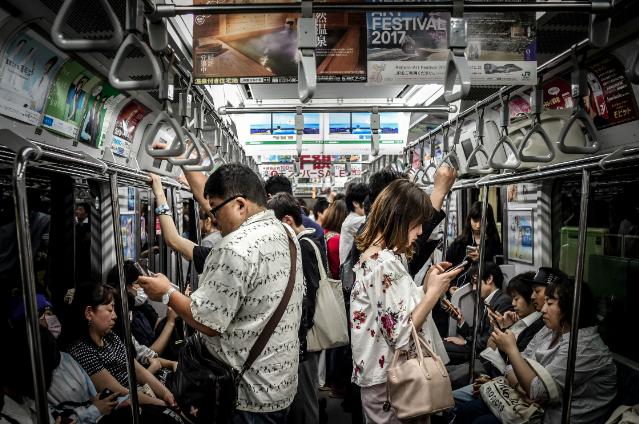
In the ancient Indian philosophical tradition, Maya refers to the cosmic illusion that veils reality, projecting a world of duality, attachment, and transient desires. Today, this metaphysical concept has been materialized in silicon. For the nearly 450 million Indian social media users, the smartphone screen is no longer a tool of communication; it is a modern Maya—an algorithmic veil that curates, distorts, and ultimately replaces lived reality. This digital enclosure has fundamentally altered the "darshan" (vision) of the youth, replacing the organic complexity of Indian life with a flattened, engagement-driven simulation.
We have transitioned from the "Age of Information" to the "Age of Curated Impulse." Unlike the river Ganges, which flows organically toward the ocean, the digital stream is engineered to flow in circles—a "ludic loop" designed to trap human consciousness in a state of perpetual suspended animation. For Indian Generation Z, who are the first cohort to undergo puberty, political awakening, and professional identity formation within this digital enclosure, the consequences are ontological. The algorithm acts as an invisible deity, dispensing the dopamine of validation and the cortisol of outrage. It reshapes the neural pathways of a civilization that once prided itself on deep contemplation and shanti (peace), replacing it with the frantic, fragmented logic of the 15-second "Reel." This article peels back the layers of this digital illusion to reveal the fracturing psyche beneath, providing evidence of a civilizational shift that is as much psychological as it is technological.
Temporal Analysis: The Pre-Jio vs. Post-Jio Psyche
To understand the current crisis, one must analyze the seismic shift in India’s digital timeline, marked decisively by the "Jio Effect" of 2016. This was not merely a change in pricing; it was a total transformation of the Indian cognitive environment.
The Era of Intent (Pre-2016)
Before the democratization of 4G data, the Indian internet was "intent-based." Access was a conscious choice. Users logged on to specific cyber cafes or managed limited desktop connections with a clear purpose: to send an email, search for a specific query, or check a result. The friction of access—paying per megabyte or traveling to a terminal—served as a natural "stopping cue." During this era, information seeking was an active "pull" process. The user was the hunter, and the information was the prey. Psychologically, this era maintained a clear boundary between the "online" and "offline" worlds. Research from the pre-digital era (1980–2000) focused primarily on the biological bases of psychiatric disorders. "Internet addiction" was a niche concept, virtually non-existent in public health discourse. The Indian student's attention span was still tethered to the printed page, and the social fabric relied on physical community squares (Choupals) rather than digital ones.
The Era of Immersion (2016–2025)
The post-Jio era introduced "frictionless immersion." With data costs in India becoming among the lowest in the world, the internet transformed from a utility to an environment—a digital atmosphere we breathe rather than a place we visit. The shift from text-based platforms like Facebook to high-octane, short-form video (SFV) platforms like Instagram Reels and YouTube Shorts has fundamentally altered cognitive processing. The brain is now conditioned for "passive reception." The algorithm "pushes" content based on micro-gestures—how long you hovered over a pixel, the speed of your scroll. Contemporary longitudinal data reveal a sharp divergence. Post-2000 research, particularly following the 2016 data boom, shows a surge in digital mental health crises. Studies using the DASS-21 scores (Depression, Anxiety, and Stress Scale) indicate a direct correlation between heavy social media use (exceeding 3 hours per day) and elevated psychological distress among Indian youth. The "Unit of Distraction" has shrunk from minutes to seconds, shattering the sustained attention required for deep learning and complex problem-solving.
The Gendered Divide: Distinct Algorithmic Trajectories
The algorithm does not treat all users equally; it profiles and segments based on the most primitive psychological triggers. This has created two distinct, increasingly polarized realities for Indian boys and girls, leading to what can be termed "Algorithmic Gender Segregation."
Boys: The Manosphere, "Sigma" Dissonance, and Financial Nihilism:
While girls face pressure to be "aesthetic," Indian boys are increasingly being funneled into the "Manosphere"—a network of algorithmic communities that promise power and "traditional" dominance in an increasingly uncertain economic world.
The Radicalization Cycle: Algorithms on YouTube and Instagram aggressively promote "Alpha Male" content. This content validates male anxiety about changing gender roles by promoting misogyny and emotional suppression as "strength." Evidence suggests that nearly 77% of young males in urban India are aware of figures like Andrew Tate, often viewing this "toxic masculinity" as a legitimate counter-culture to modern feminism.
The "Sigma" Dissonance: The "Sigma Male" trend—characterized by the lone wolf, emotionless, high-earner archetype—has created a psychological fissure. Indian teenagers, often living in multi-generational, dependent family structures with limited economic autonomy, struggle to reconcile their reality with this hyper-individualistic online ideal. This leads to "Status Anxiety," where the inability to match the "Sigma" lifestyle results in deep-seated aggression or withdrawal.
Financial Toxicity: A dangerous trend is the gamification of finance. "Finfluencers" target young men with high-risk options trading and crypto schemes as the only path to "escaping the matrix." This has led to a spike in gambling addiction, disguised as "trading," among unemployed or underemployed youth. The resulting financial trauma often leads to severe clinical depression and, in extreme cases, suicidal ideation.
Girls: The Panopticon of Beauty and Surveillance:
For Indian girls, the algorithm functions as a digital Panopticon—a prison where they are constantly watched, judged, and forced to perform.
Automated Colorism: India's colonial hangover regarding skin color is now automated by beauty filters. The "attractiveness halo effect" is reinforced by algorithms that systematically prioritize lighter skin tones in feed rankings. This creates "Internalized Colorism," where young women feel their natural skin tone is a "glitch" that needs correcting through digital or chemical means.
The "Sanskaari" vs. "Baddie" Conflict: Young Indian women navigate a treacherous dual identity. They are pressured to perform the "modern, liberated aesthetic" (the "baddie") to gain social capital online, while simultaneously maintaining the "dutiful daughter" (sanskaari) persona for family WhatsApp groups. This "context collapse" creates chronic vigilance and "Ringxiety"—the phantom feeling of a notification or the constant fear of being "exposed" by a leaked photo or a "wrong" post.
The Spiral of Silence: While social media fueled movements like #MeToo, it has also become a site of organized "gendertrolling." Rape threats and deepfake harassment are weaponized to silence vocal women. This drives many into a "spiral of silence," where the psychological cost of participation becomes too high, leading to a digital retreat that stunts their social and professional growth.
The Sacred and the Scroll: Religion, Caste, and the Algorithmic Mob
The "feed" has replaced the "village square" as the primary site of communal discourse. However, unlike the village square, which allowed for nuance and face-to-face accountability, the feed optimizes for outrage.
The Echo Chamber of "Dharma"
Algorithms are designed to maximize engagement, and nothing engages human psychology like religious outrage. Religious identity is no longer a personal quest for truth; it has been reduced to a "content vertical" optimized for the "Share" button.
The WhatsApp Vigilante: WhatsApp groups have become the primary vector for communal disinformation in India. "Fake news" travels significantly faster than its verification. The "forward" button acts as a weapon of validation; sharing hate speech becomes a performative act of religious loyalty. This creates a state of "Affective Polarization," where individuals no longer see the "other" as a fellow citizen, but as an existential threat.
Caste in the Code: The digital space is far from caste-neutral. Dalit and Adivasi voices often face "algorithmic suppression" or targeted "casteist trolling" that uses dog-whistle language to bypass AI moderation. Conversely, dominant-caste narratives are amplified by the "meritocracy" of the algorithm, which favors users who already possess the social and cultural capital to produce high-engagement "aesthetic" content.
Superglue Fundamentalism: Social media "influencers" are increasingly shaping the "social imaginaries" of Gen Z. They provide rigid "us vs. them" narratives that serve as a "superglue" for religious fundamentalism, making the youth more susceptible to radicalization than previous generations, who relied on more diverse, offline sources of authority.
Cultural and Festival Evolution: From "Sanskriti" to "Story-telling"
The impact on Indian festivals is perhaps the most visible casualty of the algorithmic age. Historically, festivals like Diwali, Holi, or Durga Puja were communal "Anchors"—events that grounded us in physical reality, family bonding, and tradition.
The Commercialization of "Festive Emotions": Recent 2025 data indicates that nearly 66% of festive social media activity in India is now driven by "aesthetic mandates." Festivals are no longer about the puja (ritual) but about the post. The algorithm favors high-saturation, visually perfect content, forcing families to prioritize "Instagrammable" decorations over traditional simplicity.
The "Digital Puja" Paradox: While live-streaming religious ceremonies has allowed the diaspora to connect, it has introduced a "spectator culture." Instead of participating in the Ganesh Visarjan or Garba, youth often view the event through a 6-inch screen, prioritizing the capture of the "perfect angle" over the spiritual experience.
Religious Polarization and Echo Chambers: Algorithms thrive on high-emotion content. In a multi-religious society like India, the "Echo Chamber" effect often amplifies extremist or polarized views. Research shows that Indian youth are increasingly served content that reinforces "us vs. them" narratives, replacing nuanced theological understanding with viral, often inflammatory, misinformation.
The Student's Dilemma: NEET/JEE and the EdTech Paradox
For the Indian student, the smartphone is a paradoxical object: it is simultaneously their primary library and their most persistent executioner.
The Resource-Distraction Paradox
Platforms like YouTube have democratized access to top-tier coaching for competitive exams like NEET and JEE. This has broken the monopoly of expensive coaching hubs like Kota. However, this access comes at a staggering cognitive cost. Cognitive Switching Costs: Students report "guilt cycles" where a 10-minute educational break turns into a 2-hour doom-scroll. The brain's executive function is exhausted not by the study material, but by the constant effort required to resist the "suggested video" sidebar. This leads to "Decision Fatigue," leaving the student too tired to actually solve complex physics or math problems.
Productivity Dysmorphia: The "Studygram" trend—where students post aesthetic photos of their desks, highlighters, and coffee—creates unrealistic benchmarks. Many students now measure their worth by the aesthetic of their notes rather than the depth of their understanding. This leads to burnout and a feeling of inadequacy when their "messy" reality doesn't match the "curated" perfection of online influencers. Attention Span Erosion: High consumption of short-form video (SFV) is negatively correlated with sustained attention and REM sleep quality. For a NEET/JEE aspirant, whose success depends on 3-hour sessions of intense focus, the "SFV brain" is a debilitating handicap.
Future Trajectories: The Looming Crisis
The "Creator Economy" Mirage: 83% of Indian Gen Z identify as potential "creators." However, we are heading toward a future of "Precarious Labor." The creator economy follows a "power law" distribution where only the top 1% monetize effectively. This risks creating a "lost generation" of youth who have foregone traditional skill acquisition (vocational or academic) for the lottery of algorithmic fame. When the fame doesn't materialize by their late 20s, the resulting mass disillusionment could trigger a social crisis.
The Next Generation: Gen Alpha
The "iPad Kids" (Gen Alpha) are entering this ecosystem with even fewer defenses. We are observing early signs of "Behavioural Atrophy"—delayed speech development, an inability to read subtle social cues, and an extreme intolerance to boredom. Because they are "pacified" by screens from infancy, they lack the "boredom-induced creativity" that has driven human innovation for millennia.
Solutions: From Regulation to "Digital Hygiene"
Dismantling the Digital Maya requires a multi-layered approach that moves beyond individual willpower to systemic change.
Policy & Regulation:
- The DPDP Act & Beyond: While the Digital Personal Data Protection Act (2023) is a start, it is insufficient. India needs "Safety by Design" laws. This includes banning "infinite scroll," disabling "auto-play" by default for minors, and limiting "push notifications" to essential services only.
- Algorithmic Transparency: The government must mandate that platforms disclose the parameters of their recommendation engines. Platforms should be held liable for the "amplification of harm," not just the "hosting of content."
Educational Interventions
Digital Citizenship Curriculum: Schools must move beyond "coding" to teaching "Digital Civics." Students need to understand how dopamine loops work, how to identify algorithmic bias, and how to spot deepfakes. This should be as fundamental as physical education. The SHUT Clinic Model: The protocols pioneered by the SHUT clinic (Service for Healthy Use of Technology) at NIMHANS should be standardized. Every school should have a "Digital Detox" counselor who treats screen addiction as a clinical reality, not a lack of discipline.
Community & Family: Reclaiming the Sacred
The "Phone-Free" Choupals: Communities must re-establish "sacred spaces"—dinner tables, parks, and religious centers—where devices are physically banned. This is essential to restore intergenerational dialogue, which is currently being severed by the "digital divide." Positive Counter-Narratives: We must fund and promote content that centers on "Body Neutrality" to counter beauty filters and "Collaborative Masculinity" to counter the toxic Manosphere.
Impacts of Digital Maya Algorithms on the Mental Health of Indian Gen Z
Gen Alpha (Children): The Dopamine Loop and Behavioral Atrophy
For Indian children born into the "iPad era," the smartphone is often the primary mediator of reality. Research from NIMHANS' SHUT Clinic (2025) indicates that children are now entering "dopamine loops" before they even develop basic social skills.
Developmental Atrophy: Excessive screen exposure in infants and toddlers is being linked to "behavioral atrophy"—delayed speech, reduced eye contact, and an inability to process social cues. The screen’s high-frequency stimulation makes real-world interactions seem agonizingly slow and boring. The Mirroring Effect: Children do not develop digital habits in a vacuum; they mirror their parents. A "Digital Fast" report (2025) found that 7-year-olds showing aggression and withdrawal were often imitating the "always-on" behavior of their parents. Melatonin Suppression: Late-night scrolling is disrupting the circadian rhythms of Indian children, leading to chronic irritability and a heightened risk of early-onset anxiety disorders.
The Student’s Dilemma: Cognitive Fragmentation and Guilt Cycles
Indian students, particularly those aspiring for NEET, JEE, or UPSC, face a unique "EdTech Paradox." While digital resources have democratized high-quality coaching, they have also fractured the cognitive capacity required to use them. Cognitive Switching Costs: Students report "Guilt Cycles"—the psychological distress of moving from a 10-minute physics lecture to a 2-hour doom-scroll on Reels. Each "switch" incurs a cognitive cost, leaving the brain too exhausted for the deep, multi-step logic required for competitive exams. Productivity Dysmorphia: The "Studygram" trend has created a form of Academic Body Dysmorphia. Students measure their worth by the aesthetic of their notes and the visual performance of studying rather than actual comprehension. This leads to a state of perpetual inadequacy and burnout.
The Indian Youth (Gen Z): Manosphere and Financial Nihilism
For the Indian youth, the algorithm acts as a funnel, often leading young men toward radicalization and young people of all genders toward financial despair. The "Sigma" Dissonance: Young Indian men are increasingly trapped between their real-world economic constraints and the "Alpha/Sigma" archetypes promoted online. This dissonance breeds a "Sigma Nihilism," where failure to achieve hyper-individualistic wealth is internalized as a personal failing, leading to severe depression. Financial Toxicity: Algorithms aggressively push "Get Rich Quick" schemes, crypto-betting, and gamified trading to unemployed youth. This has triggered a wave of "Futures Trading Addiction," resulting in catastrophic financial trauma and clinical anxiety among 18-to-25-year-olds.
Indian Women: Skin Tone Surveillance and the Digital Panopticon
For women, the Digital Maya operates as a surveillance state, automating colonial-era colorism and modern body standards. Skin Tone Surveillance: Research (2025) on Indian women aged 19–30 identifies "Skin Tone Surveillance" as a specific manifestation of self-objectification. The algorithm’s preference for lighter skin tones in "Attractiveness Rankings" forces many women into a cycle of "internalized colorism," leading to higher rates of depression and lower life satisfaction. The "Sanskaari-Baddie" Conflict: Women are forced to perform a dual digital identity—one for the progressive Instagram feed and another for the conservative family WhatsApp group. This chronic vigilance creates "Context Collapse Anxiety," a state of constant fear that one's "modern" persona will be exposed to their traditional circles.
Religious Priests: Epistemic Burden and Sacred Displacement
A less-discussed but profound impact is observed among India's religious leaders and priests. The digitalization of faith has created a crisis of authority and mental well-being. Epistemic Overload: Priests are increasingly facing an "Epistemic Burden" as their followers enter consultations equipped with decontextualized, AI-generated theological information. This "Epistemic Mismatch" strains the priest-believer relationship, making priests feel invalidated or obsolete. Sacred Displacement: The pressure to live-stream rituals and perform "Aesthetic Pujas" for social media has turned spiritual leaders into content creators. Many report a loss of "Sacred Presence," feeling that the spiritual depth of their calling is being sacrificed for the "spectacle" of the screen.
Algorithmic Polarization and the Loss of Social Cohesion
On a macro level, the entire Indian collective consciousness is being rewired to prioritize outrage over empathy. Affective Polarization: In 2025, the "Forward" button on WhatsApp has become a weapon of performative loyalty. Sharing inflammatory content is seen as a badge of religious or political belonging. This has created a nation in a state of Hyper-Vigilance, where citizens no longer see "the other" as a neighbor but as an existential threat curated by a recommendation engine. The Loss of "Stopping Cues": Historically, Indian life had natural "stopping cues"—festivals, communal gatherings, and sunset rituals. The infinite scroll has removed these boundaries, leading to a nationwide "Attention Deficit," where the capacity for civil, sustained dialogue is rapidly eroding. The impact of the Digital Maya on India’s mental health is not a series of isolated incidents but a systemic shift. We are witnessing the Algorithmic Colonization of the Indian mind. Breaking this cycle requires more than just "Digital Detox" apps; it requires a civilizational awakening. We must move toward "Safety by Design" in our policies and "Digital Dharma" in our personal lives—reclaiming the sacred space of the dinner table, the classroom, and the temple from the merchants of distraction. The future of India’s demographic dividend depends on whether our youth can learn to look up from the screen and see the reality beyond the pixels once again.
Beyond the Silicon Veil: Reclaiming the Indian Soul
The "Digital Maya" is no longer a distant philosophical metaphor; it is the definitive architecture of the modern Indian experience. As this research has demonstrated, the transition from the Era of Intent to the Era of Immersion has not been a mere technological upgrade, but a profound ontological shift. We have moved from a civilization that sought Moksha (liberation) to a demographic that is increasingly enslaved by the ludic loop of the infinite scroll. The algorithm has emerged as a digital Asura, a shadow-deity that feeds on the fragmentation of our attention, the radicalization of our young men, and the aesthetic surveillance of our young women. We stand at a civilizational precipice where our "Demographic Dividend"—the largest youth population in human history—is being strip-mined for "engagement" by merchants of distraction. The Indian psyche, once rooted in the deep contemplation of the Upanishads, is being re-wired into a state of "Algorithmic Anxiety," where the sacred traditions of our festivals and the rigorous ambitions of our students (NEET/JEE) are reduced to performative content. If the pre-Jio era was defined by the scarcity of information, the post-2024 era is defined by the scarcity of sanity. Without a fundamental course correction, we risk producing a generation that is digitally hyper-connected but cognitively bankrupt—possessing the world’s information at their fingertips, but lacking the sustained focus to understand its meaning. As we build the infrastructure of a developed nation, will we ensure our youth have the mental clarity to lead it, or will we allow the algorithm to colonize the very consciousness that is meant to define India’s future?