
The Things We Wear, the Stories We Carry
It was a Saturday morning in Jangipur. In one room, my fifty-eight-year-old mother opened a small Godrej almirah that had survived three rounds of house painting and two floods. Inside, wrapped in a faded handkerchief that had once been red, lay a pair of gold Jhumkas.
She did not put them on immediately. Instead, she held them in her palm for a moment, gently rubbing the gold with her thumb. It was not the way one handles an ordinary accessory; it was the way one holds a letter from someone deeply missed.
When she finally wore them, her gaze seemed fixed not on the ornaments themselves, but on the memories they carried. Her mother had gifted her those Jhumkas in 1989, two days before her wedding. The gold had been fashioned by melting a broken bangle that had belonged to her own grandmother. Before reaching my mother's ears, the metal had passed through the hands and histories of three generations of women. What rested against her skin was more than jewellery. It was family memory made tangible.
In the next room, barely ten feet away, my nineteen-year-old niece was preparing for the same wedding. Her ritual was different. There was no old almirah, no faded handkerchief, and no inherited gold. On her bed lay a small white charging case.
She picked up her AirPods, checked their charge, and placed them in her ears. Then she reached for her phone, opened the front camera, and took twenty-seven photographs. Twenty-six were deleted. In the final image, the AirPods were barely visible. Yet their presence mattered. They belonged to a world of music, communication, digital convenience, and technological identity—a world in which even an inconspicuous accessory can carry social meaning.
Two women. One family. One occasion. Two different rituals of adornment. My mother wore a memory; my niece carried a connection.
The contrast was striking, but it was not simply a story of tradition confronting modernity. Both women were expressing something about themselves through what they chose to wear. One accessory connected its wearer to inherited histories; the other connected its wearer to an expanding digital world. Their choices revealed how the meaning of adornment changes across generations, even as the human desire to express identity through the body remains remarkably persistent.
For centuries, the human body has served as a canvas on which societies communicate identity, belonging, status, and aspiration. A bangle may reflect regional customs, religious or ceremonial practices, family affection, or personal taste. A jhumka may embody the craftsmanship of a particular tradition. A necklace may carry the emotional significance of a wedding, an inheritance, or a relationship. Such objects are not merely decorative possessions. They can function as a cultural language, communicating meanings that words alone cannot fully express.
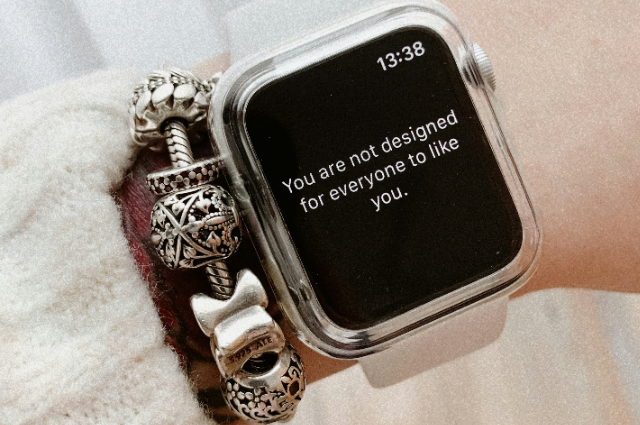
Today, however, that language is acquiring a new vocabulary. A wrist that once jingled with bangles may now carry a smart band that counts steps, monitors a pulse, and delivers notifications. An ear once adorned with a jhumka may hold a wireless earbud that connects its wearer to music, messages, and conversations beyond the immediate surroundings. What appears to be a simple exchange of one accessory for another raises a much larger question: when the things we wear begin to calculate, communicate, and collect data, do they remain ornaments, or do they become interfaces through which we negotiate identity, status, and belonging?
This transformation is not merely technological; it is social and cultural. Wearable devices combine aesthetic design with practical functions, while digital platforms influence which accessories become visible, desirable, and socially meaningful. Algorithms recommend products, influencers attach objects to aspirational lifestyles, and brands increasingly compete not only through craftsmanship or appearance but also through connectivity and digital performance. An accessory can now decorate the body while simultaneously linking it to networks of information, commerce, and surveillance.
Yet technology has not simply erased tradition. A person may wear a smartwatch beside an inherited bangle, choose jhumkas for a family celebration, or value handcrafted jewellery precisely because it carries a history that no digital device can reproduce. The more significant change lies in what society expects from the objects it wears—and in the growing influence of technology over how those expectations are formed.
The journey from adornment to algorithm, therefore, is not a straightforward movement from the old to the new. It is a story about memory and innovation, cultural continuity and commercial pressure, personal expression and algorithmic influence. To understand it, we must look beyond the objects themselves and examine the social meanings, psychological habits, economic forces, and ethical questions that gather around them.
The central question is no longer simply what we wear, but what our accessories reveal about who we are, what we value, and how much of our identity we choose to place in the hands of technology.
Traditional ornaments and digital devices are two overlapping languages of self-expression.
Jewellery announces itself. Its design, material, and cultural roots invite others to read it. A wireless earbud is quieter. It looks understated while connecting its wearer to a constant stream of private sound and communication. A bangle is treasured for its look or its sentiment, while a smart band is valued for the steps it logs, the health data it monitors, and the messages it shows.
Still, the line between them isn’t fixed. Jewellery has always signalled wealth, status, and taste, and tech can do the same. A smartwatch is a tool, but it is also a deliberate part of an outfit. An heirloom can double as a modern fashion statement. The real difference isn’t old versus new. It is the shifting mix of beauty, culture, usefulness, and symbolism we look for in what we wear.
The change goes beyond the objects themselves. Social media, online marketplaces, influencers, and recommendation algorithms now shape how styles are discovered and adopted. Fashion once came from family, local markets, and designers. Today it is also shaped in digital spaces, where repetition, visibility, and personalised ads can make us want things we never thought about before.
That is why the move from adornment to algorithm is more than a technology story. It changes the relationship between people, their bodies, their belongings, and the systems that quietly influence their choices.
The question is no longer just what we wear. It is how our choices are shaped, what they say about us, and how much control we really have over the identities we express.
To answer it, we have to look past the surface of fashion and into the cultural, psychological, and social forces redefining what it means to adorn ourselves in the digital age.
More Than Metal: The Cultural Language of Adornment
Long before algorithms shaped fashion choices, adornment served as a language of identity, belonging, and cultural memory. Across South Asia, bangles and jhumkas carry diverse meanings shaped by regional customs, family traditions, celebrations, and personal preferences. An ornament may be a treasured heirloom to one person and simply a beautiful accessory to another.
An ornament’s cultural significance lies not merely in its material, but in the memories, beliefs, and traditions it embodies. Handcrafted jewellery also preserves artisans’ skills, often passed down through generations, making traditional adornment a living expression of cultural continuity.
Adornment has always been connected to commerce and social status. Today, however, branding, digital visibility, and rapidly circulating trends accelerate consumer choices. Traditional jewellery and modern gadgets alike can express affection, craftsmanship, ambition, or prestige. What changes is not the desire for self-expression, but the social and technological environment through which its meanings are created and communicated.
From Ornament to Interface
Fashion accessories are no longer defined solely by their decorative value. Smart bands monitor physical activity, while wireless earbuds combine personal style with digital communication. These objects merge utility with aesthetics, becoming expressions of identity as well as technological tools.
Sociologically, fashion communicates taste, belonging, and status. Thorstein Veblen’s concept of conspicuous consumption explains how luxury jewellery and premium electronics can signal prestige beyond their practical functions. Pierre Bourdieu similarly demonstrates how taste reflects cultural background and social position. Thus, a handcrafted necklace may express heritage, while a smartwatch may represent convenience, aspiration, or status.
Digital platforms further transform these meanings. Algorithms recommend products, influencers promote desirable lifestyles, and targeted advertising shapes consumer preferences. Repeated exposure can turn a smartwatch from a simple device into a symbol of discipline and productivity. Although algorithms influence desire, individuals retain the capacity to question and resist these pressures.
The body remains a canvas for self-expression, but the forces shaping it are increasingly digital, data-driven, and global.
Does Culture Survive the Algorithm?
Technology can reshape cultural traditions without necessarily destroying them. While mass-produced accessories may threaten traditional artisans and their skills, digital platforms can promote handcrafted jewellery and connect craftspeople with wider audiences. People can embrace smart devices while preserving traditional ornaments for meaningful occasions.
However, wearable technology raises concerns about privacy, electronic waste, sustainability, and unequal access. Responsible innovation must prioritise transparency, affordability, durability, and environmental responsibility.
The future need not force a choice between heritage and progress. Collaboration between artisans, designers, and technology developers can combine traditional aesthetics with modern functionality. Artificial intelligence may support creativity, provided human knowledge and craftsmanship remain central.
Culture survives when innovation respects heritage and expands, rather than limits, human expression.
Can the Future Wear Its Heritage?
The journey from adornment to algorithm reveals that fashion is never merely about what the body wears. It reflects what society values, how individuals express themselves, and how culture responds to changing circumstances. The contrast between a bangle and a smart band, or between a jhumka and a wireless earbud, symbolises a wider transformation in which personal accessories increasingly combine aesthetic expression with digital functionality.
Traditional ornaments preserve memories, craftsmanship, and cultural associations that cannot be reduced to computational efficiency. Wearable technologies, meanwhile, offer genuine benefits in communication, convenience, and health awareness. Neither possesses an exclusive claim to beauty or meaning. Their significance depends on how people use them and the values they attach to them.
The challenge is to embrace innovation without treating heritage as obsolete. A smartwatch can accompany a traditional bangle, just as contemporary clothing can incorporate handcrafted jewellery. Such combinations demonstrate that modernity need not demand cultural surrender. At the same time, individuals must remain conscious of how algorithms, advertising, and commercial pressures influence their desires.
Ultimately, the future of fashion should be measured not by how completely technology replaces traditional objects, but by whether innovation expands human freedom, protects cultural diversity, and encourages responsible consumption.
A bangle may carry the memory of generations; a smartwatch may measure the movements of a single day. One connects us to histories we inherit, while the other connects us to systems we create. Both can occupy the same wrist, just as memory and innovation can coexist within the same culture.
The real question is not whether the future will be adorned with technology, but whether humanity will retain the wisdom to decide what deserves to be worn, what deserves to be preserved, and what deserves to be left behind.