
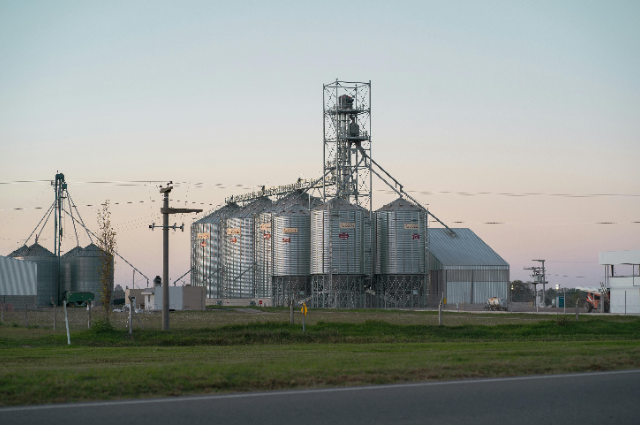
On a humid evening in 2008, a farmer in Singur stood beside his field, watching a convoy of vehicles pass by the towering walls of what was supposed to be the future. Beyond those walls lay the Tata Nano project, once celebrated as India's most ambitious manufacturing dream. Politicians called it a gateway to industrialisation. Economists described it as a milestone for investment. Supporters saw jobs, roads, and prosperity. Yet for many villagers, the same project represented the loss of ancestral land, uncertainty, and a sense that decisions about their future had been made without their input.
The story of Singur is not merely the story of a factory that failed to materialise. It is the story of a conflict between two visions of development. One emphasised rapid industrial growth and economic modernisation. The other questioned whether development could be considered just if it came at the expense of people's consent and livelihoods. More than fifteen years later, Singur remains one of the most important case studies in modern India, illustrating the difficult balance between industrial progress, democratic accountability, and social justice.
A State Searching for Economic Revival
To understand Singur, one must first understand the condition of West Bengal at the beginning of the twenty-first century.
Once among India's leading industrial centres, West Bengal had experienced decades of economic stagnation. During the colonial period, Kolkata was one of Asia's most important commercial hubs. Industries such as jute, engineering, and manufacturing flourished. However, after independence, a combination of political instability, labour disputes, capital flight, and changing economic conditions gradually weakened the state's industrial base.
By the early 2000s, concerns about unemployment and declining investment had become widespread. Young graduates increasingly migrated to cities such as Bengaluru, Pune, Mumbai, and Hyderabad in search of opportunities. Policymakers recognised the need for industrial growth and sought major investment projects that could signal West Bengal's return as an attractive destination for business.
Against this backdrop, the Tata Nano project emerged.
The Promise of the People's Car
In 2003, Tata Motors announced plans to develop an affordable car for Indian families. The project would eventually become the Tata Nano, marketed as the world's cheapest car. The initiative attracted enormous national and international attention.
For West Bengal's government, securing the Nano factory represented more than an investment deal. It was an opportunity to reshape the state's economic narrative. The project promised employment, infrastructure development, ancillary industries, and increased investor confidence.
In 2006, the state government acquired approximately 1,000 acres of land in Singur, located in the Hooghly district, for the proposed manufacturing facility.
Supporters argued that the project would generate thousands of jobs directly and indireṄṅṅṅṅctly. They pointed out that industrialisation required land and that every successful manufacturing economy had undergone similar transformations. According to this view, Singur was not simply a factory site; it was a gateway to modernisation. Ṅ
However, events soon took a different turn.
The Land Question
At the heart of the Singur controversy was a simple but deeply emotional issue: land.
For policymakers, land was a factor of production. For many villagers, it was identity, security, and inheritance.
Although a section of landowners accepted compensation, others opposed the acquisition. Critics argued that fertile agricultural land should not have been selected for industrial purposes. Many affected residents claimed that they had not been adequately consulted and that compensation mechanisms failed to address the concerns of sharecroppers, agricultural labourers, and families dependent on farming.
The conflict exposed a broader challenge facing developing societies. Economic growth often requires infrastructure and industrial expansion, but these projects frequently depend on land acquisition. When local communities perceive the process as unfair or coercive, resistance becomes inevitable.
In Singur, resistance grew rapidly.
From Local Protest to National Movement
What began as a local dispute soon became a national political issue.
Protests intensified as farmers, activists, opposition parties, and civil society groups joined the movement. Demonstrations, public meetings, and sit-ins attracted significant media attention. The issue moved beyond compensation and evolved into a debate about rights, consent, and development.
The movement gained further momentum under the leadership of opposition politicians who framed Singur as an example of state overreach. For many protesters, the issue was no longer merely about land; it had become a struggle for dignity and democratic participation.
Television channels broadcast images of demonstrations and clashes. Newspapers carried stories of affected families. Public opinion became sharply divided.
One side argued that industrialisation was essential for economic progress.
The other argued that development imposed without consent could not be considered genuine progress.
The Battle of Narratives
One reason Singur became so influential was that both sides possessed compelling arguments.
Supporters of the project emphasised economic realities. West Bengal required investment. Manufacturing jobs were essential. Infrastructure development could benefit entire regions. Delaying industrial projects, they warned, would discourage future investors.
Opponents focused on ethical and social concerns. They questioned why productive agricultural land had been chosen. They highlighted the voices of farmers who feared losing their livelihoods. They argued that economic growth should not come at the cost of marginalised communities.
Neither perspective was entirely unreasonable.
The conflict revealed a central dilemma of modern development: how should societies balance collective economic benefits against individual rights?
This question remains relevant not only in India but also around the world.
How a Small Town Became a Symbol of India's Development Dilemma
As protests continued, uncertainty surrounding the project increased.
Operational delays, security concerns, and political tensions created challenges for Tata Motors. In September 2008, the company announced its decision to withdraw from Singur and relocate the project to Sanand in Gujarat.
The announcement marked a dramatic turning point.
For supporters of industrialisation, the departure represented a significant setback. Many viewed it as a lost opportunity for investment, employment, and economic revival.
For opponents, the withdrawal was seen as a victory for democratic resistance and community rights.
Yet neither side emerged entirely satisfied.
The factory never operated in Singur. The jobs never arrived. The promised industrial ecosystem never developed. At the same time, years of uncertainty had already transformed local communities and disrupted lives.
The result was a complicated legacy rather than a clear victory.
The Human Cost
Political debates often focus on policies and institutions, but ordinary people ultimately experienced Singur.
For some farmers, the movement represented a successful defence of their land and identity. For others who had accepted compensation, the project's collapse brought disappointment and economic uncertainty.
Young residents who had hoped for employment opportunities saw those prospects disappear. Families became divided over questions of compensation and protest. Communities that once shared common concerns found themselves on opposing sides of a political struggle.
The human consequences of the conflict rarely fit neatly into ideological categories.
Singur demonstrated that development controversies are never purely economic. They affect relationships, aspirations, and social cohesion.
The Legal Battle
The controversy did not end with Tata Motors' departure.
Years of legal proceedings followed. The dispute eventually reached the highest levels of India's judicial system. In 2016, the Supreme Court ruled that the land acquisition process was invalid and ordered the return of land to affected owners.
The judgment was celebrated by many as a landmark affirmation of property rights and procedural fairness. It reinforced the principle that development projects must respect legal safeguards and community interests.
However, the ruling also reignited debates regarding investment confidence. Critics worried that prolonged disputes and policy uncertainty could discourage future industrial projects.
Thus, even the legal resolution left broader questions unresolved.
Development versus Democracy?
Singur is often portrayed as a conflict between development and democracy. Yet this framing may oversimplify the issue.
The deeper lesson is that sustainable development requires democratic legitimacy. Economic growth and public participation are not opposing goals; they are interdependent.
Industrial projects succeed when affected communities trust institutions, believe processes are fair, and feel included in decision-making. Conversely, even economically promising projects can face resistance if people perceive exclusion or coercion.
The Singur experience demonstrated that development cannot rely solely on economic calculations. Social consent matters.
Lessons for Contemporary India
More than a decade after the controversy, policymakers across India continue to grapple with similar challenges.
Large infrastructure projects, renewable energy initiatives, industrial corridors, and urban expansion programs often involve land acquisition and community displacement. The questions raised in Singur remain highly relevant:
- Who benefits from development?
- Who bears the costs?
- How should compensation be determined?
- What constitutes meaningful consent?
- Can economic growth be achieved without undermining local livelihoods?
The answers are rarely straightforward.
What Singur teaches is that development policy must address not only economic efficiency but also fairness, transparency, and participation.
A Symbol Beyond Bengal
Although Singur is located in West Bengal, its significance extends far beyond the state's borders.
Scholars, policymakers, economists, and activists continue to study the case because it encapsulates many of the tensions that define modern development. It highlights the challenges faced by emerging economies as they attempt to industrialise while maintaining democratic accountability.
In this sense, Singur is not simply a local story. It is a national and even global story.
Wherever governments seek growth, wherever communities fear displacement, and wherever competing visions of progress collide, the questions raised by Singur continue to resonate.
The Factory That Became a Lesson
The Tata Nano factory was never completed in Singur. The assembly lines never produced cars. The industrial future envisioned by its supporters never materialised. Yet the significance of Singur lies precisely in what did not happen.
It transformed a small town into a symbol of one of the most important debates in modern India. It forced policymakers to reconsider the relationship between development and consent. It reminded investors that economic projects exist within social and political contexts. Most importantly, it demonstrated that progress cannot be measured solely by factories built or investments secured.
The true legacy of Singur is not the absence of a factory but the presence of a question that remains unresolved: when a nation pursues development, how can it ensure that growth includes those whose lives are most directly affected by it?
The answer to that question will shape not only the future of Singur, but the future of development itself.
References
- India After Gandhi
- From Plassey to Partition and After
- Reports and judgments of the Supreme Court of India relating to the Singur land acquisition case (2016).
- Archival reporting from The Hindu.
- Archival reporting from the Indian Express.
- Archival reporting from The Telegraph.
- Economic analyses from NITI Aayog and Reserve Bank of India publications on industrial development and investment.