
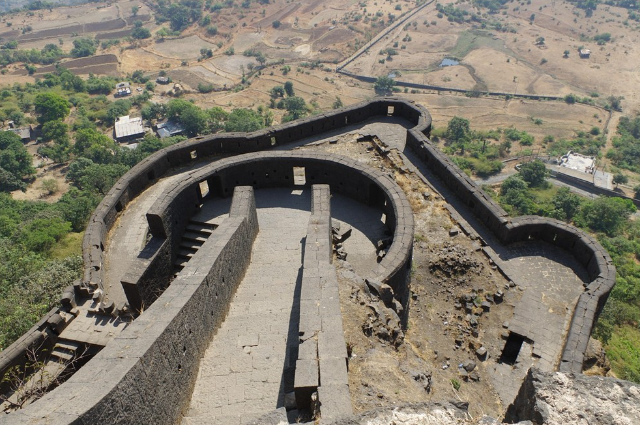
Image by rahuldudhane from Pixabay
"She gave the signal. He pushed." That's how investigators describe Ketan Agarwal's final seconds on June 18, 2026, at Lohagad Fort near Pune. If you think about it too long, it's a sentence that could describe something else entirely: the moment a nervous system, after two decades of learning to read love as threat, finally received the danger it had braced for all along.
This isn't a defence of murder. It's an attempt to explain one because the explanation matters a great deal more than the headline.
The anatomy of a modern tragedy
Ketan Agarwal was 26, a director at his family's real estate firm, an MS graduate from Babson College in the US. In February 2026, he became engaged to Siya Goyal, 20, whom he met through his maternal uncle. Both families ran businesses in Pune. A pre-wedding shoot in Bali had already been booked, but it was cancelled because Ketan's passport didn't arrive in time. On paper, and on Instagram, this was the kind of match every aunt in the city would have approved of: financially comfortable, family-sanctioned, with all the right boxes ticked.
Four months later, he was dead at the bottom of a gorge. Police allege he was pushed off the cliff edge by Chetan Chaudhary, a 22-year-old, whom Siya had reportedly been seeing in secret, on a signal she herself gave. What followed wasn't a clean confession but a slow, ugly unspooling of digital evidence of over 2,000 phone calls between Siya and Chetan in the weeks leading up to the killing, a café meeting caught on CCTV the day before, an earlier and apparently failed attempt on June 14, and then the one that worked, four days later, arranged under the cover of Siya's upcoming birthday. Investigators say the two had searched online for ways to kill him and had scouted more than one possible location before settling on the fort. Siya has reportedly told police she didn't want to marry Ketan, and that calling off the wedding would have brought "disrepute" to her family.
Here's the detail that should stop a reader cold, more than any other in this case: by police accounts, Siya believed that killing her fiancé would buy her roughly three more years before marriage was expected of her again. Not freedom from Ketan specifically. Freedom from the institution itself, and apparently, in her calculation, it came cheaper than simply breaking the engagement.
That single, chilling arithmetic is, in fact, the doorway into everything this piece wants to discuss. Underneath the crime-beat horror of cliffs and secret calls and rehearsed signals sits something far older and far more ordinary than this one family's tragedy. It's about how the human nervous system, in certain conditions, learns to mistake the feeling of threat for the feeling of love and rarely finds out it's wrong until it's far too late to matter.
The psychological angle: love is not a feeling, it's a prediction
Why "real" love so often feels boring
There's an uncomfortable pattern that turns up again and again across relationship research, and it goes something like this: stable, trustworthy, emotionally safe love often feels boring to the person living inside it, while unstable, anxious, withholding love feels electric, which feels, to the person caught in it, unmistakably like the real thing. People leave secure partners for chaotic ones and call the chaos passion. They stay in relationships that frighten them and call the fear chemistry.
This isn't some contradiction buried in human nature. It's closer to a design feature of the nervous system, and understanding it explains the Lohagad case, along with thousands of quieter, non-lethal versions of it happening in Indian homes right now, far better than any motive-hunting headline ever will.
John Bowlby and Mary Ainsworth showed, decades ago, that infants build their first working model of relationships out of how consistently a caregiver responds to their distress. One of the clearest demonstrations of this is Edward Tronick's Still Face Experiment, where a warm, playful mother suddenly goes blank-faced toward her baby for a short stretch of time. Within about two minutes, most infants move through a fairly predictable sequence of confusion, then frantic attempts to win the mother back, then real distress. Because for an infant, connection isn't comfort. It's a survival infrastructure. The baby's body can't tell the difference between "mother is briefly distracted" and "mother is gone." Both get filed under danger.
That one experiment changes how you have to read everything that follows.
Two axes, one map
Modern attachment science, carried forward by researchers like Mario Mikulincer and Phillip Shaver, doesn't sort adults into fixed personality boxes. It maps them along two intersecting questions instead:
- The anxiety axis asks: Will they leave me?
- The avoidance axis asks: Is closeness a threat to me?
Where someone lands on that map isn't destiny. It's the residue of thousands of small, repeated moments in childhood, where a caregiver's response was either predictable and therefore felt safe or unpredictable, and therefore felt like a recurring threat that needed managing. Someone high on the anxiety axis tends to read distance as proof of abandonment and responds by chasing: more calls, more messages, more pleading for reassurance. Someone high on the avoidance axis tends to read closeness as proof of entrapment and responds by retreating into silence and independence.
And none of this is built on purpose. Nobody decides, at age six, to grow up anxious or avoidant. The nervous system is just running the most reliable survival strategy it has available, based on the care it actually got, not the care it was promised. Studies of children raised in unpredictable foster or institutional settings have repeatedly found lower odds of secure attachment later in life compared to children raised in stable homes. The nervous system isn't a metaphor here. It is, quite literally, being wired by its surroundings while it's still under construction.
When two incompatible algorithms fall in love
This is where the architecture turns dangerous, not in the abstract, but in exactly the shape this case seems to take.
Someone wired, anxious, experiences a partner pulling away as proof that loss is coming. The body floods with stress hormones; the calling, the messaging, the constant need for reassurance isn't manipulation so much as panic with nowhere else to go. Someone with avoidant experiences a partner moving closer as proof that being trapped is coming. Closeness itself reads as the threat; pulling back isn't coldness, it's the only way that body has ever learned to bring its alarm back down.
Put these two patterns in a relationship together, and you get a loop that feeds itself, which researchers sometimes call the hyperactivation-deactivation cycle. The anxious partner reaches for closeness, which triggers the avoidant partner's retreat, which triggers the anxious partner's panic, which triggers more reaching, which triggers more retreat. Each one experiences the other as the problem, when really, both are just reacting to the same loop from opposite ends of it.
What makes this loop so easy to mistake for love is the mechanism sitting underneath it with intermittent reinforcement. When connection is unpredictable rather than simply absent, the nervous system doesn't learn "this isn't safe, I should leave." It learns "this isn't safe, so I can't let go." Relief that follows distress gets processed by the brain's reward system as more intense and more memorable than steady comfort, the same basic mechanism that drives behavioural addiction to gambling or substances. A reply after a long silence doesn't register as ordinary communication. It registers as a rescue. And the body genuinely struggles to tell the difference between being rescued from real danger and simply being let off an alarm that the relationship itself set off in the first place.
Which brings us back to the question this piece opened with: why stable love so often feels boring, and unstable love feels real. Secure love calms the nervous system down. It produces peace, not adrenaline. Unstable love activates its threat first, then relief, and the relief gets misfiled in memory as passion. One leaves you calm. The other leaves you with a story you can't stop telling yourself. Only one of those is actually love.
Reading Lohagad through the map, not the headline
To be clear about something important: none of what follows is a clinical diagnosis of Siya Goyal, Ketan Agarwal, or Chetan Chaudhary. No one watching from outside can diagnose strangers from news coverage, and the case is still under investigation, with no court finding of guilt against anyone involved. What's actually useful here is reading the publicly reported pattern of behaviour through this framework, not to excuse a killing, but to understand the psychological ground on which arranged-marriage pressure, secrecy, and in the rarest and worst cases, lethal violence, seem to keep meeting.
The engagement as threat, not a promise.
Look at what the police allege happened, step by step. An engagement was finalised in February, under family approval. A hidden, parallel relationship running alongside it the whole time. Behaviour that Ketan's own family later described as increasingly erratic as the wedding date got closer. A fixation on visiting Lohagad Fort, specifically including a trip cancelled on June 4 that reportedly left Siya upset, followed by repeated insistence on rescheduling it. A first attempt that apparently failed on June 14. And then, four days later, one that didn't.
Whatever the courts eventually decide, the shape of that sequence agitation building as a binding commitment gets closer, escalating toward something drastic and irreversible rather than toward disclosure or honest confrontation or simply walking away is one that attachment researchers would recognise as consistent with what's sometimes called an avoidant collapse. Someone who experiences an approaching commitment not as security but as a trap, and who, having no learned model for talking their way out of that fear, ends up trying to eliminate the thing they're afraid of instead of naming it out loud.
This isn't unique to Siya Goyal. In a smaller, non-violent way, it's the same psychological ground that shows up in the widely shared relationship case-study format people use to illustrate exactly this theory of a man, the night before his own engagement, sitting alone in his car on an empty road, engine off, stuck on a single thought: what if this ruins my life? Not because his fiancée had done anything wrong that day. Just because the architecture of commitment itself had started to feel, to his nervous system, like a cage closing.
The difference between that story and the Lohagad case isn't the fear underneath it. It's what each person did with it. One man drove to an empty road and, eventually, picked up his phone. The other allegedly drove to a cliff.
The family as accelerant, not just a backdrop
The most influential recent piece of writing on a similar theme, through the institutional critique that followed Twisha Sharma's death, rightly pointed out how Indian family structures turn the fear of social stigma into active pressure on someone already trapped inside a failing relationship. Something similar shows up here, just inverted. Siya is reported to have told investigators that calling off the wedding would have brought disrepute to her family, that the exit every healthy relationship needs, the simple ability to say "I don't want this" and leave, wasn't, in her own calculation, actually available to her.
This is exactly the mechanism by which social stigma turns a psychological problem into a forensic one. An anxious-avoidant mismatch, left alone in a culture that allows people to walk away, usually just ends in a breakup. Painful, but survivable, and frankly quite ordinary. The same mismatch, in a culture that treats a broken engagement as a permanent stain on a family's reputation, takes away the single safest exit a frightened person has and leaves behind only worse and worse alternatives. Researchers studying arranged-marriage pressure in urban India have noted for years that it's often not the commitment itself that pushes people toward danger, but the fear of being unable to get out of it.
None of these shifts blames away from whoever is eventually found responsible. It adds blame somewhere else entirely to a cultural machinery that, by making exits shameful, makes exits feel more frightening than almost anything else a person could do instead. Including, in the most extreme and tragic cases, violence.
The loop can be read. The tragedy is that it rarely is.
Here's maybe the most quietly devastating finding in relationship science right now: researchers have shown that listening to just fifteen minutes of a couple's perfectly ordinary conversation — not a fight, not a crisis, just routine talk can predict with real accuracy which relationships are heading toward a breakup, years before either partner has any conscious idea. The predictive power doesn't come from what couples argue about. It comes from how they repair afterwards, or whether they manage to repair at all. Couples who can find their way back to warmth after a conflict are simply wired differently, behaviourally and neurologically, from couples who can't.
That single fact should change how anyone reading this evaluates their own relationships, and how a society evaluates the entire institution of arranged or family-pressured marriage. The question worth asking before any wedding is never "do they love each other?" Nearly everyone walking into a relationship believes, quite sincerely, that they do. The real question is what happens after the first genuine rupture. Does distance get met with reassurance, or does it just sit there and calcify into resentment? Does conflict end in two people finding their way back to each other, or in a silence neither one knows how to break?
Lohagad Fort is an extreme, criminal endpoint of something that plays out, on a much smaller scale, in millions of Indian households, where engagements moving forward are not because both people feel safe with each other, but because both families feel committed to the idea; weddings happen not as a resolution of love but as a deadline forced onto fear. Marriage, against every instinct, doesn't switch an anxious or avoidant alarm off. It raises the stakes attached to it of money, family, public image, and an alarm under higher stakes rarely goes quiet. It usually gets louder.
What can actually be rewired?
There's a genuinely hopeful finding buried inside all this otherwise grim science. Attachment patterns, even though they're wired early and stored in the body rather than the intellect, aren't permanent. They get revised, slowly, through exactly one mechanism: repeated, lived proof of safety, not safety information. Nobody becomes securely attached by reading about attachment theory, any more than a frightened animal calms down because someone tells it, in words, that everything's fine. The nervous system only updates when the danger it's predicting keeps failing to show up when distance is followed by repair instead of abandonment, when conflict ends in reconnection instead of collapse.
That has an uncomfortable implication for how Indian families approach marriage. An engagement isn't therapy. A wedding date isn't a deadline by which fear is somehow obligated to resolve itself. Treating marriage as the cure for relationship anxiety, instead of treating that anxiety as a signal that needs to be understood and worked through, ideally well before any lifetime commitment is made rather than after, is exactly the cultural mistake that turns ordinary human fear into either decades of quiet unhappiness, or, in its rarest and most extreme form, the kind of violence the country is reading about right now.
Comprehensive analytical framework
| Analytical pillar | Core psychological mechanism | How it shows up in the Lohagad case | What it means more broadly |
| Neurodevelopmental | Nervous system shaped by predictable vs. unpredictable early caregiving | Underlying attachment patterns shape how people respond to commitment long before any relationship begins | Childhood emotional environment, not personality, is the real predictor of relational risk in adulthood |
| Behavioural / loop dynamics | The anxious-avoidant hyperactivation-deactivation cycle | Reported escalation in agitation as the wedding date approached, alongside a hidden parallel relationship | Couples and families routinely mistake nervous-system distress for "incompatibility" or bad character |
| Neurochemical | Intermittent reinforcement mistaken for passion | Public framing of the case as a "love triangle" rather than a structural mismatch under social pressure | Popular culture keeps holding up anxious, unstable attachment as the definition of true love. |
| Socio-cultural | Stigma around broken engagements is closing off safe exits | A reported fear of family "disrepute" cited as a motive for choosing violence over disclosure | Removing the social permission to walk away doesn't prevent harm; it just redirects it |
| Preventive/clinical | Attachment repair through repeated safe interaction, not information alone | No public sign that any structured counselling preceded the breakdown | Pre-marital psychological literacy needs to become as routine as pre-marital medical screening |
The call to action: from romantic mythology to psychological literacy
The Lohagad Fort case will be remembered, correctly, as a criminal investigation which will work its way through the Bharatiya Nyaya Sanhita, through forensic reconstruction, through courtroom arguments over a 2,000-call digital trail and a signal allegedly given on top of a cliff. That process matters, and it deserves to run its course on its own evidence, without interference from articles like this one.
But if this case gets filed away as just a sensational love-triangle story, India will have learned nothing from it that it didn't already think it knew that young love is dangerous, that secrecy is shameful, that women who resist arranged commitments are unstable. That framing isn't just lazy. It's actively harmful, because it leaves the real mechanism completely untouched: the attachment loop, the intermittent reinforcement that disguises itself as chemistry, the cultural stigma that closes off safe exits. All of it stays free to repeat itself in the next family, the next engagement, the next cliff.
What this piece is actually calling for isn't legal. It's cultural, and it's psychological.
Relationship anxiety needs to stop being read as a character flaw and start being read as a nervous-system signal. A partner who seems "too clingy" or "too cold" isn't necessarily wrong for the relationship; they may simply be reporting a felt sense of danger that deserves to be looked into, not dismissed.
Marriage needs to stop being treated as a solution to relationship fear and start being treated as a decision that requires the fear to already be understood. No family should be scheduling a wedding in the hope that it will somehow resolve a couple's visible conflict. If anything, visible conflict before a wedding is one of the clearest signals available that the relationship needs real attention first, not afterwards.
Broken engagements need to stop being treated as social wounds and start being recognised as one of the safest exits a frightened person has. Every family that treats a called-off wedding as a permanent embarrassment is, often without meaning to, closing off one of the only non-violent ways out available to someone caught between fear and obligation. The Lohagad case is about as extreme an illustration as you could ask for of what happens once that way out disappears.
And popular culture needs to stop romanticising chaos and start making room for peace. A culture that keeps holding up obsessive, painful, all-consuming love as the gold standard of romance is, whether it means to or not, training an entire generation's nervous systems to distrust calm to read boredom as the absence of love, instead of one of its most reliable signs.
Ketan Agarwal did not die because of a love triangle. If the allegations against Siya Goyal and Chetan Chaudhary hold up in court, he died at the point where at least three forces larger than any single person's cruelty happened to meet an attachment system shaped by circumstances none of the three of them chose, a cultural architecture that made leaving a commitment feel more dangerous than ending a life, and a society, including the millions of people now consuming this case as entertainment, that still doesn't have a shared language for recognising relationship danger until it's already become a crime scene.
The forensic reconstruction at Lohagad Fort will tell investigators exactly where each person stood and exactly how the fall happened. It can't tell them, and was never built to tell them, how decades of nervous-system wiring, family pressure, and fear nobody said out loud all converged on one morning at the edge of a cliff. That part belongs to psychology, not forensics. And until Indian society is willing to teach attachment science with the same seriousness it teaches civics or biology, this almost certainly won't be the last time a wedding date ends up feeling, for someone, indistinguishable from a death sentence.
Childhood writes the first draft of how a person loves. Culture decides whether that draft ever gets a real chance at being rewritten, or whether it just gets handed a wedding date, a deadline, and a cliff.
References
- Ainsworth, M. D. S., Blehar, M. C., Waters, E., & Wall, S. (1978). Patterns of Attachment: A Psychological Study of the Strange Situation. Lawrence Erlbaum Associates.
- Bowlby, J. (1969). Attachment and Loss, Vol. 1: Attachment. Basic Books.
- Gottman, J. M., & Levenson, R. W. (1992). Marital processes predictive of later dissolution: Behaviour, physiology, and health. Journal of Personality and Social Psychology, 63(2), 221–233.
- Mikulincer, M., & Shaver, P. R. (2007). Attachment in Adulthood: Structure, Dynamics, and Change. Guilford Press.
- Tronick, E., Als, H., Adamson, L., Wise, S., & Brazelton, T. B. (1978). The infant's response to entrapment between contradictory messages in face-to-face interaction. Journal of the American Academy of Child Psychiatry, 17(1), 1–13.
- Great Andhra. (2026, June 27). Birthday excuse, deadly trap? FIR reveals chilling murder plot.
- IBTimes India. (2026, June 26). 2,004 calls, two treks and a murder plot: How Siya Goyal and Chetan Chaudhary allegedly planned Ketan Agarwal's killing.
- India Herald. (2026, June 26). Cafe, CCTV, and 2,000 calls: Inside the alleged murder plot police say Siya Goyal and her boyfriend finalised in plain sight.
- The Tribune. (2026, June 28). Ketan Agarwal murder: Siya Goyal taken to Pune's Lohagad Fort to recreate the crime scene.