
The Paradox of American Greatness
America is often celebrated as “the greatest nation on Earth,” yet few countries debate their own greatness as intensely as the United States itself. In recent years, the world’s only post–Cold War superpower has become increasingly unsure of its identity, torn between nostalgia for a triumphant past and anxiety about a fractured present. This tension marks what scholars describe as the paradox of American greatness—a nation historically confident in its exceptionalism now confronting the limits of that very ideal.
The question “Is America great today?” is no longer raised primarily by foreign critics; it is now an internal American debate shaping politics, media discourse, and public opinion. The long-standing narrative of American exceptionalism—once rooted in the belief that the United States possesses a unique moral and political mission—has been widely challenged in contemporary scholarship (The Myth of American Exceptionalism, 2011; Exceptionalism and Difference in American Studies, 2015). Analysts argue that U.S. foreign policy itself reflects a crisis of identity, as leaders struggle to reconcile past assumptions of greatness with current geopolitical realities (Identity Crisis in U.S. Foreign Policy, 2018).
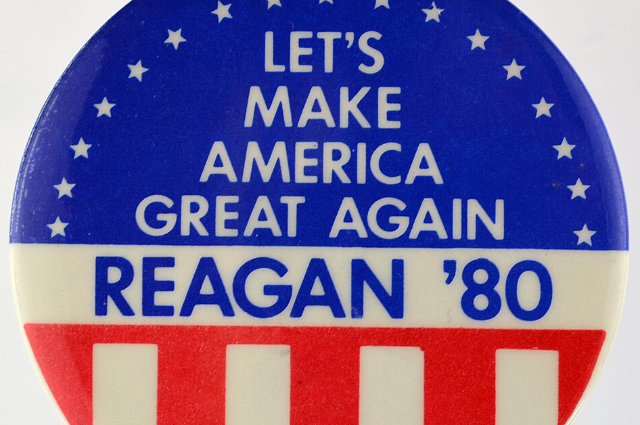
Donald Trump’s “Make America Great Again” slogan provides perhaps the most powerful symbol of this shift. Far from simply rallying supporters, the word again implies that greatness has already been lost—an implicit admission that present-day America falls short of its own ideals. In his campaign speeches across Ohio and Pennsylvania, Trump repeatedly invoked images of decline: industrial collapse, global humiliation, and political incompetence (Trump Campaign Speeches, 2015–2016). Scholars of political meaning note that such rhetoric draws its force from a shared public feeling that America’s best days lie behind it (Political Science Review, “The Meaning of Greatness in American Politics”). Pew Research Centre surveys further show that a significant portion of Americans believe the country is “in decline” and no longer sets the global standard it once did (Pew Research Centre, 2023).
This essay argues that America’s past greatness—measured through economic dynamism, military dominance, cultural influence, and global leadership—is not in question. What is in question is whether those conditions still exist. Rising inequality, political polarisation, weakened institutions, and growing global competition have eroded the foundation of American exceptionalism. The debate, therefore, is not about whether America was great, but whether it remains great today.
Finally, America’s paradox cannot be understood in isolation. The world is no longer unipolar; China’s economic rise, the assertiveness of countries like India, and increasing resistance to U.S. influence mark a global rebalancing of power. These external pressures reinforce internal doubts, contributing to a broader identity crisis within the American political imagination.
The “Make America Great Again” Claim: What “Again” Reveals About American Identity and Politics
The slogan “Make America Great Again” is built around a single keyword—“Again”—which functions as both a political message and a cultural diagnosis. Scholars of American identity argue that this term signals a nostalgic longing for a lost era of national greatness and simultaneously admits that the United States is no longer what it once claimed to be (The Myth of American Exceptionalism, 2011; Identity Crisis in U.S. Foreign Policy, 2018). Unlike traditional narratives of American exceptionalism—which present the nation as perpetually rising and globally superior—MAGA begins with the assumption of decline.
The word “Again” appeals to nostalgia and selective memory, invoking an imagined “golden age” characterised by economic prosperity, social cohesion, and uncontested global leadership. Yet researchers point out that such eras were marked by racial inequality, gender exclusion, and limited political freedoms, which the nostalgic narrative conveniently obscures (Exceptionalism and Difference in American Studies, 2015). Studies also show that MAGA resonates most with those who feel culturally displaced and economically marginalised by globalisation and demographic change, reinforcing a desire to return to traditional hierarchies and familiar social structures (Brookings Institution, 2019; Heritage Foundation, 2020).
Importantly, MAGA represents not an external critique but an internal American discourse of decline. For the first time in modern presidential politics, a major candidate openly claimed that the United States is weakened and must be restored. As political theorists note, MAGA functions as an internal critique embedded within American political rhetoric, challenging the longstanding self-image of the United States as inherently exceptional (Political Science Review: “The Meaning of Greatness”). This marks a profound shift from earlier presidents, who framed America as the leader of the free world and the engine of global progress.
Trump’s campaign speeches between 2015–2016 and 2020 serve as a detailed catalogue of this decline narrative. In speeches across Ohio and Pennsylvania, he described shuttered factories, the outsourcing of jobs, and the rise of China as proof that America “doesn’t make anything anymore.” This aligns with Pew Research Centre findings showing widespread public dissatisfaction with economic conditions and anxiety about the future. Trump also emphasised infrastructure decay, repeatedly claiming that American airports resemble “Third World countries” and that bridges and highways are “crumbling.” His warnings about global leadership loss—particularly in technology, manufacturing, and trade—framed China as a rising power overtaking the United States. Furthermore, his references to crime, addiction, and “American carnage” portrayed the nation as socially fractured and insecure. Each of these themes reinforced the narrative that America has fallen from greatness (Trump Campaign Speeches, 2015–2020).
These arguments create a direct contradiction with traditional American exceptionalism, which celebrates the United States as inherently virtuous, superior, and destined for continual progress. MAGA challenges this myth by asserting that America is no longer exceptional and must reclaim its lost greatness. Scholars argue that this represents a fundamental disruption in the national narrative, revealing deep uncertainties about America’s identity and global role (Exceptionalism and Difference in American Studies, 2015).
Public perception data strengthens this view. Surveys show that most Americans believe the country is moving in the wrong direction, trust in government is at historic lows, and many fear their children will experience a lower standard of living (Pew Research Centre, 2023). Such findings align closely with MAGA’s core message—that America is declining and requires radical restoration.
Yet this creates a significant paradox: the more MAGA emphasises national decline, the more it normalises and amplifies the perception of weakness. Analysts from the Brookings Institution argue that repeated narratives of failure and loss can deepen the very identity crisis they seek to resolve. By describing America as fundamentally broken, the movement reinforces a politics of fear, grievance, and restoration, rather than progress or transformation.
Ultimately, the MAGA slogan’s reliance on the word “Again” is not simply a political tactic but a window into contemporary American identity. It exposes competing visions of the nation, rising anxieties about demographic and economic change, and a widespread belief that the United States is no longer the exceptional power it once claimed to be. In this sense, the existence and popularity of the MAGA slogan itself is the strongest evidence that American greatness is now contested from within, reflecting the broader argument of this article: that present-day debates about greatness emerge not from external critique but from profound internal doubts about America’s current trajectory.
America’s Domestic Decline
Although the United States continues to project itself as a global superpower, a growing body of scholarship indicates that America’s greatest vulnerabilities now stem from within. Economists, political scientists, and policy analysts increasingly argue that domestic decay—not external competition—is the primary force eroding America’s claim to contemporary greatness.
1. Economic Weakness and Middle-Class Erosion
The most widely documented indicator of domestic decline is the deterioration of the American middle class. Michael Lind argues that the United States is undergoing a profound class realignment, driven by deindustrialisation and weakened labour power, resulting in the hollowing out of the once-stable middle-income sector (Lind, The New Class War). Thomas Piketty’s seminal global inequality study similarly shows that the United States has experienced one of the fastest rises in wealth concentration among major economies, with the top 1% accumulating a disproportionate share of national wealth since the 1980s (Piketty, Capital in the Twenty-First Century). Jeff Madrick reinforces this analysis, noting that wage stagnation, reduced job security, and the decline of manufacturing have collectively contributed to what he calls “the fall of the American middle class” (Madrick, 2019).
Empirical data support these diagnoses. OECD Economic Surveys identify slowing productivity growth, declining upward mobility, and widening inequality as structural weaknesses that place the U.S. behind several advanced economies. Federal Reserve reports reveal long-term stagnation in real household wealth for middle-income families, while Brookings Institution analyses describe the American middle class as “smaller, poorer, and more fragile” than at any time since World War II. Together, these findings underscore that America’s economic engine—its broad and prosperous middle class—is no longer functioning as it once did.
2. Healthcare Crisis and Declining Life Outcomes
America’s healthcare system has become a second major fault line in domestic stability. Steven Brill’s America’s Bitter Pill and Elisabeth Rosenthal’s An American Sickness document how a profit-driven health industry has produced the world’s most expensive medical system while delivering comparatively poor outcomes. Contrary to its global leadership claims, the United States ranks last among high-income nations in healthcare access, efficiency, equity, and overall quality, according to the Commonwealth Fund’s international comparison reports.
International health bodies further highlight the decline. WHO statistics show that U.S. life expectancy growth has stalled, even falling in several recent years, while the CDC confirms rising deaths from preventable causes such as opioid addiction, chronic illness, and gun violence. These trends demonstrate that the nation’s inability to guarantee basic health outcomes reflects structural weaknesses inconsistent with the image of a global leader.
3. Social and Political Instability
America’s political system is experiencing its most severe internal crisis in decades. Ezra Klein argues that extreme polarisation has transformed politics into a “conflict of identities,” making governance nearly impossible (Klein, Why We’re Polarised). Levitsky and Ziblatt, in How Democracies Die, warn that weakening democratic norms, declining trust in institutions, and increasing acceptance of political violence indicate a worrying erosion of democratic stability.
Empirical indicators corroborate this narrative. Pew Research Centre surveys show historically low trust in government, rising partisanship, and a deep social divide over race, immigration, and national identity. Freedom House reports a multi-year decline in America’s democratic scores, citing weakened institutional checks and increased threats to electoral integrity. Meanwhile, the Gun Violence Archive consistently records tens of thousands of firearm deaths annually, signalling a level of violence unparalleled in other advanced democracies.
4. Cracks Behind the Superpower Image
These domestic pressures collectively weaken the U.S. global standing. Analysts argue that internal dysfunction limits America’s ability to project power, negotiate effectively, or claim moral authority abroad (Freedom House, OECD). Political gridlock reduces the “usable power” of American leadership, while inequality and social conflict undermine the legitimacy of its democratic model (Brookings; Lind, 2020). Even in regions where U.S. influence once appeared unchallenged, such as Latin America, domestic instability has constrained its capacity to shape outcomes.
Thus, the foundations of America’s superpower identity—economic strength, social stability, and institutional integrity—are increasingly unstable. The evidence suggests that the greatest threat to American greatness is not China, Russia, or global competition, but the erosion of the nation’s internal structures that once sustained its exceptional status.
Global Shift of Power: America vs. China
For much of modern history, American exceptionalism has shaped the nation’s self-understanding and foreign policy. Classical exceptionalist doctrine maintains that the United States is historically destined for global leadership—politically superior, morally exemplary, and perpetually progressing. Scholars of American political mythology note that exceptionalism functions as both an identity and a narrative, sustaining the belief that America is the world’s most advanced democracy and a model for all nations (“Exceptionalism and Difference in American Studies”). This mythology insists that U.S. decline is inconceivable because its leadership role is rooted in a unique historical mission (“The Myth of American Exceptionalism,” 2011).
Yet the emergence of the MAGA (Make America Great Again) movement represents a profound inversion of this doctrine. Unlike traditional exceptionalism, which assumes unbroken national ascent, MAGA presupposes that greatness has already been lost. It is the first major U.S. political movement to explicitly declare that America is not great in the present moment. The very word again challenges the exceptionalist promise of continuous superiority. In this sense, MAGA acts as an internal critique of exceptionalism, destabilising the belief that America’s destiny is always upward.
This contradiction divides the national narrative. Classical exceptionalism asserts that America is thriving, morally superior, and unrivalled in global leadership. MAGA, by contrast, portrays the U.S. as economically outcompeted, militarily weakened, socially fragmented, and “no longer respected.” Trump’s speeches repeatedly stated, “We don’t win anymore,” describing the nation as exploited by global actors and losing ground to China and Mexico (Trump Campaign Speeches, 2016). This rhetoric frames the United States not as a model democracy but as a nation in decline—a framing fundamentally opposed to exceptionalist ideology.
Scholars argue that this clash reveals a deeper identity crisis within American political culture. Works such as Identity Crisis in U.S. Foreign Policy emphasise that when a nation becomes uncertain of its own identity, its traditional myths—like exceptionalism—become unstable. MAGA expresses this insecurity, functioning both as a political slogan and as a psychological response to fears that America’s best days lie in the past. The movement gains power precisely because decline narratives mobilise voters, invoke nostalgia for the booming postwar decades, and create a sense of urgency demanding restoration.
The global context intensifies these anxieties. The rapid rise of China challenges the assumption that American dominance is inevitable. Michael Pillsbury’s The Hundred-Year Marathon argues that China has long pursued a strategic plan to surpass the United States economically, technologically, and militarily. Graham Allison’s Destined for War warns that the U.S.–China rivalry risks following historical “Thucydides Trap” patterns, where rising powers threaten established ones. Meanwhile, The China Shock (Autor, Dorn, Hanson) documents how China’s entry into global markets devastated U.S. manufacturing communities—jobs lost, industries closed, regions economically hollowed—reinforcing MAGA claims of decline.
Global economic data reflects this power shift. IMF World Economic Outlook reports show China surpassing the U.S. in purchasing-power-parity GDP and narrowing the gap in nominal GDP. World Bank data affirms China’s dominance in global manufacturing output, positioning it as the “workshop of the world.” CSIS and Harvard Belfer Centre reports further identify China’s accelerating leadership in 5G, artificial intelligence, and advanced supply chains—areas once central to U.S. technological advantage. These developments contradict the exceptionalist belief that America inevitably leads in innovation and global economic structures.
Thus, China’s rise exposes the fragility of America’s exceptionalist narrative. If exceptionalism is built on the idea of natural superiority and unchallenged leadership, then the reality of U.S.–China competition undermines its foundations. MAGA amplifies this rupture by framing China’s ascent as evidence of American weakness. Trump repeatedly claimed that China had “beaten” the U.S. in trade, technology, and manufacturing—statements that transform a geopolitical rivalry into a narrative of national humiliation.
Furthermore, MAGA reveals the fragmentation of American national identity. Not all Americans agree on what “greatness” means—some associate it with military supremacy, others with racial and cultural hierarchies, and others with economic prosperity. This multiplicity of competing visions contradicts exceptionalism’s unified, singular story of national purpose (“Exceptionalism and Difference in American Studies”). Scholars note that such fragmentation marks a transition from a stable national myth to contested narratives of decline (Political Science Review, “Meaning of Greatness”).
Pressure on India: A Symptom of U.S. Weakening Influence
The increasing U.S. pressure on India—particularly over its strategic engagements with Russia—reveals a deeper structural shift in the global order where Washington can no longer assume automatic compliance from rising powers. Recent scholarship on India–U.S. relations argues that the partnership has always been shaped by caution, asymmetry, and competing priorities, making it “a reluctant alliance rather than a natural one” (Bajpai 2020). This dynamic has become more visible in the post-Ukraine war era.
1. U.S. Reaction to India–Russia Trade
India’s dramatic increase in discounted Russian oil imports after 2022 triggered a notable diplomatic response from the United States. Despite Washington’s expectation that partners would adhere to its sanctions regime, New Delhi openly rejected calls to reduce Russian crude purchases. CRS reports confirm that India continued large-scale imports even as Western governments tightened financial restrictions on Moscow (CRS 2023). The repeated U.S. warnings, public statements, and behind-the-scenes lobbying reflect not confidence but anxiety about losing grip over global sanction frameworks (Brookings India 2022). In earlier decades, U.S. pressure typically resulted in compliance; today, India’s refusal demonstrates the limits of American coercive leverage in a multipolar context.
2. India’s Independent Multi-Alignment Strategy
India’s foreign policy increasingly reflects strategic autonomy rather than alignment with any single power. As Malone (2010) notes, Indian diplomacy has long been anchored in autonomy, but the current era has elevated this stance into a multi-alignment doctrine. India simultaneously buys advanced American drones and aircraft while relying heavily on Russia for the S-400 system and other legacy defence platforms—an arrangement that Washington has been unable to disrupt (ORF 2023). New Delhi’s balancing behaviour also extends to China: although India participates in the Quad, it refuses to join U.S.-led military blocs or containment strategies. This underscores a critical transformation—major states like India now engage the U.S. on selective terms rather than accepting its leadership outright.
3. Comparison to Earlier Periods of U.S. Dominance
During the Cold War and especially the post-1991 unipolar moment, the United States exercised far greater influence over India’s policy choices. Through aid conditionality, sanctions, and diplomatic leverage, Washington shaped several of New Delhi’s strategic decisions (Bajpai 2020). The present situation marks a clear reversal. Unlike in earlier eras, India now disregards U.S. pressure with minimal consequences, illustrating a broader erosion of America’s ability to dictate global behaviour.
4. India as Evidence of an Emerging Multipolar World
India’s geopolitical posture demonstrates the diffusion of power away from a U.S.-centric system. Both ORF and Brookings India highlight that India’s engagements with Russia, the U.S., and regional institutions represent a deliberate strategy to operate as an autonomous pole in a multipolar order (ORF 2023). By exploiting U.S.–China rivalry—strengthening ties with Washington while maintaining economic and defence cooperation with Moscow—India gains strategic flexibility unimaginable during the peak years of American unipolarity.
Was America Ever Great? Historical Peak vs. Modern Reality
The question is not whether America was ever great, but when—and why that moment has faded. Most historians locate U.S. “greatness” in the post–WWII era, when the country enjoyed rare structural advantages created by global devastation and unprecedented domestic capacity (Allison 2017).
1. America’s Historical Peak (1945–1970s)
After 1945, the U.S. produced almost half of the world’s manufactured goods, giving it unmatched industrial leadership (Autor, Dorn & Hanson 2016). This era also marked the height of American innovation: Cold War research, NASA, and the rise of Silicon Valley cemented the U.S. as the global technological leader (Harvard Belfer Centre 2020). A robust middle class fueled stability—high wages, affordable education, and strong unions made the 1950s–70s an exceptional period of shared prosperity (IMF 2023). American soft power, expressed through culture and post-war institutions, positioned the U.S. as the symbolic leader of the “free world” (Pillsbury 2015).
2. Modern Reality: Decline, Division, Dependency
Today, these pillars have eroded. Deindustrialisation and China’s manufacturing dominance reflect a structural shift in global power (World Bank 2022). Innovation is now shared across multiple centres, with China emerging as a direct competitor in AI, 5G, and advanced hardware (CSIS 2021). The American middle class has shrunk, and wage stagnation increasingly limits mobility. Polarisation, institutional distrust, and political fragmentation further weaken national cohesion. Added to this is a growing dependency on global supply chains, especially Chinese manufacturing and critical minerals—illustrating the loss of the self-sufficiency that once defined U.S. greatness (IMF 2023)
America’s Greatness—A Memory, Not a Reality
Although the United States remains a powerful nation, it no longer holds the uncontested supremacy it once claimed. Even mainstream U.S. analyses now acknowledge that the era of unrivalled American dominance has ended, a reality reflected within American politics itself—most visibly through the MAGA narrative, which openly concedes national decline (Foreign Affairs 2023).
The U.S. still possesses clear strengths: the world’s most capable military, leading research universities, and a globally influential cultural industry. Yet these isolated advantages no longer make America the central axis of international politics. As The Economist notes, American power today is “significant but no longer singular,” constrained by rising competitors and structural domestic challenges (The Economist 2022).
A key reason is the definitive end of unipolarity. CFR reports increasingly describe a world shaped not by American direction but by multipolar negotiation. China’s manufacturing ascendancy, India’s strategic autonomy, and the Global South’s independent diplomacy all illustrate the diffusion of global power (CFR 2024). The U.S. can no longer assume automatic compliance from former partners nor dictate global economic or security norms as it once did.
At home, political nostalgia shapes contemporary identity. MAGA’s call to make America “great again” depends on invoking a lost golden age—mid-20th-century prosperity, unity, and industrial strength—precisely because present conditions no longer resemble that past. As Foreign Affairs argues, the internal debate over whether America is still great signals a profound decline in national confidence and exceptionalist mythmaking (Foreign Affairs 2023).
Domestic fragmentation, middle-class erosion, institutional distrust, and strategic dependency all reinforce the notion that American greatness was historically real but temporally bounded—rooted in post-WWII conditions that cannot be recreated. Today’s U.S. is influential, but no longer dominant; respected, but no longer unrivalled.