
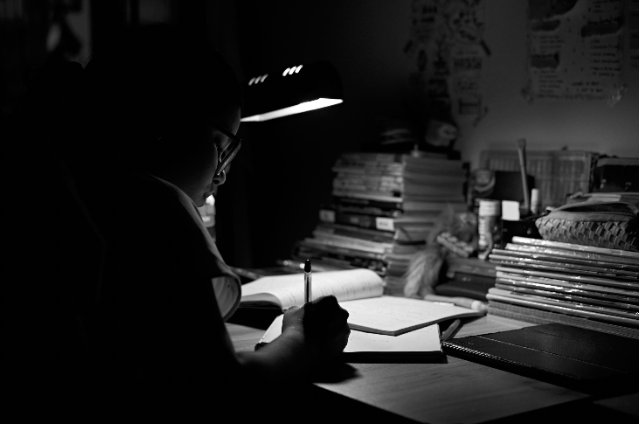
Success stories often appear beautiful when viewed from a distance. Society usually notices only the outcome — the medals hanging around someone’s neck, the certificates framed on walls, the applause during award ceremonies, the ranks printed in newspapers, and the achievements celebrated on social media. People admire the visible victory, but very few stop to imagine the painful journey hidden behind it. What remains unseen are the sleepless nights filled with anxiety, the silent sacrifices made by families, the hidden tears shed in loneliness, and the unbearable struggles that slowly shape a person’s character long before success finally arrives.
In today’s modern world, many young people grow up surrounded by technology, opportunities, and comfort. Smart classrooms, online education, digital resources, and advanced communication have made learning easier than ever before for millions of students. Yet beyond the bright screens and modern cities exists another reality that society often chooses to ignore. There are still countless children who wake up every morning not knowing whether they will have enough food to eat, electricity to study under, or money to continue their education. For them, school is not simply a routine part of life or a social experience filled with friends and enjoyment. It is a daily battle against poverty, exhaustion, hunger, social humiliation, and hopelessness.
Many students carry responsibilities far heavier than their age. Some work after school to support their families. Some students study while struggling with illness or financial pressure. Others continue their education despite living in broken homes or harsh environments where even necessities are uncertain. Yet their struggles remain invisible because society rarely notices silent pain. The world often celebrates talent only after success becomes visible, forgetting the years of hardship that existed before recognition arrived.
This is the real story of one such boy whose determination transformed not only his own future but also the perspective of everyone around him. His life was not surrounded by privilege, luxury, or powerful connections. He did not belong to a wealthy family, nor did he possess extraordinary advantages that guaranteed success. Instead, he carried something far more powerful — resilience. It was the quiet resilience that countless ordinary people develop when life forces them to become stronger than their circumstances.
His story is not about sudden miracles or unrealistic fantasy. It is about persistence during darkness, discipline during hardship, and hope during moments when giving up would have seemed easier. It is about a young student who continued walking forward even when the world around him offered very little support.
In an age where social media often glorifies instant success and temporary popularity, real stories like this remind us of a deeper truth: genuine strength is usually built silently. The strongest people are not always the loudest or most visible. Sometimes they are the ones quietly fighting battles nobody else can see.
There are countless untold stories hidden in small towns, crowded streets, rural villages, and forgotten neighbourhoods across the world. Stories of children studying under weak lights, parents sacrificing meals for their children’s education, and young dreamers refusing to surrender despite overwhelming obstacles. These stories rarely become headlines, yet they carry lessons far more meaningful than many famous success narratives.
Sometimes, the most powerful stories are hidden in the most ordinary streets.
THE SMALL TOWN AND THE SILENT BOY
Several years ago, in a small rural town surrounded by narrow roads and old houses, there lived a boy named Arman. He belonged to a financially struggling family. His father worked as a daily wage labourer, while his mother stitched clothes for neighbours to earn a little extra money. Their home consisted of two small rooms with an old tin roof that leaked heavily during the rainy season.
Electricity cuts were common in the area. During storms, darkness often covered the entire neighbourhood for hours.
Arman was known in school as a quiet and disciplined student. Unlike many children his age, he rarely participated in games after class. He would leave school quickly every afternoon and return home carrying a worn-out school bag filled with old books whose pages had already turned yellow.
Most students barely noticed him.
Some considered him strange because he spoke little.
Others assumed he lacked confidence.
A few even mocked his old clothes and broken shoes.
But nobody truly understood the reality of his life.
THE WEIGHT OF POVERTY
Every morning, long before the sun began rising over the small town, Arman woke up quietly from his thin mattress placed on the floor of their tiny house. While most children his age were still sleeping peacefully, his day had already begun. The early morning silence was often broken only by the sound of metal buckets, distant footsteps, and the cold wind moving through the narrow streets of the neighbourhood.
Before even thinking about school, Arman first helped his mother with household responsibilities. Their home had no direct water connection, so every day he walked nearly one kilometer to a public hand pump carrying heavy containers filled with water. During the summer, the journey became exhausting under the heat. During winter, the freezing mornings made the task painful. Yet he continued doing it without complaint because he understood that every member of the family had responsibilities to carry.
After returning home, he cleaned the small courtyard outside their house, helped prepare simple meals, and assisted his younger sister before school. Only after completing these chores did he finally get ready for his own classes. His uniform was old and faded from repeated use, and his shoes were already worn out from years of walking long distances. Still, every morning, he carefully cleaned them as much as possible before leaving for school.
The road to school itself was another challenge. While some students arrived comfortably by bicycle, bus, or motorcycle, Arman walked several kilometers every day carrying his old school bag on his shoulder. During the rainy season, muddy roads soaked his clothes and books. During the summer months, the heat became unbearable. But absence from school was never an option in his mind.
There were many days when he attended classes without eating a proper breakfast.
Sometimes there was simply not enough food at home. His father worked as a daily wage labourer whose income depended entirely on whether work was available that day. Some evenings, his father returned home exhausted and empty-handed after searching unsuccessfully for work. On such nights, silence filled the house more heavily than hunger itself.
Dinner often consisted only of rice and salt, and sometimes even that felt uncertain.
Arman’s mother tried her best to hide her worry from the children, but poverty has a way of entering every corner of life. It appeared in the cracked walls of their house, the leaking roof during heavy rain, the reused school notebooks, and the constant fear of unexpected expenses. Every small financial problem felt enormous because the family lived so close to survival.
Yet despite living under these harsh conditions, Arman never complained publicly about his situation.
He never went to school asking others for sympathy.
He never used poverty as an excuse for weakness.
He never allowed his suffering to turn into bitterness or anger.
Instead, he carried himself with quiet dignity and discipline.
For Arman, education was not simply about passing examinations, receiving certificates, or making his family proud. To him, education represented something much deeper. It was hope. It was freedom. It was perhaps the only path capable of breaking the cycle of poverty trapping his family generation after generation.
While other students studied mainly for marks, competition, or parental expectations, Arman studied because he believed education could save his future.
This difference slowly became visible to his teachers.
No matter how difficult life became at home, his assignments were always completed carefully and submitted on time. His handwriting remained neat even in old notebooks with torn pages. During lessons, his concentration never weakened. While many students became distracted easily, Arman listened attentively to every word spoken by the teachers because he understood the value of every opportunity to learn.
Some teachers noticed that he asked thoughtful questions despite rarely speaking unnecessarily. Others admired how respectfully he behaved toward everyone, regardless of his circumstances. Over time, they began to realise that beneath his quiet personality existed extraordinary determination.
What made his efforts even more remarkable was the fact that he achieved all of this while carrying emotional and physical exhaustion that most students around him could hardly imagine.
Poverty affects far more than material comfort. It affects confidence, mental peace, health, opportunities, and even self-worth. Many children trapped in financial hardship gradually lose hope and stop believing in their own potential because society constantly reminds them of what they lack.
But Arman refused to surrender to that hopelessness.
Every challenge he faced only strengthened his resolve to continue moving forward. Every difficult day became another reason to study harder. Deep inside, he carried a silent promise to himself: one day, he would build a life where his family would no longer have to fear hunger, uncertainty, or humiliation.
And that is what made his journey different.
While many students studied for success, Arman studied for survival.
While others chased achievement, he chased dignity.
While others dreamed of comfort, he dreamed of freedom from poverty itself.
The true weight of poverty is not measured only in money. It is measured in sacrifices, sleepless nights, hidden fears, and the constant pressure of uncertainty. Yet Arman’s story proves that even under the heaviest burdens, the human spirit can still choose determination over despair.
THE BROKEN STREETLIGHT
One evening, during examination season, a teacher was returning home after finishing extra classes at school. As he walked through a quiet road near the marketplace, he noticed a familiar figure sitting beneath a damaged streetlight.
It was Arman.
The boy sat on the edge of the pavement with books spread across his lap. The weak yellow light flickered constantly, barely illuminating the pages in front of him. Vehicles occasionally passed nearby, covering the area with dust and noise, but Arman continued studying without distraction.
Surprised, the teacher approached him and asked why he was studying outside at such a late hour.
Arman hesitated for a moment before quietly replying:
“Sir, there is no electricity at home tonight. My sister is sleeping, and the kerosene finished yesterday. I did not want to waste time because exams are coming soon.”
The teacher stood speechless.
At that moment, he realised something deeply painful: while many students complained about slow internet, lack of motivation, or exam pressure, this boy was fighting darkness itself just to continue learning.
The streetlight was broken.
The road was noisy.
The night was cold.
But Arman continued reading.
THE POWER OF SILENT DETERMINATION
The incident of Arman studying beneath the broken streetlight slowly began spreading throughout the school and the nearby community. At first, many people found it difficult to believe. Some students thought the story was exaggerated, while others were shocked that someone their own age could continue studying under such difficult conditions without complaining. Teachers who had previously admired his discipline now started understanding the painful reality hidden behind his quiet personality.
As news about his struggles reached residents, many people experienced a deep sense of guilt and reflection. They realised that they had been living beside hardship for years without ever truly noticing it. The same boy who walked silently through the streets every day, attended classes regularly, and kept to himself had been carrying burdens far heavier than anyone had imagined.
For some people, the story became a painful reminder of how easily society overlooks silent suffering. Often, people notice loud problems but ignore quiet struggles. A child who complains loudly receives attention quickly, while another who suffers silently remains invisible. Arman belonged to the second category. He never tried to attract sympathy or public attention. Instead, he carried his struggles privately with remarkable patience.
Gradually, a few teachers decided to help him in whatever ways they could. One teacher brought him additional notebooks and second-hand reference books. Another teacher offered extra guidance after school without charging any fees. Some students also began sharing study materials and helping him prepare for examinations.
One local shopkeeper, deeply moved after hearing about the streetlight incident, offered Arman permission to sit inside his small store after closing hours so he could study under proper lighting. Every evening, after the customers left and the noisy marketplace became quieter, Arman would sit in a corner of the shop surrounded by old shelves and dim lights, carefully continuing his studies late into the night.
The shopkeeper later admitted that watching the boy study with such concentration completely changed his understanding of determination. He said that many people with comfortable lives wasted opportunities daily, while this young boy treated every minute of education as something precious.
Yet what impressed everyone most was not simply Arman’s poverty, but his attitude toward life.
Despite facing constant hardship, he never demanded sympathy from anyone.
He never used his financial struggles as an excuse for failure.
He never complained publicly about his circumstances.
And he never asked society to feel sorry for him.
In fact, many people later realised that if they had not accidentally discovered his situation, Arman might never have spoken about his struggles at all.
Instead of seeking pity, he focused entirely on discipline, patience, and hard work. Every day, he continued following the same routine with quiet consistency. He attended school regularly, completed assignments on time, respected his teachers, and continued studying with unwavering focus. His determination came not from anger or pride, but from a deep belief that education could change his future.
This silent determination gradually began inspiring many other students around him.
Some students who had previously wasted time started taking their studies more seriously after seeing Arman’s dedication. Others stopped complaining about small inconveniences such as homework pressure, slow internet, or temporary electricity cuts. Teachers noticed a visible change in classroom attitudes because Arman’s story forced many young people to confront an uncomfortable truth: while some students possessed every educational advantage imaginable, they often lacked the motivation shown by a boy who had almost nothing.
His journey also taught an important lesson about strength. Society often associates strength with loud confidence, physical power, or public recognition. However, Arman revealed another form of strength entirely — the strength to continue moving forward quietly despite exhaustion, poverty, and uncertainty. It was a form of resilience built not through comfort, but through struggle.
Over time, people stopped seeing him merely as a poor student. They began seeing him as an example of perseverance and dignity. His life became proof that true determination does not always announce itself loudly. Sometimes it exists silently in the background, hidden behind humble behaviour, worn-out books, and tired eyes that still refuse to give up.
The power of silent determination lies precisely in this quiet endurance. Unlike temporary motivation, silent determination does not depend on applause, recognition, or public praise. It survives even when nobody is watching. It continues working even when success feels distant and uncertain.
And perhaps that is why Arman’s story touched so many hearts.
Because deep inside, people recognised that the boy studying quietly under weak lights possessed something far greater than material wealth:
He possessed the courage to keep believing in his dreams even when life offered him very little reason to hope.
THE EXAMINATION THAT CHANGED EVERYTHING
Months passed, and the final examination season finally arrived. For most students, the exams were stressful, but for Arman, they carried a much deeper meaning. These examinations were not simply tests written on paper; they represented hope, survival, and the possibility of changing his family’s future. Every late night spent studying under the weak streetlight, every moment of exhaustion, and every sacrifice made by his parents now rested upon these few crucial days.
While many students revised comfortably at home with electricity, private tutors, and peaceful environments, Arman continued studying under difficult conditions. Sometimes there was no electricity in his house for hours. Sometimes he studied while ignoring hunger and physical exhaustion. Yet despite these challenges, he never allowed himself to lose focus. He understood that education was perhaps the only path capable of breaking the cycle of poverty surrounding his family.
During the examination days, teachers noticed something remarkable about him. Unlike many students overwhelmed by fear and pressure, Arman remained calm and disciplined. He entered the examination hall quietly every morning, carrying the same old school bag and worn-out books that had accompanied him throughout his journey. There was no sign of arrogance or overconfidence in him — only determination.
After the examinations ended, a long period of waiting began. Students discussed expected marks, plans, and career ambitions. Some enjoyed holidays and celebrations, while others worried about their results. Arman, however, returned to helping his family with daily responsibilities. Life at home remained difficult, and despite completing the exams, uncertainty about the future remained heavy in his mind.
Then, finally, the day of the results arrived.
The entire school campus became crowded with nervous students and anxious parents waiting to see the results posted on the notice board. Excitement, fear, hope, and tension filled the atmosphere. Teachers moved through the corridors carrying official documents while students gathered impatiently around them.
When the results were finally announced, silence spread across the crowd for a few moments before excitement suddenly erupted throughout the school.
To the surprise of the entire district, Arman had secured one of the highest ranks in the region.
At first, many students could hardly believe it. The quiet boy who once sat silently in classrooms, the student who studied beneath a broken streetlight, the child from a financially struggling family, had now become one of the top-performing students in the district.
Teachers celebrated proudly, not only because of his academic achievement, but because they understood the painful journey behind his success. Some teachers became emotional remembering the nights they had seen him studying despite impossible circumstances. Local newspapers soon published small reports highlighting his inspiring story, and community organisations stepped forward offering scholarships and financial support for his future education.
For the first time in his life, people who had once ignored him began recognising his name with respect and admiration.
Neighbours who had barely noticed him before now spoke proudly about his achievement. Students who once underestimated him suddenly viewed him differently. His story spread beyond the school and slowly became a source of inspiration for many families struggling with poverty and hardship.
Yet perhaps the most remarkable part of his success was this:
Success did not change his personality.
Despite receiving praise, attention, and public recognition, Arman remained as humble and respectful as before. He continued speaking softly, treating others kindly, and helping younger students whenever possible. He never used his achievement to make others feel inferior, nor did he allow fame to create arrogance within him.
A few days later, the school organised a small event to honour his achievement. Teachers, students, residents, and community leaders gathered to celebrate his success. Many people expected a long motivational speech filled with dramatic words and emotional expressions.
But when Arman finally stood before the audience, he spoke with the same simplicity that had always defined him.
After thanking his parents and teachers, he paused for a moment and quietly said:
“Poverty can make life difficult, but it should never make dreams impossible.”
The hall fell silent.
Those simple words carried more emotional weight than any lengthy motivational lecture ever could. They reflected not only his personal journey but also the reality faced by millions of struggling students across the world. His statement reminded everyone present that hardship may delay success, but it does not have the power to destroy determination unless a person chooses to surrender.
Many people in the audience were deeply moved. Some teachers wiped tears from their eyes. Parents held their children more closely. Students who had previously complained about small difficulties suddenly realised how fortunate they truly were.
That day, Arman’s achievement became more than just an examination result.
It became proof that resilience, discipline, and hope can survive even in the harshest circumstances. It became a reminder that true greatness is not measured only by marks or ranks, but by the courage to continue fighting when life offers very little support.
And in that small school hall, the boy who once studied silently beneath a broken streetlight unknowingly became a symbol of hope for an entire community.
THE REAL LESSON BEHIND THE STORY
Arman’s story is meaningful not simply because he achieved academic success, but because it reflects the hidden reality of millions of students across the world whose struggles remain invisible to society. His journey is not an isolated incident or a rare miracle. In many villages, towns, and crowded cities, there are countless young people silently fighting battles that others neither notice nor understand. Some struggle against poverty, some against loneliness, some against social humiliation, and others against responsibilities far heavier than their age. Yet despite carrying these burdens, they continue moving forward with determination because giving up is simply not an option for them.
The real lesson behind this story is that hardship does not always destroy dreams; sometimes, it strengthens the human spirit in extraordinary ways. Difficult circumstances often force individuals to develop patience, discipline, emotional maturity, and resilience much earlier than others. While comfort can sometimes create dependency, struggle frequently builds inner strength. Arman’s life teaches us that success is not always determined by resources alone. It is often shaped by persistence, mindset, and the refusal to surrender during difficult moments.
At the same time, this story exposes an uncomfortable social truth: society frequently judges people based on appearances while ignoring the realities hidden behind them. Many students who seem quiet, distant, or different are carrying struggles invisible to others. A child wearing old clothes may possess exceptional intelligence. A student sitting silently in the classroom may be battling financial hardship at home. Someone who appears weak externally may actually possess incredible mental strength internally.
Modern society often celebrates achievement without understanding sacrifice. People admire success once it becomes visible, but they rarely recognise the painful process that existed before recognition arrived. Nobody sees the nights spent studying without electricity, the hunger hidden behind a smile, or the emotional exhaustion carried silently every day. Stories like Arman’s remind us that behind every visible achievement may exist years of invisible suffering.
Another important lesson from this story is the difference between privilege and opportunity. Many young people grow up with access to education, technology, guidance, and financial support without fully realising how valuable these advantages are. Complaints about small inconveniences often overshadow gratitude for opportunities that millions of others do not possess. Meanwhile, somewhere else, another student continues studying under impossible conditions simply because education represents hope for a better future.
This story also teaches the importance of empathy. Society has become increasingly fast-paced and competitive, causing many people to focus only on their own struggles and ambitions. In this process, the silent pain of others is often ignored. However, real humanity begins when people learn to notice, understand, and support those fighting difficult battles around them. Sometimes a small act of encouragement, guidance, or kindness can completely transform someone’s future.
The teachers and community members who eventually supported Arman may not have realised it at the time, but their recognition gave him more than material help. It gave him validation — the feeling that his struggle mattered and that his efforts were being seen. This demonstrates another powerful truth: support does not always need to be grand or expensive. Even simple encouragement can become a source of strength for someone facing hardship.
Furthermore, Arman’s story challenges the modern obsession with instant success. Today’s world often promotes unrealistic ideas of achievement through social media, where success appears quick, glamorous, and effortless. Young people constantly compare themselves to carefully edited versions of other people’s lives, leading to frustration and self-doubt. Real stories like this restore perspective by reminding society that meaningful success is usually built slowly through discipline, sacrifice, patience, and repeated failure.
Most importantly, the story reminds us that determination can exist even in the harshest circumstances. Human beings are capable of extraordinary endurance when they hold onto hope and purpose. Arman did not continue studying because life was easy for him; he continued because education represented dignity, survival, and possibility. His determination became stronger than his circumstances.
The real lesson behind the story, therefore, is not merely about academic achievement. It is about the power of resilience, the importance of empathy, and the need for society to recognise hidden struggles before judging others too quickly. It teaches us that greatness does not always emerge from privilege or comfort. Sometimes it rises quietly from broken homes, dark streets, financial hardship, and ordinary lives filled with extraordinary perseverance.
And perhaps the most powerful truth of all is this:
The strongest people are often those whose struggles remain unseen by the world.
WHY REAL STORIES MATTER
Modern society is flooded with entertainment, artificial online lifestyles, and carefully edited success narratives. Social media frequently presents achievement without showing sacrifice. As a result, many people develop unrealistic expectations about life and success.
Real stories break this illusion.
They remind society that strength often exists in silence.
That dignity can survive hardship.
That resilience is sometimes hidden beneath ordinary appearances.
Unlike fictional inspiration, real stories carry emotional truth because they emerge from genuine human experience.
Stories like Arman’s force people to reflect on their own attitudes toward struggle, gratitude, and perseverance.
THE RESPONSIBILITY OF SOCIETY
While inspirational stories have the power to motivate people emotionally, they should also awaken a deeper sense of responsibility within society. Stories like Arman’s should not merely become temporary moments of admiration or emotional discussion; they should encourage serious reflection about the conditions that force millions of children to struggle for basic educational opportunities. Inspiration without action eventually loses its meaning.
No child should be forced to study under unsafe or unhealthy conditions simply because of poverty. No student should have to choose between hunger and education, between supporting their family and pursuing their dreams, or between survival and learning. Education is not a luxury item reserved only for those born into comfort and privilege. It is a fundamental human right that should remain accessible to every child regardless of economic background, social status, religion, or geographical location.
Unfortunately, the reality across many parts of the world remains deeply unequal. While some students enjoy advanced technology, private coaching, stable electricity, and comfortable study environments, others continue learning under broken streetlights, weak candles, overcrowded classrooms, or unstable living conditions. This gap is not merely financial; it reflects a larger social imbalance where opportunity itself becomes unevenly distributed.
Governments carry a major responsibility in addressing this issue. Public education systems must be strengthened so that financially struggling students receive proper infrastructure, scholarships, nutritional support, transportation, and safe learning environments. Rural schools and underdeveloped communities should not be neglected simply because they lack visibility or political influence. Investment in education is not charity — it is an investment in the future stability and progress of society itself.
However, responsibility does not belong to governments alone. Communities, schools, teachers, and ordinary citizens also play an important role in shaping educational opportunities for disadvantaged children. Sometimes a single teacher’s encouragement, a neighbour’s support, or a community initiative can completely change a student’s future. Small acts of assistance — donating books, supporting local schools, mentoring struggling students, or simply recognising their efforts — can create life-changing impact.
Society must also learn to stop judging individuals based solely on visible success. Many talented young people disappear silently from the education system, not because they lack intelligence or ambition, but because they lack resources and support. Behind every school dropout may exist a story of financial pressure, family hardship, social humiliation, or emotional struggle that nobody noticed in time.
At the same time, stories like Arman’s remind privileged individuals to develop gratitude and awareness. Many opportunities that appear ordinary to some people — electricity, internet access, textbooks, tuition support, or a peaceful study environment — remain distant dreams for millions of others. Recognising this reality should inspire empathy rather than arrogance.
A truly progressive society is not measured only by economic growth, technological advancement, or urban development. It is measured by how fairly it treats its most vulnerable children and how seriously it protects their right to dream. When education becomes accessible only to the fortunate, society loses countless future scientists, teachers, writers, doctors, and leaders before their potential is ever discovered.
Ultimately, the responsibility of society is not simply to celebrate success stories after they happen, but to create conditions where more children are given the opportunity to succeed in the first place. Because talent exists everywhere — even in forgotten villages, dark streets, and struggling homes — but opportunity does not.
And no dream should ever depend entirely on luck, charity, or survival alone.
The boy under the broken streetlight eventually became more than just a successful student in his community. Over time, his journey transformed into a symbol of determination, resilience, and silent perseverance for everyone who heard his story. People admired his academic achievements, but what truly inspired them was the strength of his character. In a world where many individuals lose hope after facing small obstacles, he continued moving forward despite living through hardships that could have easily destroyed his dreams.
His story reminds us that true strength is often quiet and invisible. It does not always appear in headlines, television interviews, or viral social media posts. Sometimes, it exists silently in small homes with leaking roofs, in tired hands turning the pages of old books late at night, and in students who continue studying even when life gives them every reason to give up. Real courage is not always loud; often, it survives through patience, discipline, and endurance during difficult times.
This real story also forces society to reflect on its own values and priorities. We live in an era where success is frequently measured by wealth, popularity, appearance, and online recognition. Social media often creates the illusion that achievement comes quickly and easily. However, stories like Arman’s reveal the hidden reality behind genuine success. They remind us that behind every achievement there may be years of sacrifice, loneliness, self-doubt, and struggle that the world never sees.
At the same time, this story highlights an important social truth: talent exists everywhere, but opportunities do not. Across villages, towns, and crowded cities, countless young people possess intelligence, creativity, and ambition, yet many are forced to fight against poverty, lack of resources, and social neglect simply to continue their education. Some dreams survive despite hardship, while many others disappear silently before they ever receive a chance to grow. This reality should not only inspire us emotionally but also challenge us morally as a society.
The story of the boy under the broken streetlight is not just about one individual’s success. It is a reflection of millions of unseen struggles happening around the world every single day. It teaches us the importance of empathy, gratitude, and awareness. It reminds privileged individuals never to take education, comfort, or opportunity for granted. Most importantly, it encourages us to recognise and support those who continue fighting silently for a better future.
Real stories matter because they reveal humanity in its purest form. They expose pain, sacrifice, courage, and hope without artificial glamour. Unlike fictional inspiration, real experiences carry emotional truth because they emerge from genuine human suffering and perseverance. Such stories leave a lasting impact because they remind people that extraordinary strength can exist within the most ordinary individuals.
Perhaps the greatest lesson from Arman’s journey is this:
Even in the darkest circumstances, determination can become its own source of light. And sometimes, a single light shining beneath a broken streetlamp can illuminate an entire society’s understanding of courage, dignity, and hope.
References
Books & Literature
- The Diary of a Young Girl
- Themes of resilience, hope, and silent endurance during hardship.
- Long Walk to Freedom
- Inspiration regarding perseverance, dignity, and struggle against adversity.
- I Am Malala
- Focus on education, courage, and determination despite social and economic challenges.
- The Pursuit of Happyness
- Poverty, survival, ambition, and the pursuit of a better future through persistence.
Educational & Social Research
- UNESCO – Education and Poverty Research
- UNICEF – Global Education Reports
- World Bank – Education Overview
- United Nations Sustainable Development Goal 4 (Quality Education)
- UNDP Human Development Reports
Poverty, Child Development & Social Inequality
- Save the Children International
- Child Poverty Action Group
- Global Partnership for Education
- OECD Education and Inequality Studies
- UN Women – Equality & Social Development Reports
Journalism & Human Interest Inspiration
- The Guardian – Education & Society Coverage
- BBC Future – Social Inequality Features
- National Geographic – Human Stories & Society
- The Indian Express – Education & Human Interest Reports
- NDTV Education & Social Issue Reports
- Al Jazeera Features & Human Stories