
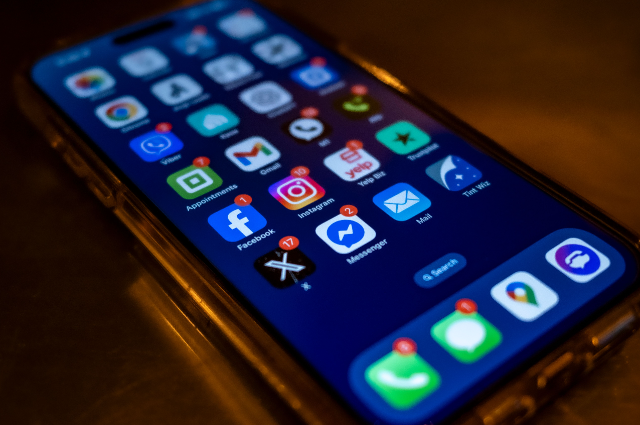
You pick up your phone to check one notification. A few minutes later, you are watching a video, reading a comment, checking another post and wondering where the last twenty minutes went.
Nothing unusual happened. In fact, this has become an ordinary part of modern life.
Our phones are no longer simply tools for communication. They have become gateways to news, entertainment, shopping, education, advertising and social interaction. Behind many of these experiences is a simple economic reality: our attention has value.
This is the basic idea behind the attention economy. When countless websites, applications and digital services compete for a limited resource—human attention—the ability to attract and hold that attention becomes economically important. Researchers studying the attention economy describe attention as a limited human resource interacting with an almost unlimited information environment.
The question, then, is not simply how much time we spend online. A deeper question is: who decides what deserves our attention?
When Attention Became a Valuable Resource
For much of human history, information was relatively scarce. Today, the situation is almost the opposite. We can access millions of articles, videos, messages, images and advertisements within seconds.
Our ability to consume information, however, has not expanded at the same speed as the amount of information available to us. Human attention remains limited.
This creates an unusual economic situation. Companies can produce enormous amounts of information, but they still need people to notice it. An advertisement that nobody sees has little value. A video that nobody watches cannot generate much engagement. A platform that people stop visiting has difficulty maintaining its business.
Attention therefore becomes something that businesses compete for.
This does not mean that every digital service is deliberately trying to waste people's time. Many platforms provide genuinely useful services and depend on user engagement for understandable commercial reasons. But the economic incentives can still shape how digital products are designed.
The more effectively a platform captures attention, the more opportunities it may have to show advertising, recommend content or collect information about user behaviour.
The Business Behind the Scroll
Consider what happens when you open a social-media feed.
You do not normally receive a random collection of posts. Instead, automated systems help determine what appears on your screen. Your previous interactions, interests and behaviour can influence the content that is recommended to you.
The Federal Trade Commission has reported that major social-media and video-streaming companies collected and used large amounts of consumer data, including information connected to advertising and automated systems. The agency also found that the business models of many of these companies created incentives for extensive data collection because personal information could be used for targeted advertising.
Online advertising itself has become highly automated. The FTC explains that real-time advertising systems can use detailed information about users to help determine which advertisement should appear, with some transactions taking place in milliseconds.
This creates a chain:
User attention → engagement → behavioral data → personalization → advertising opportunities
The system is more complicated than this simple sequence, but the basic relationship helps explain why attention has become so commercially significant.
Why Algorithms Want to Keep Us Engaged
Algorithms are not mysterious minds secretly controlling every decision we make. They are systems designed to process information and make predictions or recommendations.
But recommendation systems can have a powerful effect on what users encounter.
If a platform learns that a particular type of content keeps a person watching, clicking or returning, that information can influence future recommendations. Over time, the user's experience becomes increasingly personalised.
This can be useful. A student may discover educational material that matches their interests. A music listener may find new artists. Someone looking for a particular hobby may quickly discover a community built around it.
The same mechanism, however, can also make it difficult to stop consuming content.
The Federal Trade Commission held dedicated workshops in 2025 examining digital design features intended to keep children and teenagers online for longer periods and encourage them to return more frequently. The discussions included questions about engagement, time spent online and the potential effects of these design choices on young people's well-being.
Features such as endless feeds, automatic recommendations and frequent notifications can reduce the number of decisions a user has to make. There is always something else to see.
And that changes the experience of boredom.
The Disappearance of Empty Time
There was a time when waiting meant waiting.
A person standing in a queue might look around. Someone travelling might stare through a window. A quiet afternoon might contain nothing more than conversation, reading or daydreaming.
Today, almost every empty moment can be filled.
Waiting for a bus? Scroll.
Waiting for food? Scroll.
Taking a short break from studying? Check the phone.
Before long, even boredom can feel uncomfortable because an endless supply of stimulation is always available.
This matters because attention is not only needed for work. It is also involved in reflection, learning, reading and ordinary human interaction. Research collected in the American Psychological Association's work on the attention economy examines how digital technology interacts with cognition, learning, emotional well-being and everyday behaviour.
The problem is therefore not simply that people spend “too much time on their phones.” The more interesting issue is what happens to our ability to choose where our attention goes.
The Cost of Constant Switching
One of the less obvious costs of the attention economy is constant switching.
A person may begin studying, notice a notification, check it, return to the textbook, remember a message, open another application and then return to the original task.
Each interruption may seem insignificant. Collectively, however, they can fragment the experience of concentrating.
Deep thinking requires staying with an idea long enough to understand it. Reading a difficult book requires patience. Writing requires sustained attention. Learning mathematics, a language, or any complicated subject cannot always happen in a stream of interruptions.
The American Psychological Association's research overview on the attention economy specifically includes work examining digital distraction, learning, memory and cognitive performance.
This does not mean that technology automatically destroys concentration. Digital tools can also support learning and productivity. The important distinction is between using technology intentionally and allowing every digital signal to determine what we do next.
When Engagement Becomes the Goal
There is another important question: what kind of content wins the competition for attention?
Content that produces a strong emotional reaction can be highly engaging. It may be funny, surprising, controversial, frightening or simply difficult to ignore.
Research discussed by the American Psychological Association has examined how social-media algorithms can encourage behaviour aimed at gaining attention and engagement.
This creates a complicated environment for users.
The most useful information is not necessarily the most attention-grabbing information. A carefully researched explanation may require patience. A provocative claim may require only a few seconds to understand and react to.
If success is measured heavily through clicks, views, comments and time spent, the digital environment can naturally place pressure on creators and platforms to produce material that keeps people engaged.
That does not make every popular piece of content harmful. It simply means that attention and quality are not always the same thing.
Are We Really Choosing?
This is perhaps the most difficult question in the entire debate.
When we spend an hour watching videos, did we choose to spend that hour there?
In one sense, yes. We made the decision to open the application and continue using it.
But the environment in which that decision was made was also designed by someone else. Recommendations were selected. Notifications were delivered. Content was arranged. Advertisements were targeted. The next video was placed only a swipe away.
So the question is not whether technology controls us completely. That would be too simple.
The better question is:
How much of our attention is intentional, and how much is being shaped by systems designed to influence engagement?
The distinction matters because personal responsibility and technological design can exist at the same time.
Users can make choices, while companies can also design environments that make some choices easier than others.
Taking Back Control of Our Attention
The answer does not have to be abandoning technology.
Modern life depends on digital tools. Students use them to study. Workers use them to communicate. Families use them to stay connected. Researchers depend on digital databases. Creativity itself has been transformed by technology.
The goal, therefore, should not be to reject technology but to become more deliberate about attention.
That can begin with simple questions:
Why am I opening this application?
What did I intend to do before I became distracted?
Is this information useful, or is it simply difficult to stop consuming?
Am I choosing this content, or did it simply appear in front of me?
Even small changes can create a difference. Turning off unnecessary notifications, protecting periods of uninterrupted work, keeping the phone away during serious study, and deliberately choosing what to read or watch can make technology serve our priorities rather than constantly redefine them.
The larger goal is not to count every minute spent online. It is to understand what those minutes are doing.
The Most Valuable Thing We Have May Not Be Money
The attention economy reveals something important about the digital world: our attention is an economic resource because our time is limited.
Companies can create endless content, endless recommendations and endless opportunities for engagement. But an individual still has only twenty-four hours in a day.
Once a minute has passed, it cannot be stored, recovered or purchased back.
That is why the question “Who owns our time?” is ultimately more than a question about social media. It is a question about modern life.
Technology can help us learn, communicate, create and discover things that previous generations could hardly imagine. But the same technology can also fill every quiet moment with something demanding our attention.
The challenge is not to escape the digital world. It is to enter it with enough awareness to decide what deserves our attention.
Because in an economy built around capturing attention, the ability to choose where we place it may be one of the most important forms of control we have left.
References:
- American Psychological Association. Human Capacity in the Attention Economy. APA, 2020.
- Federal Trade Commission. A Look Behind the Screens: Examining the Data Practices of Social Media and Video Streaming Services. 2024.
- Federal Trade Commission. Unpacking Real-Time Bidding through FTC’s Case on Mobilewalla. 2024.
- Federal Trade Commission. The Attention Economy: How Big Tech Firms Exploit Children and Hurt Families. 2025.
- American Psychological Association. Social Media and Online Civility. 2025.