
Imagine two people holding the same pill. One has it neatly packed in a pharmacy bottle with their name printed on the label. The other has it loose in their pocket at a crowded music festival. The pill is identical. The difference is not in the drug itself, but in the law surrounding it.
This may contain: a cartoon character lying on the ground with his head down and two knives in front of him.
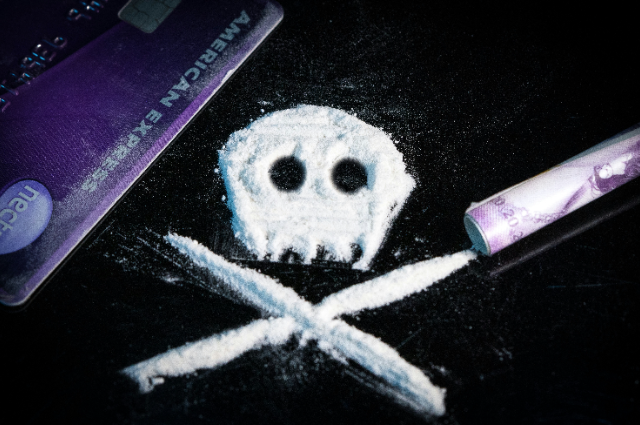
That is where Canada’s Controlled Drugs and Substances Act, or CDSA, enters the picture.
At first glance, the name sounds like something pulled straight out of a law textbook that nobody willingly reads. But behind the long title is a law that affects hospitals, pharmacies, airports, police officers, students, and even ordinary people carrying prescription medicines while travelling.
Introduced in 1996, the CDSA decides which substances are legal, which are restricted, who is allowed to possess them, and what happens when someone crosses the line. In simple words, it acts like “a very strict gatekeeper”. Some drugs are allowed in, but only with the proper permission. Others are watched carefully. And a few are firmly told, “Sorry, you are definitely not on the guest list.”
Of course, this is not just a story about criminals and courtrooms. The Act sits at the crossroads of medicine, law, and society. It raises questions that are surprisingly human. When does a medicine become an illegal drug? Should addiction be treated as a crime or a health issue? And how can a law protect people without becoming too harsh?
Serious topic? Absolutely. But let us walk through it in a slightly less intimidating, more human way.
A Quick Backstory: Why Such a Law Exists
The Controlled Drugs and Substances Act did not suddenly appear because Canada woke up one morning and decided to make life difficult. Like most laws, it was created because of a growing problem.
During the twentieth century, many countries began seeing a rise in drug misuse, illegal trafficking, and addiction. Substances such as heroin, cocaine, and later synthetic drugs were no longer limited to secret underground markets. They were becoming a public issue linked to crime, health problems, and even international smuggling networks.
Canada was not alone in facing this. Around the world, countries signed international agreements promising to control dangerous drugs. Canada joined treaties such as the Single Convention on Narcotic Drugs in 1961 and later agreements on psychotropic substances. In simple words, Canada had promised, “We will keep an eye on these substances and make rules about them.”
Before the CDSA existed, Canada already had older laws dealing with drugs, mainly the Narcotic Control Act and parts of the Food and Drugs Act. But by the 1990s, these laws had started to feel like an old mobile phone trying to run modern apps. They existed, but they were outdated, complicated, and not designed for the changing drug scene.
So, in 1996, Canada introduced the Controlled Drugs and Substances Act.

The idea was to bring all the rules together under one modern law. Instead of having separate acts for narcotics, prescription drugs, and illegal substances, the CDSA created one system to control them all.
But here is the interesting part: the law was not written simply to punish people or, as some might say, “spoil the party.” Its main goal was to balance two things that often pull in opposite directions:
Protecting public safety by controlling harmful drugs.
Allowing doctors, hospitals, and pharmacies to use certain substances for medical reasons.
After all, many controlled substances have two completely different identities. Morphine can help a patient after surgery, but the same substance can be abused illegally. Prescription stimulants can help someone with ADHD, but can also be misused. The CDSA was created to manage that complicated line between medicine and misuse.
In other words, the law exists because drugs are not simply “good” or “bad.” They are more like fire: useful in the right hands, dangerous in the wrong ones.
What the Act Actually Does (Without the Legalese Headache)
So what does the Controlled Drugs and Substances Act actually do?
In the simplest possible words, the Act controls who can have certain drugs, who can sell them, who can make them, and who can bring them into or out of Canada. If a substance is listed under the Act, you cannot just treat it like a packet of chewing gum and carry it around without permission.
The CDSA mainly focuses on four activities:
- Possession – having a controlled substance with you.
- Trafficking – selling, giving, transporting, or even offering to sell a substance.
- Production – making, growing, or manufacturing a drug.
- Importing and Exporting – bringing controlled substances into or out of Canada.
Already, you can see that the law is not only worried about drug dealers in dark alleyways. Even carrying, sharing, or travelling with certain substances can fall under the Act.
But the CDSA does not treat every drug the same way. Instead, it sorts substances into different “schedules.” Think of these schedules as a very strict guest list at an exclusive party.
Some substances are in the “absolutely not” section. Some are in the “allowed, but only with strict rules” category. Others are legal in certain situations, such as when prescribed by a doctor.
Schedule I: The High-Risk Group
Schedule I contains substances that the law treats as the most serious. These include:
- Fentanyl
- Methamphetamine
- Morphine and certain opioids
These are considered high-risk because they can be extremely addictive and dangerous. If someone is caught possessing or trafficking these drugs without authorisation, the consequences are usually severe.
Basically, Schedule I is the legal equivalent of seeing a giant red warning sign that says, “Do not touch.”
Schedule II: The Cannabis Story
For many years, cannabis sat in Schedule II. It was illegal under the CDSA, even though many people argued that it was less harmful than other drugs.
Then, in 2018, Canada made a major change. Recreational cannabis became legal under a separate law called the Cannabis Act. As a result, cannabis was removed from the CDSA and given its own set of rules.
It is almost as if cannabis was once the rebellious teenager constantly getting in trouble, and then suddenly got its own apartment and separate house rules.
Schedule III and IV: The “Depends on the Situation” Group
These schedules include drugs that are controlled, but are often used for medical purposes.
Schedule III includes substances such as:
- LSD
- Psilocybin mushrooms
- Amphetamines
Schedule IV includes many prescription drugs, such as:
- Benzodiazepines like diazepam
- Barbiturates
- Anabolic steroids
Here, the law becomes a bit more complicated. These substances are not automatically illegal. A doctor can prescribe them. A pharmacist can give them to you. You can legally possess them if you have permission.
But the moment they are used, shared, sold, or carried without authorisation, the law changes its mood very quickly.
For example, if someone has a prescription for anxiety medication, that is perfectly legal. But if they hand those pills to a friend before an exam or sell them at a party, they have suddenly stepped into CDSA territory.
In other words, the Act is not only interested in what the drug is. It is equally interested in who has it, why they have it, and what they are doing with it.
The Serious Side: Penalties and Consequences
Up until now, the CDSA might feel like a well-organised rulebook. But this is the part where the tone shifts. Because when those rules are broken, the consequences are not light.
This is not just a polite warning or a small fine in every case. Depending on the situation, it can turn into a full courtroom situation with serious legal outcomes.
The law clearly separates different types of offences, and the punishment depends on what exactly a person has done.
Let us break it down in a simple way.
At the most basic level is possession. This means having a controlled substance without authorisation. For example, carrying cocaine or someone else’s prescription medication without a valid reason. Possession of certain substances, especially those in Schedule I, can lead to penalties that include fines or even imprisonment, depending on whether the case is treated as a summary offence or an indictable offence.
But the situation becomes much more serious when we move to possession for trafficking. This is when someone is not just holding the drug for personal use, but is suspected of planning to sell or distribute it. Even if no sale has happened yet, the intention itself raises the seriousness of the offence.
Then comes trafficking. And here is an important point: trafficking does not only mean large-scale drug dealing. Under the CDSA, even giving a controlled substance to someone else without authorisation can be considered trafficking. So sharing pills with a friend is not as harmless as it might seem.
Punishments for trafficking, especially involving Schedule I substances like cocaine or fentanyl, can be extremely severe and may even lead to life imprisonment in serious cases.
At the top of the ladder are production and importing or exporting controlled substances. Producing drugs, such as operating a lab or growing illegal substances, is treated as a major offence. Similarly, bringing drugs into or out of Canada without authorisation is considered very serious, particularly because it often connects to organised crime.
If we imagine all of this as a ladder:
- Possession sits at the bottom
- Possession for trafficking stands above it
- Trafficking comes next
- Production and importing or exporting are at the top
And as you move up, the consequences become stricter.
However, there has been an important shift in recent years. Canada has started to recognise that not every drug-related case should lead directly to jail. In 2022, the government removed certain mandatory minimum penalties for drug offences under the CDSA. This means judges now have more flexibility, especially in cases involving simple possession.
Instead of immediate punishment, there is now a growing focus on diversion. This allows individuals, particularly those struggling with addiction, to be directed toward treatment programs, counselling, or community services rather than strict criminal penalties.
This change reflects a larger idea: not every person involved with drugs is a criminal in the traditional sense. Some are dealing with health issues that need support rather than punishment.
Still, the law remains strict where it needs to be. Large-scale trafficking, production, and smuggling continue to carry heavy consequences.
So while the CDSA has become slightly more flexible, it has not become lenient. It still draws a clear line, just with a bit more understanding of what lies on either side of it.
Grey Zones and Debates
Laws often look very clear on paper. But when they meet real life, things start to blur. The Controlled Drugs and Substances Act is no exception.
One of the biggest examples of this grey area is the story of cannabis. For years, cannabis was treated as an illegal substance under the CDSA. It sat in Schedule II, and possession could lead to criminal charges. At the same time, a large part of society did not view it as seriously as other drugs. This created a gap between what the law said and what many people believed.
In 2018, Canada made a major shift by legalising recreational cannabis under a separate law called the Cannabis Act. This decision did not just change one rule. It showed that drug laws are not fixed forever. They evolve with society, science, and public opinion.
Another major debate surrounding the CDSA comes from the opioid crisis. Substances like fentanyl, which are listed under Schedule I, have been responsible for a large number of overdose deaths in Canada. The law treats these substances as highly dangerous, which is accurate. But the question people are asking is this: Does strict punishment actually reduce harm?

Some experts argue that focusing only on criminalisation does not solve addiction. They believe that people struggling with drug use need medical help, safe environments, and rehabilitation, not just legal consequences. This has led to discussions about harm reduction, which includes measures like supervised consumption sites and access to safer drug supplies.
Others, however, believe that loosening drug laws could increase misuse and make communities less safe. From this perspective, strict control is necessary to prevent wider harm.
Because of these differing views, the CDSA sits in a constant state of discussion. It is not just a law being followed. It is a law being questioned, debated, and slowly reshaped.
In some parts of Canada, there have even been temporary exemptions allowing the decriminalisation of small amounts of certain drugs for personal use. These are experimental approaches aimed at understanding whether treating drug use more as a health issue can lead to better outcomes.
All of this shows one important thing: the CDSA is not a static rulebook. It is part of an ongoing conversation about how society should deal with drugs, addiction, and public safety.
And like most important conversations, there is no simple answer.
Pop Culture Meets Policy
When most people think about drugs, their first reference point is not a law book. It is usually a movie, a song, or a trending series.
Shows like Breaking Bad have created an image of the drug world that is intense, dramatic, and almost cinematic. There are high-speed chases, secret deals, coded conversations, and masterminds operating behind the scenes. Music and pop culture sometimes add to this by either glamorising drug use or portraying it as a symbol of rebellion.

But when you place that image next to the Controlled Drugs and Substances Act, the contrast is almost amusing.
The CDSA is not dramatic. It is structured, detailed, and filled with definitions, schedules, and procedures. It does not deal in suspenseful plot twists. It deals in legal classifications and regulatory control. There are no background soundtracks or cliffhangers, just sections, clauses, and consequences.
If pop culture tells a story driven by emotion and excitement, the CDSA tells a story driven by caution and control.
This difference matters because perception often shapes behaviour. When drugs are shown as thrilling or glamorous, it can make people overlook the real-world consequences. The CDSA exists to bring that focus back. It reminds society that behind every “cool” portrayal, there are serious health risks, legal consequences, and social impacts.
At the same time, pop culture also plays a role in questioning the law. Films, documentaries, and music often highlight issues like addiction, mental health, and the human side of drug use. These perspectives sometimes challenge strict legal approaches and push for more compassionate policies.
So indirectly, pop culture and policy are constantly interacting. One shapes how people think, and the other shapes how people are governed.
If the CDSA were a show, it would probably not trend on streaming platforms. It would be slow, detailed, and filled with legal explanations. In other words, far less “Breaking Bad” and far more “Breaking Bureaucracy.”
Why It Still Matters to You (Yes, Even If You’re Not a Lawyer)
At this point, it might feel like the Controlled Drugs and Substances Act is something meant only for police officers, lawyers, or policymakers. But the reality is much closer to everyday life than it seems.
Take a simple college scenario. A student has been prescribed medication for anxiety or ADHD. That is completely legal. But the moment they share those pills with a friend before an exam, even casually, the situation changes. Under the CDSA, that act can fall under trafficking, because the law does not only focus on large-scale dealers. It also includes unauthorised distribution, even on a small scale.
Now think about travel. Carrying prescription medication across borders is common. But if the medicine contains controlled substances and is not properly documented, it can lead to legal trouble. What feels like a routine activity can suddenly become a legal issue simply because the rules were not fully understood.
Even something as simple as buying supplements online can fall into this space. Not every product sold online is properly regulated. Some may contain substances that are controlled under Canadian law. Without realising it, a person could end up possessing something that is not legally permitted.
What this shows is that the CDSA is not only about extreme cases or crime stories. It quietly shapes everyday decisions. It draws the line between medical use and misuse, between legal and illegal, often in situations that do not feel dramatic at all.
More importantly, understanding this law helps in seeing the bigger picture. It is not just about drugs. It is about how society deals with health, risk, responsibility, and safety. It reflects how a country tries to protect its people while also dealing with complex human behaviour.
In a way, the CDSA teaches something beyond law. It shows that context matters. The same substance can be safe, helpful, or harmful depending on how and why it is used.
And that is exactly why this law matters, even if you never plan to step into a courtroom.
Conclusion: Balancing the Scales
The Controlled Drugs and Substances Act may not be the most exciting piece of reading, but it quietly shapes some of the most important decisions in society. It decides when a substance is considered medicine and when it becomes illegal. It determines how the law responds to addiction, how strictly it punishes crime, and how much flexibility it allows for change.
What makes the CDSA interesting is not just what it controls, but how it reflects society’s thinking over time. From strict prohibition to debates around decriminalisation and harm reduction, the law has not remained frozen. It has adapted, slowly and sometimes controversially, as new challenges like the opioid crisis and changing public attitudes have emerged.
At its core, the Act is trying to balance two sides that are often difficult to manage together. On one side is public safety, the need to control dangerous substances and prevent harm. On the other hand, public health is the understanding that addiction and drug use are not always simple criminal issues, but deeply human ones.
That balance is not perfect. It is constantly being questioned, discussed, and reshaped. And that is exactly what keeps the CDSA relevant.
In the end, the Controlled Drugs and Substances Act is not just a law about drugs. It is a reflection of how a society chooses to handle risk, responsibility, and compassion. It may not be a thrilling page-turner, but it quietly influences the storyline of public health, safety, and personal freedom in Canada every single day.
And yet, despite being less entertaining, it is the version that affects real lives every single day.