
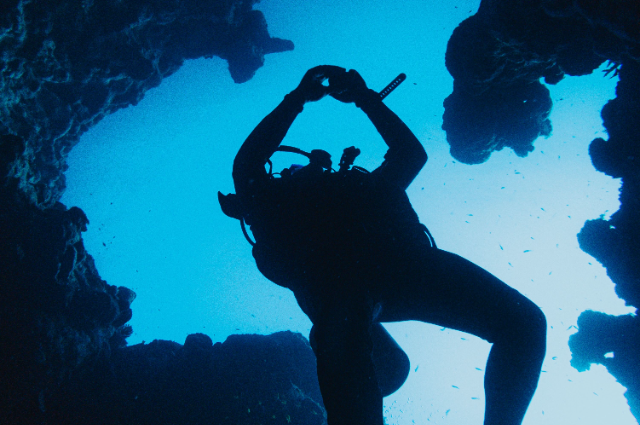
Valdez opened his eyes, and all he saw was darkness, absolute, pitch darkness. For a moment, he thought he was dead, and this was the afterlife realm. The zone where souls are trapped for eternity after they die; the soul leaves the body and goes to a realm, a different dimension where time stops- just endless darkness. Slowly, Valdes recollected how he got into this unknown realm.
The Incident
On July 23, 2026, fisherman Erasto Crisanto Valdez was trying to trap a Robalo, which is basically a common snook, with his father. The place was locally called La Cueva, which is near San Francisco, La Paz. He was armed with a mask, a spear, and a small emergency cylinder. Valdez spotted a huge fish, and he determined to hunt it down. Little did he have any idea how a small mistake would cost him endless misery and a phobia coming for him. Valdez pursued the fish, spotted it and chased it deep into the narrow aperture in the underwater cenote wall. Deep underwater, there were unmapped limestone passages; his movement was slightly uncontrolled as he was focused on hunting that fish somehow. At the water's surface where Valdez was submerged, visibility conditions were completely absent, presenting a genuine hazard. The surge of adrenaline can produce life-threatening consequences, particularly in underwater environments. Unable to locate an exit, Valdez became disoriented and rapidly depleted his reserve air supply, subsequently losing consciousness. Fortunately, while unconscious, an underwater current transported his body into a dry, isolated chamber situated 328 feet below the surface. This location represents part of an intricate cave system.
Structural Overview of LA CUEVA: EL CARMEN ECOLOGICAL RESERVE (Mexico) exemplifies outstanding sustainable and vernacular design principles. The area encompasses approximately 320 square feet. The construction features an enclosed cubic form positioned atop a substantial stone foundation. As a result, visibility is limited from the exterior through a long, narrow crack and very few window openings. However, strangely, the interior is open and the entire structure centres around a double-height basement which serves as an indirect spatial articulator. This natural architecture pulls in natural ventilation and some amount of vertical lighting down to the subterranean level.
Upon regaining consciousness, Valdez discovered himself stranded on a parched ledge enveloped in absolute darkness. The isolated area offered no light, and he found himself in a subterranean chamber situated deep within an extensive cave system. The chamber featured a reasonably elevated ceiling and adequate space for movement. An underground river, measuring 6.6 feet in width, flowed forcefully through the chamber. Valdez initially attempted to dive back into the water to locate an exit; however, the waterway contained numerous branches, and the underwater environment was completely devoid of light. He could only navigate by feeling along the rock wall, yet every passage appeared identical. After swimming underwater on a single breath for an extended period, he remained unable to locate any exit, which intensified his disorientation. Panic set in as he feared he might fail to find his way out and lose his path back to the chamber, prompting him to abandon his efforts. Fortunately, he had not ventured far and managed to return to the dry area through instinctive navigation. From that point forward, he never re-entered the water. Meanwhile, his father waited for his son to surface, but he did not emerge. His father entered the water in search of him but found no trace. Valdez faced an almost impossible situation with only one lifeline: hope. Three critical factors sustained him through the subsequent 15 days in complete darkness: 1- HYDRATION 2- PSYCHOLOGICAL ENDURANCE 3- TIME DISTORTION. An underground river supplied a steady flow of fresh water. Isolated in total darkness without any light source, he spent his time sleeping and resting to preserve energy, while also praying. Valdez believed he had been trapped for merely 3 days, yet in reality, he had endured 15 days in that submerged chamber without food or light.
THE RESCUE OPERATION: On the surface, Valdez's father reported his son's disappearance to the police, initiating an immediate search and rescue operation. Local villagers and civil defence teams also participated in the effort. On July 27th, professional divers from the Mexican Navy arrived and conducted a systematic search of the caves over several days. Approximately 213 feet from the cave entrance, they discovered Valdez's fishing spear—the first tangible evidence of his disappearance. This discovery indicated that he had ventured deep into the cave system rather than experiencing an accident near the entrance. Professional Navy divers conducted a search operation reaching depths of 394 feet but found no evidence of Valdez. On July 30th, the Navy officially concluded the search efforts after Valdez had been missing for seven consecutive days. Given that Valdez lacked formal cave diving certification and was equipped only with a minimal air supply, his survival prospects were deemed virtually nonexistent. Following this determination, the operation transitioned from a rescue mission to a body recovery effort. On July 31st, local authorities initiated a search for specialised assistance. The search focused on locating individuals with cave diving expertise and extended to Tulum, situated 620 miles away on the eastern coast of the Yucatan Peninsula, a region renowned for elite cave divers. One prominent expert in this field is Robbie Schmittner, who has dedicated 30 years to exploring the Yucatan's underground cave systems and contributed to the discovery of one of the world's longest underwater cave networks. Schmittner contacted Harry Gust, an American cave diving instructor who operates a cave diving training facility in Tulum. Gust brings 16 years of teaching experience and has completed over 1,000 cave dives. He enlisted Mexican cave diver Roso Rivera as his partner, and together they travelled to the site. Upon arrival, they joined other specialists to form a six-person team. Local officials provided accommodation and logistical support for the operation. On August 6th, Gust prepared for his initial dive, leaving his partner above water as a safety precaution while he descended alone. This decision was made to ensure that if both expert divers encountered difficulties underwater, a qualified rescuer would remain available on the surface. GUST navigated through the limestone passage and deployed a guideline, which serves as the most critical navigation tool for underwater cave exploration. In low-visibility conditions where sight distance falls below 3.3 feet, losing the guideline means losing the route to safety. A significant challenge emerged: the cave walls were extremely jagged, offering virtually no suitable anchor points, and the sharp rock threatened to sever the line at any time. To address this challenge, GUST employed three search methods. (A) Approximately 328 feet beyond the entrance, he discovered a small air tank that VALDEZ had been carrying. This finding represented a pivotal moment in the search operation—a breakthrough that suggested VALDEZ might have ventured even further into the cave. GUST conducted a thorough search around the tank but found no trace of him. Given the hazardous conditions in the area, he carefully followed the guideline back out. On August 7th, marking the 15th day since VALDEZ's disappearance, GUST prepared for a second dive with plans to explore deeper sections. He returned to the abandoned tank and proceeded further into the passage. Approximately 30 minutes into the dive, he unexpectedly broke the surface. In the glow of his headlamp, GUST was astonished to discover an enormous dry chamber. He immediately experienced a strong intuition that someone might be present in the area. Unable to restrain his enthusiasm, he called out to determine if anyone could hear him. From a recessed section of the rock wall approximately 33 feet away, a voice responded. It was Valdez, who had been trapped in that chamber for 15 days, concealed within the recess and blocked by rock. Valdez remained beyond the reach of Gust's light. Gust could not see him, only hear his voice. Gust shouted back, confirming he would return with additional personnel to rescue Valdez, and instructed him to remain in place. Gust descended underwater, followed the guideline through the passage, and eventually returned to the surface. Upon reaching the surface, he immediately notified the rescue team at the site. Everyone present was extremely pleased and deeply moved. Gust discussed a rescue strategy with Roso. Once the plan was finalised, both of them dove into the cave together and returned to the dry chamber. Roso removed his tank and walked across the dry section toward Valdez. Both individuals consulted with VALDEZ to establish a clear assessment of his physical condition and readiness for underwater evacuation, particularly given that he had consumed no food for 15 days. Despite this severe deprivation, VALDEZ remained mentally coherent. Subsequently, the three individuals—ROSO, GUST, and VALDEZ—entered the water and proceeded according to established protocols. Fortunately, VALDEZ's background as a professional fisherman proved invaluable; his extensive experience with underwater masks and breathing apparatus enabled him to maintain proper mouthpiece positioning while swimming and breathing submerged. The evacuation proceeded without complications as the three navigated through the flooded passages and emerged at the cave entrance, resulting in VALDEZ's successful rescue from the underground environment. Following his extraction, VALDEZ recounted his survival strategy: he had sustained himself by consuming water that flowed through the chamber. He had endured complete darkness and absence of food, unable to perceive anything visually. His days consisted of sleeping, prayer, and waiting. His temporal perception became severely distorted; he estimated his underground confinement at merely three days, when in fact it had lasted 15 days. Upon hospitalisation, VALDEZ presented with severe malnutrition, persistent shivering induced by the cave's relentless humidity, and acute dehydration. However, his mind was alert and active.
In an interview that was posted on social media, Valdez described his situation,
“ I WENT INSIDE, AND THEN WHEN I TURNED BACK I COULDN'T FIND THE EXIT he said from his hospital bed. “I WAS JUST SWIMMING AIMLESSLY TRYING TO GET OUT, BUT THERE WAS NO WAY OUT… I DO NOT KNOW HOW I GOT THERE OR HOW I SPENT THOSE 15 DAYS INSIDE. WHEN I FIRST ENTERED THE CAVE, I NEVER IMAGINED THERE WAS AN AIR CHAMBER HERE. THOSE 15 DAYS FELT LIKE ONLY THREE DAYS TO ME. THERE IS A SPRING RUNNING THROUGH THE MIDDLE, SO WHEN I FELT THIRSTY OR HUNGRY, I WOULD DRINK THE WATER FROM THE CENOTE. “
Valdez noted that it was pitch black in the cave. “I could not see a thing out there, and I couldn't tell if it was day or night. I kept faith in my God; He helped me survive.
PSYCHOLOGICAL IMPACT OF SURVIVORS (AFTER EFFECTS)
Individuals who have endured entrapment in submerged caverns encounter considerable psychological strain, encompassing intense anxiety and disrupted circadian patterns resulting from prolonged darkness and significant traumatic exposure. A comprehensive, systematic examination follows.
IMMEDIATE RESPONSE: Fight Response – The initial moment of entrapment activates an adrenaline surge and accelerated cardiovascular response, which may compromise cognitive function and recall capacity.
SENSORY DEPRIVATION: Encountering complete darkness, frigid conditions, and the concerning sound of ascending water levels may precipitate anxiety and pronounced claustrophobic responses
COGNITIVE FATIGUE: Encountering complete darkness, frigid conditions, and the concerning sound of ascending water levels may precipitate anxiety and pronounced claustrophobic responses
PROTECTIVE FACTORS: Contemplative practices such as meditation may facilitate reduced heart rate, optimise oxygen conservation, and support psychological equilibrium.
PSYCHOLOGICAL CONSIDERATIONS FOLLOWING RESCUE OPERATIONS
Short-term distress: Individuals who have been rescued frequently experience mood fluctuations and heightened attachment needs, accompanied by sleep disruptions.
Long-term impact: Post-Traumatic Stress Disorder (PTSD) and considerable anxiety may develop, with particular sensitivity to situations involving confined environments or inclement weather conditions.
CONTEXTUAL SENSITIVITIES: Auditory stimuli such as water sounds or spatial confinement may precipitate anxiety responses well into the recovery period following rescue.
To examine the psychological dimensions of human experience, consider the underlying mechanisms of human consciousness. The human mind has evolved with exposure to natural daylight, and while individuals encounter periods of darkness during daily life, such experiences remain relatively limited. However, when circumstances shift dramatically, and a person finds themselves confined in darkness with minimal prospects for escape, the psychological response becomes profound. The mind actively seeks pathways to liberation, engaging in problem-solving and strategic thinking. Simultaneously, the body experiences depletion of physical resources through stress-induced exhaustion, yet the consciousness remains fixated on a singular objective: survival and the restoration of light. The mind develops an intense longing for the absent element and begins to construct mental imagery and perceptual distortions. When reality inevitably contradicts these psychological constructs, the mind experiences considerable distress. To illustrate this phenomenon more accessibly, consider a traveller navigating the intense heat of a desert landscape who experiences a perceptual illusion—a mirage—which presents the appearance of a water source or oasis, though in actuality, only sand extends across the horizon.
SAFETY PRECAUTIONS FOR CAVE DIVERS
Cave diving stands as one of the most rigorous technical exploration disciplines, operating within overhead environments that eliminate direct vertical pathways to the surface. These conditions present substantial risks, which is why five essential principles have been carefully developed to ensure safety and success in cave diving operations.
OBTAIN PROPER TRAINING:
DO NOT explore beyond the illuminated sections of a cave without completing formal instruction from a recognised training organisation. Proficiency in open water diving does not translate to cave diving competency.
Divers must consistently adhere to the specific limits established by their certification tier, progressing methodically from basic cave diving through to advanced cave diving.
MAINTAIN A CONTINUOUS GUIDELINE: It is advisable to consistently establish and follow a continuous, prominently visible nylon guideline that runs throughout the entire passage to the exit. Should a silt-out occur, wherein fine sediments substantially reduce visibility, the guideline functions as the most reliable navigation instrument to facilitate safe return to the surface.
BREATHING GAS MANAGEMENT: This approach involves the diver allocating breathing gas into three equal portions: 1/3 designated for PENETRATION (ENTERING), 1/3 allocated for EXIT, and 1/3 reserved for emergency contingencies or air-sharing with a diving partner. Additionally, cave divers use gas delivery configurations such as dual-valve systems or side-mount cylinders with completely independent regulators, providing redundancy if primary equipment malfunctions.
TRIPLE LIGHT REDUNDANCY: Divers are respectfully advised to maintain a comprehensive lighting system comprising three battery-powered units: a primary high-intensity light accompanied by two separate independent backup lights. Should the primary light experience failure, it is recommended that the dive be concluded promptly, with the team safely exiting the cave environment utilising the backup lighting systems.
MIND THE DEPTH LIMIT: Cave diving operations require strict adherence to established breathing gas protocols and narcotic depth limitations, with dives remaining below 130 feet to appropriately mitigate the risks associated with nitrogen narcosis and oxygen toxicity.
BELOW IS THE DIAGRAMMATIC REPRESENTATION OF VALDEZ'S rescue route
[ SURFACE / CENOTE OPENING] (San Francisco La Paz)
│
│ ◄── Vertical Drop (Diving Entrance)
▼
┌────────────────────────────────────────────────────────┐
│ ZONE 1: FLOODED ENTRANCE TUNNEL │
│ ∙ Zero visibility due to stirred sediment │
│ ∙ Razor-sharp volcanic rock formations │
│ │
│ ──► [ 65 Meters Deep ] ──────────────────────────┐ │
│ Location of Valdez's abandoned speargun/harpoon │ │
│ │ │
└────────────────────────────────────────────────────┼───┘
│
▼
┌────────────────────────────────────────────────────────┐
│ ZONE 2: THE DEEP MAZE │
│ ∙ Pitch-black, fully submerged passages │
│ │
│ ──► [ 100 Meters Deep ] ─────────────────────────┐ │
│ Location of abandoned spare air tank │ │
│ │ │
└────────────────────────────────────────────────────┼───┘
│
▼
┌────────────────────────────────────────────────────────┐
│ ZONE 3: UNEXPLORED SECTION & CHAMBER │
│ │
│ ──► [ ~104+ Meters Deep ] ──────────────────────┐ │
│ A narrow, knife-sharp underwater restriction │ │
│ that opens up into: │ │
│ │ │
│ ╔════════════════════════════════════════════╗ │ │
│ ║ DRY AIR CHAMBER (The Survival Zone) ║◄──┘ │
│ ║ ∙ Total darkness ║ │
│ ║ ∙ Internal freshwater spring/stream ║ │
│ ║ ∙ [X] VALDEZ LOCATED HERE (August 7) ║ │
│ ╚════════════════════════════════════════════╝ │
└────────────────────────────────────────────────────────┘
The diagram presented above serves to illustrate the considerable significance of the rescue operation and the exceptional level of professional expertise, extensive experience, and, notably, the courageous resolve that proved essential to successfully rescuing the individual in question. The identification of the trapped person represented one component of the mission; however, the genuinely demanding aspect involved carefully and methodically extracting him from the intricate underwater environment. Remarkable occurrences do transpire within our world, and those fortunate enough to experience such events often survive to share their accounts with the global community. The terrestrial realm above the surface differs markedly from the aquatic environment beneath it, which constitutes an entirely distinct ecological domain and a fundamentally different world altogether. Interestingly, while humanity has made substantial progress in space exploration, discovering celestial bodies such as asteroids, stars, and black holes, we have yet to comprehensively explore the mysteries that remain concealed beneath the ocean's surface and within our deepest waters. In a hostile environment, the decisive factor for survival isn't physical strength—it's psychological resilience. When your mind commits to the belief that you will overcome the crisis, your survival odds dramatically improve. Valdez found himself in an impossible situation where he couldn't rely on his own resources. His only strategy was to maintain mental fortitude and trust that rescue would arrive. This unwavering hope became his lifeline, enabling him to endure 15 days without food or light. Paradoxically, hostile circumstances can generate unexpected advantages that facilitate survival. The complete darkness and absence of any illumination worked in Valdez's favour—he believed he'd been trapped for merely 3 days when awaiting rescue, unaware that 15 days had actually passed. Had he known the true duration, his psychological resolve would likely have collapsed, potentially costing him his life. In this case, the very darkness and time distortion that seemed like obstacles became his greatest source of hope and survival. If he had realised that he was trapped for 15 days, he might have given up waiting for help. A survivor represents not merely an individual engaged in struggle, but rather encompasses the collective effort of those nearest to them—their family members—who maintain steadfast hope from beyond, persevering through considerable challenges to facilitate rescue possibilities and the safe return of their loved one.
CAVE DIVING FATALITIES IN MEXICO
This overview highlights documented underwater cave diving fatalities in Mexico's cenotes and sinkholes, particularly throughout the Yucatan Peninsula.
Cenote Chac Mool Triple Fatality (April 2012) – Three divers, including a dive guide and two recreational divers, lost their lives after venturing beyond safe cavern limits without maintaining a continuous guideline, resulting in rapid gas depletion.
Cenote Calimba Double Fatality (December 9, 2004) – Certified cave divers Kent Hirsch and Michael Nast perished deep within the Sac Actun Cave system near Tulum after becoming disoriented and exhausting their oxygen supply during an exploratory expedition.
El Zacatón Sinkhole Incident (April 6, 1994) – Renowned American cave explorer Sheck Exley succumbed during an attempted record-setting deep dive to the bottom of El Zacatón, one of the world's deepest water-filled sinkholes, alongside Jim Bowden. Exley's death resulted from oxygen depletion during the dive.
CALAVERA CENOTE (Temple of Doom) August 17, 1995 - A devastating incident unfolded when eight seasoned divers ventured into the subterranean limestone formations adjacent to TULUM, resulting in several deaths.
Safety audits and statistical reports compiled by the International Underwater Cave Rescue and Recovery (IUCRR) and regional organisations such as Centro De Rescate Estudio y Evaluación en Ríos Subterráneos (CREER) offer limited data-driven insights into underwater cave diving fatalities. A critical finding reveals that equipment failure rarely causes fatalities. Instead, the primary culprit is human error—specifically confusion and disorientation that leads divers to become lost within intricate subterranean passages. Mexico's cave network presents extraordinary complexity with extensive branching and hundreds of cenote entrances. Permanent cave arrows mark routes toward the nearest exit, which may differ from the original entry point. When divers blindly follow these arrows without maintaining a continuous personal guideline, this practice has proven to be a significant factor in multiple double and triple drowning incidents. An additional contributing factor involves camera-related distractions, particularly from underwater cameras and action cameras such as GoPro devices. These action cameras impose significant cognitive demands, leading divers to diminish their situational awareness, overlook critical line intersections, or consume their gas supplies excessively while documenting footage. Untrained open water divers have historically represented a substantial proportion of cenote fatalities, where a visible cavern transitions into complete darkness. A prevalent cause is the absence of established guidelines when entering a single open-water tank, combined with sudden panic responses triggered by silt disturbance. Conversely, fatalities among trained divers typically result from complex navigation errors, exceeding gas management thresholds (often through violation of the Rule of Thirds), solo exploration ventures, or normalisation of deviance—such as when guides circumvent standard safety protocols to provide tourists with enhanced viewing experiences. Nevertheless, the implementation of prominent warning signage at cave entrances alongside mandatory local safety regulations for recreational cavern tours has effectively decreased unauthorised open-water tourist access in popular cenotes.
Valdez's rescue was made possible through the unwavering determination of both the trapped individual and the compassionate community surrounding him. Despite facing seemingly insurmountable odds, Valdez refused to abandon hope, and the locals demonstrated remarkable courage by risking their own safety in rescue efforts. When initial attempts shifted toward recovery, the community's commitment never wavered. Recognising the complexity of the situation, they reached out to international experts in underwater cave diving, ultimately connecting with Harry Gust, one of the world's most accomplished professionals in this specialised field. His invaluable experience and expertise proved instrumental during this critical moment, transforming what appeared to be an impossible rescue into a successful outcome. This remarkable story reminds us that perseverance and collective effort can overcome extraordinary challenges, embodying the profound truth that hope endures until the very end. Yet this experience also underscores an essential lesson: safety protocols and established guidelines exist to protect us for good reason. Whether navigating underwater environments or everyday situations, awareness of your surroundings is crucial. Valdez's predicament might have been entirely preventable had he not been swept away by the thrill of pursuing a fish, allowing adrenaline to override caution. Beyond the physical danger, we must recognise the profound emotional toll such incidents inflict on loved ones—families, spouses, and children endure agonising worry and desperate hope throughout the ordeal. This sobering reality emphasises why respecting safety rules isn't just about individual protection; it's about honouring those who care about us most. Life holds immeasurable value, and we must cherish it deeply. While courage and adventure may be celebrated as achievements, being alive itself is the true virtue. We possess a single lifetime—a precious opportunity to explore this extraordinary world to the absolute fullest extent our abilities and circumstances allow. Yet this exploration remains possible only if we prioritise staying alive. History's most catastrophic accidents have stemmed from seemingly trivial oversights or preventable human errors that could have been avoided from the start. Though human mistakes are unavoidable, recognise this powerful truth: every cautious decision we make in unfamiliar situations safeguards our own wellbeing and preserves the joy on the faces of those who love us and await our safe return home. Safety is a personal responsibility that begins with ourselves. When we transform safety practices into daily habits, we become living examples for everyone around us, influencing those who observe our actions. By championing safety, we cultivate a transformative habit that strengthens our entire community. Envision a world where accidents become virtually nonexistent because everyone—whether embarking on an underwater cave expedition or simply crossing the street with a child—consistently follows safety protocols. This inspiring vision can become reality through our collective commitment. Let's celebrate life and celebrate the spirit of being an alert person.
References: