
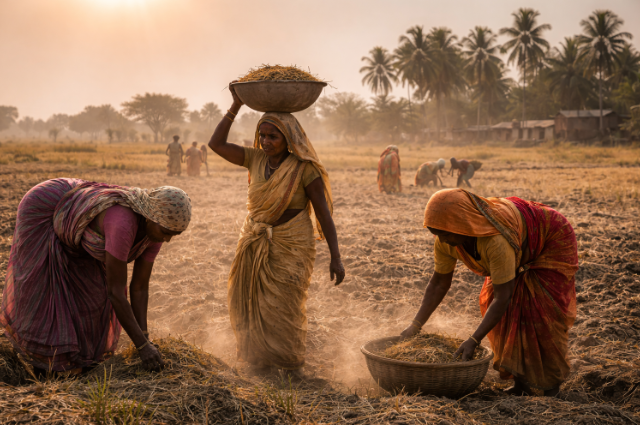
Climate Stress, Gender, and Health Vulnerability
Climate change is reshaping the contours of human vulnerability, and nowhere is this more visible than in its impact on women’s health. Rising temperatures, increasing frequency of heat waves, and urban “heat islands” are no longer abstract threats—they are daily realities for millions of women, particularly those in informal work sectors. Agricultural labourers, textile workers, and women employed in outdoor industries face prolonged exposure to high heat, often without adequate access to hydration, cooling infrastructure, or protective labour policies.
According to a 2024 MSSRF study in Beed, Maharashtra, female sugarcane workers in high heat districts reported twice the rate of hysterectomies compared to cooler zones, and 70% experienced chronic dizziness and fatigue during summer months. Similarly, women in Tamil Nadu’s textile belts admitted to avoiding drinking water to skip bathroom breaks, resulting in a spike in urinary tract infections (UTIs) during peak heat.
These observations are not isolated. Rising heat exacerbates reproductive health challenges, mental health stressors, and chronic diseases, including cardiac and metabolic disorders. Urban areas are particularly at risk; cities like Ahmedabad, with dense construction and limited green spaces, have witnessed a 43% spike in all-cause mortality during heatwaves, according to the Ahmedabad Heat Action Plan. The combination of rising temperatures and high population density turns cities into silent health hazards, disproportionately affecting women, the elderly, and low-income communities.
Globally, health systems are responding cautiously to these intersecting threats. The World Health Organisation (WHO) has conditionally approved GLP-1 weight-loss drugs like Semaglutide and Wegovy for adults with a BMI ≥35 who have failed lifestyle interventions. These approvals are accompanied by stringent safeguards to prevent misuse as cosmetic solutions. In HIV prevention, innovations like Lenacapavir, a twice-yearly injection, are transforming interventions for high-risk adolescent girls, particularly in regions with high HIV prevalence such as South Africa.
In India, the challenge extends to antimicrobial resistance (AMR), where structural gaps in state-level enforcement and uneven regulatory compliance threaten public health. Following incidents like the Maiden Pharma tragedy in Gambia, India’s CDSCO audited 76 pharmaceutical companies, revoking 18 licenses for manufacturing violations. Such measures underscore the need for predictive, AI-enabled monitoring systems, rather than reactive enforcement, to safeguard public health while maintaining India’s “Pharmacy of the World” credibility.
Section I: Climate Stress and Women’s Health
Climate change is not gender-neutral. Rising temperatures, extreme heat events, and urban heat islands have disproportionate impacts on women, particularly those in rural areas, informal labor markets, and low-income urban settlements. These impacts span reproductive health, metabolic function, mental wellbeing, occupational safety, and socio-economic stability, making heat not just a physical threat but a gendered health crisis.
Heat-Linked Reproductive and Metabolic Health
Women’s reproductive health is uniquely sensitive to environmental stressors, and prolonged heat exposure exacerbates both acute and chronic conditions. The MSSRF 2024 study in Beed, Maharashtra, provides stark evidence: female sugarcane workers in high-heat zones reported twice the incidence of hysterectomies and 70% experienced chronic dizziness, fatigue, and dehydration during summer months. Heat stress is associated with hormonal imbalances, menstrual irregularities, and increased risks of miscarriage in high-temperature districts, demonstrating a direct link between climate stress and reproductive morbidity.
Occupational Vulnerability and Informal Work Hazards
Women employed in informal sectors, such as agriculture, textiles, construction, and street vending, face unique challenges. Unlike formal workplaces, these sectors lack basic protective infrastructure such as cooling systems, shade, hydration facilities, and regulated work hours. In Tamil Nadu’s textile belts, female workers admitted to avoiding drinking water to skip bathroom breaks, leading to increased cases of urinary tract infections (UTIs) and chronic kidney stress during peak summer months. Similarly, sugarcane workers, agricultural laborers, and street vendors often endure 8–12 hours of sun exposure daily, with minimal occupational safeguards.
Heat stress in workplaces is compounded by socio-cultural pressures. In many rural communities, women must balance income-generating work with domestic chores, caregiving, and household water collection—often under scorching conditions. This dual burden magnifies fatigue, dehydration, and exposure to heat-related illnesses. Moreover, lack of labor legislation enforcement in informal sectors leaves women with no legal recourse or health insurance support, reinforcing systemic inequities.
Urban Heat Impacts
Urban centers amplify climate stress through heat islands, where dense concrete, limited vegetation, and high energy consumption raise ambient temperatures. Cities like Nagpur, Ahmedabad, and Delhi have experienced silent spikes in heat-induced morbidity, with women disproportionately affected due to pre-existing health vulnerabilities and domestic labor roles. The Nagpur Metropolitan Surveillance Unit used AI-powered mapping of heat and Air Quality Index (AQI) data to detect early warning signs of heat-linked Acute Encephalitis Syndrome (AES) in Chhindwara, demonstrating how predictive technology can mitigate urban heat risks.
Heat exacerbates stress, anxiety, and irritability, particularly in households facing economic or water scarcity pressures. The MSSRF study highlighted a 38% increase in domestic violence reports during peak summer months in surveyed households, linked to heat-induced stress, economic strain, and resource scarcity. Women, therefore, face interconnected physical, mental, and social risks, making climate stress a multidimensional threat.
Socioeconomic Consequences and Gendered Inequities
Heat stress is not only a medical issue but also an economic and social problem. Women often reduce working hours or abandon labor-intensive occupations during extreme heat, leading to loss of income and heightened poverty risk. In agriculture, sugarcane, and textile industries, productivity drops during heatwaves, directly impacting household food security and economic stability.
Global and Indian Contexts
Globally, climate-linked health inequities among women are increasingly recognized. Heat exposure disproportionately affects women in South and Southeast Asia, sub-Saharan Africa, and Latin America, particularly in regions dependent on manual labor and lacking protective
infrastructure. The World Health Organization (WHO) emphasizes that gender-sensitive climate adaptation is critical for preventing both mortality and long-term morbidity.
In India, field studies from MSSRF, state labor departments, and municipal health bodies show that the combined impact of heat, informal labor exposure, and inadequate urban planning is severe. While some states like Kerala have initiated protective measures—such as mandated noon breaks for outdoor workers during peak heat months—many regions remain underprepared, and enforcement is inconsistent. Without systemic interventions, heat-linked morbidity and mortality among women will continue to rise, affecting reproductive health, mental wellbeing, and economic participation.
Recommendations for Mitigating Heat Impacts on Women
To address this multidimensional threat, policy responses must be gender-sensitive, context specific, and multi-level:
- Legislative safeguards: Mandate labor protections for women in informal sectors, including cooling facilities, hydration access, and regulated work hours.
- Urban heat adaptation: Integrate AI-based heat mapping into municipal health plans to provide early warnings and rapid response.
- Health system preparedness: Ensure women’s access to reproductive and metabolic health services, including mobile health clinics in high-heat districts.
- Economic support measures: Provide incentives or compensation for heat-related income loss in informal sectors.
- Community awareness campaigns: Educate women and households on heat risks, hydration, and early symptom recognition to prevent serious morbidity.
Section II: Therapeutic Interventions and Access Gaps
As climate stress escalates, women face a growing array of health challenges, ranging from metabolic disorders to reproductive complications. In response, therapeutic innovations are emerging globally, but access and equity remain key concerns.
GLP-1 Weight-Loss Drugs: Conditional Global Approval
The World Health Organization (WHO) has cautiously approved glucagon-like peptide-1 (GLP-1) receptor agonists—such as Semaglutide (Wegovy)—for weight management in adults with BMI ≥35, who have failed lifestyle interventions. This represents a significant development in addressing obesity and related metabolic conditions, which are aggravated by heat stress. Women, especially in urban settings or high-heat labor zones, face higher risks of heat-related metabolic collapse; excess weight compounds the cardiovascular and renal burden.
India’s Approach to GLP-1 Drugs and Metabolic Health
India faces a dual challenge: rising obesity and metabolic disorders among women, and limited access to advanced therapeutics. The country is exploring several measures to mitigate inequity:
- Domestic production and licensing: Indian pharmaceutical companies such as Cipla and Dr. Reddy’s are working under the Medicines Patent Pool (MPP) framework to manufacture affordable versions of GLP-1 drugs for domestic and global use.
- Conditional prescription frameworks: Indian regulatory authorities emphasize that GLP-1 drugs should be prescribed only after lifestyle interventions have failed, ensuring both safety and ethical use.
- Awareness and counseling programs: Public health campaigns are being launched to educate women on nutrition, physical activity, and safe medication use, linking clinical interventions to broader lifestyle support.
Long-Acting HIV Prevention: Lenacapavir
In parallel to metabolic interventions, HIV prevention strategies are also evolving, with a focus on adolescent and high-risk female populations. Lenacapavir, a twice-yearly injectable antiretroviral, represents a paradigm shift from daily oral PrEP regimens. Administered under the Global Fund framework, this innovation addresses adherence challenges, particularly among young women who may face stigma or logistical hurdles in daily pill consumption.
South Africa’s rollout of 400,000 doses in early 2026 demonstrates the potential impact of long-acting interventions in high-prevalence settings. For India, integrating Lenacapavir into
public health programs can reduce HIV transmission among adolescent girls while minimising daily monitoring burdens. 4. Therapeutic Access Divides and Gendered Inequities
Both GLP-1 drugs and Lenacapavir illustrate a broader challenge: therapeutic access divides. Women in high-heat or low-income settings often face simultaneous exposure to climate stress, metabolic risks, and infectious disease vulnerability, yet advanced therapies remain financially and geographically out of reach.
- Socioeconomic barriers: High drug costs, lack of insurance coverage, and transportation challenges restrict access
- Knowledge gaps: Limited awareness of eligibility criteria or treatment benefits prevents women from seeking care.
- Policy and distribution gaps: Fragmented supply chains and insufficient state-level implementation hinder equitable rollout, particularly in rural districts.
- Antimicrobial Resistance (AMR) and Therapeutic Effectiveness
Heat stress and gendered labour conditions also exacerbate AMR-related risks. Women frequently exposed to high-temperature workplaces with poor hygiene are at increased risk of urinary tract infections, wound infections, and other bacterial diseases. Misuse of antibiotics in these contexts contributes to rising AMR, which undermines the effectiveness of existing therapies, including GLP-1 management for metabolic complications complicated by infections.
India’s NAP-AMR 2.0 emphasises state-level enforcement, digital tracking, and predictive monitoring, but gaps remain. Successful interventions in Kerala and Gujarat—such as banning over-the-counter antibiotics and conducting digital audits—offer models for scaling nationwide.
Policy Recommendations for Therapeutic Equity
To maximise the impact of emerging therapies while addressing climate-linked health vulnerabilities, India should pursue a multi-pronged approach:
- Affordability and licensing: Expand voluntary licensing of GLP-1 and Lenacapavir drugs through the Medicines Patent Pool, reducing cost barriers for women in low-income settings.
- Targeted distribution: Prioritise high-heat districts, informal labour hubs, and adolescent female populations for early access.
- Integration with lifestyle and preventive programs: Combine pharmacological interventions with nutrition, hydration, heat awareness, and reproductive health services.
- Digital monitoring and AI surveillance: Use predictive analytics to identify high-risk zones, ensuring timely deployment of therapeutics and reducing treatment gaps.
- Community education and counselling: Empower women with knowledge on drug eligibility, safe usage, and preventive health measures, bridging the awareness divide.
Section III: Antimicrobial Resistance (AMR) Challenges
While climate stress and emerging therapies pose immediate challenges for women’s health, antimicrobial resistance (AMR) represents a slower, insidious threat that undermines the effectiveness of both existing and novel medical interventions. In India, rising heat, gendered labour conditions, and uneven health infrastructure intersect with AMR to create high-stakes public health vulnerabilities. Women, particularly in rural and informal sectors, are disproportionately affected due to increased infection risk, limited access to regulated healthcare, and structural inequities in antibiotic stewardship.
AMR: A Gendered and Climate-Linked Threat
Heat stress amplifies the risk of infections. Women working long hours in agriculture, textiles, or informal labour often face chronic dehydration, urinary tract infections (UTIs), and skin infections. For instance, in Tamil Nadu, female textile workers reported heightened UTIs during summer months due to limited hydration and bathroom access, creating conditions where antibiotic use becomes frequent and sometimes unsupervised. Similarly, sugarcane and street workers in Maharashtra and Karnataka experience recurrent infections, often relying on local pharmacies or over-the-counter antibiotics.
Globally, the WHO recognises AMR as a “slow-moving pandemic”, capable of reversing decades of progress in public health. Women in heat-exposed occupational environments are at heightened risk because social norms, labour pressures, and infrastructural deficits prevent timely medical care, making resistance both a personal and systemic issue.
India’s National Action Plan on AMR (NAP-AMR 2.0)
India’s NAP-AMR 2.0, launched in 2021 and updated in 2025, provides a comprehensive framework to combat antibiotic resistance across human, veterinary, and environmental sectors under the One Health approach. Key objectives include:
- Strengthening surveillance: Monitoring antibiotic use in hospitals, pharmacies, and community settings.
- Regulatory enforcement: Ensuring prescription-only antibiotic sales and penalising violations.
- Capacity building: Training healthcare providers, pharmacists, and inspectors in AMR best practices.
- Public awareness campaigns: Educating communities about responsible antibiotic use. 3. Veterinary Antibiotics and Structural Gaps
A significant driver of AMR in India is veterinary antibiotic use, which remains largely unregulated at the state level. Livestock and poultry farms frequently administer antibiotics for growth promotion or disease prevention, often without veterinary oversight. Resistant bacteria can transfer to humans via food, water, and environmental pathways, disproportionately affecting women involved in animal husbandry, dairy production, or local food markets.
The One Health approach, which links human, animal, and environmental health, is essential to tackling these cross-sectoral threats. However, state-level disparities, limited enforcement, and a lack of integrated data systems hinder full operationalisation. Without addressing veterinary antibiotic misuse, India risks persistent AMR hotspots, threatening both public health and economic productivity.
Climate Stress and AMR Synergies
Rising temperatures exacerbate AMR risks in multiple ways:
- Heat-induced infections: Higher temperatures increase bacterial replication and infection rates, leading to more frequent antibiotic use.
- Water scarcity and hygiene challenges: Women collecting water in rural areas face limited access to clean water, facilitating bacterial spread.
- Occupational stressors: Heat, fatigue, and inadequate sanitation amplify infection risks in labour-intensive jobs.
Digital and Predictive Enforcement: A Modern Response
India is experimenting with technology-enabled solutions to address enforcement gaps. Programs like Operation Amrith in Kerala empower drug inspectors to conduct surprise audits, track antibiotic sales digitally, and enforce compliance. Similarly, the Integrated Health Information Platform (IHIP) aggregates real-time health data, enabling districts to detect “hotspots” of infections and potentially linked AMR cases before they escalate.
AI and predictive analytics have also been employed in urban centres to forecast infection trends and guide resource allocation. For example, the Nagpur Metropolitan Surveillance Unit used AI scanning to detect early outbreaks of Acute Encephalitis Syndrome (AES), allowing proactive interventions. Such predictive approaches, if scaled nationwide, could transform AMR enforcement from reactive to preventive, particularly benefiting women in rural and urban high-heat settings.
Policy and Strategic Recommendations
To effectively combat AMR, India must integrate regulatory, technological, and community-level interventions, with attention to gendered vulnerabilities:
- Mandatory enforcement: Convert NAP-AMR guidelines into statutory mandates at the state level, with penalties for non-compliance.
- Unified data systems: Link human and veterinary antibiotic use into a centralized AI powered platform to track and predict resistance patterns.
- Heat- and gender-sensitive interventions: Prioritise high-heat districts and labour-intensive zones for targeted AMR monitoring, ensuring women are not disproportionately affected.
- Public-private partnerships: Collaborate with pharmacies, hospitals, and NGOs to educate communities and monitor antibiotic distribution.
- Community empowerment: Train women’s collectives in rural areas to identify early infection signs, understand safe antibiotic use, and advocate for improved sanitation.
Section IV: Innovations in Global Health and India’s Health Interventions
In the face of escalating climate stress, gendered health vulnerabilities, and rising antimicrobial resistance, innovative solutions are becoming central to global and national health strategies. Advances in therapeutics, digital surveillance, and public health delivery systems provide a pathway to reduce health inequities, particularly among women in high
heat and low-resource settings. This section explores long-acting HIV prevention, GLP-1 therapeutics, AI-driven health monitoring, and integrated Indian policy interventions, demonstrating how innovation can bridge the gap between climate risk and effective solutions.
The rising prevalence of obesity, diabetes, and related metabolic disorders among women is exacerbated by climate stress. High temperatures increase cardiovascular strain and can worsen insulin resistance, making women in heat-intensive labour sectors particularly vulnerable. GLP-1 receptor agonists, such as Semaglutide (Wegovy), represent a cutting-edge intervention for managing obesity and metabolic disorders in high-risk populations.
While globally approved, access remains limited due to cost and production constraints. India’s proactive measures—including domestic production and MPP licensing agreements with Cipla and Dr Reddy’s—seek to expand affordability. Moreover, integrating these drugs with nutrition and lifestyle counselling ensures a holistic approach, addressing the underlying causes of metabolic risk while protecting women’s health under climate stress.
AI and Predictive Health Surveillance
Technological innovation extends beyond drugs. India is experimenting with AI-driven predictive health systems to mitigate climate-related health risks. The Integrated Health Information Platform (IHIP) aggregates real-time disease data from 33 conditions, enabling early detection of outbreaks, including heat-linked infections.
For instance, the Nagpur Metropolitan Surveillance Unit successfully identified an Acute Encephalitis Syndrome (AES) outbreak in Chhindwara days before official reports, allowing timely intervention. By integrating heat and air quality data (AQI), AI models can predict high-risk zones, identify vulnerable populations (including women in outdoor work), and inform targeted health responses.
Such predictive systems are particularly valuable for women exposed to heat, metabolic strain, and infectious disease risk, enabling healthcare delivery before crises escalate. Integrating AI with community outreach programs, mobile clinics, and local health workers ensures that predictive insights translate into tangible, on-the-ground action.
Integration of Climate-Aware Health Policies
India’s health innovations are most effective when paired with climate-aware policies. Key measures include:
- Heat-Protective Labour Legislation: Kerala mandates noon breaks for outdoor workers during peak heat months, reducing exposure to extreme temperatures and preventing heatstroke.
- Urban Health Integration: Cities like Ahmedabad and Nagpur integrate heat alerts, hospital admissions, and AI-driven disease monitoring, ensuring rapid response to emerging health threats.
- Regulatory Oversight: Following global pharmaceutical incidents, India’s CDSCO audits and license cancellations strengthen drug safety, complementing preventive health strategies.
Holistic Approach to Climate, Gender, and Health
Global health innovation and domestic policy must converge to address the multidimensional impact of climate stress on women. Key principles include:
- Preventive Intervention: AI-enabled surveillance, heat mapping, and early-warning systems reduce risk before disease escalates.
- Therapeutic Accessibility: Affordable, long-acting drugs and conditionally approved therapeutics mitigate metabolic, reproductive, and infectious disease burdens.
- Gender-Sensitive Policy: Labour protections, hydration infrastructure, and community health education ensure interventions reach women disproportionately affected by heat and occupational stress.
- Integrated Health Systems: Linking human, veterinary, and environmental health under the One Health approach reduces AMR and ensures comprehensive care.
- Sustainability and Equity: Policies that consider climate stress, social inequities, and economic barriers ensure interventions are durable and inclusive.
Case Studies Highlighting Successes and Gaps
- Kerala’s Noon Break Policy: Reduces heat exposure among outdoor female workers, resulting in lower heat-related hospitalisations.
- Nagpur AES Prediction: Demonstrates how AI-based mapping allows rapid containment of outbreaks, benefiting both rural and urban women.
- Medicines Patent Pool Licensing: Ensures affordable production of Lenacapavir, improving access for high-risk adolescent girls in low-resource settings.
- Ahmedabad Heat Action Plan: Integrates heat alerts with hospital readiness, illustrating effective urban health planning in high-risk zones.
Section V: Policy, Legislative Interventions, and Integrated Recommendations
While climate stress, gendered vulnerabilities, and emerging health threats highlight the urgency of action, policy frameworks and legislative interventions form the backbone of sustainable health governance. In India, a combination of labour laws, urban health initiatives, regulatory oversight, and national action plans is beginning to address the complex interplay of climate, health, and gender.
Heat-Protective Labour Legislation
Women in informal sectors—agriculture, construction, and textiles—face high-heat exposure, limited hydration, and extended work hours, creating significant health risks. Kerala’s proactive approach provides a model for climate-sensitive labour policy. The state mandates noon breaks from 12 PM to 3 PM during peak heat months, ensuring outdoor workers have opportunities to rest, hydrate, and avoid heatstroke.
Other labour policies include:
- Hydration and cooling infrastructure: Mandating water stations and shaded rest areas in outdoor workplaces.
- Flexible work schedules: Encouraging early-morning or late-evening shifts in high-temperature regions.
- Occupational health monitoring: Linking labour departments with health clinics to monitor heat-related illness trends among female workers.
Urban Adaptation and Heat-Resilient Cities
Urban centres amplify climate stress through heat islands, pollution, and dense population clusters, increasing cardiac, metabolic, and infectious disease risk for women. Cities like Ahmedabad and Nagpur have developed Heat Action Plans integrating early warning systems, hospital readiness, and community education campaigns.
Key urban interventions include:
- AI-driven heat-AQI mapping: Predicts high-risk zones and informs health alerts for hospitals and community health workers.
- Green infrastructure: Planting trees, expanding parks, and using reflective materials to reduce urban heat absorption.
- Public cooling centres: Accessible spaces for women, the elderly, and outdoor labourers during heatwaves.
Regulatory Oversight and Pharmaceutical Safety
India’s position as the “Pharmacy of the World” depends on robust regulatory mechanisms. Recent pharmaceutical incidents, such as the Coldrif Syrup contamination in Madhya Pradesh, underscore the critical need for strict enforcement. Key measures include:
- CDSCO audits: Regular inspections and license revocations for violations.
- Predictive AI monitoring: Combining domestic and export data to anticipate safety issues.
- Public transparency: Making inspection outcomes publicly accessible to enhance accountability.
National Action Plans and Multi-Level Coordination
India’s NAP-AMR 2.0 illustrates the challenges and opportunities of multi-tiered policy implementation. While national guidelines provide strategic direction, state-level enforcement varies significantly:
- Kerala and Gujarat enforce strict prescription-only sales for antibiotics. Other states exhibit regulatory gaps, enabling over-the-counter misuse 5. Integrated Recommendations for Climate-Resilient Health Governance
To address the intersecting threats of heat stress, gender inequity, and health system vulnerabilities, India should adopt a multi-dimensional, integrated approach:
- Legislate Heat-Resilient Work Norms: Mandate labour protections, including hydration, shaded rest areas, and flexible schedules for women in informal and outdoor sectors.
- Expand Urban Adaptation: Integrate AI-driven heat mapping, cooling centres, and green infrastructure into municipal health planning.
- Strengthen Pharmaceutical Oversight: Regular audits, predictive monitoring, and transparent reporting ensure safe and equitable access to therapeutics.
- Ensure Therapeutic Equity: Expand MPP licensing of GLP-1 and Lenacapavir, and link distribution to high-risk districts to prevent access divides.
- Enhance AMR Enforcement: Convert voluntary AMR guidelines into statutory mandates, integrate human and veterinary oversight, and leverage digital surveillance for early detection.
- Community Engagement: Train women’s groups to identify early symptoms, monitor heat stress, and advocate for policy compliance, ensuring interventions are locally responsive.
- Cross-Sectoral Coordination: Link health, labour, environment, and urban planning ministries to implement coherent, gender-sensitive, and climate-aware interventions.
Global Lessons for India
India’s policy interventions resonate with global health strategies:
- Predictive AI surveillance mirrors WHO-endorsed early-warning systems.
- Long-acting HIV prevention demonstrates scalable therapeutic innovation for adolescent girls.
- Conditional access to advanced drugs aligns with international ethical standards for safety and equity.
Section VI: Future Outlook and Conclusion
As India confronts the intersecting challenges of climate stress, gendered health vulnerabilities, and emerging infectious threats, the country is at a critical juncture. The health of women—particularly those in rural, informal, or high-heat environments—is both a barometer of societal resilience and a determinant of future development. Innovations in therapeutics, digital surveillance, and policy, combined with proactive climate adaptation, offer unprecedented opportunities to transform vulnerabilities into strategic strengths. 1. Lessons from Current Interventions
India’s ongoing initiatives provide valuable insights into the interconnected nature of health, climate, and gender equity:
- Labour protections matter: Policies like Kerala’s noon break for outdoor workers demonstrate that even simple legislative interventions can significantly reduce heat-related morbidity, especially for women.
- Technology enables foresight: AI-driven surveillance, as seen in Nagpur and Ahmedabad, allows predictive intervention, preventing outbreaks and enabling resource allocation in high-risk zones.
- Therapeutic innovation must be coupled with equity: Long-acting HIV prevention drugs and GLP-1 therapeutics are transformative but require affordable, accessible distribution networks to ensure that the most vulnerable populations benefit.
- AMR containment is non-negotiable: Antimicrobial resistance threatens the effectiveness of both existing and emerging therapies, making compliance, monitoring, and enforcement critical, particularly in high-heat, rural, and informal work settings.
Strategic Opportunities for India
Looking forward, India has several opportunities to solidify its position as a global leader in climate-resilient, gender-sensitive health governance:
- Scaling Predictive Technology Nationwide: Expanding AI-enabled disease and heat surveillance to all districts can preempt health crises and prioritise interventions for women in vulnerable regions.
- Integrating Health and Labour Policies: Linking labour protections, occupational safety standards, and health monitoring ensures that climate stress does not translate into chronic health inequities.
- Promoting Therapeutic Innovation and Domestic Production: Domestic manufacturing of GLP-1 drugs, Lenacapavir, and other emerging therapeutics, combined with voluntary licensing for affordability, ensures that India reduces dependency on global supply chains while protecting vulnerable populations.
- Strengthening One Health Approaches: Coordinated action across human, veterinary, and environmental sectors can curb AMR, reduce zoonotic risks, and enhance overall community health.
- Urban Climate Adaptation: Heat-resilient cities, green infrastructure, and accessible public cooling centres can mitigate urban heat islands, a growing source of gendered health risk.
Long-Term Policy Imperatives
To ensure sustainability and resilience, India must consider long-term policy measures:
- Legally Binding Health Protections: State-level enforcement of labour protections, AMR compliance, and pharmaceutical safety ensures consistent and equitable application
- Continuous Monitoring and Evaluation: Establishing independent audit mechanisms for labour, health, and environmental data can identify gaps early and guide resource allocation.
- Capacity Building and Education: Training healthcare workers, inspectors, and community volunteers strengthens local implementation of policies.
- Community Empowerment: Women’s collectives and local NGOs should be engaged as active partners, enhancing awareness and ensuring interventions reach the most marginalised.
- Climate-Integrated Health Planning: Policies should explicitly recognise the interdependence of climate, health, and social equity, making resilience a core principle rather than a secondary consideration.
Vision for the Future
The convergence of climate change, emerging health threats, and technological innovation presents a unique opportunity for India to redefine health security:
- Women in rural and high-heat districts will no longer bear the disproportionate burden of climate stress due to proactive labour policies, accessible therapeutics, and predictive monitoring systems.
- Innovative interventions, such as Lenacapavir injections and GLP-1 therapeutics, will reach those most in need, reducing inequities in both urban and rural settings.
- AMR will be mitigated through integrated One Health strategies, strict regulatory enforcement, and digital monitoring, ensuring the longevity of existing and future therapies.
- Urban planning and infrastructure will incorporate climate-sensitive designs, reducing heat exposure and associated health risks for vulnerable populations.
The health of women under climate stress is a mirror of national resilience. Addressing it requires visionary thinking, coordinated action, and sustained innovation. India stands at the forefront of a new paradigm, where technological, policy, and community-based solutions
converge to tackle the multi-dimensional threats posed by climate change, infectious diseases, metabolic disorders, and antimicrobial resistance.
By combining legislative safeguards, urban adaptation, predictive AI surveillance, equitable therapeutic access, and cross-sectoral coordination, India is not only mitigating current health risks but also building a resilient foundation for future generations.
The path forward demands strategic foresight, political will, and social commitment. In navigating this complex terrain, India demonstrates that climate resilience, gender equity, and health security are not mutually exclusive goals; they are deeply interconnected imperatives that define the nation’s ability to thrive in an increasingly volatile world.
“The resilience of a society can be measured by the health of its most vulnerable; in India, protecting women from climate and health stress is protecting the nation’s future.”
References
- World Health Organisation (WHO).Climate Change and Health. WHO, Geneva.WHO policy briefs and technical notes on heat stress, gendered health impacts, and climate adaptation.
- World Health Organisation (2023).Guidelines on the Use of GLP-1 Receptor Agonists for Obesity Management.WHO Expert Committee Reports, Geneva
- World Health Organisation (2024).Global Action Plan on Antimicrobial Resistance. WHO–FAO–UNEP Joint Secretariat Publications.
- M.S. Swaminathan Research Foundation (MSSRF) (2024). Heat Stress, Women’s Health, and Occupational Vulnerability in Semi-Arid India.Field study conducted in Beed district, Maharashtra.