
The Sandbar That Nobody Wanted
In 1979, the Brahmaputra flooded, as it does almost every year, and then retreated. On a bare sandbar near Kokilamukh in Assam's Jorhat district, it left something behind: snakes. Dozens of them, dead, baked by a sun that had nothing to hide from. A sixteen-year-old boy from the Mising community, Jadav Payeng, walked across the sand and understood something that no textbook had taught him. Without trees, there was no shade. Without shade, there was no life.
He went to the village elders and asked what could be done. The answer was blunt: nothing would grow there. If he wanted to try anything at all, they said, he could try bamboo. Most teenagers would have shrugged and gone home. Payeng collected twenty bamboo seedlings and planted them.
That is the true story, and it is easy to tell it as a fairy tale. It was not one. It was a boy, a river, and a very long wait.
Forty Years of Ordinary Work
What makes the story remarkable is not a single heroic act. It is the absence of drama in what followed. Payeng did not plant a forest in a season. By the accounts that have been widely reported, he moved to the sandbar and planted, watered, and tended, day after day, year after year. First came the bamboo. Then, slowly, other species: seedlings carried across by boat, seeds pushed into the sand, saplings protected from the next flood.
He is also reported to have carried red ants from his village to the sandbar, because the soil lacked the living organisms a forest needs. The ants, so the account goes, bit him badly. They also helped. Whether or not every detail has been polished by retelling, the underlying instinct was sound: a forest is not just trees. It is soil, insects, fungi, birds and water, all dependent on each other. A teenager with no formal training in ecology had grasped that by trial and error.
Support was minimal. He survived by keeping cattle and selling milk, a livelihood he is still known for. There was no grant, no government scheme, no project report. For years, almost nobody knew.
The Forest That Was Found by Accident
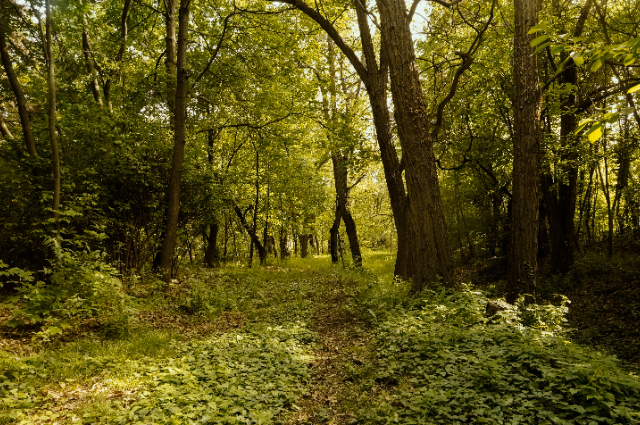
The wider world learned of it in the late 2000s. According to widely cited reports, officials from the forest department came across it after a herd of wild elephants strayed from the area into a nearby village. Following their trail, they found a dense forest where, a generation earlier, there had been only sand. A photojournalist, Jitu Kalita, documented Payeng's work, and the story began to travel.
The forest is now commonly described as covering roughly 550 hectares (about 1,360 acres). It is called Molai Kathoni, after Payeng's nickname, Molai. Reports describe it as home to elephants, deer, rhinoceroses, vultures, and, according to some accounts, Bengal tigers. In 2012, he was felicitated at Jawaharlal Nehru University in Delhi, where he was called the "Forest Man of India". In 2015, the Government of India awarded him the Padma Shri. Documentary films have since been made about him.
Why the Story Matters More Than the Medal
The temptation is to treat Payeng as a curiosity: one extraordinary man, one extraordinary place. That misses the point. His forest sits in a region where the stakes of ecological loss are very high.
Take Majuli, the great river island in the same stretch of the Brahmaputra. It is often described as the world's largest river island, and it is shrinking. Figures commonly cited suggest it covered well over a thousand square kilometres in earlier centuries and now holds closer to a quarter of that, largely because of erosion. The river that gives this landscape its life is also taking it away. Trees and vegetation on riverbanks help bind soil and slow erosion. They are not a complete answer to the Brahmaputra's force, but they are part of one.
There is a second lesson, about scale. India has set ambitious restoration and afforestation targets for years, and large plantation drives are announced with regularity. Planting is the easy part to count and to photograph. Survival is harder: whether saplings are watered, protected, and left alone long enough to become a living system. Payeng's forest did not succeed because of the number of trees planted on a single day. It succeeded because one person stayed for decades.
The Part That Is Not Inspirational
A serious telling of this story must include its difficulties. Forests that work attract wildlife, and wildlife near human settlements creates conflict. Elephants that shelter in the forest also raid crops and homes in surrounding villages, and Payeng has himself spoken about the tension this creates. Communities living beside the forest bear costs that the rest of us, admiring from a distance, do not.
He has also expressed worry about the pressure of development and about whether the forest will be protected after he is gone. A forest that depends on one person's lifetime of effort is, in a sense, fragile. The real test of his legacy is not whether we celebrate him but whether institutions, local communities and the state can hold what he built.
What One Teenager Teaches Us
The story of Jadav Payeng is often reduced to a slogan: one man can change the world. It is a pleasing line, and it is slightly dishonest. Payeng did not change the world. He changed a sandbar, in a corner of Assam, over forty years, by doing something unglamorous every single day.
That is exactly why it deserves attention. We tend to wait for large solutions: the policy, the funding, the movement. Payeng started with twenty bamboo seedlings and a question: what can I do about this? He did not wait for permission, and he did not wait for certainty.
Somewhere in India today, a river is eating a bank, a hillside has been stripped, or a pond has dried up. The tools are as simple as they were in 1979: a seedling, a bit of water, and the willingness to come back tomorrow.
The snakes on that sandbar could not be saved. The forest that grew in their place is the answer one boy gave to their death.
References:
- Jitu Kalita's photo-documentation and reporting on Molai Kathoni
- Official Padma Shri 2015 awardee list (Government of India)
- JNU felicitation of Jadav Payeng, 2012
- Documentary films on Payeng (for example, Forest Man, 2013)
- Majuli erosion data: Brahmaputra Board, Assam State Disaster Management Authority, or peer-reviewed studies
- Current forest area and wildlife figures: Assam Forest Department