
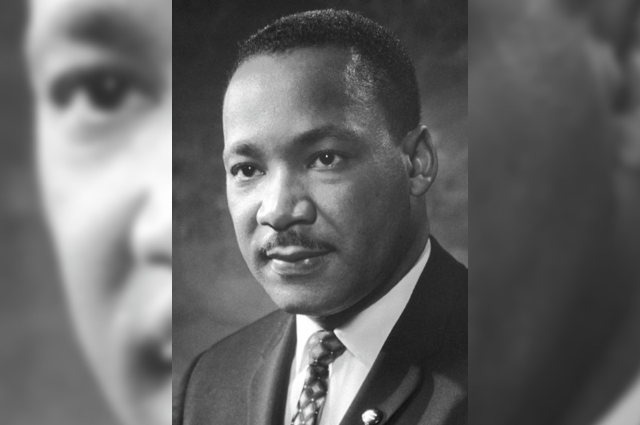
Introduction: Why Martin Luther King, Jr., Day Still Matters
Every year, on the third Monday of January, the United States pauses to commemorate the life and legacy of Martin Luther King Jr.. More than a historical figure, King has become a moral symbol—invoked in political speeches, quoted in classrooms, and remembered in public ceremonies as the foremost advocate of nonviolent resistance during the modern civil rights movement. His leadership during the Montgomery Bus Boycott, the March on Washington, and the campaigns that helped secure the Civil Rights Act of 1964 and the Voting Rights Act of 1965 placed him at the centre of one of the most transformative periods in American democratic history.
Martin Luther King, Jr., Day is a federal holiday established in 1983 and first observed nationwide in 1986. It is the only U.S. federal holiday dedicated to an individual who was not a president, underscoring the magnitude of King’s national and global influence. Officially, the day honours his birthday, January 15, though it is observed on the third Monday of the month. Public institutions close, flags are raised, and communities organise marches, educational events, and volunteer initiatives. Since the 1990s, it has also been designated a national “day of service,” encouraging civic engagement in the spirit of King’s commitment to social responsibility.
Yet the holiday is more than a ceremonial remembrance. It represents a contested and evolving act of national memory. King was not universally admired during his lifetime; he faced surveillance, criticism, and hostility from political leaders and segments of the public. Remembering him today requires acknowledging not only his soaring rhetoric but also the deep resistance to racial equality that shaped his era—and continues to shape American society.
This article argues that Martin Luther King, Jr., Day functions as a lens through which to understand the broader history of civil rights in the United States. It reveals how democratic ideals have been expanded through struggle, how historical figures are transformed into national symbols, and how debates over race, justice, and equality remain unresolved. To examine the meaning of this holiday is therefore to confront both the nation’s achievements and its unfinished work.
Historical Roots of Racial Inequality in the United States
Racial inequality in the United States did not emerge suddenly in the twentieth century; it was embedded in the nation’s political, legal, and economic foundations. From the early seventeenth century, the system of chattel slavery developed in the American colonies as a racialised institution. Colonial legislatures codified laws that defined Africans and their descendants as property, stripped them of legal personhood, and made slavery inheritable through the mother. By the time of independence, slavery was central to the economy of the Southern states and deeply intertwined with national politics.
This reality stood in sharp contradiction to the ideals articulated in the Declaration of Independence, which proclaimed that “all men are created equal.” The Constitution that followed avoided the word “slavery” but protected it indirectly through clauses such as the Three-Fifths Compromise and the Fugitive Slave Clause. The founding framework thus fused democratic aspiration with racial exclusion. Liberty and equality were proclaimed as universal principles, while denied in practice to millions.
Resistance to slavery was constant. Enslaved Africans rebelled, escaped, negotiated, and preserved cultural and familial bonds under oppressive conditions. Organised uprisings, such as those led by Nat Turner, terrified slaveholding societies and prompted harsher laws. At the same time, abolitionism grew in both Black and white communities. Figures such as Frederick Douglass exposed the brutality of slavery through speeches and autobiographies, while activists like William Lloyd Garrison pressed for immediate emancipation. Abolitionist networks, including the Underground Railroad, represented a sustained moral and political challenge to the institution.
The Civil War (1861–65) ended slavery, and Reconstruction initially promised a dramatic reordering of American society. The Thirteenth Amendment abolished slavery; the Fourteenth Amendment guaranteed equal protection under the law; and the Fifteenth Amendment prohibited racial discrimination in voting. For a brief period, Black men voted, held public office, and participated in democratic governance across the South. These amendments marked the most significant constitutional expansion of rights in U.S. history up to that time.
However, Reconstruction collapsed under violent white resistance and waning Northern political will. Federal troops withdrew from the South in 1877, and white supremacist governments regained control. Through intimidation, economic coercion, and terrorism—often carried out by groups such as the Ku Klux Klan—Black political participation was systematically suppressed. States enacted poll taxes, literacy tests, and grandfather clauses to disfranchise Black voters, effectively nullifying the Fifteenth Amendment.
The Supreme Court reinforced this retreat from equality. In the 1857 case Dred Scott v. Sandford, the Court had already ruled that African Americans could not be citizens and had “no rights which the white man was bound to respect.” After Reconstruction, the 1896 decision in Plessy v. Ferguson upheld state laws requiring racial segregation under the doctrine of “separate but equal.” In reality, facilities and services for Black Americans were consistently inferior. Segregation became the legal backbone of the Jim Crow system, entrenching inequality in schools, housing, transportation, employment, and public accommodations.
By the early twentieth century, racial inequality was institutionalised across much of the country. Lynching and mob violence enforced social hierarchy, while discriminatory labour practices and housing policies limited economic mobility. Yet Black Americans continued to organise. Churches, mutual aid societies, newspapers, and civil rights organisations such as the NAACP laid the groundwork for future resistance.
These long-term conditions made a mass civil rights movement not merely possible but inevitable. The contradiction between constitutional guarantees and lived reality persisted across generations. African Americans had been promised citizenship, equality, and suffrage; the systematic denial of those promises created enduring political tension. By the mid-twentieth century, demographic shifts, economic change, and global pressures would converge to challenge the stability of Jim Crow.
The Rise of the Modern Civil Rights Movement (1950s–1960s)
The modern civil rights movement emerged in a rapidly changing post–World War II world. The war had exposed the hypocrisy of fighting fascism abroad while tolerating segregation at home. Black veterans returned with heightened expectations of equality. The Great Migration had shifted millions of African Americans from the rural South to urban centres in the North and West, increasing political leverage. At the same time, the early Cold War placed the United States under international scrutiny; racial discrimination undermined its claim to moral leadership in a global struggle against communism.
A pivotal legal turning point came in 1954, when the Supreme Court decided Brown v. Board of Education. The Court unanimously declared that segregated public schools were inherently unequal, overturning Plessy v. Ferguson in the context of education. While Brown did not immediately dismantle segregation, it provided constitutional legitimacy to the movement and energised activists across the country. Southern states responded with “massive resistance,” closing public schools and defying court orders, leading to prolonged desegregation battles.
Grassroots activism proved decisive. Black churches served as organisational hubs, offering meeting spaces, leadership, and moral framing. Women played central but often underrecognized roles as strategists, fundraisers, and local leaders. Students launched sit-ins at segregated lunch counters beginning in 1960, demonstrating disciplined nonviolent resistance. Local organisers risked jobs, homes, and lives to challenge discriminatory practices in voting, housing, and employment.
Nonviolence became the defining strategy of the movement. Inspired by Christian theology and the example of Mahatma Gandhi, leaders such as Martin Luther King Jr. argued that disciplined, peaceful protest could expose the brutality of segregation and win broad public sympathy. The Montgomery Bus Boycott (1955–56) demonstrated the power of sustained economic pressure. Freedom Rides in 1961 tested federal enforcement of desegregation rulings, often meeting violent resistance that was broadcast nationwide.
Several organisations coordinated these efforts. The NAACP pursued litigation strategies that challenged segregation in courts. The Southern Christian Leadership Conference, founded in 1957, mobilised church networks for mass protest. The Student Nonviolent Coordinating Committee empowered young activists to lead voter registration drives and direct-action campaigns. The Congress of Racial Equality organised sit-ins and Freedom Rides, emphasising interracial cooperation.
Media coverage played a transformative role. Televised images of peaceful demonstrators attacked by police dogs, fire hoses, and mobs in places like Birmingham shocked national audiences. Such coverage generated sympathy in the North and pressured federal authorities to intervene. International observers also took note; in the context of decolonisation movements across Africa and Asia, American racial violence damaged the country’s diplomatic standing.
By the early 1960s, the movement transitioned from primarily legal challenges to sustained mass protest. The 1963 March on Washington symbolised this shift, combining grassroots mobilisation with national political demands. Persistent activism helped secure the Civil Rights Act of 1964 and the Voting Rights Act of 1965—landmark federal laws that dismantled legal segregation and protected voting rights.
The rise of the modern civil rights movement thus represented the convergence of historical injustice, legal advocacy, grassroots courage, and geopolitical pressure. It was not spontaneous but the result of decades of organising and constitutional struggle. By mid-century, the gap between American ideals and American realities had become too visible, too contested, and too politically unstable to sustain without change.
Martin Luther King, Jr.: Leadership, Philosophy, and Influence
Martin Luther King Jr. emerged as the most recognisable leader of the modern civil rights movement not by accident, but through a combination of intellectual formation, moral conviction, and historical circumstance. Born in 1929 in Atlanta, Georgia, into a middle-class Black family rooted in the Baptist church, King was shaped early by both religious tradition and racial injustice. His father, a prominent pastor at Ebenezer Baptist Church, instilled in him a sense of dignity and resistance to segregation. King excelled academically, attending Morehouse College, Crozer Theological Seminary, and later earning a doctorate in systematic theology from Boston University. His theological education exposed him to Protestant liberalism, the Social Gospel movement, and philosophical currents that emphasised social reform as a religious obligation.
Central to King’s worldview was the fusion of Christian ethics with the philosophy of nonviolent resistance. He drew heavily from the teachings of Jesus—particularly the command to love one’s enemies—and from the example of Mahatma Gandhi, whose nonviolent struggle against British colonial rule demonstrated the political power of moral force. For King, nonviolence was not passive submission but active resistance without hatred. It sought not the humiliation of opponents but their transformation. This approach framed the struggle for civil rights as a moral drama, exposing the injustice of segregation while maintaining ethical discipline among protesters.
King first gained national prominence during the Montgomery Bus Boycott of 1955–56. After Rosa Parks refused to surrender her seat to a white passenger, Black residents of Montgomery organised a mass boycott of the city’s buses. At just 26 years old, King, then pastor of Dexter Avenue Baptist Church, was chosen to lead the Montgomery Improvement Association. His eloquence and calm resolve during the 381-day boycott drew national media attention. The boycott ended when the Supreme Court ruled bus segregation unconstitutional, demonstrating the effectiveness of coordinated nonviolent protest.
Building on this momentum, King helped found the Southern Christian Leadership Conference (SCLC) in 1957. The SCLC sought to harness the organisational strength of Black churches across the South to lead campaigns against segregation and voter suppression. Under King’s leadership, the organisation coordinated protests in cities such as Birmingham and Albany, often provoking violent responses from local authorities that galvanised national sympathy.
The 1963 March on Washington for Jobs and Freedom marked the height of King’s public influence. Standing before the Lincoln Memorial, he delivered his “I Have a Dream” speech, articulating a vision of racial equality rooted in the nation’s founding ideals. The speech linked civil rights demands to the unfulfilled promise of the Declaration of Independence, framing the movement as a struggle to redeem American democracy rather than overthrow it. Broadcast worldwide, the address cemented King’s reputation as a moral voice of the nation.
King’s activism played a significant role in shaping federal legislation. The Birmingham Campaign of 1963, marked by televised brutality against peaceful demonstrators, helped create the political urgency that led to the Civil Rights Act of 1964. The following year, violent repression of voting rights activists in Selma, Alabama, contributed to the passage of the Voting Rights Act of 1965. Although these laws were the product of broad coalitions and congressional action, King’s leadership and public advocacy were central to mobilising support.
In 1964, King was awarded the Nobel Peace Prize, becoming the youngest recipient at that time. The award recognised not only his leadership in the United States but also the global implications of nonviolent resistance as a method for social change. He used the prize money to support the movement, reinforcing his commitment to collective struggle rather than personal recognition.
In the later years of his life, King expanded his focus beyond formal segregation. He turned toward economic inequality, arguing that civil rights without economic justice were incomplete. The Poor People’s Campaign sought to address poverty across racial lines, highlighting disparities in housing, employment, and access to resources. King also publicly opposed the Vietnam War, criticising the diversion of funds from anti-poverty programs and condemning the moral cost of military intervention. These positions alienated some former allies, including political leaders who had supported earlier civil rights legislation.
King faced substantial opposition throughout his career. Segregationists denounced him as a radical agitator. He was arrested multiple times, his home was bombed, and he was subjected to constant threats. The Federal Bureau of Investigation, under J. Edgar Hoover, conducted extensive surveillance, attempting to discredit him. Even within the movement, younger activists sometimes criticised his gradualism and emphasis on integration rather than Black autonomy.
By 1968, King remained both admired and controversial—a figure revered by supporters yet mistrusted or opposed by many Americans. His leadership, grounded in moral philosophy and strategic discipline, reshaped national law and conscience. But it also revealed the depth of resistance to racial equality embedded within American society.
Assassination and National Reaction
On April 4, 1968, Martin Luther King Jr. was assassinated while standing on the balcony of the Lorraine Motel in Memphis, Tennessee, where he had travelled to support striking sanitation workers. His death at the age of 39 stunned the nation. The assassination occurred at a moment when King had broadened his activism to include labour rights and economic justice, underscoring the evolving scope of his mission.
The immediate reaction was one of shock and grief, particularly within Black communities. Riots erupted in more than 100 cities across the United States, reflecting both mourning and long-simmering frustration over persistent inequality. National Guard units were deployed to restore order in several urban centres. The violence highlighted the volatility of racial tensions and the sense of despair many felt at the loss of a leader committed to nonviolent change.
Political leaders quickly responded. President Lyndon B. Johnson called for calm and urged Congress to pass pending civil rights legislation. Within days, lawmakers approved the Civil Rights Act of 1968, commonly known as the Fair Housing Act, which prohibited discrimination in the sale, rental, and financing of housing. The law was widely understood as a tribute to King’s legacy and a recognition that racial inequality extended beyond public accommodations and voting rights.
Internationally, tributes poured in from political and religious leaders who had regarded King as a global symbol of peace and justice. His funeral in Atlanta drew thousands of mourners, and millions more watched on television. The ceremony reflected both personal sorrow and collective reckoning.
In death, King’s public image shifted. During his lifetime, he had been surveilled, criticised, and labelled disruptive by many officials. After his assassination, he was increasingly remembered as a national martyr and moral visionary. Over time, commemorations, memorials, and ultimately a federal holiday would elevate him into the pantheon of American historical figures.
Yet this transformation also simplified his legacy. The radical edge of his critiques—of poverty, militarism, and structural inequality—was often softened in public memory. His death closed one chapter of the civil rights movement but opened another: the ongoing effort to interpret, honour, and act upon the principles for which he had lived and died.
The Long Road to Establishing Martin Luther King, Jr., Day
The creation of Martin Luther King, Jr., Day as a federal holiday was neither immediate nor uncontested. In the days following the assassination of Martin Luther King Jr. in April 1968, members of Congress introduced legislation to honour him with a national holiday. The proposal reflected the widespread grief and recognition of his historic contributions. Yet despite emotional public support, the measure faced significant political resistance and stalled for more than a decade.
At the state and local level, however, recognition began to grow. By 1970, some cities and states started observing King’s birthday, January 15, as a commemorative day. Illinois became the first state to establish a paid state holiday in his honour in 1973. Throughout the 1970s, grassroots campaigns, civil rights organisations, labour unions, and religious groups pushed for broader adoption. The movement gained cultural momentum as musicians, activists, and public figures advocated for federal recognition, framing the holiday as a moral imperative.
Opposition to a national holiday took several forms. Some lawmakers argued that creating another federal holiday would impose economic costs by increasing paid leave for government workers. Others expressed ideological resistance, questioning whether King’s activism warranted the same status as presidents or military leaders traditionally commemorated by federal holidays. More overtly, racial opposition persisted. King remained a polarising figure, particularly among those who had resisted desegregation and civil rights reforms during the 1960s. Critics sometimes portrayed him as divisive or radical, reflecting lingering tensions over the legacy of the civil rights movement.
Congressional debates intensified in the early 1980s. Public opinion increasingly favoured recognition, influenced by years of advocacy and the growing acknowledgement of King’s global stature. In 1983, after sustained campaigning and negotiation, Congress passed legislation establishing the third Monday in January as Martin Luther King, Jr., Day. President Ronald Reagan signed the bill into law on November 2, 1983, despite earlier reservations, citing the importance of honouring a man who had helped expand American democracy.
The first nationwide observance took place on January 20, 1986. Even then, the holiday was not uniformly accepted. Several states resisted immediate adoption or combined the day with other commemorations. Arizona, for example, initially opposed recognising the holiday, leading to economic boycotts and national controversy before voters ultimately approved it in 1992. It was not until the year 2000 that all 50 states formally observed Martin Luther King, Jr., Day as a state holiday.
The prolonged struggle to establish the holiday reveals the complexity of national memory. Honouring King required not only acknowledging his achievements but also confronting the divisions his activism had exposed. The eventual creation of the holiday signalled a broad—though not unanimous—consensus that the civil rights movement represented a defining chapter in American history. At the same time, the resistance underscored that the ideals King championed remained politically charged. The holiday’s very existence is thus a testament to decades of advocacy, negotiation, and shifting public consciousness.
How Martin Luther King, Jr., Day Is Observed
Martin Luther King, Jr., Day is a federal holiday observed on the third Monday of January. As a federal holiday in the United States, it means that federal government offices, post offices, and most public institutions close for the day. Many private employers also grant employees time off, though practices vary. The holiday stands apart from most other federal observances because it commemorates a private citizen rather than a president or military event.
Public observances typically include parades, marches, and commemorative gatherings in cities across the country. These events often echo the protest traditions of the civil rights movement, blending celebration with reflection. Speeches by civil rights veterans, elected officials, clergy, and community leaders highlight King’s legacy and address contemporary issues related to racial justice, economic inequality, and civic responsibility.
Educational institutions play a central role in shaping how the holiday is understood. Schools and universities frequently organise lectures, panel discussions, and service-learning projects. Students study King’s speeches and examine the broader history of the civil rights movement, connecting historical events to current social challenges. Such programs aim to move beyond symbolic recognition toward critical engagement.
Since 1994, Martin Luther King, Jr., Day has also been officially designated as a national “Day of Service.” This initiative encourages Americans to volunteer in their communities, reinforcing King’s belief in collective responsibility and social action. Activities range from food drives and neighbourhood cleanups to mentoring programs and voter registration efforts.
Museums, churches, and cultural institutions contribute to the commemorations as well. Sites associated with King’s life, including his birthplace and memorials, host special programs. Churches often hold services emphasising themes of justice and reconciliation. Through these varied forms of observance, the holiday functions not only as a remembrance of past struggle but as an invitation to continued civic participation and moral reflection.
MLK Day in Contemporary America: Memory, Politics, and Debate
In contemporary America, Martin Luther King, Jr., Day exists at the intersection of memory and political struggle. While officially framed as a unifying national holiday, it unfolds within a society still marked by racial inequality, partisan polarisation, and competing visions of democracy. As a result, the holiday has become not only a day of commemoration but also a forum for debate about the meaning of King’s life and the direction of the nation.
Modern racial tensions—shaped by controversies over voting access, policing, immigration, education policy, and economic disparity—inevitably influence how the holiday is observed. For some Americans, MLK Day represents progress fulfilled: a testament to the triumph of civil rights legislation and the nation’s capacity for reform. For others, it underscores unfinished business, highlighting persistent disparities in wealth, incarceration rates, school funding, and political representation.
At the heart of these debates are competing interpretations of Martin Luther King Jr.’s legacy. One interpretation emphasises his aspiration for a “colorblind” society, often distilled from his 1963 declaration that individuals should be judged “by the content of their character.” Advocates of this view frame King primarily as a champion of individual equality and racial harmony, arguing that policies should avoid explicit racial considerations.
Another interpretation situates King within a broader critique of systemic injustice. Scholars and activists note that in his later years, King spoke forcefully about structural racism, economic inequality, and the interconnections between militarism and poverty. From this perspective, remembering King requires confronting institutional disparities rather than focusing solely on interpersonal prejudice. The tension between these interpretations shapes public discourse each January.
Activist organisations frequently use MLK Day to draw attention to contemporary issues. Voting rights groups highlight restrictions they argue disproportionately affect minority communities, invoking the spirit of the Voting Rights Act of 1965. Advocates addressing police violence organise marches and community dialogues, linking current incidents to the broader history of unequal law enforcement. Campaigns focused on economic inequality reference King’s Poor People’s Campaign, emphasising his call for living wages, fair housing, and expanded social programs.
Media narratives reflect this complexity. Coverage of MLK Day often oscillates between celebratory retrospectives and reports on ongoing protests or policy disputes. Political leaders across the ideological spectrum invoke King’s words to support divergent agendas, illustrating the symbolic power of his legacy. Quotations from his speeches appear in presidential proclamations, grassroots pamphlets, and social media campaigns alike. In this way, King functions as both a unifying icon and a contested symbol.
Public debates also arise over how King should be remembered in schools and civic spaces. Some argue that curricula simplify his message, presenting him as a dreamer detached from the disruptive activism that characterised his work. Others contend that contemporary political movements selectively appropriate his rhetoric while ignoring the historical context of his campaigns. Disagreements over monuments, educational standards, and public commemorations demonstrate that national memory remains dynamic rather than fixed.
Thus, MLK Day operates as a space for protest as well as remembrance. Marches held on the holiday often resemble the demonstrations of the 1960s, blending commemoration with calls for reform. The dual character of the day—solemn tribute and active mobilisation—reflects the enduring tension between honouring past achievements and confronting present challenges. In this sense, the holiday remains a living expression of democratic debate rather than a static ritual.
The Enduring Legacy of Martin Luther King, Jr.
More than half a century after his assassination, Martin Luther King Jr.’s influence continues to shape social movements in the United States and beyond. His leadership during the civil rights era established nonviolent protest as a powerful instrument of political change. Subsequent movements advocating for women’s rights, LGBTQ+ equality, disability rights, immigrant justice, and environmental reform have drawn upon the tactics and moral framing he helped popularise.
Internationally, King’s philosophy has resonated with movements seeking democratic reform and social justice. His synthesis of Christian ethics and Gandhian nonviolence offered a model adaptable to diverse political contexts. Leaders and activists across continents have cited his example as evidence that sustained, peaceful resistance can alter entrenched systems of power.
King’s legacy is also visible in the physical and cultural landscape. Monuments, streets, schools, and public institutions bear his name. The Martin Luther King Jr. Memorial in Washington, D.C., stands as a prominent national tribute, inscribing excerpts from his speeches in stone. Films, documentaries, biographies, and annual commemorations continue to reinterpret his life for new generations.
Yet legacy is not the same as full understanding. Over time, public memory has sometimes simplified King’s message, reducing it to a single speech or a single phrase. Such simplification can obscure his critiques of economic exploitation, militarism, and structural inequality. During his lifetime, he was regarded by many as a controversial and disruptive figure rather than a universally admired hero. Remembering this complexity is essential to appreciating the scope of his thought.
King’s message remains relevant in the twenty-first century precisely because the issues he confronted—racial discrimination, poverty, unequal access to political power—have not disappeared. While legal segregation has ended, disparities persist in housing, education, health care, and wealth distribution. His insistence that justice requires both moral conviction and organised action continues to challenge citizens and policymakers alike.
Ultimately, King’s enduring legacy lies not only in the laws influenced during his lifetime but in the ethical framework he articulated. He framed civil rights as a test of democratic integrity and human dignity. As long as societies grapple with inequality and conflict, his call for justice grounded in nonviolence will remain part of the global conversation.
Conclusion: A Holiday That Challenges the Nation
Martin Luther King, Jr., Day stands today as a living, contested, and profoundly meaningful observance. It is not merely a tribute to a single leader, nor is it a comfortable ritual fixed in the past. Rather, it is a recurring moment in which the United States confronts its own history and measures its present against its professed ideals.
The holiday honours Martin Luther King Jr., but it also honours the broader struggle for civil rights and democratic inclusion. Each year, it invites reflection on the victories of the mid-twentieth century—the dismantling of legal segregation, the expansion of voting rights, and the affirmation of equal protection under the law. At the same time, it draws attention to unresolved inequalities that persist in wealth, housing, education, criminal justice, and political representation.
MLK Day therefore, resists being reduced to nostalgia. It challenges narratives that portray racial justice as a completed chapter of American history. The very debates that surround the holiday—over voting access, economic fairness, and the meaning of equality—demonstrate that the questions King raised remain unsettled. His life reminds the nation that democracy is not self-sustaining; it requires vigilance, participation, and moral courage.
In this sense, the holiday is less about comfort than responsibility. It calls citizens to examine whether contemporary policies and institutions align with the principles of justice and human dignity that King articulated. Commemoration becomes meaningful only when paired with engagement.
Ultimately, MLK Day endures because it embodies both memory and mandate. It remembers a movement that reshaped the nation, and it mandates continued effort toward a more equitable society. As long as democratic ideals remain works in progress, the holiday will continue to challenge the nation to live up to its highest promises.
References
- The Martin Luther King, Jr. Research and Education Institute (Stanford University)
- National Archives – Martin Luther King Jr. and the Civil Rights Act of 1964
- U.S. National Archives – Voting Rights Act of 1965
- Nobel Prize – Martin Luther King Jr. Biography
- Library of Congress – Civil Rights History Project
- National Museum of African American History and Culture – Civil Rights Movement
- U.S. Congress – Public Law 98-144 (Establishing Martin Luther King Jr. Day)
- The King Center
- Encyclopedia Britannica – Martin Luther King, Jr.
- Martin Luther King Jr. Memorial (National Park Service)