
The Changing Nature of Writing History
Foundations of Traditional Historiography and Its Limitations
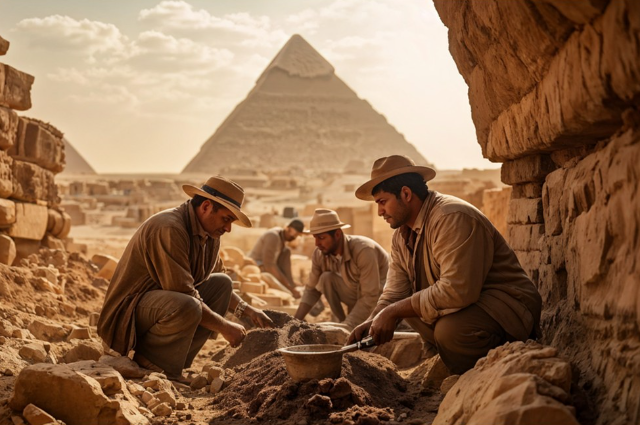
For centuries, the writing of history was built around the careful collection, preservation, and interpretation of historical evidence. Traditional historiography developed through the belief that the past could be understood by examining reliable sources and reconstructing events through systematic analysis. Historians primarily depended on archives, manuscripts, official documents, inscriptions, and published works to investigate political events, social changes, economic developments, and cultural transformations. These sources formed the foundation through which historians attempted to create narratives about human societies and their experiences.
Archives played a central role in traditional historical research. Government records, administrative documents, royal writings, legal texts, and institutional reports provided important information about states, rulers, conflicts, and major events. Manuscripts and published works preserved intellectual, religious, and cultural ideas from different periods. Inscriptions, archaeological records, and material remains helped historians study societies where written sources were limited. Through these materials, historians reconstructed timelines, analysed causes and consequences, and developed interpretations of historical change.
Within this traditional framework, the historian was considered an investigator who collected evidence, examined its reliability, compared different sources, and produced an interpretation of the past. A historian’s task was not simply to repeat information from documents but to analyse the context in which those documents were created. Questions such as who produced a source, why it was created, and what purpose it served became important parts of historical research. Historical writing, therefore, involved both evidence and interpretation.
However, traditional historiography also revealed significant limitations. One of the most important questions is: Who created the historical records? Many historical sources were produced by governments, political elites, religious institutions, colonial administrations, and powerful social groups. Since these groups controlled literacy, administration, and systems of record-keeping, their perspectives often became dominant in historical narratives. As a result, the archive frequently represented the experiences of those who had power rather than the experiences of all members of society.
This created another important question: Whose voices were preserved, and whose voices were ignored? The lives of ordinary people, workers, rural communities, women, indigenous populations, and marginalised groups were often absent or limited in traditional historical records. Their experiences were not always documented through official sources, leading to incomplete understandings of the past.
Women’s histories provide a clear example of this limitation. Traditional historical writing often focused on political leaders, wars, and economic achievements, while the everyday experiences of women were overlooked. The roles of women in family life, labour, social movements, education, and cultural practices were frequently ignored because such experiences were rarely recorded in official archives. The development of feminist historiography challenged this approach by highlighting the importance of recovering women’s voices and experiences.
Similarly, indigenous communities and marginalised groups were often represented through the perspectives of outside observers, especially colonial authorities. Colonial records frequently classified and described local communities according to colonial interests and assumptions. These records may provide valuable historical information, but they also reflect the political and cultural perspectives of those who created them.
Everyday social histories also remained underdeveloped within traditional approaches. The lives of common people—their work, traditions, relationships, beliefs, and daily struggles—were often considered less important compared to major political events. New historical approaches later expanded the field by focusing on ordinary experiences and social structures rather than only rulers and institutions.
Therefore, archives should not be understood as completely neutral collections of information. Archives reflect the societies that created them, including their values, inequalities, and systems of power. What is preserved, what is classified, and what is forgotten are influenced by historical circumstances. The absence of a record does not always mean that an experience did not exist; sometimes it means that certain voices were not allowed to be recorded.
Recognising these limitations transformed the way historians approach the past. Modern historiography does not reject traditional sources but critically examines them, asking whose perspectives they represent and what stories remain hidden. This critical understanding of archives has become essential in the transition toward new approaches, including digital historiography, where technology offers new possibilities for recovering overlooked histories while also creating new challenges of representation and interpretation.
Digital Humanities: New Tools for Historical Research
The emergence of Digital Humanities has introduced a significant transformation in the way historians study, analyse, and interpret the past. Digital Humanities can be understood as an interdisciplinary field that combines traditional humanities research with digital technologies, computational methods, and data-driven approaches. It brings together historians, researchers, computer scientists, archivists, and other scholars to explore how digital tools can expand the possibilities of studying human experiences across time.
Unlike traditional historical methods that mainly depend on physical archives, manuscripts, and published works, Digital Humanities allows historians to work with large collections of digital information. It provides new ways to collect, organise, analyse, and present historical knowledge. Through digital technologies, historians can examine thousands of documents, identify patterns across large datasets, and explore connections that may not be visible through conventional research methods.
The importance of Digital Humanities does not come from replacing traditional historical approaches but from extending their possibilities. Digital tools help historians ask new questions, explore new sources, and study historical processes from different perspectives. They allow researchers to move beyond individual documents and examine broader patterns of social, economic, political, and cultural change.
1. Digital Archives: Preserving and Expanding Access to History
One of the most important developments in Digital Humanities is the creation of digital archives. Digital archives involve converting historical materials such as manuscripts, photographs, maps, newspapers, government records, and other documents into digital formats. Through scanning, digitisation, and online storage, historical sources that were once limited to specific libraries or institutions can become accessible to researchers and the public around the world.
Traditional archives often required physical travel, specialised permissions, or access to specific institutions. Digital archives reduce these barriers by allowing researchers to explore historical collections remotely. A scholar studying colonial records, ancient manuscripts, or cultural documents can now access materials from different countries without physically visiting multiple archives.
Digital archives also support the preservation of fragile historical materials. Many old documents are vulnerable to damage caused by time, environmental conditions, or repeated handling. Digitisation creates a permanent digital copy, helping protect historical knowledge for future generations.
However, digital archives also raise important questions. The process of deciding which materials are digitised involves choices about importance, accessibility, and representation. If certain communities or sources are excluded from digitisation, digital archives may reproduce the same inequalities found in traditional archives. Therefore, creating digital collections requires careful attention to diversity and inclusion.
2. Digital Mapping and GIS: Understanding History Through Space
Another major approach in Digital Humanities is the use of Geographic Information Systems (GIS) and digital mapping. Traditional history often focuses on time, events, and people, but digital mapping allows historians to study the relationship between history and geography. It helps researchers understand how places, environments, and movements influence historical developments.
GIS technology enables historians to map events and analyse spatial patterns. For example, researchers can map migration movements, trade routes, military campaigns, urban growth, and the spread of cultural ideas. Instead of viewing history as a simple timeline, digital maps reveal how different locations interact and shape historical processes.
Digital mapping has been particularly useful in studying colonial expansion. Historians can visualise how colonial powers expanded their territories, established administrative networks, and controlled economic resources. Maps can also reveal patterns of resistance, migration, and cultural exchange that may not be obvious in written records alone.
Migration history is another area where GIS has created new possibilities. By mapping population movements, historians can study how communities moved due to economic opportunities, conflicts, environmental changes, or political pressures. These visual representations help connect individual experiences with larger historical trends.
3. Data Visualisation: Making Historical Patterns Visible
Data visualisation is another powerful tool used in Digital Humanities. It involves presenting historical information through charts, graphs, networks, and visual models. Large amounts of historical data that may be difficult to understand through text alone can become clearer when represented visually.
For example, population data can be visualised to show demographic changes over time. Historians can analyse population growth, migration patterns, urbanisation, and social transformations through visual representations. Similarly, economic networks can be studied by mapping connections between regions, trade centres, and commercial activities.
Network visualisation is especially useful for understanding relationships between people, institutions, and ideas. Historians can examine connections between political figures, intellectual movements, religious networks, or economic systems. This approach helps reveal structures and relationships that traditional methods may overlook.
Digital visualisation also provides new ways to study social transformations. Changes in education, labour, cultural practices, and communication can be analysed through large datasets, allowing historians to identify long-term patterns in society.
For example, the study of colonial economies can use digital methods to examine trade networks, resource extraction, and connections between colonies and global markets. Similarly, social historians can use data analysis to explore changes in family structures, communities, and everyday life.
Overall, Digital Humanities has expanded the possibilities of historical research by introducing new methods of exploring evidence. Digital archives increase access to historical sources, GIS reveals the importance of space and geography, and data visualisation makes complex historical patterns easier to understand. These approaches demonstrate that technology is not simply a tool for storing information; it is reshaping the ways historians discover, analyse, and interpret the past.
Simulation and the Reconstruction of the Past
One of the most innovative developments in digital historiography is the use of simulation to explore and reconstruct the past. Historical simulation refers to the use of computer-based models, digital environments, and computational techniques to recreate possible historical situations, landscapes, and social processes. Instead of studying history only through written descriptions and physical evidence, simulation allows historians to create digital representations of past worlds and examine how different factors may have influenced historical developments.
Simulation does not attempt to simply reproduce the past exactly as it existed. Rather, it creates models based on available historical evidence, allowing researchers to explore possibilities and relationships between different historical factors. By combining archaeological data, written records, geographical information, and scientific research, digital simulations provide new ways of understanding historical environments and human behaviour.
One major application of historical simulation is the 3D reconstruction of ancient cities and historical sites. Archaeological evidence often provides only fragments of information about past settlements. Through digital modelling, historians and archaeologists can recreate possible versions of ancient buildings, streets, and public spaces. These reconstructions help researchers and the public visualise how people may have lived, interacted, and organised their communities.
For example, digital reconstructions of ancient cities can show the structure of urban planning, religious spaces, marketplaces, and residential areas. They allow researchers to explore questions such as how people moved through cities, how social spaces were organised, and how architecture reflected cultural values. These visual models also make historical knowledge more accessible by allowing people to experience the past interactively.
Another important area is the use of digital models to study historical landscapes. Geography has always influenced human history, affecting agriculture, migration, settlement patterns, and economic activities. Digital landscape simulations help historians understand how environments changed over time and how societies adapted to those changes. By combining geographical data with historical information, researchers can study the relationship between humans and their surroundings.
Historical simulation is also used to analyse battles, political events, and social changes. Digital models can recreate possible military strategies, population movements, or economic systems. For example, a simulation of a historical battle can examine how geography, resources, technology, and decision-making influenced the outcome. Similarly, social simulations can explore how changes in population, trade, or political systems may have affected societies.
However, the use of simulation also raises important critical questions. The first question is: Can simulations truly represent the past? A digital model is always a reconstruction based on selected evidence and assumptions. Since historical knowledge is incomplete, no simulation can perfectly recreate past reality. It represents one possible interpretation rather than an exact copy of history.
Another challenge concerns the reliability of models when historical data is incomplete. Many historical periods contain gaps in evidence. When information is missing, researchers must make assumptions to complete the model. These assumptions may influence the final result. Therefore, simulations must be carefully analysed and should always be connected with historical evidence and critical reasoning.
A further question is whether simulation actually explains history or only presents possibilities. A digital model may show what could have happened under certain conditions, but it cannot fully explain human motivations, cultural meanings, or complex social experiences. Human history involves emotions, beliefs, conflicts, and decisions that cannot always be reduced to mathematical models or computer calculations.
Therefore, simulation should be understood as a supporting tool rather than a replacement for traditional historical interpretation. It provides historians with new methods to explore evidence, test ideas, and communicate historical knowledge. However, the meaning of history still depends on critical analysis, contextual understanding, and human interpretation.
The key argument is that simulation can make history more visible, interactive, and accessible, but it cannot replace the historian’s role in questioning sources and understanding the complexity of the past. Digital reconstructions open new windows into history, but the responsibility of interpreting what lies beyond those windows remains with historians.
OCR, HTR, and AI: Making Old Records Readable Again
One of the greatest challenges in historical research has always been the difficulty of accessing and reading old documents. Millions of historical records exist in archives around the world, but many remain difficult to study because they are written in outdated scripts, damaged materials, or handwritten formats that are difficult for modern researchers to interpret. The development of technologies such as Optical Character Recognition (OCR), Handwritten Text Recognition (HTR), and Artificial Intelligence (AI) has created new possibilities for transforming these inaccessible records into searchable and analysable historical resources.
Optical Character Recognition (OCR): Converting Images into Text
Optical Character Recognition (OCR) is a technology that converts scanned images of printed documents into digital, searchable text. When historical books, newspapers, government records, or printed manuscripts are scanned, they often exist only as images. OCR software analyses the shapes of letters and characters in these images and transforms them into machine-readable text.
For historians, OCR has significantly changed the way historical research is conducted. Instead of manually reading thousands of pages, researchers can now search large collections of digitised documents quickly. This allows historians to identify specific names, events, places, and ideas across massive archives.
For example, historical newspapers containing political debates, social discussions, and everyday information can be analysed on a much larger scale through OCR. Researchers can examine changes in public opinion, language patterns, and social developments across different periods. Similarly, colonial records, government reports, and published materials can be processed more efficiently.
However, OCR works best with clear, modern printed text. Many historical documents present challenges because of their age, physical condition, or unusual writing styles.
Handwritten Text Recognition (HTR): Reading Historical Manuscripts Through AI
While OCR mainly focuses on printed texts, Handwritten Text Recognition (HTR) uses artificial intelligence to interpret handwritten documents. Many valuable historical sources, including personal letters, diaries, administrative records, religious manuscripts, and private writings, exist only in handwritten form.
HTR systems use machine learning models trained on examples of handwriting to recognise patterns and convert handwritten pages into digital text. This technology has opened new opportunities for historians because handwritten archives often contain personal and social information that is missing from official documents.
For example, personal letters can reveal everyday experiences, emotions, social relationships, and individual perspectives. Diaries can provide insights into how ordinary people understood major historical events. Administrative handwritten records can help researchers study economic systems, local governance, and social structures.
HTR is especially valuable for studying multilingual and regional archives. Many historical collections contain documents written in different languages and scripts. AI-based recognition systems can help researchers explore materials that were previously difficult to access due to language barriers or limited expertise in reading older scripts.
Expanding Access to Forgotten Histories
The combination of OCR, HTR, and AI has the potential to transform historical research by making millions of previously inaccessible documents available for analysis. Records that remained unread in archives for decades can now become part of digital collections.
This is particularly important for regional histories and forgotten texts. Many communities possess valuable historical materials written in local languages, traditional scripts, or less-studied forms of writing. Digital recognition technologies can support the preservation and study of these sources, allowing historians to recover voices that were previously overlooked.
For example, regional manuscripts, local administrative documents, and cultural records can provide alternative perspectives that challenge dominant historical narratives. By making these sources searchable and accessible, digital technologies contribute to a more diverse understanding of the past.
Challenges and Limitations
Despite their importance, OCR and HTR technologies are not perfect. One major challenge is the condition of historical documents. Many records are damaged, faded, incomplete, or affected by poor preservation. These physical problems make accurate recognition difficult.
Another challenge is old writing styles. Historical documents often use handwriting patterns, spelling systems, and languages that differ significantly from modern forms. An AI system trained on contemporary text may struggle to recognise older scripts or unusual vocabulary.
Language variation is another important issue. Many historical archives contain multiple languages, dialects, and mixed writing systems. Developing accurate recognition tools for less-resourced languages remains a major challenge.
AI recognition can also produce errors. A computer-generated text version of a historical document may contain incorrect words, missing information, or misinterpretations. Therefore, historians cannot completely depend on AI outputs without verification. Human expertise remains necessary to check accuracy and understand historical context.
Ultimately, OCR, HTR, and AI should be viewed as powerful research assistants rather than replacements for historians. These technologies expand access to historical sources, but interpretation still requires human judgment, critical thinking, and knowledge of historical contexts.
The importance of these technologies lies not only in making old records readable but also in creating new possibilities for historical discovery. By combining human expertise with artificial intelligence, historians can uncover hidden materials, explore forgotten voices, and develop richer understandings of the past.
Algorithmic Archives: History in the Age of Data
The development of digital technologies has transformed archives from passive collections of documents into dynamic systems of information management. In the traditional sense, archives were physical spaces where historical materials were stored, organised, and accessed by researchers. However, in the digital age, archives increasingly depend on algorithms that classify, organise, search, and connect historical information. These systems have created what can be described as algorithmic archives—digital environments where computational processes influence how historical knowledge is stored, discovered, and interpreted.
Algorithmic archives are not simply digital copies of traditional archives. They involve the use of artificial intelligence, machine learning, databases, and search technologies to manage large collections of historical materials. Algorithms help organise millions of documents, identify patterns, recommend related sources, and make historical information easier to access. In this way, algorithms have become an important part of the process through which historians discover and analyse the past.
One of the major advantages of algorithmic archives is their ability to handle enormous amounts of information. Traditional historical research often required historians to manually examine individual documents, which could take years or even decades. Digital systems can process large collections quickly, allowing researchers to analyse thousands of texts, images, and records in a shorter period of time.
For example, algorithms can identify repeated themes in historical newspapers, detect connections between individuals in different documents, and reveal relationships between events across different locations and time periods. A historian studying migration, trade, or political movements can use digital systems to find patterns that may not be immediately visible through traditional reading methods.
Algorithmic archives also make it possible to connect historical events across different sources. A single historical event may appear in government records, personal letters, newspapers, photographs, and other documents. Digital systems can help bring these sources together, creating a more connected understanding of the past. This approach allows historians to move beyond isolated documents and examine broader historical networks.
Another important benefit is the speed and accessibility of research. Digital archives allow researchers from different parts of the world to access historical materials without physically visiting specific institutions. This creates opportunities for international collaboration and allows scholars to study collections that were previously difficult to access.
However, the increasing role of algorithms in historical research also creates important challenges. One major concern is algorithmic bias. Algorithms are often viewed as neutral technological systems, but they are created by humans and trained using existing data. The information included in a digital system influences the results it produces. If historical data contains social, political, or cultural biases, algorithms may reproduce and even strengthen those biases.
For example, many colonial archives were created by colonial governments and institutions. These records often reflected the perspectives and priorities of colonial authorities rather than the experiences of the communities they controlled. When such archives are digitised and organised through algorithms without critical analysis, colonial viewpoints may continue to dominate digital historical research.
Another issue is that missing digital records can create the illusion of missing histories. If certain communities, languages, or experiences are underrepresented in digital archives, future researchers may incorrectly assume that these histories were unimportant or did not exist. Digital absence can become a new form of historical invisibility.
For this reason, historians must question not only the information stored in archives but also the systems that organise and present that information. The categories used by algorithms, the keywords assigned to documents, and the methods used for ranking search results can influence how people understand history.
The future of archives, therefore, depends not only on preserving and storing information but also on critically examining how information is organised. Digital technology offers powerful tools for expanding historical research, but it also requires careful attention to representation, diversity, and fairness. Algorithmic archives have the potential to reveal hidden connections and forgotten histories, but only when historians actively question the structures behind the technology.
Ultimately, the age of data is not simply changing where history is stored; it is changing how historical knowledge is produced. Algorithms may help historians discover new patterns in the past, but human interpretation remains essential for understanding their meaning.
Colonial Metadata and the Politics of Historical Data
In the digital age, historical archives are not only collections of documents; they are also systems of organisation and classification. One of the most important but often overlooked elements of digital archives is metadata. Metadata refers to the information that describes a record or document, such as its date, author, location, subject, category, and description. It helps researchers search, organise, and understand historical materials. However, metadata is not simply a technical tool; it also carries historical meanings and reflects the perspectives of those who created and organised the archives.
Many archival classification systems were developed during colonial periods when governments and institutions created records to manage, control, and study colonised societies. Colonial authorities collected information about communities, cultures, languages, resources, and populations for administrative purposes. The categories they created often reflected colonial assumptions and priorities rather than the perspectives of the people being documented.
For example, colonial records frequently classified communities according to categories created by colonial officials. These classifications could simplify complex identities, ignore local social structures, and present communities through an external viewpoint. When these archival systems are transferred into modern digital databases, colonial ways of organising knowledge may continue to influence how historians access and interpret the past.
This creates an important question: Does the organisation of historical information shape the understanding of history itself? The answer is yes. The way records are labelled, categorised, and connected affects what researchers find and how they interpret historical events. If a digital archive uses inherited colonial categories, it may continue to highlight certain perspectives while making others less visible.
This issue has led to the movement toward decolonising archives. Decolonising archives does not mean removing colonial records from history; rather, it means critically examining how those records were created, classified, and interpreted. It involves recognising the power relationships behind archival systems and creating more inclusive approaches to historical preservation.
One important aspect of decolonising archives is the inclusion of local knowledge systems. Many communities have their own ways of preserving history through oral traditions, cultural practices, local languages, and community memories. Traditional archival systems often ignored these forms of knowledge because they focused mainly on written documents produced by official institutions. Including local knowledge allows historians to develop broader and more balanced understandings of the past.
Another important step is challenging inherited classifications. Digital archives provide an opportunity to rethink how historical materials are organised. Instead of relying only on categories created by colonial administrations, archivists and historians can include multiple perspectives and alternative descriptions. This can help recover overlooked histories and make archives more representative of diverse communities.
However, this process requires careful consideration. Changing classifications does not mean rewriting history according to modern preferences; it means creating systems that acknowledge multiple perspectives and historical contexts. A more inclusive archive should preserve existing records while also questioning the frameworks through which those records have been understood.
The main argument is that the way history is organised can influence the way history is understood. Metadata may appear to be a neutral system of labels and descriptions, but it plays a powerful role in shaping historical visibility. In the digital era, creating fairer archives requires not only preserving information but also examining the structures that determine how information is classified, accessed, and interpreted.
Large Language Models (LLMs) and the Future of AI-Assisted History
The development of Large Language Models (LLMs) has introduced a new stage in the relationship between artificial intelligence and historical research. LLMs are advanced AI systems designed to process, understand, and generate human-like text by learning patterns from large collections of data. In the field of history, these technologies are creating new possibilities for analysing documents, exploring archives, and supporting historians in research activities.
Unlike traditional digital tools that mainly store or organise information, LLMs can interact with historical materials in more complex ways. They can assist researchers by processing large volumes of text, identifying connections between sources, and helping analyse information that would require significant time and effort if done manually. However, their role must be understood carefully because AI systems do not replace historical reasoning or interpretation.
One major application of LLMs in history is the summarisation of historical texts. Historians often work with large collections of documents, including books, reports, manuscripts, and archival materials. AI systems can help create summaries of these materials, allowing researchers to quickly understand the main themes and identify sources that require deeper examination. This can improve research efficiency, especially when dealing with large digital archives.
Another important capability is translation. Historical research often involves documents written in different languages. LLMs can assist in translating texts and making sources available to a wider audience. This is particularly valuable for studying multilingual archives, colonial records, and historical documents that were previously difficult to access because of language barriers.
LLMs can also support searching large archives. Instead of relying only on traditional keyword searches, AI-based systems can understand relationships between concepts and identify relevant materials based on meaning. This allows historians to discover connections between different documents, events, and historical figures more effectively.
Another significant contribution of AI is the ability to identify patterns within historical information. By analysing large collections of texts, AI tools can help researchers detect recurring themes, changes in language, social trends, and relationships between historical events. For example, AI-assisted analysis can support studies of political movements, cultural changes, economic networks, and social transformations.
Despite these possibilities, the use of LLMs in historical research also has important limitations. One major concern is that AI can generate incorrect information. Since LLMs predict responses based on patterns in data, they may sometimes produce inaccurate details, create false connections, or present uncertain information as fact. Therefore, historians must verify AI-generated results through reliable sources.
Another limitation is the lack of historical context. Human historians understand that documents are created within specific social, political, and cultural environments. AI systems may analyse words and patterns effectively, but may not fully understand the deeper meanings, motivations, and power relationships behind historical sources.
LLMs also depend heavily on existing data. If certain communities, languages, or historical experiences are underrepresented in digital datasets, AI systems may reproduce those gaps. This creates the risk of continuing existing biases within historical research.
Therefore, the future of AI-assisted history should not be based on replacing historians with machines. Instead, AI should be considered a research partner that supports human investigation. Historians remain essential for asking meaningful questions, evaluating evidence, understanding context, and making ethical decisions about interpretation.
The role of LLMs in history is not to write the past automatically but to expand the tools available for studying it. When combined with critical thinking and responsible research practices, AI can help historians explore larger collections, uncover new connections, and develop deeper understandings of human history.
Ethical Challenges of Digital History
The digital transformation of historical research has created new opportunities for preserving, accessing, and analysing the past. However, it has also introduced important ethical challenges that influence how historical knowledge is created and shared. Digital history is not only about using advanced technologies; it also requires careful consideration of issues related to ownership, access, preservation, privacy, and control over information.
One major challenge is data ownership. Historical documents, photographs, manuscripts, and cultural records often belong to individuals, communities, institutions, or governments. When these materials are digitised, questions arise about who has the right to control, distribute, and use them. Digital archives can make historical materials widely available, but they must also respect the rights and interests of the communities connected to those records.
Another important issue is digital preservation. Unlike physical documents that can survive for centuries under proper conditions, digital records depend on technology, software, and storage systems that may become outdated. File formats, digital platforms, and storage devices can change over time, creating the risk that future generations may lose access to important historical information. Preserving digital history requires continuous maintenance and strategies to ensure long-term accessibility.
Privacy concerns also create challenges, especially when dealing with recent historical records. Digital archives may contain personal letters, photographs, government documents, or information about individuals and communities. Making such materials publicly available requires a balance between historical research and the protection of personal privacy.
Another major concern is unequal access to technology. Although digital archives can make history more accessible globally, not everyone has equal access to the internet, digital tools, or technological skills. This digital divide may create new inequalities where some communities are able to participate in historical research while others remain excluded.
The control over digital archives is also a critical issue. The organisations, governments, and companies that manage digital collections influence what information is preserved, how it is classified, and what users can access. This raises important questions: Who decides what becomes digitally available? Whose histories are prioritised, and whose remain invisible?
A further question concerns the future: Will future generations have access to today’s digital records? The information created in the present—websites, social media, digital documents, and online discussions—represents an important part of contemporary history. However, without proper preservation, much of this digital heritage may disappear.
Therefore, the future of digital history depends not only on technological development but also on ethical responsibility. Creating inclusive, accessible, and sustainable digital archives requires careful decisions about ownership, representation, and preservation. Technology provides powerful tools for historical research, but ensuring that these tools serve diverse communities remains a central challenge.
Conclusion: The Future of Historiography in the Digital Age
The digital transformation of history is creating a new era of historical research, where technology expands the possibilities of discovering, analysing, and interpreting the past. Digital archives, artificial intelligence, simulations, and computational methods have provided historians with new tools to explore sources and perspectives that were previously difficult to access. These developments allow researchers to examine larger collections of evidence, recover overlooked voices, and understand historical patterns in new ways.
However, the growth of digital history does not reduce the importance of human interpretation. Technology can process information, identify connections, and support research, but understanding history requires critical thinking, contextual awareness, and careful evaluation of evidence. Digital tools must be used responsibly because algorithms, datasets, and archival systems can contain biases that influence how the past is represented.
The future historian will be different from the traditional historian but will continue to rely on the same principles of critical inquiry. The historian of the digital age will understand traditional sources, work with digital data, question the systems and algorithms that organise information, and recognise the biases within historical records. Rather than choosing between traditional methods and digital technologies, future historians will combine both approaches to create deeper and more balanced interpretations of history.
Ultimately, digital technology is not changing history because the past is disappearing; it is changing history because we now have new ways to discover, analyse, and interpret it. The challenge for future generations will be using these new tools while preserving the critical spirit that has always been at the heart of historical research.
References
- Digital Humanities — Stanford University
- Digital Humanities: The Basics — Routledge
- The Programming Historian — Digital Methods for Historians
- Europeana Digital Archive - europeana.eu/
- Library of Congress Digital Collections - www.loc.gov
- National Archives (United States) — Digital Records
- Geographic Information Systems (GIS) and Historical Research — Esri
- Optical Character Recognition (OCR) — Google Cloud Vision Documentation
- Handwritten Text Recognition (HTR) — READ-COOP Transkribus
- UNESCO Memory of the World Programme - https://www.unesco.org
- The British Library Digital Collections - www.bl.uk/catalogues
- Internet Archive — archive.org
- Algorithmic Bias and Fairness — MIT Technology Review
- Data & Society Research Institute — Technology and Society Research
- AI and History Research — Journal of Digital History
- Digital Preservation — Digital Preservation Coalition
- Large Language Models and Artificial Intelligence Research — OpenAI Research
- Decolonising Archives — International Council on Archives
- The Oxford Handbook of Digital History - academic.oup.com
- Stanford Encyclopedia of Philosophy — Philosophy of History