
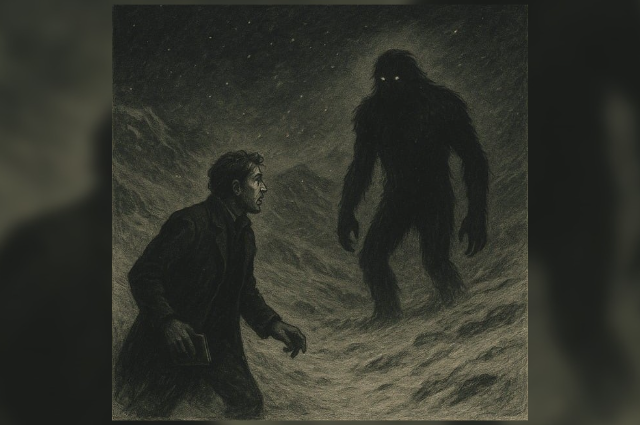
Image by Heiko Caimi from Pixabay
Introduction: Re-Entering the Lost World of 1960s Doctor Who
First broadcast in 1967, The Abominable Snowmen occupies a unique and paradoxical position in the history of Doctor Who. It is widely regarded as one of the most atmospheric and influential serials of the Second Doctor era, yet it is also one of the programme’s most incomplete narratives, with five of its six episodes missing from the BBC archives. This combination of creative significance and physical absence has transformed The Abominable Snowmen into both a cornerstone and a mystery within the show’s long-running legacy.
The serial forms part of Doctor Who’s fifth season, often referred to by scholars and fans as the “Monster Season.” During this period, the series deliberately shifted toward darker, more threatening antagonists in response to changing audience expectations and the temporary removal of the Daleks. Alongside the Cybermen, Ice Warriors, and Enemy of the World, The Abominable Snowmen introduced the Yeti and the Great Intelligence—two creations that would leave a lasting mark on the programme’s mythology.
Despite appearing on television in only two serials, the Yeti achieved an iconic status unmatched by many more frequently used monsters. Their imposing, silent presence, combined with the eerie Himalayan setting and later the London Underground, embedded them deeply in audience memory. The central argument of this article is that the enduring legacy of The Abominable Snowmen lies in its innovative fusion of mythological folklore, science fiction rationalism, and carefully constructed atmosphere.
For academics and fans alike, the serial remains a subject of continued analysis because it exemplifies how Doctor Who in the 1960s negotiated fear, mythology, and modernity—while its missing episodes have elevated it from a television story into a cultural artefact shaped as much by absence as by presence.
Genesis of the Yeti: Creative Origins and Development
The creation of the Yeti was not an isolated act of imagination but the result of a close and deliberate collaboration between writers, actors, and producers at a pivotal moment in Doctor Who’s history. As the programme entered its fifth season in 1967, it faced both creative opportunity and practical necessity, leading to the emergence of one of its most distinctive antagonists.
The Haisman–Lincoln Partnership
Henry Lincoln and Mervyn Haisman formed one of the most influential writing partnerships of the Second Doctor era. Their approach to Doctor Who was characterised by intellectual ambition and an interest in blending speculative science fiction with historical and mythological elements. Prior to The Abominable Snowmen, the duo had already demonstrated a talent for constructing layered narratives that relied on atmosphere and ideas rather than spectacle alone. During Season 5, they played a significant role in defining the show’s darker, more mature tone, contributing to what later became known as the “Monster Season.” Their collaboration emphasised mystery, gradual revelation, and conceptual antagonists, laying the groundwork for monsters that were threatening not because of overt violence, but because of what they represented.
Patrick Troughton’s Influence
Patrick Troughton, portraying the Second Doctor, was deeply involved in shaping the direction of the series. He expressed a strong preference for stories set on or near Earth, believing that familiar environments heightened dramatic tension and viewer engagement. Troughton was also keen on stories rooted in folklore and legend, where the Doctor could act as a rational figure confronting superstition and fear. His enthusiasm for such narratives directly influenced the development of The Abominable Snowmen. The idea of using the Himalayan Yeti—already embedded in popular imagination as a mysterious and terrifying creature—allowed the writers to explore this intersection between myth and modern science, aligning closely with Troughton’s vision for the programme.
Replacing the Daleks
By 1967, the Daleks, once the programme’s most reliable ratings draw, had been temporarily retired due to creative fatigue and contractual complications. This left the production team in urgent need of a new “headline monster” capable of capturing public attention. The challenge was twofold: the replacement needed to be visually distinctive and immediately recognisable, yet fundamentally different from the Daleks to avoid repetition. The Yeti fulfilled this role by embodying physical menace rather than technological dominance. Their sheer size, silence, and relentless movement offered a new kind of threat, one rooted in primal fear rather than mechanised warfare.
Concept Evolution: From Mythical Creature to Robot
Crucially, Haisman and Lincoln rejected the idea of portraying the Yeti as a purely organic monster. Instead, they reframed the legendary creature as a robot, transforming folklore into science fiction. This decision aligned with Doctor Who’s long-standing tradition of demystifying the supernatural through rational explanation. The robotic Yeti also enabled the introduction of the Great Intelligence, a formless, parasitic entity that controlled them. Conceptually, the Intelligence represented an abstract and intellectual villain—an enemy of the mind rather than the body. Together, the Yeti and the Great Intelligence embodied a sophisticated fusion of myth, science, and philosophical threat, setting them apart from previous adversaries and ensuring their lasting impact on the series.
Building the World: Production History and Behind-the-Scenes Realities
The distinctive atmosphere of The Abominable Snowmen was not achieved through lavish budgets or advanced technology, but through creative adaptation within the strict production constraints of 1960s British television. Every aspect of the serial—from its script to its monster design—was shaped by necessity, ingenuity, and the limitations of the BBC at the time.
Script Development and Production Constraints
Henry Lincoln and Mervyn Haisman developed The Abominable Snowmen with an ambitious setting: Tibet in 1935, a remote and culturally rich environment rarely depicted on British television. Obviously, filming in the Himalayas was impossible, so the script was designed to suggest vast, inhospitable landscapes through dialogue, atmosphere, and minimal sets. The BBC’s episodic format, with six 25-minute episodes, encouraged slow pacing and gradual tension, allowing suspense to build organically. Limited special effects meant that horror relied on implication rather than explicit spectacle, shaping the serial’s measured tone and emphasising mystery over action.
Casting and Characterisation
Patrick Troughton’s Second Doctor was central to the serial’s success. His portrayal combined playful eccentricity with sudden gravitas, making him uniquely suited to stories where intellectual threat outweighed physical confrontation. Alongside him, Frazer Hines’ Jamie McCrimmon provided grounded bravery and emotional realism, while Deborah Watling’s Victoria Waterfield embodied vulnerability and moral sensitivity. The dynamic between these three characters created a balance of curiosity, courage, and empathy that anchored the narrative. The introduction of Professor Travers, portrayed by Jack Watling, added an essential human perspective. As a scientist obsessed with proving the existence of the Yeti, Travers embodied the danger of intellectual obsession, making him an ideal conduit for the Great Intelligence’s influence.
Filming on Location: Snowdonia as Tibet
One of the series’ most remarkable achievements was its extensive location filming at Nant Ffrancon Pass in Snowdonia, Wales. The production team selected the site for its dramatic mountain scenery, which convincingly doubled for the Himalayas on screen. At the time, this was one of the longest and most demanding location shoots in Doctor Who’s history. However, the harsh weather posed significant challenges. Heavy rain soaked the Yeti costumes, making them heavy and difficult to manoeuvre, while strong winds complicated filming schedules. Actors inside the suits suffered from extreme heat due to poor ventilation and thick padding, limiting how long scenes could be shot. Logistical issues, including transporting equipment across rough terrain, tested the endurance of cast and crew alike.
Yeti Costume Construction
The Yeti costumes were designed by Martin Baugh, whose task was to create creatures that appeared large, intimidating, and non-human within a modest budget. The suits were constructed using bamboo frames to add height and bulk, covered in foam padding and long yak-hair fur. Latex hands and feet completed the design, while the performers’ visibility was restricted to narrow slits beneath the face area. While the intention was to make the Yeti imposing and uncanny, environmental conditions undermined this effect. Rain caused the fur to mat and sag, unintentionally softening their appearance. Combined with the stiffness of the suits, this resulted in the “cuddly” look that later critics would highlight, even though it was never part of the original design.
The Great Intelligence Effects
The Great Intelligence posed a different challenge, as it lacked a physical form. Its presence was conveyed through possession scenes, most notably involving Professor Travers and the monk Padmasambhava. These moments relied heavily on performance, lighting, and sound rather than visual effects. The BBC Radiophonic Workshop played a crucial role in establishing the Intelligence’s identity, creating eerie, disembodied soundscapes that signalled its influence. These audio elements, combined with subtle acting choices, allowed the Intelligence to feel pervasive and threatening despite its invisibility, reinforcing the serial’s emphasis on atmosphere over spectacle.
In-Universe Plot Analysis: Breaking Down The Abominable Snowmen
Although much of The Abominable Snowmen is missing from the television archive, its narrative can be reconstructed through surviving footage, scripts, audio recordings, and contemporary accounts. Taken together, these sources reveal a carefully structured story that prioritises atmosphere, gradual escalation, and philosophical tension over conventional action.
Setting: Tibet, 1935
The serial is set in Tibet in 1935, primarily within and around a remote Buddhist monastery high in the Himalayas. This setting is crucial to the story’s tone and meaning. The monastery represents isolation—geographical, cultural, and spiritual—cut off from the modern world and vulnerable to forces it does not fully understand. The monks’ rituals, chants, and reverence for tradition create a mystical ambience that blurs the line between faith and superstition. Against this backdrop, the legend of the Yeti feels plausible and deeply unsettling, reinforcing the idea that ancient beliefs can mask far more dangerous realities. The harsh mountain environment further heightens tension, emphasising humanity’s fragility in the face of both nature and the unknown.
Story Progression
The narrative begins with the arrival of the Doctor, Jamie, and Victoria in the TARDIS, materialising near the monastery. They quickly learn that the region is plagued by attacks attributed to the legendary Abominable Snowmen. Their early encounters with the monks establish an atmosphere of fear and secrecy, as the monks struggle to reconcile their spiritual beliefs with the violence threatening their community.
The arrival of Professor Travers deepens the conflict. Obsessed with proving the existence of the Yeti, Travers represents scientific rationalism pushed to unhealthy extremes. As Yeti attacks increase in frequency and intensity, the threat shifts from rumour to undeniable reality. These encounters are marked by the Yeti’s silent, relentless advance, which creates tension through anticipation rather than sudden shock.
A key turning point occurs with the possession of the monk Padmasambhava, revealing the presence of the Great Intelligence. Through this possession, the Intelligence speaks, manipulating religious authority and exploiting faith as a means of control. The Doctor gradually uncovers the truth: the Yeti are not mythical creatures but robotic constructs, controlled by an ancient, parasitic intelligence seeking to expand its influence across the world.
The climax centers on the Doctor’s confrontation with the Great Intelligence. Rather than defeating it through physical force, the Doctor uses intellect and strategy to sever the Intelligence’s control, exposing its dependence on human hosts. The Intelligence is forced to withdraw, temporarily defeated but not destroyed. The serial concludes with a haunting twist: a glimpse of a genuine snow creature in the mountains, suggesting that while science can explain much, mystery itself can never be entirely eliminated.
Narrative Structure and Pacing
Structurally, The Abominable Snowmen exemplifies slow-burn storytelling. The early episodes focus on mood and uncertainty, allowing fear to accumulate gradually. Action sequences are sparse but impactful, framed by long stretches of quiet tension. This pacing encourages viewers to engage intellectually, piecing together clues alongside the Doctor.
The serial’s greatest strength lies in its interplay between faith, science, and the unknown. Religious belief is neither dismissed nor validated outright; instead, it becomes a space where the Great Intelligence can manipulate perception. Science, embodied by the Doctor, ultimately provides answers, but not absolute certainty. This balance between explanation and mystery gives The Abominable Snowmen its enduring power, making it one of the most philosophically resonant stories of the 1960s era of Doctor Who.
Iconic Evolution: The Web of Fear and the Reinvention of the Yeti
The success of The Abominable Snowmen was so strongly anticipated that its sequel, The Web of Fear, was commissioned before the original serial had even completed its broadcast run. This decision reflects the production team’s confidence in the Yeti as a viable long-term monster and in the dramatic potential of the Great Intelligence as a recurring antagonist. At a time when Doctor Who was searching for reliable replacements for the Daleks, the rapid approval of a sequel demonstrated that the Yeti were already perceived as audience-grabbing creations capable of sustaining further stories.
Commissioned Before the First Aired
The early commissioning of The Web of Fear was unusual but telling. Producers recognised that The Abominable Snowmen had introduced a concept rich enough to expand beyond its original setting. The combination of a distinctive monster and an abstract, intelligent villain offered narrative flexibility, allowing the threat to evolve rather than simply repeat itself. This confidence also reflected growing ambition within the production office to build continuity between stories, an approach that would later become central to Doctor Who’s long-term storytelling.
Shifting from the Himalayas to the London Underground
The most significant change in The Web of Fear was its setting. Moving the action from the remote Himalayas to the London Underground transformed the nature of the horror. The Underground was familiar, everyday, and deeply embedded in British urban life. By placing the Yeti in tunnels beneath London, the story collapses the distance between the viewer and the threat. The fear was no longer abstract or exotic; it was immediate and personal. Ordinary commuters could imagine the monsters lurking just beyond the platform edge, turning a mundane environment into a site of claustrophobic terror. This shift in setting amplified suspense and made the Yeti far more relatable—and frightening—to contemporary audiences.
Yeti Redesign
In response to criticisms of the original costumes, the Yeti underwent a significant redesign for The Web of Fear. The new suits were smaller, more mobile, and constructed with rougher hair to avoid the “cuddly” appearance that had undermined their menace in the earlier serial. Visually, they were enhanced with glowing eyes, which added an inhuman quality, and equipped with web-guns capable of immobilising victims. These additions shifted the Yeti from blunt instruments of force to tactical enforcers, reinforcing their role as extensions of the Great Intelligence’s strategic mind.
Introduction of Lethbridge-Stewart and UNIT Foundations
Perhaps the most lasting legacy of The Web of Fear was the introduction of Colonel Lethbridge-Stewart, a pragmatic military officer who would later become the Brigadier and a central figure in Doctor Who. His presence marked the early foundations of UNIT and established a recurring relationship between the Doctor and Earth’s military defenders. Through this character, the serial helped shape the programme’s future direction, embedding the Yeti narrative within a broader framework of Earth-based defence that would dominate the Third Doctor era and beyond.
Themes and Symbolism: Myth, Automation, Faith, and Fear
At its core, The Abominable Snowmen is more than a monster story; it is a thematically rich exploration of belief, control, and uncertainty. By weaving together mythological imagery and science-fiction concepts, the serial reflects both timeless human fears and the specific anxieties of the 1960s.
Myth vs. Technology
One of the serial’s most striking thematic tensions lies in its contrast between ancient folklore and modern technology. The Yeti began as creatures of legend, deeply embedded in Tibetan myth and religious storytelling. To the monks, the Abominable Snowmen are manifestations of spiritual warning or punishment. The Doctor’s revelation that the Yeti are robotic constructs recontextualises this myth, transforming superstition into science fiction. Yet the story does not dismiss folklore entirely. Instead, it suggests that myths often contain distorted truths, exploited by more powerful forces. The robotic Yeti embody the idea that technology can masquerade as the supernatural, using fear and ignorance as tools of control.
Identity and Possession
The Great Intelligence functions as one of Doctor Who’s earliest examples of an abstract villain—an enemy defined not by physical presence but by domination of the mind. Its method of possession strips individuals of agency, reducing them to vessels for its will. Professor Travers and the monk Padmasambhava become symbols of this loss of identity, illustrating how authority figures can be corrupted from within. On a metaphorical level, the Intelligence represents anxieties about ideological possession: the fear that one’s thoughts, beliefs, or loyalties can be overridden by external forces. This theme resonates strongly with broader cultural concerns about conformity, propaganda, and psychological manipulation.
Environment and Isolation
The Himalayan setting is not merely a backdrop but an active participant in the narrative. The vast, frozen mountains emphasise isolation and vulnerability, mirroring the emotional states of the characters. Cut off from civilisation, the monastery becomes a pressure chamber where fear and paranoia intensify. The hostile environment reinforces the sense that humanity is small and fragile, easily overwhelmed by forces beyond its understanding. This use of landscape as psychological space deepens the story’s impact, turning nature itself into a source of unease.
“The Unknown” as 1960s Science Fiction Allegory
Like much science fiction of the 1960s, The Abominable Snowmen reflects Cold War-era fears. The Great Intelligence’s tactics—covert infiltration, manipulation of belief systems, and mind control—echo contemporary anxieties about ideological subversion and hidden enemies. The fear is not of open invasion, but of something unseen, embedded within society, and difficult to identify. By presenting the threat through both mythic and scientific lenses, the serial captures a period in which traditional certainties were being challenged by rapid technological and political change. In this way, The Abominable Snowmen uses its monsters to explore the terror of the unknown, a fear rooted as much in the real world as in fiction.
Critical and Fan Reception (1967–Present)
The reception of The Abominable Snowmen and its robotic Yeti has evolved considerably since its original broadcast, shaped by changing critical perspectives, fan engagement, and the unique circumstances of the serial’s partial loss from the archives. From immediate audience reactions in the late 1960s to contemporary academic analysis, the story’s reputation has remained remarkably resilient.
Contemporary Views (1967–68)
At the time of its broadcast, The Abominable Snowmen proved particularly effective with younger viewers. Contemporary accounts and later recollections consistently suggest that children found the Yeti genuinely frightening. Their silent, relentless advance and imposing physical presence tapped into primal fears, making them ideal antagonists for Saturday evening television. Adult viewers and critics, meanwhile, were often more impressed by the serial’s atmosphere than its spectacle. Reviews highlighted the eerie Himalayan setting, the slow accumulation of tension, and Patrick Troughton’s subtle performance, which balanced whimsy with seriousness. While some adults noted the limitations of the monster costumes, these concerns were largely overshadowed by praise for the story’s mood and ambition.
Later Academic Interpretations
In later decades, scholars began reassessing The Abominable Snowmen within the broader context of Doctor Who and 1960s British science fiction. Media historian James Chapman famously compared the impact of the Yeti in The Web of Fear to the psychological effect of Psycho, arguing that placing monsters in familiar spaces permanently alters how audiences perceive those environments. Although this observation primarily concerns the sequel, it retroactively enhanced appreciation of the Yeti’s conceptual power. Academic critiques have also addressed the limitations of the Yeti’s design, noting that its stiffness and “cuddly” appearance undermine its threat when viewed through a modern lens. However, these same limitations are often reframed as emblematic of the era’s production conditions rather than as failures of imagination.
Fan Culture and Myth-Making
Fan culture has played a crucial role in preserving and expanding the Yeti’s legacy. Audio dramas produced by Big Finish have reintroduced the creatures and the Great Intelligence to new audiences, often emphasising their psychological menace over physical appearance. The 1995 direct-to-video film Downtime further extended the mythology, revisiting Professor Travers and exploring the lingering influence of the Intelligence. Novelisations, comics, and fan reconstructions using telesnaps and surviving audio have contributed to a rich ecosystem of interpretation, effectively transforming absence into creative opportunity.
Why the Yeti Are Still Remembered
The enduring memory of the Yeti can be attributed to several factors. Nostalgia plays a significant role, particularly for viewers who encountered the monsters in childhood. Their distinctive, almost surreal aesthetic sets them apart from more conventional science-fiction villains. Most importantly, their association with missing episodes places them at the heart of Doctor Who’s “lost story” mythology. The combination of iconic imagery and incomplete survival ensures that the Yeti remain not just monsters from the past, but symbols of television history itself.
“The Missing Episode Problem”: How Loss Shaped Legacy
Few factors have shaped the reputation of The Abominable Snowmen more profoundly than the loss of most of its episodes. The serial’s fragmented survival has transformed it from a television production into a cultural artefact defined as much by absence as by content, deeply influencing how it is remembered, studied, and valued.
BBC Archival Wiping and Cultural Impact
During the 1960s and early 1970s, the BBC routinely wiped or discarded television recordings in order to reuse expensive videotape and conserve storage space. At the time, programmes like Doctor Who were not regarded as long-term cultural assets but as ephemeral entertainment. As a result, five of the six episodes of The Abominable Snowmen were erased, leaving only the second episode intact. This loss had long-term cultural consequences. It created gaps in the historical record and deprived future audiences of direct access to one of the most acclaimed stories of the Second Doctor era, fundamentally altering how the serial could be experienced and evaluated.
The Sole Surviving Episode and Reconstructions
The survival of a single episode has nevertheless provided a vital anchor for reconstruction efforts. Episode Two offers invaluable insight into the serial’s tone, performances, and visual style, particularly the Yeti costumes and location filming. Beyond this, fans and archivists have relied on off-air audio recordings, production stills, and telesnaps to recreate the missing episodes. Novelisations and, more recently, animated reconstructions have further bridged the gap between loss and understanding. These efforts reflect a collaborative relationship between official producers and fandom, where reconstruction becomes an act of cultural preservation rather than mere nostalgia.
Scarcity and the “Holy Grail” Effect
Scarcity has elevated The Abominable Snowmen and its sequel, The Web of Fear, to near-mythical status within Doctor Who fandom. Missing episodes became “holy grails” for collectors, fueling decades of searches and speculation. This scarcity has also shaped Doctor Who historiography, encouraging scholars to rely on secondary sources, memory, and reconstruction rather than direct textual analysis. Ironically, the loss has enhanced the Yeti’s mystique. Their limited on-screen presence, combined with incomplete survival, ensures that they occupy a unique space in the series’ history—icons defined not only by what remains, but by what can never fully be recovered.
The Yeti Beyond 1968: Spin-offs, Cameos, and Continued Relevance
Although the Yeti disappeared from regular television appearances after The Web of Fear, they never truly vanished from the Doctor Who universe. Instead, they re-emerged intermittently across spin-off media, anniversary specials, and thematic echoes in the modern series, ensuring their continued relevance.
Downtime (1995) and Travers’ Return
The most direct continuation of the Yeti storyline occurred in the 1995 direct-to-video spin-off Downtime. Set decades after the events of The Abominable Snowmen and The Web of Fear, the film revisits Professor Travers, now older and burdened by his past encounters with the Great Intelligence. In Downtime, the Intelligence resurfaces through a New World University experiment, using Yeti technology to transform a human into one of the creatures. Although unofficial in status, the film demonstrated the enduring narrative potential of the Yeti and reinforced their connection to themes of obsession, possession, and intellectual hubris.
Big Finish Audios and Anniversary Specials
Big Finish Productions played a major role in revitalising the Yeti for contemporary audiences. Audio dramas such as the Counter-Measures series reintroduced the creatures as central antagonists, often emphasising psychological menace over physical appearance. These stories, particularly those produced around the show’s fiftieth anniversary, framed the Yeti as historically significant threats within the Whoniverse. By leveraging sound design and performance, Big Finish succeeded in restoring much of the terror that limited visuals had once constrained.
The Five Doctors Trophy Cameo
The Yeti’s symbolic importance was acknowledged in The Five Doctors (1983), where a Yeti costume appears as a trophy in the Doctor’s museum. Though brief, this cameo serves as a visual reminder of the creature’s place in the programme’s past and functions as an act of institutional memory, quietly affirming their status as classic adversaries.
Influence on Modern Doctor Who
The thematic legacy of the Yeti is evident in modern Doctor Who. The Whisper Men, introduced during the Eleventh Doctor’s era, echo the Yeti’s slow, silent menace and faceless uniformity. Most significantly, the Great Intelligence returned during the Matt Smith era, updated for contemporary storytelling while retaining its core characteristics as a parasitic, disembodied intellect. These echoes confirm that while the Yeti themselves remain largely confined to the classic era, their conceptual influence continues to shape the series.
Conclusion: The Lasting Legacy of the Yeti and The Abominable Snowmen
More than half a century after its original broadcast, The Abominable Snowmen remains one of Doctor Who’s most enduring and enigmatic stories. The Yeti, despite their limited number of on-screen appearances, have achieved a cultural significance that far exceeds their physical presence in the series. They stand as symbols of a creative period in which the programme boldly experimented with atmosphere, mythology, and conceptual storytelling, redefining what a Doctor Who monster could represent.
The serial continues to attract academic interest because it encapsulates key tensions of 1960s science fiction: faith versus reason, myth versus technology, and individuality threatened by unseen forces. Its introduction of the Great Intelligence marked an early move toward abstract antagonists, while its use of folklore grounded science fiction in human belief systems. Scholars and critics alike view The Abominable Snowmen as a case study in how limited resources can produce narratively rich and thematically complex television.
More broadly, the story exemplifies Doctor Who’s unique ability to merge myth, science, horror, and humanity into a single narrative framework. The Doctor’s role as a rational yet compassionate figure navigating superstition and fear reflects the series’ enduring moral philosophy: that understanding, not domination, is the path to survival. Even the final suggestion of a “real” snow creature underscores the show’s respect for mystery alongside explanation.
Finally, the ongoing reconstruction of missing episodes—through animation, audio, and fan scholarship—has kept The Abominable Snowmen alive for new generations. These reconstructed classics ensure that Doctor Who’s history is not lost, but continually reinterpreted, preserving the Yeti not merely as monsters of the past, but as lasting icons of television history.
References
Official & Authoritative Sources
Synopsis & Plot Context
- Doctor Who World – The Abominable Snowmen synopsis
- Penguin / BBC Yeti Attack! (combined audio edition with plot detail)
Sequel & Legacy
Character & Franchise Impact
Additional Context & Fandom