
Why The Home and the World Still Matters
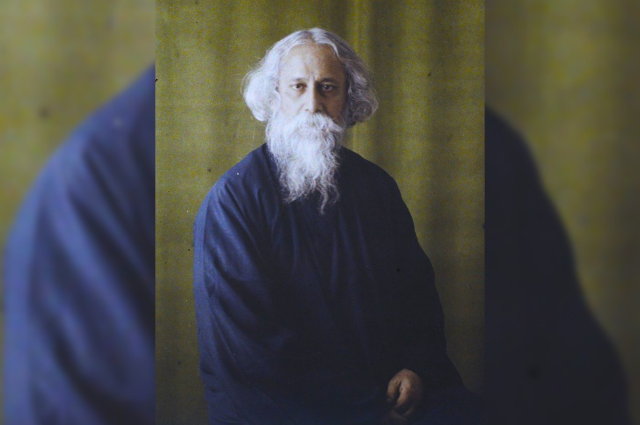
Rabindranath Tagore (1861–1941), the Nobel laureate poet, philosopher, and polymath, is among the towering figures of world literature. His literary output spans poetry, novels, short stories, plays, music, and art, and his thought profoundly shaped modern Bengali culture and Indian intellectual history. Among his many works, The Home and the World (Ghare-Baire, 1916) stands out as a subtle yet penetrating exploration of the interplay between personal life, political ideology, and moral responsibility. First written and published in Bengali in 1916 and translated into English in 1919, the novel was later retranslated in 2005, retaining its enduring relevance for modern readers.
Set against the backdrop of the Swadeshi Movement, a crucial element of India’s home-rule struggle against British colonial rule, the novel delves into the tensions between love, ethics, and political idealism. It raises the central question: can nationalism coexist with humanism and ethical responsibility? By examining the psychological, moral, and political entanglements of its characters, Tagore presents a narrative that transcends its historical moment, reflecting on the universal human dilemmas that emerge when ideology encroaches upon private life.
The novel’s plot revolves around three central characters: Nikhil, a rational, liberal landowner; his wife Bimala, a traditionally raised woman undergoing an inner awakening; and Sandip, Nikhil’s charismatic childhood friend, whose extremist nationalism seduces both Bimala and the wider public. Through alternating first-person narratives, Tagore explores the inner lives of these characters, illuminating the complex moral ambiguities that arise from love, loyalty, political conviction, and ambition.
Ultimately, The Home and the World is both a psychological and philosophical work, interrogating the costs of ideological seduction and the ethical limits of patriotism. By weaving together intimate domestic drama with the larger currents of colonial politics, Tagore crafts a novel that remains a cautionary tale for all ages—a work that challenges readers to reflect on freedom, responsibility, and the moral consequences of political and personal choices.
Historical and Political Context: Bengal and the Swadeshi Movement
The early twentieth century in Bengal was a period of intense social, political, and cultural upheaval. The Partition of Bengal in 1905, orchestrated by Lord Curzon, sought to divide the province along religious lines—Hindus in West Bengal and Muslims in East Bengal—ostensibly for administrative efficiency but widely understood as a tactic to weaken growing nationalist sentiment. The partition ignited widespread protests, leading to the Swadeshi Movement, which emphasised the boycott of British goods, promotion of indigenous industries, and the cultivation of economic self-reliance.
The Swadeshi Movement also catalysed political radicalisation and communal tensions. While some leaders advocated moderate, rational activism, others, like Sandip in Tagore’s novel, championed immediate, emotionally charged revolution. Public bonfires of British cloth became iconic acts of patriotic zeal, demonstrating the fusion of symbolism, mass mobilisation, and personal participation in political rituals.
Tagore himself engaged critically with the movement. Initially supportive of certain aspects, he quickly became disillusioned by the coercion, moral compromises, and emotional manipulation that often accompanied nationalist activism. He criticised the transformation of patriotism into a form of mass idol worship that could justify deception, violence, and exploitation of the vulnerable—particularly women who were drawn into political symbolism.
The Home and the World reflects this historical context with subtlety and balance. It neither romanticises the Swadeshi Movement nor descends into political propaganda. Instead, Tagore presents a nuanced picture of Bengal’s socio-political landscape, highlighting the moral tensions and human consequences of ideological fervour. Through Sandip, he explores the allure and danger of charismatic extremism; through Nikhil, he presents reasoned restraint and ethical patriotism; and through Bimala, he demonstrates how ordinary individuals can become instruments or victims of larger political movements.
The novel also highlights the intersection of nationalism and personal life. Bengal’s political agitation intrudes into the domestic sphere, testing marriage, friendship, and moral values. Tagore thus captures the human dimensions of historical events, illustrating how ideological movements ripple through private lives and ethical decisions, leaving profound consequences for individuals and society alike.
Narrative Structure and Literary Technique
Tagore’s narrative approach in The Home and the World is as innovative as it is subtle. The novel employs multiple first-person narrators—Bimala, Nikhil, and Sandip—allowing readers to witness events through distinct, often conflicting perspectives. This technique achieves psychological realism, revealing not just what characters do but why they act as they do, exposing desires, fears, and moral conflicts.
Bimala’s narration conveys emotional awakening and moral confusion, capturing the intensity of her internal struggle. Nikhil’s perspective reflects calm ethical reasoning, philosophical reflection, and measured judgment. Sandip’s voice, in contrast, brims with rhetorical force, persuasion, and emotional manipulation, exposing the seductive power of charismatic extremism.
The interplay of reliability and bias in narration is central to the novel’s ethical inquiry. Readers must navigate the contradictions among the three accounts, mirroring the moral ambiguities of the characters’ decisions. The shifting perspectives deepen moral complexity, highlighting how ideology, passion, and human desire can distort perception and judgment.
In terms of literary style, the novel incorporates modernist qualities within Indian literature. Its psychological depth, focus on moral dilemmas, and experimental narrative form distinguish it from contemporaneous nationalist novels like Anandamath, which are more prescriptive and heroic in tone. Tagore’s style blends realism, ethical reflection, and poetic sensibility, creating a work that is both intellectually rigorous and emotionally resonant.
Bimala: Woman, Nation, and Inner Awakening
Bimala begins the novel as a woman confined by tradition, her identity rooted in the zenana, the domestic quarters that symbolise safety, obedience, and moral order. She reveres her husband, Nikhil, believing that marital devotion constitutes her highest duty. Initially, her world is narrow, structured by ritual, social expectation, and domestic labour.
The threshold between the home and the outer world becomes a central motif in her transformation. Nikhil encourages Bimala to read, think critically, and participate in decision-making, slowly challenging the traditional constraints imposed upon her. This gradual exposure to intellectual and emotional autonomy sparks a psychological awakening, preparing her to confront new possibilities and ethical dilemmas.
Sandip’s arrival accelerates this transformation. His fiery nationalism and magnetic presence awaken in Bimala both passion and ambition. Through him, political engagement becomes a source of personal exhilaration, granting her visibility, power, and significance. Yet, this empowerment is entwined with manipulation. Sandip frames Bimala as the living embodiment of India’s divine feminine energy, equating her with the nation and invoking Shakti imagery to glorify her symbolic role. This duality—empowerment entwined with objectification—forms the crux of Bimala’s moral conflict.
Her moral journey reaches a crisis when she succumbs to Sandip’s pressure and steals from Nikhil for the Swadeshi cause. The act generates profound guilt and disillusionment, revealing the moral hazards of conflating personal ambition, ideological zeal, and symbolic power. In attempting to restore the stolen money, Bimala experiences both remorse and a renewed recognition of Nikhil’s ethical stability.
Feminist readings underscore the paradox of Bimala’s agency. While she exercises choice and experiences psychological awakening, her autonomy is circumscribed by male-driven ideologies and symbolic expectations. Tagore portrays her empowerment as both real and constrained, demonstrating how women’s freedom can be co-opted by ideological movements. Through Bimala, the novel interrogates the intersection of gender, power, and nationalism, illustrating how political and emotional forces shape—and often compromise—personal agency.
Nikhil: Ethical Nationalism and Liberal Humanism
Nikhil embodies ethical patriotism and rational humanism. Unlike Sandip, who glorifies passion and sacrifice, Nikhil advocates moral restraint, reasoned action, and respect for human dignity. He supports Indian self-reliance but rejects coercion, violence, and blind adherence to ideology.
His understanding of freedom extends to personal autonomy. He encourages Bimala to think independently, participate in decisions, and exercise moral judgment. Even when he recognises her attraction to Sandip, he respects her agency, demonstrating that ethical relationships are grounded in consent and moral reasoning rather than control or domination.
Nikhil’s opposition to uncritical nationalism highlights Tagore’s central critique: patriotism divorced from ethics becomes destructive. Sandip idealises the nation as a sacred entity demanding absolute loyalty, while Nikhil asserts that the nation exists to serve humanity, not the reverse. His moral stance often leaves him isolated, but it underscores the enduring importance of integrity over expediency.
Though he represents the moral centre, Nikhil is not flawless. His adherence to ethical consistency contributes to personal tragedy, as he neither restrains Bimala nor confronts Sandip aggressively, resulting in his death. Yet this tragedy affirms Tagore’s vision: ethical humanism may not guarantee survival, but it preserves dignity, conscience, and long-term moral coherence.
Sandip: Charisma, Extremism, and the Seduction of Power
Sandip personifies aggressive, emotionally charged nationalism. His charisma, rhetoric, and ability to manipulate public sentiment draw others into revolutionary zeal. Religious and mythic language elevates political action to a sacred duty, blurring ethical boundaries.
Sandip manipulates Bimala by equating her with the nation’s divine feminine energy, granting her symbolic power while constraining true agency. He justifies theft, coercion, and emotional manipulation in the name of patriotic service, revealing a disturbing gap between his ideals and his actions.
Through Sandip, Tagore warns against revolutionary narcissism: the danger of ideology pursued for personal or emotional gratification, at the expense of morality, empathy, and human dignity. His ultimate failure underscores the destructive potential of charisma untempered by ethics.
Major Themes and Philosophical Concerns
Nationalism vs. Humanism
The novel critiques extreme nationalism by contrasting Sandip’s zeal with Nikhil’s ethical humanism, questioning whether the nation should demand sacrifice that violates personal morality.
Home vs. World
Tagore explores how public ideology intrudes into domestic life, destabilising marriage, trust, and emotional equilibrium. The tension between the zenana and the outside world reflects broader ethical and social dilemmas.
Freedom and Responsibility
Bimala’s choices illustrate the tension between autonomy and moral accountability. Tagore emphasises that true freedom requires ethical reflection, not mere personal or political empowerment.
Gender and Power
Bimala’s transformation highlights the duality of symbolic empowerment and personal manipulation, revealing how women’s agency can be co-opted by male-driven ideologies.
Violence and Moral Decay
The justification of immoral acts for political ends—most notably, theft and manipulation—illustrates the corrosive effects of extreme ideology on human morality.
Symbolism and Motifs
- Fire and burning foreign cloth: Symbolises political zeal, nationalist fervour, and the potential for moral destruction.
- Home, threshold, and outside world: Represents tension between private moral life and public political engagement.
- Goddess imagery and nationalism: Bimala as Shakti highlights symbolic appropriation of women in political discourse.
- Money, theft, and moral corruption: The stolen money embodies ethical compromise under ideological pressure.
- Silence, restraint, and inner strength: Nikhil’s moral steadiness contrasts with Sandip’s flamboyant extremism, emphasising ethical resilience.
Tragedy and Ending: What Does the Novel Ultimately Say?
Nikhil’s death symbolises the vulnerability of principled individuals amidst ideological chaos. Bimala’s disillusionment illustrates the personal and ethical cost of emotional and political manipulation. The novel offers no easy resolution, reinforcing Tagore’s rejection of absolute political answers. The tragedy underscores the necessity of conscience, moral reflection, and balanced engagement with ideology.
Critical Reception and Literary Legacy
Upon release, the novel received acclaim for its literary craftsmanship but criticism from nationalist circles for its portrayal of revolutionary fervour. Compared to Anandamath, which glorifies militant nationalism, Tagore offers a contemplative, ethical vision. Satyajit Ray’s 1984 film adaptation further reinforced the novel’s themes, emphasising the psychological and moral dimensions of the story. Today, the novel is regarded as a landmark in Bengali and Indian literature, influencing literary, political, and feminist discourse.
Conclusion: Tagore’s Timeless Warning
The Home and the World warns against the seduction of ideology and the moral costs of political zeal. Its insights remain relevant for modern nationalism, identity politics, and ideological extremism. Through Bimala, Nikhil, and Sandip, Tagore emphasises the enduring importance of moral clarity, empathy, and ethical restraint. The novel’s cautionary power lies in its intricate blend of domestic drama, political reflection, and philosophical inquiry, making it a timeless guide for navigating the complex interplay of freedom, responsibility, and ideology.
References:
- The Home and the World | Britannica
- Swadeshi Movement | Britannica
- Rabindranath Tagore’s Home and the World – Journal Analysis
- Nationalism and Bengal – LitCharts
- Tagore on Nationalism – ThePrint