
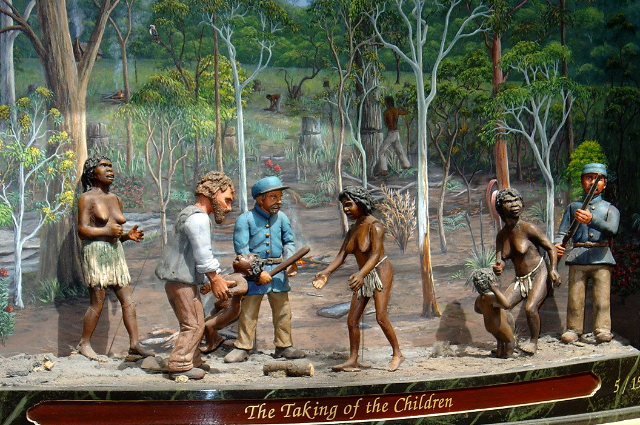
The history of the Stolen Generations in Australia refers to the systematic removal of Aboriginal and Torres Strait Islander children from their families by state agencies, churches, and welfare institutions between the mid-1800s and the 1970s. These policies were not isolated acts of child protection, but part of a broader state ideology known as assimilation, which aimed to absorb Indigenous peoples into the dominant settler society. Under the language of “welfare,” “protection,” or “civilisation,” assimilation policies were presented as benevolent interventions. In practice, however, they functioned as mechanisms of cultural erasure, identity disruption, and long-term social restructuring.
Key terms are essential to understanding this history. The Stolen Generations describes those Indigenous children who were forcibly separated from their families and communities. Assimilation refers to the process by which minority groups are compelled to abandon their cultural identities and adopt the norms of a dominant society, often under conditions of unequal power. Forced child removal specifically denotes the legal and administrative practice of taking children without parental consent, justified through vague definitions of neglect and welfare concerns.
This article argues that the policies behind the Stolen Generations were not accidental welfare failures or isolated administrative decisions, but part of a structured colonial ideology designed to weaken Indigenous societies across generations. The consequences of these policies extend far beyond the individuals directly affected, shaping patterns of psychological trauma, cultural dislocation, and socio-economic disadvantage that continue into the present.
While the Australian case is central, it is not unique. Similar assimilationist systems operated in other settler colonial contexts, including Canada’s residential schools, the United States’ Native American boarding schools, and policies affecting Māori communities in New Zealand. These parallels highlight assimilation as a global colonial strategy rather than a national anomaly.
This article will examine the historical origins of these policies, the legal and ideological frameworks that sustained them, their human impacts, and the continuing efforts toward truth, justice, and reconciliation.
Historical Background of Colonisation in Australia
The origins of the Stolen Generations are deeply rooted in the early processes of British colonisation of Australia beginning in 1788. The arrival of British settlers marked the beginning of widespread disruption to Aboriginal and Torres Strait Islander societies, which had existed for tens of thousands of years with complex systems of law, kinship, governance, and land stewardship. Colonisation was not only a territorial occupation but also a structural transformation of social, cultural, and economic life.
One of the most immediate consequences of settlement was the dispossession of land. Indigenous connection to Country was central to identity, spirituality, and survival, but British legal doctrines treated land as terra nullius—land belonging to no one. This legal fiction justified the seizure of territories without treaties or consent. As settlers expanded inland, frontier violence became widespread, including massacres, forced removals, and punitive expeditions. These conflicts destabilised communities, disrupted food systems, and fractured traditional governance structures.
Within this environment of displacement and violence, the removal of Indigenous children began to emerge in informal and opportunistic ways. In the late 18th and early 19th centuries, some Aboriginal children were taken by settlers and used as domestic servants or labourers in households and farms. These early practices were not yet formalised by law, but they reflected an emerging colonial assumption that Indigenous children could be “re-educated” or absorbed into European ways of life.
Missionaries played a central role in shaping this trajectory. Christian missionary societies established missions and schools with the stated aim of “civilising” Indigenous populations through religious instruction, European education, and cultural conversion. While some missions provided shelter and basic resources, they also functioned as instruments of cultural transformation. Children were often separated from their families to be raised in mission environments where Indigenous languages and customs were discouraged or actively suppressed.
By the mid-to-late 19th century, these practices began to be formalised through protectionist policies. Colonial governments established legislation and institutions such as Aboriginal Protection Boards, which were granted broad powers over Indigenous lives, including the authority to remove children deemed “neglected” or “at risk.” In practice, definitions of neglect were often applied in racially biased ways, where Indigenous identity itself was treated as evidence of deficiency.
This period marked a shift from informal removal and missionary influence to systematic, legally sanctioned intervention. The foundations were laid for a more centralised and bureaucratic system of child removal that would later evolve into the policies associated with the Stolen Generations. Rather than emerging suddenly in the 20th century, these policies developed gradually from decades of colonial expansion, cultural domination, and institutional control.
Emergence of Assimilation Ideology
Assimilation, as it developed in colonial policy and social theory, refers to the forced absorption of minority or Indigenous populations into the dominant culture of a society. Unlike voluntary cultural exchange, assimilation in colonial contexts was grounded in unequal power relations and often justified through assumptions of racial hierarchy and linear “civilizational progress.” It was not simply about integration, but about transforming or erasing distinct cultural identities so that Indigenous peoples would become socially and culturally indistinguishable from the settler majority.
In the 19th century, assimilation ideology was strongly influenced by Social Darwinism and emerging racial science. These frameworks misapplied evolutionary theory to human societies, ranking cultures along a supposed scale from “primitive” to “civilised.” Within this worldview, European societies were placed at the top, while Indigenous cultures were framed as either stagnant or destined to disappear. This belief system created a moral justification for intervention: if Indigenous peoples were considered “dying out,” then their absorption into the dominant society could be presented as both inevitable and benevolent.
By the early 20th century, such ideas increasingly shaped government policy in Australia. A key turning point occurred in 1937 at the Aboriginal Welfare Conference, where federal and state authorities formally adopted assimilation as a national policy direction. The underlying assumption was that Aboriginal people, particularly those of mixed descent, could be gradually absorbed into white society through education, training, and cultural reconditioning. This marked a shift from earlier “protection” policies toward an explicit goal of cultural elimination through absorption.
A particularly disturbing aspect of assimilation ideology was the notion of “breeding out” Aboriginal identity. Policymakers and officials often believed that by encouraging or enforcing unions between people of Indigenous and European descent, Aboriginal identity could be diluted over generations. This pseudo-scientific idea reduced identity to biology and ignored the resilience of culture, kinship, and community belonging. It also reinforced intrusive control over Indigenous family life, including the removal of children who were classified as “half-caste” or of mixed ancestry.
Importantly, assimilation was not unique to Australia. Similar ideologies operated across other settler colonial societies, including Canada, the United States, and New Zealand, where Indigenous peoples were subjected to policies designed to reshape identity through schooling, religion, and family separation. In all cases, assimilation functioned as a tool of colonial governance rather than cultural inclusion.
Ultimately, assimilation ideology must be understood not as neutral social policy but as a structured political project aimed at the gradual dissolution of Indigenous identity through generational transformation.
Legal Frameworks and Child Removal Policies
The implementation of assimilation ideology in Australia was made possible through a growing body of legislation that granted colonial and later state authorities extensive control over the lives of Aboriginal and Torres Strait Islander peoples. These legal frameworks transformed earlier informal practices of child removal into structured, institutionalised systems of intervention. Under the appearance of “protection” and “welfare,” the law became a central instrument through which coercive assimilation was normalised.
During the second half of the 19th century, several Australian colonies introduced Protection Acts that laid the foundation for state control over Indigenous populations. For example, legislation such as the Queensland Industrial and Reformatory Schools Act (1865) and the Victorian Aborigines Protection Act (1869) empowered government-appointed officials to regulate Indigenous lives, including the authority to remove children from their families. Similar laws were later adopted across other colonies, creating a network of overlapping jurisdictions that collectively expanded state power.
Central to these systems were Protectors of Aborigines and later Aboriginal Protection Boards or Welfare Boards. These bodies were granted wide discretionary authority over where Indigenous people could live, work, and send their children. In many cases, they functioned with minimal oversight, allowing individual officials to make decisions based on subjective judgments rather than transparent legal standards. This concentration of power meant that families had little or no legal recourse once a child was targeted for removal.
A critical feature of these laws was the vague and elastic definition of “neglect.” While ostensibly designed to protect children from harm, neglect was often interpreted in highly racialised terms. Poverty, living conditions, or cultural differences were frequently equated with parental incapacity. In practice, Indigenous identity itself could be treated as sufficient grounds for intervention. This legal ambiguity enabled widespread and arbitrary removal of children without meaningful consent from families or communities.
By the early 20th century, these policies became increasingly systematised. Institutional networks of missions, government-run settlements, and church-operated homes expanded across Australia. Children removed under the Protection Acts were placed in these institutions, where they were subjected to strict discipline, vocational training, and cultural suppression. Churches often collaborated closely with state authorities, managing many of the residential facilities where children were housed, thereby reinforcing the connection between legal authority and moral justification.
Over time, administrative powers over Indigenous affairs became more centralised, particularly as federal coordination increased in the 20th century. Despite differences between states, the underlying logic remained consistent: Indigenous children were to be separated from their families and raised within institutions designed to assimilate them into white society.
In this way, legality did not merely regulate child welfare—it actively constructed a system in which coercion appeared lawful, orderly, and justified. The law transformed cultural disruption into an administrative procedure, making the removal of children not an exceptional act of violence, but a routine function of governance.
Life in Institutions and Mechanisms of Control
For many children of the Stolen Generations, removal from their families led to life in institutions that were formally presented as schools, missions, or welfare homes, but functioned in practice as systems of strict control and cultural reconditioning. Daily life was highly regimented, with rigid schedules that dictated waking hours, meals, schooling, labour, and sleep. Individual autonomy was minimal, and obedience to authority was enforced as the central expectation of institutional life.
A defining feature of these institutions was forced labour. Children were commonly required to perform domestic work, agricultural tasks, or maintenance duties as part of their “training.” For girls, this often meant preparation for domestic service in settler households, while boys were frequently directed toward manual or farm labour. Education, where provided, was often limited and practical rather than academic, reinforcing a predetermined social role rather than offering pathways to broader opportunity.
Cultural suppression was systematic. The use of Aboriginal and Torres Strait Islander languages was frequently prohibited, and children were punished for speaking their mother tongues or practising cultural traditions. This linguistic restriction played a central role in breaking intergenerational transmission of identity, knowledge, and belonging. Cultural practices, kinship knowledge, and spiritual connections to Country were either discouraged or actively erased within institutional environments.
Family separation was further intensified within the system itself. Siblings were often split up upon arrival or transferred between different institutions without notice. Frequent relocations disrupted any possibility of stable relationships or continuity of care. Children were moved between missions, orphanages, and foster placements, creating a constant sense of instability and disconnection.
Reports from survivors and historical inquiries also document widespread physical punishment and neglect. Discipline was often harsh, with corporal punishment used to enforce compliance. Emotional deprivation and inadequate living conditions were common, and in many cases, children lacked access to basic nutrition, clothing, or healthcare. Instances of physical and sexual abuse have also been recorded, highlighting the vulnerability of children in environments with limited oversight and accountability.
Beyond physical conditions, the psychological environment of these institutions was characterised by surveillance and control. Children were monitored closely, and conformity was rewarded while resistance was punished. Over time, this system worked not only to manage behaviour but to reshape identity itself, encouraging the internalisation of shame and the suppression of cultural belonging.
In effect, these institutions were not merely sites of care or education. They operated as structured mechanisms of cultural restructuring, designed to replace Indigenous identity with conformity to the dominant colonial society.
Cultural Destruction and Identity Loss
One of the most profound consequences of the Stolen Generations was the systematic destruction of cultural continuity. Culture in Aboriginal and Torres Strait Islander societies is not merely symbolic or expressive; it is deeply embedded in land, kinship networks, language systems, and ancestral knowledge. Assimilation policies disrupted all of these foundations simultaneously, producing long-term fractures in identity and belonging.
Language loss was one of the most immediate and enduring impacts. Many children placed in institutions were forbidden from speaking their Indigenous languages, often under threat of punishment. As a result, entire linguistic traditions were weakened or broken within a single generation. Because language carries cultural knowledge, oral history, and spiritual meaning, its suppression also meant the loss of stories, law, and intergenerational teaching practices that had been maintained for thousands of years.
Equally significant was the disconnection from Country. In Aboriginal worldviews, land is not a resource but a living system tied to identity, ancestry, and responsibility. Removal from ancestral land severed children from the physical and spiritual relationships that define cultural belonging. Without access to the country, individuals were unable to learn local knowledge systems, ceremonial responsibilities, or the ecological understanding embedded in place-based traditions.
Kinship systems were also deeply disrupted. These systems structure social relationships, responsibilities, and identity within communities. Forced removal fractured family networks and prevented children from learning their roles within these complex systems. When siblings were separated or placed in different institutions, even basic familial continuity was broken, weakening the transmission of cultural identity.
For many survivors who later returned to their communities, this rupture created profound identity confusion. They often found themselves disconnected from both the culture of their birth and the dominant society in which they were raised. This sense of “in-betweenness” was not an individual failure but a predictable outcome of forced cultural displacement.
Over time, these individual disruptions accumulated into broader community-level effects. The loss of language speakers, knowledge holders, and cultural educators weakened the ability of communities to transmit traditions across generations. Cultural continuity was not simply interrupted—it was structurally undermined.
Thus, assimilation policies did not merely alter lifestyles; they actively dismantled the interconnected systems of land, language, and kinship that sustain Indigenous identity.
Psychological Impacts and Intergenerational Trauma
The psychological consequences of the Stolen Generations are profound, long-lasting, and interwoven with both individual experience and collective history. For many children who were forcibly removed, the immediate trauma stemmed from sudden separation from parents, siblings, and community networks. This rupture occurred during critical stages of emotional development, often without explanation or the possibility of return, creating deep and enduring feelings of abandonment, fear, and confusion.
Within institutional environments, this initial trauma was frequently compounded by neglect, harsh discipline, and in some cases, physical and sexual abuse. The absence of stable caregiving relationships disrupted the formation of secure attachment, a foundational element of emotional development. Modern psychological research on attachment theory suggests that consistent, responsive caregiving is essential for healthy identity formation. When this is absent, individuals may develop attachment disorders characterised by difficulty trusting others, emotional dysregulation, and challenges in forming stable relationships later in life.
A recurring outcome among survivors has been identity fragmentation. Many individuals raised in institutions were deprived of cultural knowledge, family history, and language, while also being excluded from full acceptance in the dominant society. This dual dislocation often produced a persistent sense of not belonging to either world. Such identity disruption is not simply cultural but deeply psychological, affecting self-esteem, emotional stability, and long-term mental health.
Epidemiological studies and survivor testimonies have documented elevated rates of depression, anxiety, post-traumatic stress symptoms, and substance dependence among members of the Stolen Generations. These outcomes are best understood not as isolated clinical conditions but as responses to sustained and systemic trauma. In many cases, substances were used as coping mechanisms to manage unresolved grief, emotional pain, and social marginalisation.
A key concept in understanding these effects is intergenerational trauma. This refers to the transmission of trauma responses from one generation to the next, not only through psychological mechanisms but also through disrupted parenting practices, social disadvantage, and unresolved grief. Survivors who did not experience secure caregiving themselves often faced challenges in providing stable emotional environments for their own children, not due to lack of care, but due to the absence of learned models of parenting and emotional regulation.
Contemporary trauma theory also situates these experiences within the framework of collective or historical trauma. Unlike single-event trauma, historical trauma arises from repeated, systemic violence inflicted on entire communities over generations. Its effects persist through cultural disruption, socioeconomic disadvantage, and ongoing experiences of marginalisation.
As a result, the psychological impacts of the Stolen Generations cannot be understood solely at the individual level. They represent a continuing legacy of structural violence that shapes mental health outcomes across multiple generations, reinforcing cycles of pain while also informing contemporary healing and resilience efforts.
Socio-Economic Consequences
The Stolen Generations have had enduring socio-economic consequences that extend far beyond the immediate period of child removal. These outcomes are best understood not as individual shortcomings, but as the long-term effects of structural disruption imposed through state policy. The removal of children from their families weakened the social foundations necessary for educational continuity, stable employment pathways, and intergenerational economic mobility.
One of the most significant impacts has been reduced educational attainment among survivors. Many children placed in institutions received limited or narrowly vocational schooling, often designed to prepare them for low-skilled labor rather than academic advancement. The suppression of language, identity, and cultural knowledge also created barriers to engagement in mainstream education systems later in life, particularly for those who experienced identity fragmentation and instability in adolescence.
These educational disadvantages contributed directly to lower employment opportunities and reduced lifetime income. Survivors of institutional care frequently entered insecure or low-wage employment, with limited access to professional development or long-term career progression. The absence of family support networks further compounded these challenges, as kinship systems that traditionally provided economic and social support had been disrupted.
Another major consequence is the overrepresentation of Stolen Generations survivors and their descendants in welfare systems and incarceration statistics. While these patterns are often misinterpreted through individual behavioural explanations, they are more accurately understood as outcomes of historical exclusion, intergenerational trauma, and systemic disadvantage. Disrupted family structures, limited educational opportunities, and ongoing social marginalisation all contribute to increased vulnerability within contemporary institutional systems.
Health and housing disparities also remain persistent. Survivors and their families experience higher rates of chronic illness, mental health conditions, and reduced access to adequate housing. These conditions are closely linked to historical trauma, socio-economic exclusion, and geographic displacement from traditional lands and community support networks.
Importantly, these outcomes illustrate how policy decisions made over generations continue to shape present-day inequality. The economic marginalisation of Stolen Generations communities cannot be separated from the intentional disruption of family systems, culture, and education. Rather than reflecting individual failure, these disparities reveal the structural consequences of assimilation policies that removed not only children, but also the conditions required for long-term social and economic stability.
Inquiry, “Bringing Them Home” Report, and National Apology
The process of formal recognition of the Stolen Generations emerged gradually through public inquiry, survivor testimony, and political acknowledgement. A major turning point occurred in 1995, when the Australian Human Rights and Equal Opportunity Commission initiated a national inquiry into the forced removal of Aboriginal and Torres Strait Islander children. This inquiry represented the first large-scale attempt to systematically document the experiences of survivors across different states and institutions.
The findings were published in 1997 in the landmark report Bringing Them Home. Based on hundreds of testimonies from survivors, families, and community organisations, the report provided detailed evidence of widespread removal practices, institutional abuse, and long-term cultural and psychological harm. It concluded that these policies constituted a violation of fundamental human rights and recommended formal apologies, reparations, and support services for affected communities.
In the years following the report, public awareness of the Stolen Generations increased significantly. Grassroots activism and advocacy by Indigenous organisations helped bring the issue into national consciousness. In 1998, the first National Sorry Day was held, symbolising collective recognition of past injustices and honouring survivors. However, political responses remained uneven, with debates over legal liability and compensation limiting the scope of formal governmental action.
A major milestone occurred on 13 February 2008, when then–Prime Minister Kevin Rudd delivered a formal national apology to Aboriginal and Torres Strait Islander peoples. The apology acknowledged the pain, suffering, and injustice caused by past government policies of forced child removal and assimilation. It was widely regarded as an important symbolic moment in Australia’s reconciliation process.
Despite these developments, responses to the Bringing Them Home recommendations have been partial. While some states introduced limited reparations schemes and support services, there has been no comprehensive national compensation framework equivalent to the scale of harm documented in the report. Many recommendations relating to systemic reform, including long-term funding for healing services and community-led initiatives, have been implemented inconsistently or only in part.
As a result, while the inquiry and apology represent significant moral and political recognition, they have not fully translated into structural transformation. The gap between symbolic acknowledgement and substantive reform remains a central issue in assessing the effectiveness of Australia’s reconciliation efforts.
Comparative Colonial Policies
The Stolen Generations in Australia form part of a broader global pattern of settler-colonial assimilation policies directed at Indigenous peoples. While the Australian case has distinct legal and historical features, similar systems were implemented in other countries, reflecting a shared ideological framework rooted in cultural hierarchy, racial classification, and the goal of Indigenous absorption into dominant settler societies.
In Canada, the residential school system operated for over a century and involved the large-scale removal of Indigenous children from their families into church- and state-run institutions. These schools aimed to “civilise” Indigenous children by suppressing their languages, spiritual practices, and cultural identities. As in Australia, the system was justified as a form of welfare and education, but in practice, it produced widespread neglect, abuse, and intergenerational trauma. The legacy of these institutions continues to shape Canadian reconciliation processes today.
In the United States, Native American boarding schools similarly removed children from tribal communities and placed them in institutions designed to assimilate them into Euro-American culture. The motto often associated with these schools, “Kill the Indian, save the man,” reflects the explicit intent to eliminate Indigenous identity. Children were frequently punished for speaking their languages and were trained for low-status labour roles. These policies contributed to long-term cultural disruption and ongoing socio-economic inequality among Native American communities.
In New Zealand, assimilation policies toward Māori communities were implemented more through education systems and social policy than through large-scale institutional removal, although boarding school practices and language suppression were still present. Māori children were often discouraged from speaking te reo Māori, and urbanisation policies further weakened traditional kinship and community structures. Over time, however, Māori activism has contributed to stronger language revitalisation and Treaty-based reconciliation frameworks.
Across these contexts, several common patterns emerge. First, forced or coerced separation of children from families was central to policy implementation. Second, Indigenous languages, spiritual practices, and cultural systems were systematically suppressed. Third, churches and state authorities often worked in partnership to administer institutions and enforce assimilationist goals. Finally, all cases have produced enduring intergenerational trauma, visible in disparities in health, education, and incarceration rates.
These parallels demonstrate that assimilation was not an isolated national policy but a global colonial strategy. Understanding these shared structures is essential for situating the Stolen Generations within a wider history of settler-colonial governance and its continuing legacies.
Critiques of Assimilation Theory
Assimilation theory, as developed in classical sociology and anthropology, describes the process by which minority groups gradually adopt the cultural norms of a dominant society until distinctions between groups diminish. However, in colonial contexts such as the Stolen Generations, this framework has been widely criticised for masking power imbalances and legitimising coercive state practices.
A central critique is that assimilation theory assumes the dominance of one “superior” culture as the normative endpoint of social development. This implicitly ranks cultures along a hierarchy, framing Indigenous societies as transitional or incomplete forms that must evolve toward the dominant settler model. Such an assumption reflects outdated evolutionary thinking and fails to recognise the equal validity of diverse cultural systems.
Furthermore, the theory often obscures coercion by presenting cultural change as voluntary or natural. In cases like Australia, Canada, and the United States, assimilation was enforced through legislation, institutionalisation, and the removal of children from their families. Under these conditions, describing the process as “integration” misrepresents the reality of structural violence and state control.
Another limitation is that assimilation theory tends to overlook resistance and cultural survival. Despite systematic suppression, Indigenous communities maintained and revived languages, kinship systems, and cultural practices. These acts of continuity challenge the idea that assimilation was ever complete or uncontested.
Contemporary anthropology and postcolonial scholarship increasingly reject forced assimilation as both analytically inadequate and ethically problematic. Instead, they emphasise concepts such as cultural resilience, survivance, and settler-colonial power structures. These frameworks better account for the role of coercion, dispossession, and historical trauma in shaping social outcomes.
Ultimately, assimilation theory fails to capture the full extent of violence embedded in colonial systems. It underestimates the asymmetry of power and the enduring consequences of forced cultural transformation, making it insufficient for explaining experiences such as the Stolen Generations.
Reconciliation Efforts and Their Effectiveness
Reconciliation efforts in Australia have taken multiple forms, ranging from symbolic acknowledgement to policy reform and community-led healing initiatives. These responses represent an ongoing attempt to address the legacy of the Stolen Generations and broader colonial injustices, although their effectiveness remains uneven.
One of the most visible measures has been formal government recognition, particularly the national apology delivered in 2008. This apology marked an important symbolic shift, acknowledging the harm caused by past policies of forced child removal and assimilation. Earlier milestones, such as the establishment of National Sorry Day in 1998, also contributed to public awareness and collective remembrance.
Alongside symbolic recognition, legal and policy reforms have included land rights legislation and the expansion of Indigenous self-determination frameworks. These reforms have helped restore some connection between Indigenous communities and traditional lands, although outcomes vary significantly across regions and legal jurisdictions.
Community-led initiatives have played a crucial role in healing and recovery. Organisations such as Link-Up services support survivors in tracing family connections, reunifying relatives, and addressing the emotional consequences of separation. Educational reforms have also begun to incorporate Indigenous histories and perspectives into school curricula, contributing to broader public understanding of historical injustices.
Despite these developments, significant limitations remain. Socio-economic inequality between Indigenous and non-Indigenous populations persists across health, education, housing, and incarceration indicators. Financial reparations for survivors have been inconsistent and, in many cases, limited in scope relative to the scale of documented harm. Moreover, structural change has progressed slowly, with many communities continuing to experience the intergenerational effects of trauma and dispossession.
Overall, while reconciliation efforts have achieved meaningful symbolic and partial institutional progress, they have not yet resolved the deeper structural inequalities produced by assimilation policies.
Contemporary Situation and Ongoing Challenges
The legacy of the Stolen Generations continues to shape contemporary Australia, demonstrating that the impacts of assimilation are not confined to the past. One of the most concerning indicators is the ongoing overrepresentation of Aboriginal and Torres Strait Islander children in out-of-home care systems, reflecting continuing patterns of family separation, though under different legal frameworks.
Persistent socio-economic inequality remains evident in gaps in health outcomes, educational attainment, employment, and housing stability between Indigenous and non-Indigenous populations. At the same time, there are significant efforts toward cultural revival, including language restoration programs, cultural education initiatives, and strengthened community identity.
However, debates continue over the adequacy of current structural reforms. Many Indigenous leaders and scholars argue that meaningful change requires deeper systemic transformation rather than incremental policy adjustments. As a result, the legacy of assimilation remains an active social and political issue, shaping both contemporary inequality and ongoing efforts toward justice and self-determination.
Conclusion
The Stolen Generations must be understood as the outcome of a systemic assimilation ideology embedded within colonial governance, rather than as isolated or unintended policy failures. Child removal practices were structurally designed to disrupt Aboriginal and Torres Strait Islander family systems, weaken cultural continuity, and facilitate long-term absorption into the dominant settler society. As shown throughout this analysis, these policies produced enduring psychological, cultural, and socio-economic consequences that continue to shape Indigenous communities today.
While symbolic acts such as apologies represent important recognition, reconciliation cannot be achieved through symbolism alone. Meaningful redress requires sustained structural reform, genuine support for cultural restoration, and ongoing acknowledgement that the effects of historical injustice remain active in the present. Only through addressing both past harm and current inequality can a more just and equitable future be pursued.
References
- https://www.humanrights.gov.au
- https://aiatsis.gov.au
- https://www.aph.gov.au
- https://www.nma.gov.au
- https://www.naa.gov.au
- https://www.creativespirits.info
- https://www.abc.net.au
- https://www.ohchr.org
- https://www.canada.ca
- https://americanindian.si.edu
- https://nzhistory.govt.nz
- https://www.reconciliation.org
- https://www.aph.gov.au
- https://www.ncbi.nlm.nih.gov
- https://www.un.org