
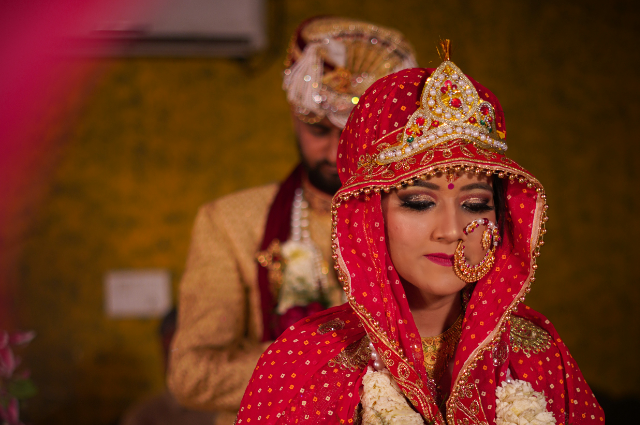
A Closer Look at a Changing Institution
A Closer Look at a Changing Institution
Recently, actor and public figure Jaya Bachchan reportedly remarked in a conversation with a senior journalist that marriages are outdated. Whether one agrees or not, her comment has reignited a debate that has been silently simmering for years: Is marriage still relevant in today’s world?
Marriage as a Contract, not a Fairytale
For as far as I understand it, marriage has always been a contract, sometimes written, sometimes unspoken. It is a relationship built on conditions, expectations, responsibilities, and negotiated roles. When these conditions are not met or stop serving both partners, the marriage eventually crumbles.
Many people, however, oppose this view. They prefer the comfort of an idealised vision of marriage, choosing to live in a cocoon of selective optimism. They turn away from uncomfortable truths, continuing with blinkers firmly in place. That’s the hypocrisy our society is built on, celebrating the institution while overlooking how fragile it actually is.
The Historical Purpose of Marriage, and Why It’s Changing
Marriage has never been purely about love and romance. Historically, in most societies, including in South Asia, marriage operated as a social and economic contract: a formal/informal agreement between families, aimed at alliances, resource consolidation, community standing, and raising children within a stable unit. In such arrangements, personal compatibility, emotional fulfilment, or individual autonomy were often secondary to duty, survival, or social standing.
- Under those conditions, marriage served as much to guarantee economic security (especially for women) as to build relationships. As noted in a seminal study by Pew Research Centre, as women’s education and earnings have grown over decades, in many societies, “the economic gains from marriage” for women have changed. In earlier periods, marriage often enhanced a woman’s economic status, but as more women earn independently, that dynamic shifts. Pew Research Centre
- These shifts in economic independence and gender roles gradually erode the very basis on which traditional marriages were formed: dependency, gendered roles, family-based security rather than personal fulfilment.
Thus, as societies modernise, with more women in education and the workforce, with more individuals valuing personal aspirations, the raison d’être of marriage gets challenged. What was once a practical alliance becomes, for many, an optional structure; what was once an expected milestone becomes a matter of personal choice.
Global and Indian Trends: Data That Reflect Change
It is one thing to philosophise; it is another to see real shifts in demography, behaviour, and cultural patterns. Here’s what recent data suggests:
Declining Marriage Rates, Rising Age at First Marriage
- According to the 2024 edition of the Organisation for Economic Co-operation and Development (OECD)’s Society at a Glance, in 2022 the “crude marriage rate” across OECD countries stood at an average of 4.3 marriages per 1,000 people, down from 5–7 per 1,000 in many countries in 1990.
- Additionally, the age at first marriage has increased significantly: where in the early 1990s the average first marriage age across many OECD countries was roughly 25 for women and 28 for men, by 2021 it was about 32 for women and 34 for men.
- These changes indicate not just delayed marriage, but also a growing trend of people choosing not to marry at all, or postponing marriage, often after education, career establishment, or personal growth.
Rising Divorce Rates, Or, at least, More Acceptable Divorce
- Historically, divorce carried heavy social stigma, especially in collectivist or conservative societies. But increasing acceptance of divorce, interpersonal expectations for emotional satisfaction, and greater legal/social empowerment for women have made divorce a more accessible option. In India, for example, the increasing financial independence of women is identified as a major factor behind rising divorce/separation rates.
- Many analyses attribute this shift not to “social decay” but to greater emphasis on mutual respect, personal growth, mental health, and emotional compatibility, qualities that older marriages often sacrificed for stability.
Growth of Alternative Relationship Forms: Singlehood, Cohabitation, Partnerships
- As social stigma around non-traditional relationship forms declines, alternatives to formal marriage, such as long-term partnerships, cohabitation, and conscious singlehood, are gaining acceptance. The concept of “marriage as the only legitimate form of committed relationships” is weakening.
- The push for individuality and personal fulfilment becomes stronger than the pressure to conform to social norms. The institution of marriage is, for many, no longer a necessity, but one of several possible life choices.
Together, these trends reflect a growing global re-evaluation of what constitutes a valid partnership, family, or social commitment. Marriage is no longer the default, at least in many urban, more economically independent populations, and its decline is not necessarily a sign of moral collapse, but of shifting values.
Why People Are Moving Away: Motives and Realities
Observations about expectations evolving, emotional labour, economic independence, and the conditioning of love on performance align with many of the documented reasons for this shift.
1. Economic Independence and Gender Equality
When women attain financial independence through education, employment, and legal rights, the economic dependency that once bound many to marriage dissolves. This autonomy empowers them to choose better, or to choose not to be in a marriage at all. In India (and elsewhere), this is repeatedly cited as a top driver of rising divorce rates and the growing acceptance of singlehood.
Moreover, as roles within marriage evolve, traditional gendered expectations of women staying home, adjusting, and compromising no longer align with aspirations of equality, shared responsibilities, and autonomy. Many find that these traditional expectations breed resentment, emotional labour imbalance, or suppression of individuality.
2. Changing Priorities: Individual Well-Being, Emotional Satisfaction, Mental Health
Modern generations, especially younger ones, increasingly view marriage not as an obligation or destiny, but as one among many life choices. Priorities have shifted to personal growth, mental health, career, and self-fulfilment, sometimes over partnership or family.
There's also greater awareness (and lower shame) surrounding emotional needs, mental health, compatibility, and self-respect. When marriage fails to meet those, or becomes a source of toxicity, more people are opting out rather than persisting out of duty or fear.
3. Realism Over Romanticism: Marriage as Conditional, Not Eternal
Your argument that “love in marriage is often conditional” resonates with what many sociologists and psychologists note: modern relationships, even marriages, are increasingly understood as negotiated partnerships. Expectations, emotional labour, mutual growth, shared values, when these fade or diverge, the "contract" is revisited.
For many, the idea that a marriage must last “till death do us part” is replaced by: “It should last as long as it remains healthy, respectful, and mutually fulfilling.” For relationships that don’t meet these criteria, separation becomes not failure, but a practical choice.
4. The Erosion of Social Pressure and Changing Norms
In previous generations and conservative contexts, many stayed married due to social pressure, stigma attached to divorce or singlehood, concern for family reputation, or economic dependence. But with shifting values and increased social mobility, these pressures are weakening.
Younger generations are more willing to challenge norms, to delay marriage, remain single, or choose alternative forms of relationships, especially in urban India. As some have argued, marriage is no longer a “must-do,” but a “may-do.”
What This Means: Is Marriage “Outdated,” or Are We Evolving?
Saying “marriage is outdated” is too absolute, but with the changing social, economic, and psychological landscape, marriage as a universal institution is definitely losing its monopoly. Here’s what I think is happening (and what’s likely to continue):
The Case for “Marriage as Choice —Not Default”
- For many individuals, especially in urban and economically independent segments, marriage is increasingly becoming optional, just one among many valid choices for companionship, family, emotional support, or life partnership.
- For those who do marry, there’s a growing demand for egalitarian partnerships, emotional fulfilment, mutual respect, shared responsibilities, not merely roles or obligations.
- Divorce or separation is increasingly accepted as a legitimate decision, not always a failure, but sometimes a healthy exit from an unfulfilling or toxic union.
In that sense, the “traditional marriage model”, early marriage, dependency, role-based duties, and social obligation, is indeed becoming outdated.
But Marriage Isn’t Dead — And It Still Has a Place
- Marriage continues to offer social, legal, and structural benefits: in many societies, legal marriage still brings social legitimacy, family acceptance, shared rights (property, children, inheritance, caregiving), and social support networks.
- For many, marriage remains a viable path for companionship, family-building, children, and emotional security, especially when approached consciously, with mutual respect and realistic expectations.
- The institution itself is evolving; it’s adapting to changing gender norms, economic conditions, and aspirations. Marriage doesn’t have to mean what it meant thirty or fifty years ago.
So what seems to be “outdated” is not necessarily the idea of partnership, but the old template of marriage, the structure built on dependency, gender roles, expectation of lifelong duty, and societal coercion.
The Indian Context: Unique, But Reflecting Global Currents
Your reflections are particularly sharp in the Indian context, and indeed, many of the global trends manifest in India, albeit shaped by its cultural, social, and economic specifics.
- Historically, most Indian marriages have been arranged, often with little focus on romantic love or personal compatibility. As per one estimate, in an earlier survey of 160,000 households, 93% of married Indians reported their marriages as arranged, compared to a global average of about 55%.
- Low divorce rates in India, often cited with pride, have less to do with stable marriages and more to do with social stigma, economic dependence, and lack of alternatives.
- As more women become educated, economically independent, aware of their rights, and emotionally assertive, especially in urban India, more are willing to leave unhappiness. This is contributing to a gradual rise in divorces/separations, even in a society traditionally resistant to it.
- Concurrently, urban youth are increasingly questioning the necessity of conventional marriage. For many, career, personal growth, mental health, and individual freedom come first. Many delay marriage or skip it.
Thus, the institution of marriage in India is undergoing a quiet but profound transformation. It’s not disappearing, but it is being redefined.
But Is This All Cynicism? Or Is It a Healthy Evolution?
One could argue that this shift reflects a kind of cynicism: a belief that love and relationships are transactional, that commitment is fragile, that people leave at first discomfort. And sometimes, that criticism is valid — unrealistic expectations, impatience, refusal to work on relationships, excessive individualism can indeed erode the possibility of deep, enduring companionship.
Yet I think — as you hint — this shift can also be interpreted as realism, honesty, self-respect. In a world where individuals live longer, value autonomy, and seek emotional fulfilment, it is only natural that relationships evolve accordingly.
Holding on to the romantic myth that “once married, till death do us part, through thick and thin” may not always serve, if “thick and thin” includes emotional neglect, inequality, suppression of individuality, or even abuse. Re-evaluating institutions like marriage — questioning whether they serve us — can be a healthy, necessary step.
Moreover, evolving marriage does not mean worse relationships. It simply means more conscious relationships: where partners choose each other with eyes wide open; where equality, respect, dialogue, and mutual growth are valued; where leaving isn’t treated as shame but as a legitimate decision when needs or values diverge.
What Marriage (or Partnership) Should Mean in 2025 and Beyond
If we accept that the traditional model is outdated, then we need to imagine what a modern, evolved equivalent of marriage could be. Here are some guiding principles — derived from both your reflections and broader social analysis:
- Choice over Obligation: Marriage should be a choice, not a duty. People should marry because they genuinely want to — not because of societal pressure, fear of loneliness, or economic dependence.
- Equality and Mutual Respect: Emotional labour, household responsibilities, financial decisions, personal ambitions — all should be negotiated fairly. Roles should not be predetermined by gender or tradition.
- Autonomy and Individuality: Each partner should retain individual identity, ambitions, agency, mental health — not lose self in the name of “we.”
- Honesty and Realistic Expectations: Love and commitment are not enough. Communication, compatibility, empathy, and willingness to grow — these matter more.
- Flexibility Without Stigma: If a relationship fails to serve well-being, if values diverge, separation should be seen not as failure but as legitimate closure.
- Support Beyond Marriage: Social systems, legal frameworks, policies — all should recognise and support diverse forms of relationship and family: singlehood, companionship without formal marriage, cohabitation, shared parenting, etc.
Essentially: relationships where respect, consent, and growth are fundamental — not merely tradition, duty, or social appearance.
Counterpoints & Cautions: Why Marriage Still Matters (and Might Continue to)
Before concluding, it’s important to acknowledge why many still value marriage — and why, despite changes, it may continue to be relevant:
- Social, Legal, Structural Advantages: Marriage often provides legitimacy, social acceptance, legal protections (on inheritance, parental rights, medical decisions, social security). For many, these practical benefits are significant. In societies like India, where family and social networks still matter deeply, being married offers social standing and security.
- Stability for Children: For some people, marriage remains the most socially accepted structure for raising children, offering legal assurance, societal acceptance, and family support.
- Emotional Bond & Life Partnership: For many couples, marriage still offers a sense of commitment, belonging, and long-term companionship that they value — and they navigate the challenges consciously and respectfully.
- Evolution — Not Abolition: The institution may evolve rather than vanish. Marriage may be reframed: less as a duty or social expectation, more as a carefully chosen partnership, adaptable across time, responsive to changing gender norms, personal values, and social contexts.
In short: for many, a “re-imagined marriage” — not the old model — may still provide meaningful value.
Marriage Is Not Dead — But Its Default Status Is
To return to the question raised by your draft (and reportedly by public figures like the one you mention): Is marriage outdated?
I would say: Yes, insofar as marriage as a “default, necessary, lifelong obligation” is becoming outdated. The old covenant of dependency, gendered roles, duty and silence — that version of marriage is increasingly incompatible with contemporary values of autonomy, equality, individuality, and emotional fulfilment.
But marriage itself — as a form of partnership — is not dead. What’s dying is its traditional template. In its place, a more fluid, choice-based, egalitarian form of partnership is emerging.
The real question for individuals, societies, and policymakers is: Can we adapt to this new reality thoughtfully? Can we redesign social, legal, and cultural frameworks to support diverse kinds of relationships, not just traditional marriage, but also conscious partnerships, cohabitation, singlehood, shared parenting, etc.?
If the answer is yes, then perhaps the end of “marriage as we knew it” won’t be a tragedy, but a rebirth: of relationships built not on obligation, but on mutual respect, shared growth, honesty, and choice.