
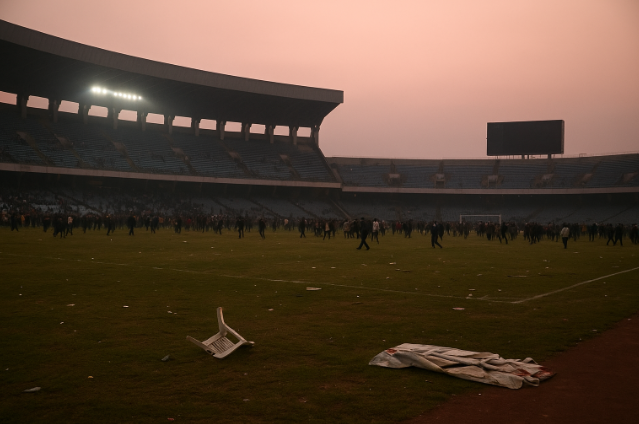
Lionel Messi’s recent India tour was billed as a historic moment, a once-in-a-lifetime opportunity for Indian fans to see the Greatest Of All Time on home soil. It was supposed to be a celebration of football, a spectacle to inspire an emerging nation of athletes, and a grand convergence of fan love and sporting greatness. Instead, what Kolkata witnessed was nothing short of a fiasco, a moment of embarrassment, betrayal, and bitter reflection.
The event at Kolkata’s Salt Lake Stadium, meant to be the emotional opening of Messi’s GOAT India Tour 2025, descended into such chaos that fans stormed the field, threw bottles and chairs, and left the venue in anger and disillusionment. Tickets that were supposed to grant fans proximity to greatness instead became symbols of frustration and unmet expectations. Organisers were detained, refunds demanded, and the state government was forced into public apologies as cameras captured the spectacle turned spectacle of shame.
But beyond the chaotic headlines and viral videos lies a deeper question: What are we really doing for the development of sport in our country?
A Spectacle That Cost Too Much and Gave Too Little
The numbers are staggering. Reports estimate that the organisers poured between ₹150-200 crore into the multi-city promotional tour, a figure that includes Messi’s appearance fee, logistics, security, production, and marketing. Even with projected ticketing and sponsorship revenues, the scale of investment was vast.
Let’s pause and absorb that: hundreds of crores for a celebrity visit that, on its opening day, barely allowed the paying fans to see the man they came to watch. That money, considered in the context of grassroots development, sports academies, coaching incentives, school upliftment programs, youth tournaments, and infrastructure, could have fueled a generation of athletes, not just footballers, but athletes across various disciplines.
A Punjab football club director was right when he said that such an amount invested sincerely in grassroots development could have produced ten Messis of our own. That is not emotional rhetoric, it’s a stark, visionary critique of misplaced priorities.
We chase borrowed fame instead of creating our own homegrown excellence.
What Actually Happened in Kolkata
The Salt Lake Stadium incident did not start with chaos; it unravelled.
Messi arrived amid wild enthusiasm. Dedicated fans lined up hours before the event, braving the cold and paying hefty ticket prices ranging from ₹3,800 to ₹15,000 or more, with VIP access costing far beyond.
At the event, Messi virtually unveiled a 70-foot statue of himself, an enormous structure completed in record time, drawing crowds and selfies but also raising eyebrows about priorities.
When the stadium programme began, things rapidly deteriorated:
- Messi’s appearance was briefly reported variously as under 20 minutes, sometimes barely 10 minutes, and he was immediately swamped by a ring of officials, politicians, celebrities, and their entourages. Security kept genuine fans at bay.
- Frustration boiled over as fans who had paid months’ wages for tickets found themselves barely able to see Messi, let alone interact or watch any demonstration of football magic.
- Many begged for refunds and accused organisers of misrepresentation, even calling the event a “scam”.
- In the stands, chaos erupted — seats were ripped out and thrown, bottles hurled, and fans demanded accountability as scenes spiralled out of control.
- The organiser, Satadru Dutta, was detained by police in connection with the mismanagement.
It was a spectacle of disappointment, not inspiration.
Kolkata’s Footballing Legacy vs. This Spectacle
Kolkata is not just any Indian city; it is the Mecca of Indian football. For generations, the Vivekananda Yuba Bharati Krirangan and the fervent football culture of Bengal have been woven into the identity of the sport in our country. Legends like Bhaichung Bhutia, I-League dramas, and the Kolkata Derby are part of local lore.
Back in 1996, when Diego Maradona visited the Yuva Bharati Krirangan, another iconic Argentine legend, the event was executed with dignity and class. Under the leadership of then-Sports Minister Subhas Chakraborty, it was respectful and orderly, a reflection of reverence for both the legend and the fans. Millions remember it fondly. Today, that memory stands in stark contrast to the recent episode.
Where one event was seamless and respectful, the other was ragged, chaotic, and marred by mismanagement.
This isn’t just a matter of logistics — it’s a reflection of leadership.
When Culture Meets Mismanagement
The scenes from Salt Lake, videos of angry fans, of seats ripped from their place, of disillusioned supporters chanting for refunds — are heartbreaking not merely because of the chaos, but because they show a failure of vision and execution.
The anger wasn’t just at not seeing Messi. It was at the sense of betrayal, a belief that the event catered to politicians, celebs, and VIPs first, and to genuine fans second. This sentiment resurfaced in multiple reports, where fans noted that ministers and celebrities surrounded Messi, leaving the real supporters with nothing but screens and distance.
In Kolkata, the city that once held Maradona’s visit with dignity, this misstep has been labelled a disgrace.
One foreign visitor reportedly said that while the government can’t even deliver metro infrastructure on time, it found the time and money to erect a poorly made statue in a matter of 40 days. That conversation encapsulates the heart of the critique: misaligned priorities, political optics, and showmanship over substance.
Chasing Imported Glory Instead of Cultivating It
Every major sporting nation, whether in Europe, North America, or even parts of Asia, recognises where its competitive advantage begins: at the grassroots.
Grassroots means:
- Coaching clinics for children in towns and villages
- Accessible equipment and playing fields
- School and district level tournaments
- Scholarships and financial support for promising athletes
- Educated and well-trained coaches
- Long-term development programmes
You don’t build sporting legends overnight. You build them over years, sometimes decades.
Instead, what India has increasingly chosen is the imported hero strategy, bringing international icons for promotional tours and PR moments. These events can be inspiring if done right, but an event without substance, without real football, without clear engagement with local talent, without meaningful interaction becomes performance art, not development.
Sunil Chhetri, arguably India’s greatest footballer, voiced this sentiment perfectly: Indian footballers, including himself, have brought genuine pride to the nation but never received the same recognition or hype that an imported spectacle does. His point wasn’t jealousy; it was a justified critique of the narrative and of where our investments go.
A Lost Opportunity
Messi’s visit could have been historic in the truest sense:
- Youth football clinics led by elite coaches
- Stadium workshops and talent identification programmes
- Public sessions where aspiring players learn directly from legends
- Scholarships or foundation funding pledges toward youth football
- Coach training and exchange programmes
Instead, fans got a few rushed minutes surrounded by a wall of VIPs and bureaucracy.
That’s not just disappointing, it’s symptomatic of how events are conceptualised in India today: as glamour pieces and political capital, not as catalysts for real growth.
The Bigger Picture: What Does India Want from Sport?
Beyond football, this episode reflects a broader indictment of our sporting ecosystem.
India is a nation of over 1.4 billion people with immense athletic potential. Yet, for decades, our sporting success has been sporadic, a few shining moments in cricket and isolated excellence in other fields, without the depth seen in countries with systematic development.
This is not a question of love for sport. It is a question of structure, a system that nurtures, supports, and cultivates.
We want global icons to visit because they are magnets, they bring attention, they bring eyes, they bring momentary excitement. But what happens after the cameras leave?
If we do not parallel that with investment in our own talent, then these events remain hollow. They are spectacles, not movements.
Kolkata’s Pain Is India’s Pain
The outrage seen in Kolkata, the sense of hurt, betrayal, and disillusionment, tells us something profound about the soul of Indian sports fans:
- They don’t want tokenism.
- They don’t want empty gestures.
- They want meaningful engagement with the sport they love.
- They want respect, not just for a visiting star, but for themselves as fans and for the game itself.
And that pain is not limited to West Bengal.
Across India, from the football pitches of Kerala to the academies of Goa to the fields of Manipur, there are athletes, coaches, and fans who feel the same frustration.
They watch politicians chase headlines while genuine sporting ecosystems languish for want of sustained investment.
Leadership, Vision, and Accountability
The organisational failure in Kolkata cannot be separated from leadership. From logistical mismanagement to crowd control breakdowns, from VIP monopolisation to the absence of clear fan engagement, it was a failure of planning and execution at multiple levels.
Government leaders, administrators, and organisers must answer fundamental questions:
- Why were ticket holders unable to see or interact with Messi?
- Why were VIPs allowed to dominate the stadium floor to the detriment of paying fans?
- Why was crowd management so ineffective that it resulted in vandalism?
- Why were refunds not automatic in the face of a failed experience?
What happened in Kolkata wasn’t just poor management. It was an embarrassing indictment of priorities.
A Call to Reclaim Sporting Culture
We can draw lessons from this, but only if we recognise them. The Messi event in Kolkata will be remembered not for celebration, but as a warning signal: that without focus, investment, and respect for the sport and its fans, even moments of great promise can turn to ashes.
If we truly want to build legends at home, if we want ten Messis rather than one imported for a day, then we must shift our gaze:
- From fleeting spectacles to sustained programmes
- From political optics to developmental impact
- From celebrity worship to athlete empowerment
- From short-term hype to long-term vision
Sporting nations are built not on red carpets, statues, or photo-ops. They are built on infrastructure, coaching, policy, accountability, and grassroots passion supported by real resources.
Messi will go down in history as one of the greatest football players ever. That is indisputable.
But what Kolkata will be remembered for, unless we learn from this moment, is a missed opportunity; a spectacle that promised inspiration but delivered frustration. A moment that could have united fans and aspiring athletes, but instead highlighted systemic neglect.
The real question now is: Will we look inward and rebuild? Or will we keep chasing borrowed glory while ignoring the soil beneath our own feet?
Only time — and action — will tell.