
In mathematics, adding something can sometimes make a problem easier. An extra variable may open a new route to a solution; an additional dimension may reveal a structure that was difficult to recognise before. But what if adding a dimension makes two objects appear identical when, in their original form, they were not? And what if removing that additional dimension does not restore the distinction?
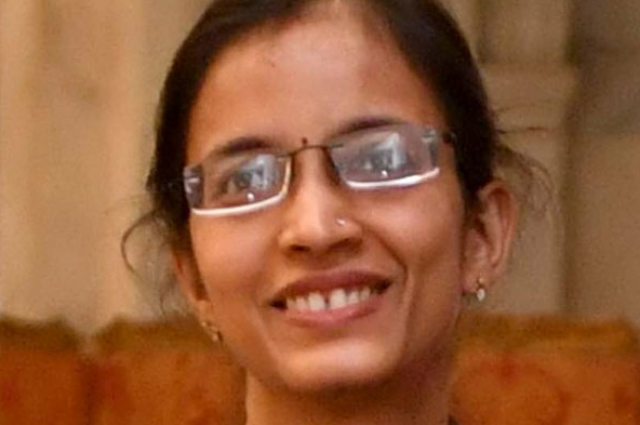
This is not a philosophical puzzle. It is the substance of a question that occupied mathematicians for decades, beginning with a problem posed in 1949 by the eminent mathematician Oscar Zariski. Known as the Zariski Cancellation Problem, it became one of the enduring questions in algebraic geometry. In 2014, a young mathematician working at the Indian Statistical Institute in Kolkata produced a counterexample to the problem in positive characteristic. Her name was Neena Gupta.
Twelve years after that mathematical breakthrough first brought her international recognition, Gupta has been named among the 100 emerging leaders on TIME100 Next India 2026, in the Health and Science Innovators category. The recognition is significant, but the more interesting story lies in the intellectual journey that preceded it: a researcher working in India, engaging with an abstract mathematical question whose history stretched across generations, and demonstrating that an accepted mathematical expectation did not always hold.
A problem hidden inside a simple question
To understand why Gupta's work mattered, it helps to approach the mathematics without being intimidated by its terminology.
Algebraic geometry studies the relationship between algebra and geometric spaces. Equations are not merely expressions to be solved; they can describe shapes, surfaces and structures with properties that mathematicians investigate. Some of these structures are called affine varieties.
The cancellation question asks, in simplified terms, whether two such mathematical spaces must have been equivalent before an extra dimension was added if they become equivalent after that dimension is introduced.
Imagine two objects that look different when examined separately. An additional structure is attached to each, and suddenly the resulting objects become indistinguishable in the mathematical sense relevant to the problem. Can one then remove the added structure and conclude that the original objects were also equivalent?
It sounds reasonable. But mathematics is not governed by what sounds reasonable.
Zariski's question exposed the difficulty of making that assumption rigorous. For decades, the problem attracted attention because it concerned a fundamental property of algebraic structures, not a narrow computational exercise. Its answer had implications for how mathematicians understood the behaviour of spaces under the addition of variables.
The problem was particularly subtle because mathematical results can depend on the number system and the underlying field in which calculations are performed. A conclusion that holds in one setting may fail in another. It was in this more delicate territory that Gupta's research made its mark.
The counterexample that changed the question
In 2014, Gupta demonstrated that a three-dimensional affine variety constructed earlier by Japanese mathematician Takanori Asanuma provides a counterexample to the Zariski Cancellation Problem in positive characteristic.
The result was important because it showed that the expected cancellation property did not always hold. Two mathematical structures could become equivalent after an additional dimension was introduced without having been equivalent in their original form.
The distinction is worth emphasising. Gupta did not simply solve an equation or find an unusual numerical result. She established, through a mathematical proof, that a general expectation about the behaviour of certain algebraic varieties was false in the setting she investigated.
A counterexample can be as consequential as a positive proof. When a mathematical proposition is believed to hold generally, demonstrating one valid instance in which it fails forces the boundaries of existing knowledge to be reconsidered. It tells researchers that a route they assumed was safe cannot be taken without further qualifications.
This is one of the reasons fundamental mathematics advances through questions that may initially appear detached from everyday life. A proof can change the way an entire area of research is approached, even when it does not produce an immediately marketable technology or a practical device.
The Infosys Science Foundation, in awarding Gupta its 2024 Prize in Mathematical Sciences, described her work as a landmark contribution to affine algebraic geometry. Its citation also recognised her subsequent research and the connections she established with other problems in commutative algebra and algebraic geometry.
From Bethune College to the Indian Statistical Institute
Neena Gupta's academic journey began in Kolkata, the city where she was born in 1984. Her interest in mathematics developed early, encouraged by her mother, Gyanlata Gupta, who would organise problem-solving competitions between her and her brother.
The small domestic exercise of competing over mathematical puzzles became something more enduring. After completing her schooling, Gupta pursued Mathematics Honours at Bethune College, one of Kolkata's historic institutions for women's education. She graduated in 2006 and moved on to the Indian Statistical Institute, where she completed her postgraduate studies in 2008 and subsequently undertook doctoral research.
Her choice of mathematics as a profession placed her in a discipline where women remain underrepresented, particularly in advanced research. During her postgraduate studies, she was reportedly the only woman in her mathematics class.
That detail is significant, not because it should be used to manufacture a story of adversity, but because it illustrates the environment in which she pursued a demanding academic specialisation. Advanced mathematics requires sustained concentration, intellectual independence and the confidence to question established results. For a woman working in a field where she had few female classmates, establishing a research identity meant finding her place within an overwhelmingly male academic environment.
It would be simplistic to suggest that her achievements are explained by gender alone. Gupta's contribution rests on mathematical ability, sustained research and a proof that other specialists could examine and evaluate. Nevertheless, the circumstances of her academic journey give her success a wider social meaning.
Her career also challenges the familiar assumption that international scientific recognition requires a researcher to build a career abroad. Gupta has conducted her important research in India, at the Indian Statistical Institute in Kolkata. The place where she worked was not a stepping stone that she had to leave behind to become internationally recognised. It was where she made her contribution.
Recognition beyond the mathematical community
The honours that followed her work reflect the regard in which her research has been held.
In 2014, she received the Indian National Science Academy's Young Scientist Award. In 2019, she was awarded the Shanti Swarup Bhatnagar Prize in Mathematical Sciences, one of India's most prestigious recognitions for scientific research.
In 2021, she received the DST-ICTP-IMU Ramanujan Prize for Young Mathematicians from Developing Countries. The award recognised her outstanding contributions to affine algebraic geometry and commutative algebra. She was also conferred the Nari Shakti Puraskar for the year 2021, presented in 2022, in recognition of her contribution to mathematics.
Further recognition followed with the 2023 TWAS-CAS Young Scientist Award for Frontier Science and the 2024 Infosys Prize in Mathematical Sciences. She was also selected to deliver the Emmy Noether Lecture in 2025, an important recognition within the international mathematical community.
The latest addition is her inclusion in TIME100 Next India 2026. The inaugural Indian edition of the list recognises 100 emerging leaders across science, business, culture, sports and other fields. Gupta's presence in the Health and Science Innovators category brings a form of public visibility to a discipline that seldom attracts the attention given to technological inventions, sporting achievements or popular culture.
The recognition also invites a larger question: how many people outside specialist mathematical circles know that a significant contribution to a longstanding international problem has emerged from a research institution in Kolkata?
The importance of questions without immediate answers
In a world increasingly preoccupied with measurable outcomes, the value of pure mathematics is not always easy to explain. Research is frequently expected to produce something tangible: a new medical treatment, a faster computer, an industrial application or a commercial innovation. Fundamental mathematics follows a different timetable.
A theorem may take years to prove. A counterexample may overturn an assumption without immediately offering a practical application. Its significance may become clearer only as other researchers use the result to investigate related questions.
Gupta's work belongs to this tradition of intellectual inquiry. Its importance lies in expanding mathematical understanding, not in promising an instant technological benefit. The proof matters because it changes what mathematicians know to be true, and what they must investigate further.
There is also an educational lesson in her journey. Mathematics is often presented to schoolchildren as a subject of correct answers, fixed procedures and marks secured through speed and accuracy. Research mathematics is quite different. It begins with uncertainty. It requires the patience to remain with a question whose answer may not be visible, and the willingness to abandon an assumption when evidence contradicts it.
For girls who may have been discouraged from pursuing mathematics because of stereotypes about ability, temperament or suitability, Gupta's career offers a powerful counterexample of its own. It demonstrates that intellectual ambition need not be restricted by inherited expectations. A young woman from Kolkata can work on a problem that has occupied the international mathematical community and contribute something that changes its understanding.
Her achievement should not become another convenient slogan about women overcoming obstacles. It deserves something more substantial: recognition of the quality of the research, the rigour of the proof and the academic environment that enabled it.
A different measure of influence
TIME100 Next India has placed Gupta among a hundred people whose work is considered significant to the country's future. Yet her influence cannot be measured only by a place on a list or by the number of awards attached to her name.
Its deeper measure may lie in the questions she has made possible for others. A mathematical result does not close every door; often, it opens several more. By showing where a longstanding expectation fails, Gupta's work has helped reshape the direction of research in a specialised but fundamental area of mathematics.
There is something quietly compelling about this achievement. No dramatic laboratory experiment, public spectacle or commercial launch announced the breakthrough. It emerged from the patient work of mathematical reasoning, where a proof must withstand scrutiny regardless of the reputation of the person who produces it.
In Kolkata, at an institution devoted to the pursuit of knowledge, Neena Gupta challenged an assumption that had survived for decades. Her story is not simply about a woman receiving international recognition, or about an Indian scientist finding a place on a prestigious list. It is about the courage to question what appears settled, the discipline to establish why it is not, and the intellectual independence to follow a problem wherever the mathematics leads.
The most important lesson may be found in her discovery itself. In mathematics, adding a dimension can sometimes change what we are able to see. In a society that has too often underestimated the contribution of women to fundamental research, recognising Neena Gupta adds something else: a new dimension to the way we imagine who can shape the frontiers of knowledge.