
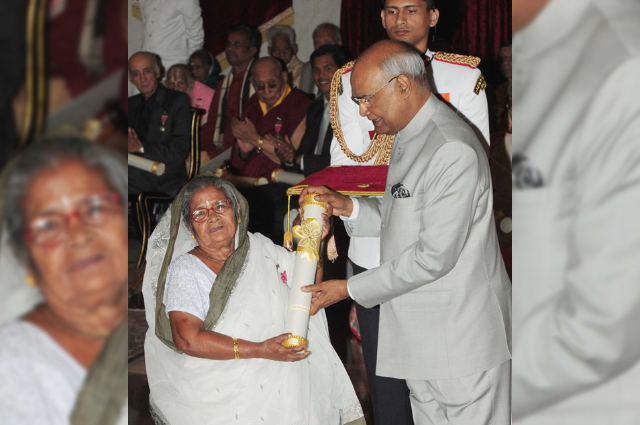
In 1971, Sadhan Chandra Mistry died after falling ill with an ailment his family could not afford to have properly treated. His death left his wife, Subasini, with four children and little financial security. They were poor, and the cost of obtaining medical attention had proved beyond their means. For Subasini, this was not an abstract failure of the healthcare system. It had happened within her own family, and its consequences would shape the rest of her life.
She could not bring her husband back. She could, however, try to prevent another family from suffering the same loss for the same reason. She resolved to build a hospital for people who could not afford medical treatment.
The resolution was enormous in relation to her circumstances. Subasini had little formal education, no substantial resources and four children to raise. A hospital required land, construction, medical equipment, medicines and doctors willing to treat patients. She possessed none of these things in sufficient measure. What she had was the capacity to work, an understanding of what poverty could take away, and a purpose that would have to survive years of ordinary necessity.
There was no immediate transformation. There was work.
Subasini earned her living as a domestic helper, a manual labourer and a vegetable seller. The occupations were physically demanding, and the money was needed for the immediate requirements of a family struggling to remain afloat. Food had to be bought. Children had to be raised. Her own survival could not be postponed until the hospital became possible.
Nevertheless, she saved what she could.
The distinction matters. Saving money when one has a comfortable income is not the same as setting aside a little from earnings already stretched across the essentials of daily life. A sum that might appear insignificant to someone with financial security can represent a meal, a household necessity or a small measure of protection against the next unexpected expense to someone living close to the edge. For Subasini, saving meant repeatedly making room for a future need within a present that offered very little room at all.
She continued for years, working and putting aside money while bringing up her children. The dream did not become easier because it took a long time. The time was part of the cost.
The story is often told through its eventual achievement, the hospital that grew from her determination. But before there could be a hospital, there had to be a woman who returned to work the day after another difficult day, who earned money in small amounts and who kept some of it for a purpose that could not yet be seen. There was no guarantee that the savings would be enough, that other people would support her, or that a medical institution could be established and sustained. She was committing herself to a future without knowing whether she would live to see it completed.
That uncertainty is central to her achievement. She was not following a plan backed by wealth or institutional assurances. She was building the possibility of one.
By 1992, after years of saving, Subasini had acquired land in Hanspukur, her husband’s native village. The choice brought the proposed hospital back to the place associated with the loss that had first given rise to her resolve. The land was not simply an asset. It was the first substantial foundation for a project that had existed for years as an intention and a series of small financial decisions.
But land alone could not provide medical treatment. A hospital needed buildings, people, supplies and money beyond what one woman could raise through her labour. Subasini therefore appealed to the local community to help make the project possible.
The request changed the nature of the undertaking. What had begun with her personal experience and savings now depended on other people deciding that the need was worth answering. A village could contribute money, materials, labour or professional service. No single contribution had to accomplish everything. The purpose was to bring enough contributions together to begin.
Her son Ajoy also played an important role. According to the Government of India’s account of her story, he raised ₹50,000 through friends, acquaintances and organisations. Doctors from neighbouring areas agreed to attend to patients without charging professional fees. Their participation helped turn a plan into a service.
A modest, one-room clinic emerged. It was not the finished hospital Subasini had imagined, but it was a beginning that could be used. Patients could come for care. Doctors could offer their services. The project was no longer dependent on the hope that something might happen one day; it had acquired a place where the work could begin.
This is where the story becomes more than an account of individual determination. Subasini supplied the first sustained effort and the savings that made the land possible. Ajoy helped mobilise further resources. Doctors gave their time and expertise. People in the surrounding community responded to the appeal. Their contributions were different in scale and kind, but they were directed towards the same practical need.
The hospital was not built by resolve alone. It was built when resolve found ways to enlist labour, money and professional skill.
The distinction is important because stories of extraordinary achievement can sometimes leave the impression that one exceptional person can overcome every obstacle through willpower. Subasini’s perseverance was essential, but it did not make medical care a solitary enterprise. Her achievement also involved recognising that the work exceeded her individual means and asking others to participate. The request for help was not an admission that the dream had failed. It was a necessary part of making it real.
The project progressed. The foundation stone for the hospital was laid in 1995, and the hospital opened to the public in 1996, according to the Press Information Bureau’s published account. The interval between the death that inspired Subasini’s vow and the hospital’s opening was roughly twenty-five years. For much of that period, the dream had been sustained through work that attracted little public attention: earning, saving, caring for a family and trying again.
A hospital opening is an identifiable milestone. The years that precede it are harder to record. They consist of repeated acts that rarely appear momentous when considered separately. A small deposit does not look like a hospital. A day’s wages do not look like a public institution. A request to a neighbour or a doctor may produce no immediate result. Their significance becomes visible only when they accumulate and are joined to the efforts of others.
That accumulation is the heart of Subasini’s story.
Her husband’s death had shown her what the absence of affordable medical care could mean to a poor family. Her response was not to establish a service for one particular household, nor to seek compensation for her own loss. She directed her effort towards a place where other people might receive treatment. The private consequences of poverty became the reason for a public undertaking.
The idea was simple, but its implications were not. A family that cannot afford care may delay seeking it, travel too late or have no realistic choice about treatment. Illness does not wait until money becomes available. When healthcare is out of reach, the difference between having access to a doctor and having none can become a difference between survival and death. Subasini had encountered that reality in the most painful way available to her. Her response was an attempt to change the circumstances in which such a decision had to be made.
Her story also asks us to look more carefully at what we call money. We often speak of savings as a private reserve, a means of protecting ourselves and our families against uncertainty. Subasini’s savings began in the same practical world of household needs and daily expenses, but they were directed towards something beyond her own security. She took money earned through physically demanding work and gradually converted it into land for a community resource.
That did not make her own needs less real. Nor does it make poverty a desirable condition from which greatness must emerge. The significance lies not in the hardship itself, but in what she chose to do with the limited means available to her. Her labour should not be romanticised. Domestic work, manual labour and selling vegetables are work, and the effort they require deserves recognition in its own right. The fact that she carried such work for years while pursuing a demanding public purpose makes the achievement more substantial, not less.
There is also a quieter lesson in the role of time. We tend to celebrate visible results: the building, the institution, the inauguration. The years of saving are less dramatic. They do not offer the satisfaction of an immediate outcome. Yet a large undertaking can depend on precisely this kind of patience, in which progress is too little to be impressive on any single day but too deliberate to be dismissed as insignificant.
Subasini’s story is not evidence that money does not matter. Money mattered at every stage. Its absence had contributed to her husband’s death, and its scarcity shaped her own life. The point is that she began with what she could earn, rather than waiting for a fortune or an institution to make the first move. The money she saved could not build a hospital by itself, but it gave her a tangible starting point from which others could join her.
Nor should the story suggest that an individual’s generosity can substitute for a reliable healthcare system. A hospital requires continuing resources, qualified staff, medicines, equipment and sound administration. The establishment of a medical facility is a beginning, not the end of the responsibility to provide care. Subasini’s achievement is best understood in its historical context: she worked to create a place for people whose poverty had limited their access to treatment, beginning with the means she could gather and extending the effort through cooperation.
What remains striking is the distance between the resources she had at the beginning and the scale of the purpose she pursued. She was a widow supporting four children, earning through several kinds of labour and saving over a period of about two decades. She did not begin with the money needed to construct a hospital. She began with the conviction that another family should not be left without medical care simply because it was poor.
The story’s force lies in the way that conviction acquired material form. First came the savings, then the land, then the appeal to the community, the contribution raised by her son, the doctors who offered their services, the small clinic and, eventually, the hospital. Each stage depended on the one before it, and each required people to believe that the next stage was worth attempting.
There is no need to turn Subasini Mistry into a figure without doubt, fatigue or ordinary human limitations to recognise what she accomplished. The documented facts are powerful enough. A woman who had experienced the consequences of unaffordable medical care spent years working towards a practical alternative. She used her savings to help secure land, sought assistance when the project exceeded her resources and helped bring together the people needed to begin providing care.
The history of Humanity Hospital records what Subasini Mistry and those who joined her effort set out to build: a place where people with limited means could seek medical care.
The hospital began with a promise, but the promise became real through work that could be counted: wages earned, savings accumulated, land acquired, money raised, services offered and a clinic opened. The larger achievement grew from those specific acts.
A few rupees at a time, Subasini Mistry made a future possible that had once seemed beyond her reach. The significance of what she saved is measured not only by the land it helped secure or the institution that followed, but by the purpose to which she put it. She had known what it meant for poverty to stand between a sick person and treatment. She spent years trying to make that barrier less absolute for others.
Refrence
- Press Information Bureau, Government of India. “Backgrounder: Inspiring Stories – Women Transforming India Awards, 2017,” 29 August 2017. https://www.pib.gov.in
- Banerjee, Tamaghna. “No one should die because they are poor: Subhasini Mistry.” The Times of India, 28 January 2018. https://timesofindia.indiatimes.com
- United Nations in India. “Saving thousands of lives daily – Subasini Mistry,” 2 September 2017. https://india.un.org