
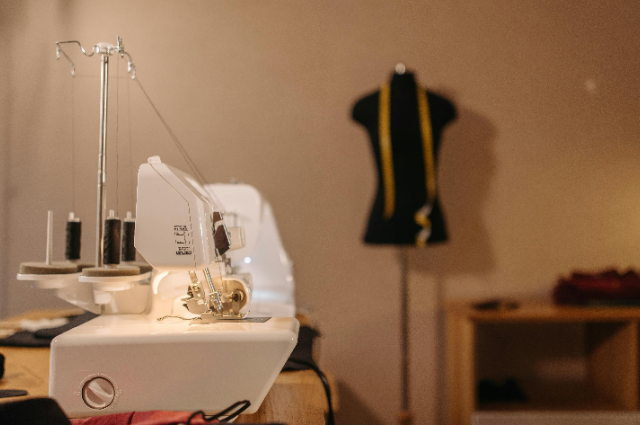
Hyper-personalization is quietly upending what we mean by "fashion." Living in a world drenched in mass-market labels, increasing numbers of consumers are seeking "made-for-me" goods like monogrammed bags, custom-designed shoes, and pet portraits on tote bags, which are not only for status but also to evoke a sense of ownership, identity, and attachment. This shift, more than a trend, speaks to a deeper psychological craving to feel unique in a world where mass-produced sameness mostly feels cookie-cutter, bland, and impersonal. What makes customized items compelling isn't just their rarity but the story they carry. A custom pet portrait printed on a phone cover, for example, isn't just any other accessory; rather, it turns into a small tribute to a beloved pet, a tangible memory that you carry every day. Similarly, a monogrammed jacket or a pair of bespoke shoes becomes "your signature," a quiet statement that you are not some consumer of a season's trend but an individual. This isn't anecdotal. The larger fashion industry is shifting too: according to a recent Vogue feature, more designers, even those that once relied on mass production, are increasingly embracing made-to-order or custom-order models.
Their reasoning is quite simple: custom orders avoid overproduction, provide higher profit margins, allow creativity, and, most of all, they meet the rising consumer demand for uniqueness and personal style. As fashion houses gauge this shift, “made-for-me” seems less of a luxury niche and more of a mainstream direction. The global custom clothing and bespoke fashion market is growing strongly. According to various market analyses, the global custom-made clothing market, as part of the broader personalized fashion ecosystem, is expected to increase from approximately US$50.2 billion in 2024 to US$144.5 billion by 2034, at an annual growth rate of around 10.7%. Numbers such as these reflect not just a fleeting fad but a structural change: people are willing to pay more—not for a label, but for something that feels uniquely theirs.
In India, this transformation is already visible. Traditional tailoring, like bespoke kurtas, custom-stitched sherwanis, and made-to-measure suits, has long existed. What's new now is the expansion of customization beyond formalwear into everyday fashion and accessories. Small businesses and entrepreneurs are leveraging this appetite, too. Take, for instance, a Delhi-based startup that retails customized pet-portrait accessories, mugs, etc., saw a dramatic uptick in orders after offering a "Pet & Me" bundle including a matching mug and cover printed with a customer's pet's photo and name. Many buyers told the owner that it wasn't just about owning merchandise—it was about "carrying a memory." Sales doubled within six months, suggesting that to many, emotional resonance matters more than price or brand. So, what drives this shift? In part, it is identity. For younger consumers—Millennials and Gen Z—possessions are less about flaunting logos and more about telling stories. A mass-produced "off-the-rack" jacket might look fine, but a version customized with subtle bespoke touches feels personal. It becomes more than a garment. It becomes part of one's self-expression. In a globalized, digitalized world where trends change fast, personalized items promise longevity: they survive beyond seasonal cycles because they carry personal value.
In addition, there's an increased awareness about sustainability and ethical consumption. The old ready-to-wear model is in many ways highly wasteful: overproduction, unsold inventory, and rapid disposal. Customization by design produces only what gets ordered. This reduces waste, cuts down returns, and is in line with conscientious consumer values. As one Italian boutique that moved to full made-to-order production reports, "When you work this way, each piece becomes personal and lasting." Moreover, customization renders the act of shopping a participatory process: it changes from passively buying whatever is on display to customers becoming co-creators by selecting colors, details, and monograms or uploading their own design ideas. Interactivity enhances emotional investment here; the end product does not feel like a commodity but a choice.
But "made-for-me" offerings can yield higher profit margins and stability from a business perspective, too. Brands don't risk unsold inventory common in seasonal ready-to-wear; every item is produced to demand. This business model fits small-scale artisans and larger niche brands. And with digital previews and modular production systems, even custom orders can scale without exorbitant costs.
But that's not without its own set of disadvantages. Custom pieces tend to be more expensive and production timelines longer. Some people may pay not just for customization but for the idea of uniqueness itself. There's also the risk of the custom trends going into cliché: as personalized fashion becomes more popular, some "custom styles" may become massified, defeating the whole point of standing out. The emotional pull remains, nevertheless. In an age of uniformity—where high-street stores are identical between cities and aesthetics are run in a loop through social media—owning something truly your own feels like a kind of identity reclaimed. It's less about displays of wealth than memory preserved: your history, your self. Thus, hyper-personalization is taking over as the "new luxury": not defined by price tags or logos, but by meaning, memories, and individuality. For many, luxury isn't in excess; it's in being seen. In a world where fashion once demanded sameness, "made-for-me" offers freedom. For those who value identity over uniformity, it may well be the most personal luxury of them all.
Sources:
- emov, A. (2025, October 21). Why more designers are adopting a made-to-order model. Vogue. https://www.vogue.com
- https://www.mckinsey.com