
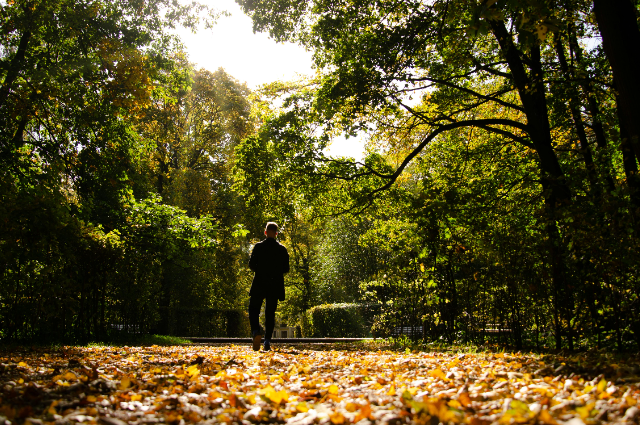
The world has moved on, and so have we. Now, the generations have new problems, new issues, and new standards they live with. The ancient, instinctive part of us still reacts to threats with the same intensity as it did millennia ago. Especially one that is not within the bounds of an individual. How do we comprehend a threat that feels as vast and uncontrollable as the one that wiped out the dinosaurs? Our minds are constantly interpreting signals of a looming, seemingly inevitable environmental threat. A new, persistent unease has settled over this generation. It is one that cannot be soothed by typical advice like "stay positive," "focus on yourself," or "don't think too much." This unease is climate anxiety, a persistent sense of dread caused by witnessing environmental collapse in real time. It is not hypothetical fear; it is the collective psychological response to smog-filled skies, failing monsoons, rising temperatures, vanishing species, and the awareness that the planet's future feels increasingly unpredictable. For Gen Z and Millennials, this crisis is not a far-off scientific debate. It is the backdrop and a constant state of being to adulthood. Traditional coping mechanisms, built for personal stressors rather than planetary emergencies, often fall short. Therapists around the world now report clients grieving not lost relationships, but lost ecosystems; not fearing personal failure, but fearing the failure of an entire planet. Because, unlike past crises, there is no escape from the planet we’ve damaged, and this is the only home we have.
This emerging emotional landscape has given birth to a new mental health field: ecotherapy, or nature-based therapeutic intervention. Once an alternative, it is increasingly recognized as a structured response to climate grief and ecological despair. Ecotherapists treat emotions that arise from prolonged exposure to environmental crises—guilt over carbon footprints, grief after natural disasters, hopelessness about the future, and the heavy emotional burden of feeling responsible for "fixing" an unfixable planet. According to a 2021 global survey, 59% of young people across 10 countries described themselves as "very" or "extremely" worried about climate change, and 45% said these worries affected their daily functioning. These numbers reveal what many already intuitively know—climate anxiety is not a fringe concept; it's a generational condition.
As mental health professionals increasingly confront this reality, nature itself is being readmitted into care as a therapeutic resource. The idea is straightforward: if ecological loss creates emotional wounds, ecological reconnection can help heal them. Ecotherapy is backed by evidence, showing measurable reductions in anxiety, stress, and emotional overwhelm. Studies show that time spent in nature lowers cortisol and heart rate and raises serotonin. Patients say that walking through a park quiets the mind in a way the therapy room often can't. And as the air gets thick with pollution and cities get denser, green space has turned from nice-to-have into a psychological necessity. This shift is already reflected in municipal health systems. Seoul, the South Korean capital, for example, launched a citywide “Forest Healing” program where citizens suffering from stress, anxiety, or burnout are referred by their doctors to guided nature walks, forest-bathing sessions, and outdoor mindfulness workshops. Seoul’s National Forest Therapy Center has been praised for measurable improvements in participants’ blood pressure, mood, and sleep quality. In Singapore, the government’s “Park Prescription Programme” integrates doctors into green-space advocacy: physicians quite literally prescribe time in parks as part of treatment plans for anxiety, mild depression, and chronic stress. This is supported by Singapore’s massive investment in urban greening, where the city added over 100 hectares of new parkland between 2019 and 2023, becoming one of the world’s leading examples of nature-integrated healthcare. These initiatives make it clear that nature is no longer viewed as recreation: it is public health infrastructure and needs to be implemented with the same urgency we demand for other modern public policy reforms.
The same truth is often reflected in stories on a more individual scale. In Mumbai, a 24-year-old graphic designer experiencing overwhelming eco-grief described regular therapy as helpful but incomplete. Her therapist eventually recommended structured "nature-based grounding," including weekly walks in Sanjay Gandhi National Park, journaling outdoors, and community gardening. She said later that nature had provided "a kind of stability nothing else could," not because it erased her fear but because it reminded her of resilience, cycles, and continuity. Ecotherapists say this pattern is common: climate anxiety does not disappear, but it becomes bearable when people feel reconnected to something living instead of feeling helplessly detached from everything dying.
This new therapeutic model reflects a larger truth: climate anxiety is not an individual malfunction or simple overthinking; it's a rational response to systemic collapse. The problem is that what is fundamentally a collective crisis can't be resolved with individual coping strategies alone. No amount of meditation can cool rising oceans. No breathing exercise can reverse biodiversity loss. And no gratitude journal can dismantle polluting industries. It's just this mismatch in problem and solution scale that's precisely why traditional therapy often struggles. Conversely, ecotherapy acknowledges that healing necessitates reestablishing connections to both the natural world and one's inner selves.
There is, however, an important caution: as these ideas are rapidly commercialized by wellness industries and risk becoming a trend rather than an emergency, the danger of commodifying nature rises. "Climate grief workshops," "eco-healing resorts," and "forest retreats" are charging exorbitant prices that only the wealthy can afford. This will reinforce the same inequalities driving climate injustice. Real ecotherapy needs to stay accessible, community-led, and anchored in public infrastructure. In many ways, the climate anxiety generation is redefining mental health itself. The crisis has forced us to expand the meaning of care beyond the individual psyche to include the ecosystems surrounding it. And it has made clear that emotional resilience is linked not only to personal choices but also to political, environmental, and social structures. As green spaces become prescriptions and climate grief becomes therapeutic vocabulary, we're seeing something more profound than a mental-health trend: it's a cultural turning point. Policymakers and institutions must act with urgency rather than leaving emotional and ecological burdens on individuals.
The way ahead includes recognizing that climate anxiety is not a weakness; rather, it is a sign of emotional attunement to the reality. And again, healing is not escapist but an engagement—planting a tree, joining community cleanups, advocating for environmental policy, or taking the time to breathe among branches rather than screens. Nature may not solve the climate crisis, but it can strengthen the people who are fighting to.
Sources:
- The Lancet, “Climate anxiety in children and young people,” 2021
- Singapore National Parks Board, Annual Report - 2023