
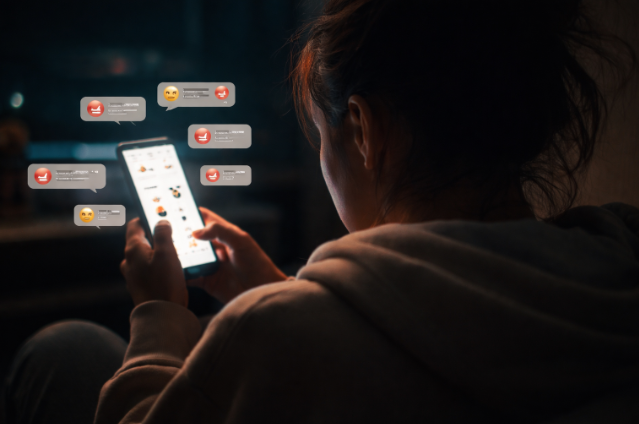
Now and then, I come across people raging, protesting, and boycotting online, and when I read as to why such behavior was triggered, a lot of the time, the reason is as menial as you and I could imagine. Something that seems not even worth a successful person’s time, and yet people who like to hide behind the mask of hidden profile pictures and fake names always manage to find the time to publicly incessantly troll or hurt someone publicly with their harsh words and even harsher critiques. Someone once said, If you don’t have anything kind to say, it is better not to say anything at all. When digital love turns into digital rage, it can send a person’s life off its axis in minutes. In the era of smartphones and instantaneous social judging, public figures find themselves not just admired but also scrutinized. Even for the most mundane actions. Posting a photo, attending a celebrity event, or simply being seen with an admired global icon can trigger waves of intense online abuse, not because of any wrongdoing, but because expectations are unrealistically high and hyper-scrutiny takes no prisoners. This is the toxic side of fan culture, where adoration quickly mutates into hostility, and where “cancel culture” becomes a weapon of relentless digital punishment.
Cancel culture, also known as call-out culture, is a widespread social media-based effort to withdraw support from a public figure, business, or organization believed to have acted in a socially or morally reprehensible manner. It can result in boycotts, mockery, lost opportunities, and public shaming all happening at lightning speed on platforms including Twitter, Instagram, and Facebook, all simultaneously.
In modern fan-stan culture, it's become a hodgepodge ecosystem of intense fandom, ironically paired with rapid judgment. "Stan Twitter," the extremely devoted fan communities around music, film, or sports figures, has propelled careers and created extraordinary engagement. But, at the same time, it shows that online abuse has created a space for toxic responses from fans who view even innocuous behavior as a slight or a misstep by the people they almost worship. A recent example came to light when Bengali film actress Subhashree Ganguly faced severe online backlash merely for sharing photos with global football star Lionel Messi during his visit to Kolkata. Ganguly, one of the leading actresses of Bengali cinema with a slew of awards to her name, put up images of herself with Messi at the Salt Lake Stadium, where he was being felicitated amidst chaotic scenes involving fans. Her caption mentioned that she had represented the Bengali film fraternity on the occasion. Many social-media users criticized her post as “tasteless” and insensitive; she was, they felt, showing off when frustrated fans were upset over scattered event planning and chaotic scenes in the stadium. Some comments shamed her for being clueless about the emotional disappointment of fans who had paid high prices for tickets or had felt wronged by the event's confusion. The fallout was so bad that her husband, filmmaker Raj Chakraborty, put up a lengthy defense, saying there was nothing inappropriate in her sharing the photo. He felt that the chaos at the stadium had no connection with her decision to take and publish the pictures, and this kind of online behavior sets a disturbing precedent for how women are treated online. This episode illustrates how fragile celebrity privacy is and how quickly admiration can turn to vitriol. That it should be considered “tasteless” to share a friendly picture taken with an admired figure shows how digital fan cultures can disproportionately weaponize criticism in a trice. The endless scroll of social media amplifies reactions without nuance or empathy; the personal is made a public spectacle, the performer a target. It is not an isolated case in India but part of a larger mosaic of online fan hostility throughout the world.
Many artists in the West have spoken out about the toxic toll of digital fan cultures. Singer-songwriters like Alessia Cara have talked about how "stan culture," a slang term for overly zealous fanbasescan become "very hurtful," even driving stars to take social media breaks to avoid harassment. On more than one occasion, stars like former Stranger Things actress Millie Bobby Brown and Selena Gomez have taken hiatuses or temporarily deleted their social media accounts due to harassment from factions of fans.
This is all embedded in the backlash cycles' mechanics: how outrage gets incentivized by the platforms themselves. In their studies of digital shaming and online cancellation, scholars have pointed to the fact that social media lives on the speed of engagement, controversy, conflict, and judgment beget clicks, comments, and shares. Online shaming can also extend well beyond simple critique into full-blown character assassination, where social media users conglomerate their efforts to mock, bully, or harass a target with little accountability.
Data on the prevalence of such behaviors underlines the size of the problem. In surveys on online harassment, a significant percentage of public figures and ordinary users alike report their experiences with cyberbullying or hateful content. A 2023 UNESCO report further found that over 70% of women journalists and public figures experience more online violence when compared. While precise statistical snapshots vary by region and platform, one global analysis found that a substantial portion of users reported witnessing or being subjected to online abuse related to their identity or statements—from gender to personal affiliations—and only a fraction of platforms effectively intervene. These findings point to a broader pattern of culture that tolerates hostility. Broad trends in online harassment are documented in multiple social science studies examining digital shaming and cancel culture dynamics. The toxic cycle is often fueled by impossible expectations that public figures should be flawless role models, whereby celebrities are presumed to always conduct themselves perfectly, never post something that could be misinterpreted, and consistently align with every belief held by their fans. This creates an impossible corridor of acceptable behavior that is unrealistic to uphold. The moment that celebrity shares something that does not align with the emotional expectations of a particular fan cohort, they risk judgment or being "canceled." Cancel culture, originally framed as a grassroots accountability mechanism for actual harms, has morphed in many online contexts into a form of social punishment for deviations from fan-community norms.
The mental health consequences of such virulent online responses are equally considerable, including stress, anxiety, and other mental health concerns. The solution to this problem involves awareness of online etiquette and digital empathy. Users can build a culture of critical thinking and empathy, fighting the temptation of readily judging or piling criticism without context. Journalists and commentators are equally able to show they will make a difference by calling out disproportionate backlash and resisting sensational-driven storytelling.
Ultimately, the digital public square is a shared space and its cruelty, as much as its capacity for connection, reflects collective values. The backlash against Subhashree Ganguly shows how quickly admiration can become condemnation and how digital fan culture can weaponize ordinary human expression. If social media is to remain a space for positive engagement, it must change from enabling impulsive judgment to fostering respectful, context-aware discourse. Only then can celebrity privacy and humanity be defended in an age of instant outrage.
. . .
Sources:
- Quanisha_Virginie_201049806_COMM5600_Dissertation
- Desk, T. E. (2025, December 15). Subhashree Ganguly faces backlash for Messi pics; Raj Chakraborty defends wife: “Does being an actress disqualify her?” The Times of India. https://timesofindia.indiatimes.com