
The ocean recorded it — even when the country didn’t.
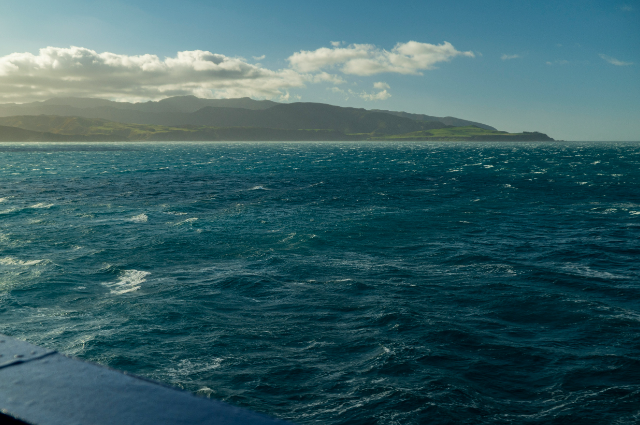
As timelines scrolled and headlines chased noise, two Indian Navy officers kept a night watch in the Southern Ocean, where darkness is heavy, sleep is rationed, and waves tower like running buildings. Salt cuts the air. The wind did not negotiate. There were no cameras, no applause, at that moment, just a duty to perform, discipline to maintain and a decision to make on the edge of the world.
More than 25,400 nautical miles were covered. Four continents. Three oceans. Three of the most dangerous capes on Earth. And yet, in public discourse, this voyage barely registered. This silence is the story of two women Indian Navy officers, Lieutenant Commander Dilna K and Lieutenant Commander Roopa, who recently completed a historic circumnavigation of the globe, travelling approximately 25,400 nautical miles (around 47,000 km) in the sailing vessel INSV Tarini. The voyage took 238 days, or about 8 months, making them the first Indian women to achieve this feat in a "double-handed" (two-person) mode.
This was not an “inspiring journey.” A national capability test was carried out quietly by the Indian Navy. A double-handed circumnavigation — it means no backup crew, no outside assistance and no room for error. Every choice—navigation, rest, repair—had consequences. When systems broke down, human judgment had to scale up immediately.
The timeline is exacting and inflexible.
Sailing Vessel Tarini set sail from Goa on 2 October 2024. They entered the northeast monsoon to start their mission and had eight months of uncertainty in front of them.
Days turned into weeks, weeks into oceans. By early 2025, they had crossed the Southern Ocean and rounded Cape Horn—where sailors do not test limits, they respect them. On 29 May 2025, after 238 days at sea, the vessel returned to Goa. The loop around the globe was complete.
The Mission That Wasn’t Meant for Headlines
This mission was never designed for noise. It was designed for proof.
The Navika Sagar Parikrama is an expedition of the Indian Navy, and not a stunt; it has been conceptualised as a real verification of maritime skill, fortitude and leadership at sea. The second of its kind, this mission set out to raise the bar in intended ways. Where the first circumnavigation confirmed that Indian naval women could sail around the world as a crew, this edition posed a stiffer question: Can they do it without virtually anything to fall back on?
That is why this voyage mattered more than the first.
The shift to a double-handed format changed everything. Two officers. One vessel. No rotating crew, no relief, no external assistance. Every hour of rest had to be negotiated with responsibility. Every repair had to be done by the same hands that steered the boat. In this format, fatigue is not a phase—it is a constant. Decision-making becomes sharper because mistakes compound faster. This was not an adventure; it was a risk deliberately accepted.
The decision to field an all-women crew was not symbolic. It was strategic. Lieutenant Commander Dilna K and Lieutenant Commander Roopa A were selected after rigorous training cycles because they met the operational threshold—nothing more, nothing less. Gender was not the qualification; capability was. The Navy placed them in one of the most unforgiving sailing formats in the world and trusted them to deliver.
That trust was not misplaced.
This mission was not meant for headlines because its purpose was internal first: to test systems, leadership, and human limits under real ocean pressure. The world did not need to watch for it to matter. The sea was watching—and it keeps a far stricter record than any newsroom.
The Women at the Helm
Every mission needs a command core. This one had just two minds, two bodies, and one shared horizon.
Lieutenant Commander Dilna K and Lieutenant Commander Roopa A were not chosen to make history; they were chosen because they could hold the line when history tested them. Both officers are seasoned sailors of the Indian Navy, trained not only in navigation and seamanship but in endurance—physical, emotional, and cognitive. Their profiles are different, but their competence converges at the same point: calm under pressure.
Lieutenant Commander Dilna K brought operational sharpness and deep sailing experience, known for methodical decision-making and quiet authority. Lieutenant Commander Roopa A complemented this with technical strength, adaptability, and an instinct for problem-solving when systems falter. In isolation, either would be capable. Together, they became redundancy itself.
Their training was unforgiving. Long ocean passages, emergency drills, sleep deprivation, equipment failure simulations, and psychological conditioning designed to break comfort before the sea could. Selection was not about resilience slogans; it was about evidence—who could think clearly when exhausted, who could lead without ego, who could follow without friction.
In a double-handed voyage, leadership is not hierarchical—it is fluid. Command shifts with context. One rests while the other stays alert. One repairs while the other navigates. There is no room for dominance, only trust. Conflict, if unmanaged, becomes a liability. These two officers built a rhythm where silence communicated as much as speech.
Out there, leadership was not about rank. It was about responsibility shared, fear managed, and decisions owned together. Two women at the helm—but more importantly, two professionals carrying the weight of an entire mission, mile after mile, without anyone else to pass it to.
The Vessel as a Statement
The voyage spoke through its vessel long before it spoke through its crew.
INSV Tarini was more than just a boat—it was intent. Constructed in India and operated by the Indian Navy, Tarini is an indigenous maritime capability under genuine stress, not a display of pageantry. Choosing this vessel was deliberate. If the mission was to test human capability, the platform needed to demonstrate national belief in domestic design and engineering.
The choice to go heavy on wind power was an intentional one, too. Engines offer comfort. Wind demands skill.
Sailing without engine dependence forces constant engagement with nature—reading weather, trimming sails, adjusting course, and accepting delay without panic. This choice stripped the journey down to fundamentals: seamanship over speed, judgment over convenience. It ensured the mission was not about arriving fast, but about arriving right.
On board, the technology was up to date, but deliberately constrained. Navigation systems, satellite communications and safety gear were at the ready — but no delusion of invulnerability. When the navigation panel suddenly went dark in the middle of the Pacific Ocean, technology yielded to human expertise. Charts, experience and level-headed decision making became the true instruments.
Every ocean voyage carries risk. This one accepted it openly. Equipment could fail. The weather could turn violent.
Repairs had to be done at sea, by the same two hands that sailed the vessel. There was no rescue team waiting nearby, no reset button.
INSV Tarini proved that indigenous assets, when paired with disciplined leadership, can operate far beyond coastal comfort zones. The vessel did not overpower the ocean. It respected it—and that respect is what carried it around the world.
Eight Months at Sea — A Chronology of Endurance
The journey did not begin with drama. It began with resolve.
On 2 October 2024, INSV Tarini slipped out of Goa, carrying two officers of the Indian Navy and eight months of uncertainty. Once the coastline faded, time changed its meaning. Days were measured not by dates, but by winds, waves, and watch cycles. Oceans replaced borders. Survival replaced routine.
As the vessel moved forward, continents quietly fell behind. The Indian Ocean opened first—wide, patient, deceptive. Then came harsher waters, where weather dictates terms and discipline answers back. With no external help, every mile sailed was earned.
The first major port call was Fremantle. More than a rest stop, it was a signal—India’s naval presence arriving through wind and endurance, not engines. The next halt at Lyttelton marked the gateway to the Southern Ocean, where preparation gives way to humility. From there, the voyage turned unforgiving.
At Port Stanley, isolation deepened. This stop carried symbolic weight—few Indian vessels, fewer Indian women sailors, have reached this far under sail. Each port visit quietly expanded India’s maritime footprint, without flags or speeches.
The final major port was Cape Town, standing at the edge of the Atlantic and the Indian Ocean. Here, the hardest part of the journey lay behind them. The capes had been crossed. The storms had been faced.
These port calls were not tourism. They were moments of diplomacy, endurance, and representation. Every arrival said the same thing, without words: India sails far, India sails prepared, and India’s women stand steady at the helm—even after months alone with the sea.
Where the Ocean Fights Back
The ocean is not a backdrop. It is an opponent.
Nowhere is this more evident than in the Southern Ocean, where water and wind operate without compromise. Here, weather systems collide freely, waves grow without warning, and mistakes are punished instantly. For sailors, this stretch is not crossed—it is endured. Sleep becomes fragile. Cold seeps into bone. Every sound of the hull is monitored like a heartbeat.
The passage around Cape Leeuwin, Cape Horn, and the Cape of Good Hope carries a reputation written in shipwrecks. These capes sit where oceans converge, creating confused seas and violent winds. Cape Horn, in particular, is feared not for drama but for unpredictability. Sailors do not challenge it; they survive it. Rounding all three under sail, with only two people aboard, places this voyage among the most demanding in modern seamanship.
Nature did not relent. The officers faced cyclonic systems, sub-zero temperatures, and waves rising over 20 feet, crashing with a force that tests both vessel and nerve. Every decision—when to reef sails, when to push forward, when to slow down—carried consequences measured in safety, not speed.
Then came the moment no training fully prepares you for. In the vastness of the Pacific Ocean, the navigation panel went completely dark. No digital position. No electronic reassurance. Just open water in every direction. Panic would have been fatal. Instead, training took command. Traditional navigation methods, mental mapping, and calm coordination replaced screens. Leadership became invisible but decisive.
This was the ocean fighting back—and losing, not because it was overpowered, but because it was respected. In those moments, the mission proved its core truth: technology assists, but human judgment carries you home.
Mentorship, Not Myth
Behind every quiet success lies a lineage of experience.
This voyage did not sail alone. It carried with it the guidance of Commander Abhilash Tomy (retd), one of India’s most seasoned ocean sailors and the first Indian to complete a solo, non-stop circumnavigation under sail. His role was not ceremonial. It was structural.
Commander Tomy’s mentorship grounded the mission in institutional memory—lessons written not in manuals but in muscle memory and hard-earned judgment. He understood what the Southern Ocean does to fatigue, how isolation erodes clarity, and where confidence quietly turns into risk. That knowledge was transferred long before the vessel left Goa, embedded into training routines, decision frameworks, and contingency thinking.
This is how the Indian Navy sustains excellence: not through myth-making, but through continuity. Experience is not discarded when officers retire; it is recycled into capability. The past does not give speeches—it prepares the future.
Mentorship matters because the sea does not respond to motivation. It responds to preparation. No slogan can guide a vessel through a navigation blackout. No applause steadies hands in freezing rain at night. What works is foresight, humility, and an internalised voice that says, this has happened before—here is how you survive it.
By standing behind this mission, Commander Tomy ensured that heroism stayed out of the spotlight and competence stayed at the centre. The result was not a legend in the making, but something far more valuable: professionals trained to finish the job, return safely, and pass the knowledge forward—without ever needing to raise their voices.
Nari Shakti — Beyond the Slogan
Slogans are loud. Capability is quiet.
Nari Shakti is often spoken in stages and statements, but this voyage stripped the phrase of decoration and tested it where rhetoric does not survive—at sea, under risk, without backup. There were no symbolic gestures in the Southern Ocean, no concessions made by waves or wind. What remained was performance.
This expedition did not place women in a controlled showcase. It placed them in a combat-adjacent, high-risk operational environment, where isolation, equipment failure, and extreme weather mirror the pressures of real-world maritime operations. Sailing double-handed across hostile waters is not far removed from crisis leadership during conflict—it demands endurance, rapid judgment, and emotional regulation under sustained stress.
What this voyage proves is simple and unsettling for outdated assumptions: competence has no gender. Lieutenant Commander Dilna K and Lieutenant Commander Roopa A were not protected by narrative. They were exposed to the same risks any sailor would face—cyclones, freezing nights, and system failures—and they delivered without exception.
What it quietly dismantles is the idea that women need modified standards, softer roles, or symbolic inclusion. This mission did not lower the bar; it raised it. It also challenges the comfort of celebrating empowerment without accountability. Here, empowerment came with responsibility, and responsibility came with consequences.
The Indian Navy did not ask these officers to represent women. It asked them to represent the service—and they did so with discipline and resolve. That distinction matters.
This is Nari Shakti beyond the slogan: not applause, not visibility, but trust placed and trust honoured. And once that line is crossed, there is no going back—to myths, to limits, or to silence.
Strategic and Cultural Significance
This voyage was not a detour from strategy. It was a strategy—executed quietly.
For India’s blue-water Navy ambitions, circumnavigation under sail is not symbolic romance; it is capability signalling. Operating thousands of nautical miles from home ports, without external support, tests logistics thinking, endurance doctrine, and command confidence. It shows that the Indian Navy is not limited to coastal defence or regional presence—it is psychologically and operationally comfortable in the world’s harshest waters. Blue-water power begins in the mindset long before it appears in fleets.
Adventure sailing functions as a live training laboratory for crisis leadership. Unlike simulations, the ocean does not pause or reset. Fatigue accumulates. Equipment fails. The weather escalates without permission. Officers learn to make decisions with incomplete data, to balance caution with momentum, and to lead when reassurance is impossible. These are the same skills required in conflict zones, humanitarian crises, and extended deployments. The sailboat becomes a compressed command environment—small scale, high stakes, total accountability.
Why does this matter in peacetime? Because peacetime is when competence is built. War only reveals what training has already written. Missions like Navika Sagar Parikrama cultivate leaders who have lived inside uncertainty and emerged disciplined rather than reactive. They strengthen institutional confidence without provoking adversaries. They project seriousness without spectacle.
Culturally, such missions recalibrate public imagination. They remind a distracted society that national strength is not only forged in moments of conflict, but in long, silent preparation. When the sea has tested you for eight months and let you return, you carry something no classroom can teach.
That is why this voyage matters—not as an exception, but as a benchmark.
Why India Needs to Remember This Story
Forgetting is not neutral. It has a cost.
When real achievement fades into silence, a nation slowly retrains itself to value noise over substance. This voyage—months of discipline, risk, and professional excellence by officers of the Indian Navy—was not designed for virality. But when such stories go untold, they leave a vacuum that spectacle is quick to fill. We begin to celebrate what is loud, not what is hard.
The danger lies there. Spectacle rewards momentary attention. Achievement demands memory. When we only amplify ceremonies, slogans, and dramatic visuals, we lose touch with how national capability is actually built—quietly, slowly, and far from the spotlight. The result is a culture that applauds outcomes without understanding the process that made them possible.
Remembering this story is not about praise; it is about education. Students should learn that leadership can mean standing a night watch in freezing rain. Citizens should know that empowerment sometimes looks like exhaustion managed with discipline. Institutions should document such missions not as footnotes, but as case studies in endurance, planning, and trust.
This story needs to be written, taught, and circulated—across classrooms, media platforms, and public conversations. Not because it is emotional, but because it is instructive. It shows what preparation looks like when it works.
If India forgets such journeys, it risks misunderstanding itself. If it remembers them, it builds a clearer sense of what quiet excellence looks like—and why it deserves a permanent place in our collective memory.
Why India Needs to Remember This Story
Forgetting is not neutral. It has a cost.
When real achievement fades into silence, a nation slowly retrains itself to value noise over substance. This voyage—months of discipline, risk, and professional excellence by officers of the Indian Navy—was not designed for virality. But when such stories go untold, they leave a vacuum that spectacle is quick to fill. We begin to celebrate what is loud, not what is hard.
The danger lies there. Spectacle rewards momentary attention. Achievement demands memory. When we only amplify ceremonies, slogans, and dramatic visuals, we lose touch with how national capability is actually built—quietly, slowly, and far from the spotlight. The result is a culture that applauds outcomes without understanding the process that made them possible.
Remembering this story is not about praise; it is about education. Students should learn that leadership can mean standing a night watch in freezing rain. Citizens should know that empowerment sometimes looks like exhaustion managed with discipline. Institutions should document such missions not as footnotes, but as case studies in endurance, planning, and trust.
This story needs to be written, taught, and circulated—across classrooms, media platforms, and public conversations. Not because it is emotional, but because it is instructive. It shows what preparation looks like when it works.
If India forgets such journeys, it risks misunderstanding itself. If it remembers them, it builds a clearer sense of what quiet excellence looks like—and why it deserves a permanent place in our collective memory.
History Doesn’t Always Arrive with Noise
Return, once more, to that night in the Southern Ocean.
The watch is quiet. The wind does not care about milestones. Waves rise and fall like moving walls, and the vessel keeps its line because two people refuse to surrender attention. No audience. No applause. Just judgment, discipline, and continuity. This is where the story began—and this is where it earns its meaning.
What unfolded over eight months was not an event to be consumed and forgotten. It was a legacy in motion. A legacy of preparation validated, of systems trusted, of leadership practised without spectacle. The officers did not chase history; they executed a mission. History followed because excellence tends to do that.
For the Indian Navy, this voyage now sits quietly among its strongest assets—not as a trophy, but as a reference point. For young readers, it offers a different template of ambition. For the nation, it reframes empowerment as responsibility carried to completion.
Not every chapter of national strength announces itself. Some chapters are written slowly, in salt and fatigue, across longitudes no one tracks. They do not trend. They endure.
If we choose to remember this journey, it will not be because it was dramatic. It will be because it was done right—fully, professionally, and without excuses.
History does not always arrive with noise.
The ocean recorded it—even if we didn’t.