
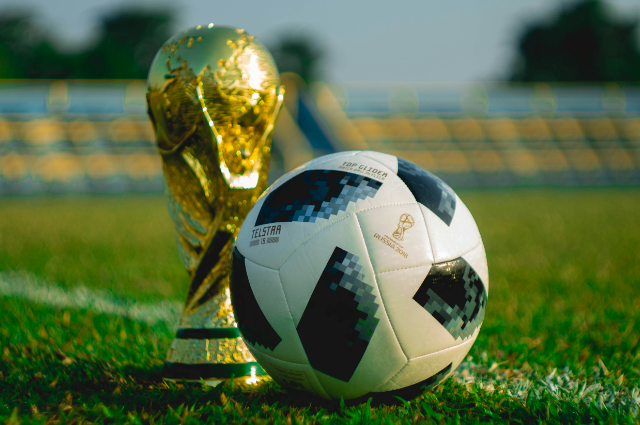
Every four years, the world stops.
Offices fall silent. Classrooms turn restless. Streets glow under giant screens. For a month, borders soften, and languages blend into one shared vocabulary — goals, hope, heartbreak. The FIFA World Cup is not just a tournament; it is the largest sporting spectacle on Earth, a global ritual where billions watch the same ball roll across the same grass at the same moment.
In 2026, that ritual changes shape.
For the first time in history, the competition will expand to 48 teams, transforming the scale, rhythm, and reach of the game. More nations will enter the arena. More anthems will rise before kickoff. More dreams will find a stage. It will not simply be bigger — it will be structurally different.
The stage itself will stretch across three countries: the United States, Canada, and Mexico. Never before has the World Cup been hosted by three nations at once. From the stadium lights of American metropolises to Mexico’s historic football cathedrals and Canada’s emerging arenas, the tournament will unfold across an entire continent. This is logistics at a continental scale — and symbolism at a global scale.
But World Cup 2026 is more than a sporting event. It is a reflection of how power moves in the modern world. It reveals economic ambition, commercial strategy, and the careful crafting of a global image. Beneath the roar of the crowd lies another story — of markets, diplomacy, infrastructure, and soft power.
With the world’s eyes on the tournament, the stage is set for a profound shift. As we move forward, it’s clear that 2026 is not only about tradition, but about transformation — starting with the very fabric of the World Cup itself.
The Expansion to 48 Teams: Inclusion or Strategy? The 2026 tournament will not simply be larger. It will be reengineered.
For decades, the World Cup stood firm at 32 teams — a structure that shaped generations of football history. Now, that framework has been expanded to 48 nations. It is a structural transformation, not a cosmetic adjustment. More matches. More groups. More national flags are rising during the opening ceremonies. In total, 104 matches will be played — turning the tournament into the longest and most commercially expansive edition ever staged.
On paper, the expansion looks like a victory for global inclusion. Africa gains more qualifying spots. Asia sees its representation grow. CONCACAF, as the co-host region, benefits significantly. For many emerging football nations, 2026 represents their first realistic pathway to the global stage. The dream widens. The gate opens.
But inclusion is only one side of the ledger.
With more teams come more broadcast windows. More sponsorship packages. More advertising inventory. More markets are being activated across continents. From a business perspective, expansion multiplies global viewership potential and deepens penetration into developing football economies. It is a strategic growth model — scaling the product to maximise global revenue streams.
So the question emerges: Is this democratisation of the beautiful game? Or is it corporate optimisation wrapped in the language of opportunity?
The competitive impact also deserves attention. Will a larger field dilute quality in the early rounds? Or will it create new narratives — underdog stories, regional rivalries, breakthrough performances that redefine global football geography? With 104 matches spread across a continent, the tournament's rhythm will shift. Player fatigue, squad depth, and scheduling efficiency will become decisive variables.
In 2026, expansion is not just about numbers. It is about direction. It signals how modern football operates — balancing aspiration with economics, emotion with enterprise.
The questions around expansion set the tone for broader conversations. To understand the full impact of World Cup 2026, we turn to another historic change: joint hosting across three countries.
Three Nations, One Stage: Symbolism of Joint Hosting
The 2026 World Cup will make history in another powerful way. For the first time ever, three countries will host the tournament together: the United States, Canada, and Mexico. One event. One trophy. But three nations sharing the spotlight.
This is more than a technical decision. It sends a message.
At a time when borders often dominate political debates, these three North American countries are choosing to cooperate on the world’s biggest sporting stage. They will share stadiums, transportation systems, security plans, and global branding. The tournament will move across cities and borders, but it will feel like one connected experience. It is football acting as a bridge.
Mexico carries deep history into this moment. It has already hosted the World Cup twice before — in 1970 and 1986 — and 2026 will mark its third time. That makes Mexico unique in World Cup history. Its stadiums are not new to global drama; they have witnessed legends. Hosting again reinforces its strong identity as a true football nation.
The United States, meanwhile, stands as the commercial engine of the tournament. With massive stadiums, powerful media networks, and strong corporate sponsorship, it will drive much of the financial force behind the event. The scale of the American sports market guarantees record-breaking revenue and global broadcasting reach.
Canada is emerging as a football market. The sport has grown rapidly there in recent years, especially after the national team’s return to the World Cup in 2022. For Canada, 2026 is not just about hosting matches — it is about building a stronger football culture for the future.
Three nations. Different strengths. Shared ambition.
In 2026, the World Cup will not belong to one country. It will belong to a region — and perhaps that is the clearest sign that football, like the world itself, is becoming more interconnected than ever before.
Stadiums, Infrastructure, and the Political Economy Behind every shining stadium, there is a financial story.
The 2026 tournament will be played across cities in the United States, Canada, and Mexico. Many of the stadiums already exist, especially in the United States, where large NFL arenas will be adapted for football. But “existing” does not mean “cost-free.” Cities are investing heavily in upgrades — improving transport systems, expanding airports, strengthening security, and modernising public spaces. Roads are repaired. Metro lines are extended. Surrounding neighbourhoods are redesigned.
These improvements are often presented as long-term benefits. Governments argue that such investments will boost urban development and leave a positive legacy. Yet public money plays a key role in making it happen. Taxpayers, directly or indirectly, help finance the spectacle.
At the same time, corporate sponsorships power the tournament from above. FIFA operates through a highly centralised revenue model. Broadcasting rights, global sponsors, marketing deals, and licensing agreements generate billions of dollars. The World Cup is not only a sporting event — it is one of the most profitable entertainment products in the world. Major multinational brands attach their names to the tournament, knowing that billions of viewers will be watching.
Tourism is another major promise. Host cities expect hotels to fill, restaurants to overflow, and local businesses to experience a surge in demand. Economic projections often predict billions in short-term revenue and global exposure that could attract future investment. For many cities, the World Cup is seen as a marketing campaign on a global scale.
But the key question remains: who truly benefits?
Governments gain visibility. Corporations gain profits. FIFA secures record revenues. Local businesses may enjoy temporary boosts. Yet critics of past World Cups have shown that the long-term economic impact is often debated. In some previous tournaments, expensive infrastructure became underused after the event ended, and projected financial gains did not fully materialise.
Compared to earlier editions — especially those where new stadiums had to be built from scratch — 2026 may face fewer risks because much of the infrastructure already exists. Still, controversy is never far from global mega-events. Issues of public spending, displacement, and economic inequality always hover in the background.
In the end, the stadium lights shine brightly. But behind that brightness lies a complex economic structure — one where sport, politics, and money are tightly connected.
Soft Power and Global Image Building
A World Cup is never only about football. It is also about image.
When billions of people watch a tournament organised by FIFA, they are not just watching matches. They are watching cities, skylines, cultures, and national symbols. Every camera
angle becomes a message. Every opening ceremony becomes a statement. This is what political scholars call “soft power” — the ability to influence the world not through force, but through attraction.
For the United States, Canada, and Mexico, the 2026 World Cup is a chance to present a shared image: stable, modern, organised, and globally connected. It is an opportunity to show advanced infrastructure, cultural diversity, and economic strength. Hosting such a massive event sends a clear message — this region can handle complexity, cooperation, and global attention.
The media plays a powerful role in shaping this perception. International broadcasters will frame stories about fans, security, technology, and culture. Positive coverage can strengthen a global reputation. Negative narratives — about political tension, social issues, or organisational problems — can also spread quickly. In the age of 24-hour news cycles, images travel fast.
Digital platforms make this influence even stronger. Social media will turn every goal, celebration, and controversy into instant global content. Fans will not only watch the World Cup; they will produce it — posting videos, sharing opinions, creating trends. Platforms like Instagram, X, TikTok, and YouTube will amplify national branding far beyond traditional television.
In today’s connected world, perception is power.
The 2026 World Cup will therefore operate on two fields at once. On the grass, teams will compete for a trophy. Off the grass, nations will compete for respect, influence, and global admiration.
Security, Migration, and Border Realities A tournament across three countries sounds exciting. But it also brings serious challenges.
The 2026 World Cup will take place across 16 host cities in the United States, Canada, and Mexico. This means teams, officials, media workers, and millions of fans will be moving constantly — by air, road, and rail — across international borders. The logistics are massive. Travel schedules must be perfectly coordinated. Airports must handle heavy traffic. Transport systems must work without failure.
Then comes the issue of visas.
Each country has its own immigration rules. Fans from different parts of the world will need permission to enter one, two, or sometimes all three nations. Smooth visa processes will be essential if organisers want true global participation. Any strict or slow system could limit fan mobility and affect the atmosphere of the tournament.
Security is another major concern. With 16 cities involved, police forces, intelligence agencies, and emergency services must coordinate at an unprecedented level. Large crowds, high-profile teams, and global media attention make the event sensitive. Safety planning will cover stadiums, fan zones, hotels, and transport hubs. In modern mega-events, security is as important as the matches themselves.
There is also a deeper contrast.
Football often speaks the language of unity — “one game, one world.” The sport celebrates connection beyond race, religion, and nationality. Yet this tournament will unfold across real political borders, where migration debates and border policies remain serious political issues. The World Cup promotes movement and openness, but the countries hosting it still operate within strict national systems.
This tension makes 2026 unique. It will test whether football can truly rise above borders — or whether the realities of politics and security will quietly shape the experience behind the scenes.
On the field, the ball will move freely. Off the field, movement will require careful planning, policy, and control.
Fans, Identity, and Cultural Power
At its heart, the World Cup belongs to the fans.
Long before kickoff, streets begin to change. Flags appear on balconies. Jerseys fill public squares. Strangers greet each other like old friends. Football becomes a language spoken without translation. When the tournament begins under the banner of FIFA, it is not only teams that compete — identities come alive.
For many people, supporting a national team is more than sport. It is memory. It is family history. It is pride carried across generations.
North America is home to millions of diaspora communities — people whose roots stretch to Latin America, Africa, Europe, and Asia. In cities across the United States, Canada, and Mexico, the World Cup will feel deeply personal. A Moroccan family in Toronto, a Brazilian community in New York, a Nigerian group in Houston — all will bring their colours, songs, and traditions into the public space. The tournament will not just visit these cities; it will awaken them.
Cultural festivals and fan zones will turn urban centres into global villages. Music, food, art, and street celebrations will create an atmosphere far beyond the stadium walls. For many fans, these shared spaces become as meaningful as the matches themselves. The experience of
watching together — laughing, shouting, mourning, celebrating — builds a temporary but powerful sense of unity.
Digital engagement will expand this feeling even further. Supporters will connect through live streams, social media, and online communities. A goal scored in Los Angeles will spark celebrations in Lagos, Buenos Aires, and Seoul within seconds. The fan experience is no longer limited to physical presence; it is global and immediate.
The 2026 World Cup may redefine what it means to attend the tournament. With three host countries, 48 teams, and 104 matches, the scale is larger than ever. The cultural mix will be deeper. The voices will be louder. The identities will be more visible.
In the end, trophies gather dust. But the memory of collective emotion — of standing in a crowd, singing your anthem, feeling part of something bigger — that is the true cultural power of the World Cup.
Challenges and Criticism
Every grand vision carries a shadow.
The 2026 tournament, organised under FIFA, promises scale, spectacle, and record-breaking numbers. But not everyone believes that “bigger” automatically means “better.”
One major concern is commercialisation. Critics argue that the modern World Cup increasingly feels like a global corporate festival rather than a pure sporting celebration. Sponsorship logos dominate stadium walls. Broadcast rights are sold for billions. Kickoff times are often shaped by television markets rather than local fans. The fear is simple: when profit becomes the main driver, the spirit of the game risks becoming secondary.
Environmental impact is another serious issue. A 48-team tournament means more flights, more hotels, more energy consumption, and more waste. Even though the matches will be spread across the United States, Canada, and Mexico — reducing the need for brand-new stadium construction — the overall carbon footprint of a larger event remains significant. In an era of climate awareness, global sporting events face growing pressure to prove they are sustainable, not just spectacular.
Then there is the question of player fatigue. With 104 matches scheduled, the tournament will be longer and more demanding than ever before. Top players already compete in intense domestic leagues and international competitions throughout the year. Adding more matches increases the physical and mental strain. Injuries, burnout, and reduced performance levels are real risks. The calendar is crowded, and athletes are not machines.
So the central question emerges: Is expansion always progress?
Supporters argue that more teams mean more inclusion, more global representation, and more opportunities for emerging football nations. Critics respond that expansion can dilute quality and stretch resources too thin. Both perspectives carry weight.
The 2026 World Cup stands at a crossroads. It promises growth, diversity, and financial strength. Yet it must also answer concerns about balance, sustainability, and integrity. In the pursuit of scale, the tournament must ensure it does not lose the very essence that made the World Cup powerful in the first place.
A Turning Point in Football History
The 2026 World Cup is not just another edition of a famous tournament. It is a structural shift in world football.
With 48 teams, 104 matches, and three host nations — the United States, Canada, and Mexico — this event expands the scale of the game in ways never seen before. Under the leadership of FIFA, the tournament moves into a new phase: larger markets, broader participation, deeper global reach. It is not evolution at the margins. It is a transformation at the core.
More teams mean new voices. More cities mean wider visibility. More investment means stronger commercial structures. The World Cup of 2026 reflects a world that is interconnected, competitive, and commercially driven. It mirrors globalisation itself — where borders still exist, but influence flows across them instantly.
This tournament will reveal how sport, politics, economics, culture, and media now operate together as one ecosystem. Stadiums will host matches, but they will also host narratives about power, identity, cooperation, and ambition. The event becomes a global mirror, showing us who holds influence, who seeks recognition, and how nations project themselves on the international stage.
And then, finally, the noise will fade into a single sound.
When the first whistle blows, the world will not just be watching football. It will be witnessing the future model of global sport — bigger, more connected, more complex.
2026 will not simply crown a champion. It will mark a turning point.