
Kashmir doesn’t arrive all at once. It unfolds—quietly, almost cautiously—through winding roads, guarded checkpoints, and sudden stretches of breathtaking calm. You think you know what to expect. After all, it’s one of the most photographed places in the country. But being there is different. It’s not just beauty—it’s layered, shifting, and at times, unexpectedly personal.
I travelled to Kashmir in October 2024 with Veena World, a small group of five from Pune. What could have easily been just another structured group tour turned into something far more intimate. Maybe it was the size of the group, maybe the pace, or maybe just timing—but everything felt warmer and more connected than I had imagined.
Our tour manager, Chinmay, was young, attentive, and quietly present in a way that didn’t feel forced. There was also another family travelling alongside us—a couple and their son, Ninad—and a parallel group of senior citizens led by another tour manager, Umesh. Somewhere between schedules, shared meals, and long drives, these weren’t just fellow travellers anymore. They became part of the experience itself.
Both the groups in Gulmarg
Srinagar introduced us gently. That evening, we visited Shalimar Bagh. It was spread out, with proper walkways, water channels running through the centre, and sections filled with flowers in full bloom—simple, well-maintained, and not overdone. There was a small waterfall feature where we sat for a bit, the sound of the water steady and loud enough to block everything else around. We walked through the garden at a relaxed pace, just taking it in. Nothing dramatic, but it felt like a good, quiet start to the trip.
Shalimar Bagh- Ninad and me
Dal Lake was exactly what you expect it to be—calm, reflective, almost unreal in its stillness. But what stayed with me wasn’t just the view. It was a small moment during a shikara ride. While most of our group drifted toward the floating shops, I stayed back on the boat with Umesh. We spoke about ordinary things—work, travel, life—but in that quiet setting, the conversation felt deeper than it actually was. Sometimes, it’s not what you say but where you are when you say it.
Dal Lake with the tour managers – Chinmay and Umesh
Kashmir has a way of doing that. It slows conversations down. It makes pauses feel meaningful.
And then there was Pahalgam.
If Kashmir had a heartbeat for me, it was there.
We spent two nights in Pahalgam, and those evenings felt different. It was quiet, but not empty. There was one street I remember clearly—shops on both sides, a proper pavement to walk on, benches placed along the way, and a few quotes written on the walls that you’d just stop and read without thinking too much. The sound of the river flowing behind was constant, the air was cool, and the antique-style lamps lit the path just right—soft, not too bright. At one point, the electricity went off, and for a few seconds, everything went completely dark. Then the hum of generators from a few shops kicked in, breaking that silence. It was simple, but it stayed. It was here that the trip shifted from being just a travel experience to something more introspective.
The streets of Pahalgam
Chinmay and I became friends somewhere along the way. It wasn’t planned or dramatic—it just happened in two quiet walks through Pahalgam that now feel suspended in time. There was something about those walks—the stillness, the cold air, the soft lighting—that made everything feel a little more intense, a little more real.
Looking back now, those same streets feel heavier—especially after the shooting that took place there last year, where a sudden burst of violence disrupted what was otherwise an ordinary day, leaving people shaken in a place known more for its calm than conflict. Incidents like that don’t just pass; they stay in the memory of a place. Recent events have a way of changing how you remember them. What once felt quiet and peaceful now carries a certain weight. And yet, that’s the truth of Kashmir—it holds both. Beauty and tension. Calm and history. Stillness and something constantly moving underneath.
The last few days of the trip settled into a rhythm that felt almost domestic. Mornings started slowly. For three days in a row, Chinmay made coffee for me—simple, small gestures that somehow became significant. Nights ended with television in his room, unwinding after long days of travel. It wasn’t anything grand. If anything, it was fleeting. But sometimes, it’s these brief, unplanned connections that stay with you longer than the places themselves.
A short-lived romance, if you can call it that—but enough to make the entire journey feel different.
Gulmarg was one of our last stops, visually overwhelming in the best way possible—vast stretches, crisp air, and landscapes that don’t seem entirely real. Before the snow, it feels like an endless green meadow framed by pine forests and distant peaks—calm, open, and almost deceptively gentle. Once winter sets in, it transforms into one of India’s most sought-after ski destinations, known for its powder snow and the iconic Gulmarg Gondola, one of the highest cable cars in the world. Most people come here for snow activities—skiing, snowboarding, and the gondola ride—but even without all that, Gulmarg holds its own as a place that shifts dramatically with the seasons.
Gulmarg
But for us, it also brought a moment of fear. My mother didn’t react well to the altitude. Her blood pressure dropped, and she began to feel disoriented. In a place so open and expansive, that sudden vulnerability felt even sharper.
What followed, however, was something I don’t think we will ever forget. We reached out to a family friend who was posted there in the army as a Major. Despite it being a day off, he stepped in immediately—arranging for us to be taken to the base, calling in a doctor, and making sure my mother was stable. What could have turned into a stressful memory became one filled with gratitude. There was care, urgency, and kindness—all in a place that often feels distant and inaccessible.
We were escorted back safely, and perhaps for the first time, the idea of Kashmir being “protected” didn’t feel abstract. It felt real, human, and personal.
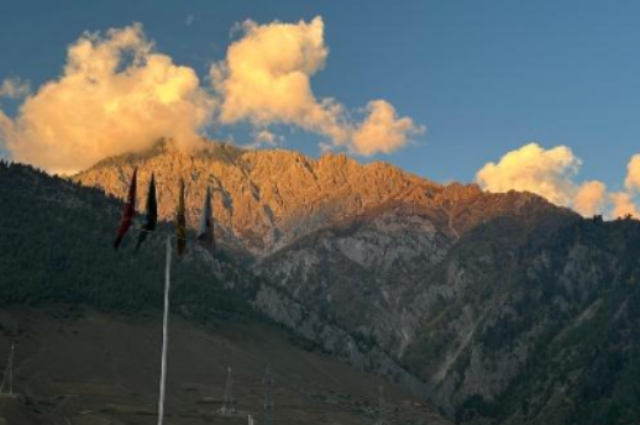
Every destination we visited had its own version of nature. Not repetitive, not predictable. In one place, the hills turned golden under the setting sun. In another, there was ice—sharp, quiet, untouched. Rivers were flowing right behind our hotel, constant and grounding. And then there were the small comforts—hot soup on cold nights, warm food after long days, the kind of simple things you don’t think much about until you’re there.
Kashmir isn’t just about what you see. It’s about what you feel in between.
It’s in the pauses between conversations.
In the silence of a landscape that doesn’t demand attention but holds it anyway.
In the people you meet briefly, but remember clearly.
For me, Kashmir isn’t just Dal Lake or Gulmarg or Pahalgam. It’s a mix of everything—fear and safety, connection and distance, stillness and movement. It’s a place that gave me beauty, yes, but also perspective.
And maybe that’s what makes it unforgettable.