
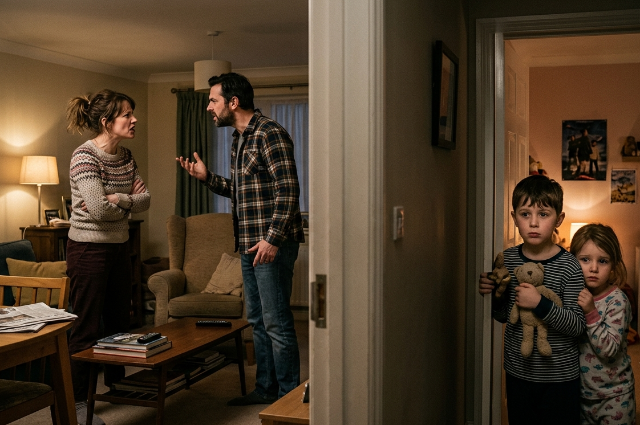
The floorboards in our house didn’t just creak; they warned you. By the time I was seven, I knew the specific high-pitched groan the third plank from the front door made when weight hit it. If that groan happened at 5:30 PM, it meant he was tired. If it happened after midnight, it meant my sister and I needed to be under the bed before the keys even rattled back into his pocket. It is strange what a seven-year-old brain prioritises. I didn’t think about weekends, or toys, or cartoons. I thought about the volume of the television. I thought about how loud my shoelaces clacked against the linoleum when I untied them. I spent most of my second-grade year practising how to breathe without making a sound, drawing air through my nose so slowly that my chest barely rose. That winter, the air inside the house was always thick with a heavy, sour smell; a mix of stale beer, damp carpet, and the copper tang of fear. My mother spent a lot of time looking at the kitchen counter, rubbing a dish towel over the same clean spot until the fabric frayed. Her shoulders were always hiked up to her ears, like she was permanently waiting for a loud noise. The worst nights started with silence. A heavy, suffocating quiet rolled in right after dinner. One Tuesday, I was sitting on the living room rug trying to finish a math worksheet. The assignment was simple: colour the boxes to show fractions. One-half blue, one-half red. My hand was shaking a little because his boots were clicking in the hallway. That was the cadence we dreaded; slow, deliberate, heavy. When he walked into the room, the air pressure seemed to drop. He didn't look at me. He looked at my mother, who was standing by the sink.
"Why isn't the heat on?"
He asked. His voice wasn't loud. That was the trick of it. People think abuse is always shouting, but the quiet, gravelly voice was far more terrifying. It meant he was completely sober enough to know exactly what he was doing. "The bill was higher this month," my mother said softly, her back still to him. "I had to choose between the oil delivery and the groceries. "I kept my eyes locked on my fraction worksheet. Colour three-quarters yellow. My crayon snapped in half under the pressure of my thumb. The sharp crack of the wax felt like a gunshot in the room. I froze, my heart slamming against my ribs like a trapped bird. "Look at me when I'm talking to you," he said. I didn't see the first hit, but I heard it. It was a dull, wet sound, followed by the sharp scrape of the kitchen chair sliding across the linoleum. My mother didn't scream. She never screamed; she just made a small, choked gasp, like she had swallowed a piece of ice. "Get in the room," she whispered, her voice cracking. She wasn't looking at him. She was looking at me. Her left eye was already turning a strange, angry pink. My limbs felt like lead, but the seven-year-old survival instinct is fast. I grabbed my worksheet, my broken crayons, and I ran down the short hallway into the bedroom I shared with my sister. She was already in the closet. She was nine, and she had perfected the art of disappearing. She had cleared a space behind the winter coats, pushing old shoes out of the way to make a nest. I scrambled in next to her and pulled the slatted folding door shut. Through the gaps in the wood, the hallway light cut across our faces in thin, yellow stripes.
We sat there, knees pressed against our chests, listening to the destruction of our kitchen. It always followed a pattern. First came the verbal barrage—names I didn't understand yet but knew were meant to make my mother small. Then came the sound of breaking ceramic. He liked to break plates. The sound of a plate shattering against a wall is incredibly sharp; it rings in your ears long after the pieces hit the floor. My sister reached out and grabbed my hand. Her palms were sweating. She didn't say anything, but she squeezed my fingers so hard it hurt. I welcomed the pain. It gave me something else to focus on besides the heavy thuds vibrating through the floorboards.
Every time a thud happened, I closed my eyes and counted. One, two, three, four. If I could get to sixty, maybe it would stop. It never stopped at sixty. The hardest part about being seven in a house like that is the absolute helplessness. You are too small to fight, too young to run away, and too terrified to call for help because you’ve been told that telling secrets destroys families. So you just sit in the dark, surrounded by the smell of mothballs and dusty coats, wishing you could turn into smoke and float out through the window. The noise lasted for what felt like hours, but according to the glowing face of the plastic Mickey Mouse clock on our nightstand, it was only twenty minutes. Then, the front door slammed. The entire house shook, a final exclamation point to the violence. The silence that followed was different from the silence before. This was a hollow, exhausted quiet. My sister and I didn't move for a long time. We waited to make sure he hadn't just stepped out onto the porch to trick us. When we finally crept out of the closet, the house felt freezing cold. We walked into the kitchen. The yellow linoleum was covered in white shards from our dinner plates, and a puddle of milk was slowly creeping toward the refrigerator. My mother was sitting on the floor, leaning her back against the oven. Her lip was split, and her face looked distorted, but she was sweeping the big pieces of glass into a neat pile with her bare hands. She looked up at us, her eyes dull and swimming with tears she refused to let fall. "Go back to bed," she said, her voice completely flat. "It's over now ."But it wasn't over. It was never really over. Even when the room was clean, the tension stayed in the walls, waiting for the next time the front door plank groaned. That night, I lay under my blanket with my clothes still on, watching the shadows shift on the ceiling, knowing that my childhood had ended somewhere between the kitchen chair sliding and the first plate breaking.