
“Gandhiji, I Have No Homeland”
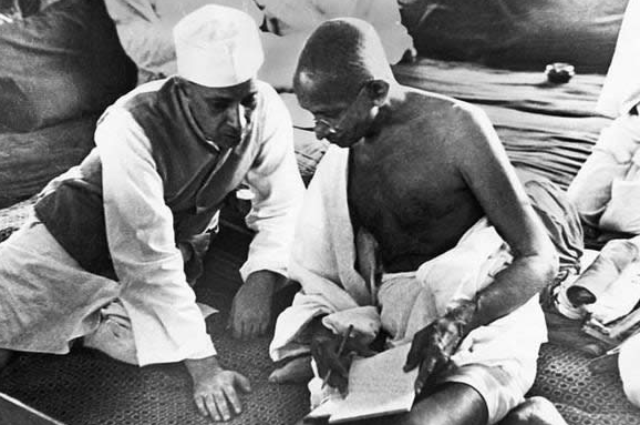
On August 14, 1931, during a tense meeting at Mani Bhavan in Bombay ahead of the Second Round Table Conference, Mahatma Gandhi questioned Dr B.R. Ambedkar about his sharp, persistent criticism of the Indian National Congress and the broader anti-colonial movement. Gandhi suggested that Ambedkar’s unrelenting opposition was harming the unified struggle against British imperial rule. Ambedkar’s reply was immediate, deliberate, and uncompromising:
“Gandhiji, I have no homeland... How can I call this land my own and this religion my own, wherein we are treated worse than cats and dogs, wherein we cannot get water to drink?”
Ambedkar was not merely expressing personal political frustration with the leadership of the Congress party. He was exposing a profound structural contradiction at the very centre of the Indian national project. He was posing a fundamental democratic question: How can a nation demand political freedom from foreign rule while systematically denying basic human dignity, social access, and civic equality to tens of millions of its own citizens?
When we commemorate Gandhi Jayanti, the national narrative naturally focuses on non-violence, anti-colonial resistance, and moral leadership. Yet re-reading this occasion through Ambedkar’s interrogation forces us to confront the complex inner tensions that accompanied the birth of independent India. What does independence mean to a person who is politically free from foreign rule but socially degraded at home?
Gandhi and Ambedkar both dedicated their lives to the upliftment of India's oppressed and marginalised communities, but they differed fundamentally on where justice should begin. Gandhi placed his primary faith in moral transformation, social unity, and reform within the existing social body. Ambedkar placed his primary faith in education, political power, constitutional safeguards, and independent self-representation.
Their debate becomes even more revealing when we examine the positions of both Dalits and Indian Muslims together. Both groups faced real vulnerabilities within majoritarian politics, yet their historical positions, social conditions, and political needs were distinct. Looking at how Gandhi and Ambedkar addressed these two communities provides an essential lens for understanding the promises and unfinished challenges of Indian democracy.
Two Visions of Social Liberation
The intellectual divide between Gandhi and Ambedkar was rooted in two fundamentally different diagnoses of power, society, human nature, and historical change.
Gandhi: Moral Reformation and Organic Integration
For Gandhi, social injustice—including the practice of untouchability—was primarily a moral failure. He viewed it as a deep spiritual sin infecting Hindu society that required penance, self-purification, and a genuine change of heart among upper-caste Hindus. His strategy rested on moral persuasion, constructive village work, the dignity of physical labour, and inter-community reconciliation.
Gandhi sought to reform society from within. He believed that true freedom (Swaraj) could not be created by state laws or institutional power alone, but through an ethical transformation of human consciousness. While he campaigned passionately against untouchability throughout his life, he initially sought to purge it without completely dismantling traditional social structures, believing that village communities could be transformed into peaceful, harmonious, and self-sufficient moral ecosystems.
Ambedkar: Institutional Power and Structural Destruction
Ambedkar rejected the idea that moral appeals, upper-caste repentance, or majoritarian goodwill could undo centuries of systemic oppression. In his famous 1936 treatise, Annihilation of Caste, Ambedkar argued that untouchability was not an accidental flaw or moral aberration of Hindu society, but a direct structural consequence of the caste hierarchy itself.
For Ambedkar, social liberation required:
- The destruction of the caste hierarchy and its religious justifications.
- Rapid urban modernisation and movement away from feudal village environments, which he described as dens of localism and ignorance.
- The mastery of formal academic, legal, and professional education.
- The acquisition of direct political power and statutory, state-backed constitutional rights.
Where Gandhi sought to reform the social body through ethical persuasion, Ambedkar sought to restructure the legal and political institutions that held state power. Their disagreement went far beyond personal style or tactical differences; it was a fundamental debate over whether justice is delivered through the moral conscience of society or guaranteed through the law of the state.
Dalits: Reform or Power?
The debate over Dalit emancipation can be understood through three core pillars: education, social dignity, and political representation.
Education
Gandhi’s educational framework, known as Nai Talim (Basic Education), emphasised vocational training, manual crafts, physical labour, and moral character built within local rural settings. He viewed education as a tool for personal self-reliance, moral discipline, and community integration.
Ambedkar, conversely, viewed higher academic, legal, and professional education as the single most critical tool against social oppression. His iconic call to action—"Educate, Agitate, Organise"—placed intellectual development at the very centre of political resistance. Ambedkar insisted that Dalits must enter universities, master law, economics, and public administration, and build an independent intellectual leadership capable of standing up for their rights within state institutions.
Social Dignity
Gandhi launched extensive nationwide campaigns against untouchability, undertook dedicated tours, promoted temple entry, and established the Harijan Sevak Sangh. He coined the term Harijan (“children of God”) to cultivate moral empathy among upper-caste Hindus and bestow spiritual dignity upon the oppressed.
Ambedkar and subsequent Dalit scholars decisively rejected the term Harijan as paternalistic and patronising. For Ambedkar, dignity was not something to be granted as an act of charity or spiritual pity by upper-caste reformers; it had to be claimed as an inherent constitutional right through assertive public civil rights actions, such as the 1927 Mahad Satyagraha, where Dalits asserted their legal right to draw water from a public tank.
Political Representation
This domain presented the deepest divide between the two leaders. Gandhi favoured an integrated political system where Dalits voted alongside the general Hindu population, believing that ongoing social reform within a unified community would ensure their protection and social inclusion.
Ambedkar argued that in a majority-rules electoral system without specific safeguards, upper-caste majorities would simply elect subservient Dalit candidates who would not voice the genuine demands of their people. His central concern was not merely reserving seats, but who controlled the selection of those representatives. As Ambedkar noted, in a general voting system, the winning candidate would often be the person trusted by the majority, rather than the person chosen by the oppressed group itself.
The Poona Pact: Conscience, Compromise, or Pressure?
The tension between integrated social reform and independent political representation reached a historic crisis in September 1932 over the British government's Ramsay MacDonald Communal Award, which granted separate electorates to the Depressed Classes.
The Historical Facts
- First, the Communal Award granted separate electorates to Dalits, allowing Dalit voters to exclusively elect their own representatives for a set number of legislative seats, alongside voting in general electorates.
- Second, Gandhi, imprisoned at Yerwada Central Jail in Pune, launched a fast unto death against separate electorates for Dalits, while accepting them for religious minorities like Muslims and Sikhs.
- Third, Gandhi argued that separate electorates would permanently separate Dalits from Hindu society, institutionalise untouchability in law, and divide the nation.
- Fourth, Ambedkar strongly opposed Gandhi's fast, maintaining that separate electorates were an essential constitutional mechanism for Dalits to secure genuine, independent political leadership.
- Fifth, as Gandhi's physical health deteriorated rapidly, immense public pressure mounted across India. Faced with the reality that Gandhi's death in prison could trigger widespread violent retaliation against Dalit communities nationwide, Ambedkar signed the Poona Pact on September 24, 1932.
- Sixth, the Pact abandoned separate electorates for Dalits in exchange for a significantly increased number of reserved seats within a joint electorate system, increasing reserved provincial seats from 71 to 148.
The Historical Debates: Moral Authority vs. Political Coercion
Historians and political theorists continue to evaluate the ethical and political dimensions of the Poona Pact through two distinct lenses:
- Defenders of Gandhi view his fast as a deeply principled act of moral conscience aimed at preventing the legal division of Indian society. From this perspective, Gandhi believed separate electorates would remove the moral responsibility of upper-caste Hindus to eradicate untouchability, treating Dalits as a permanently separate political block rather than an integral part of the social fold needing urgent internal reform.
- On the other hand, Ambedkar later characterised the fast as an act of political coercion. In his 1945 work, What Congress and Gandhi Have Done to the Untouchables, Ambedkar argued that he was placed in an impossible position where he was forced to trade away vital political safeguards to save Gandhi's life.
- The Poona Pact remains a profound lesson regarding the dynamics of democratic politics: when one leader's moral conscience becomes another community's political constraint, where does ethical persuasion end and political pressure begin?
And the Muslims? Gandhi's Minority Politics
To fully evaluate how Gandhi and Ambedkar understood representation and minority rights, we must also examine how both leaders approached Indian Muslims—a distinct religious minority navigating majoritarian politics.
Moral Reconciliation and Trust-Building
Gandhi approached the Muslim question through moral reconciliation, inter-religious dialogue, and joint political action. His early support for the Khilafat Movement (1919–1922) was a deliberate moral effort to build trust between Hindus and Muslims by standing with Muslim religious concerns during a time of crisis.
Gandhi consistently maintained that Indian nationalism could never be defined by a Hindu majority. Throughout the escalating communal tensions of the 1930s and 1940s, Gandhi opposed majoritarian chauvinism, insisting that the majority community had a moral obligation to make concessions to reassure the minority. During the horrific violence of Partition in 1947, Gandhi put his own life on the line, travelling to conflict-torn regions like Noakhali, Bihar, and Delhi, using his personal influence and hunger strikes to stop mass violence and protect Muslim lives and property.
The Limitations of the Moral Framework
Despite his personal commitment to Hindu-Muslim unity, Gandhi’s approach relied heavily on personal moral authority, trust-building, and ethical appeals to mutual goodwill. As communal polarisation intensified, moral appeals alone proved vulnerable to political mobs on both sides. Critics noted that while Gandhi's framework produced moments of deep inter-community solidarity, it struggled to establish durable, legal mechanisms that could withstand severe political shocks.
Ambedkar and Muslims: A Constitutional Approach
Ambedkar’s analysis of the Muslim question differed completely from Gandhi’s moral approach. Ambedkar analysed the position of Indian Muslims through a strict institutional, sociological, and constitutional lens.
Institutional Analysis over Moral Goodwill
In his detailed 1940 study, Thoughts on Pakistan (later republished as Pakistan or the Partition of India), Ambedkar conducted a thorough analysis of Muslim political demands, separate electorates, minority safeguards, and majoritarian nationalism.
Unlike Gandhi, who viewed Hindu-Muslim harmony as a matter of "heart-unity," Ambedkar viewed it as a structural problem of constitutional engineering and power balance. He recognised that in a democracy where political voting often aligns with social groups, a permanent numerical majority poses an inherent threat to any minority:
“A democratic form of government, deliberate and political, can easily turn into a majoritarian tyranny if social groups are permanently frozen into majorities and minorities.”
Ambedkar emphasised the necessity of statutory safeguards, weightage, and constitutional checks to ensure that religious minorities were not rendered politically powerless by majoritarian voting blocs.
Comparing Their Core Approaches
When we compare both thinkers directly, their core differences become exceptionally clear across every major domain of social and political life:
- Primary Focus: Gandhi focused on moral reform, social integration, and the internal purification of society. Ambedkar focused on structural rights, political power, and legal protections against hierarchy.
- Untouchability: Gandhi viewed untouchability as a moral sin within Hindu society requiring personal and social transformation. Ambedkar viewed it as a structural oppression inherent to the caste system requiring legal destruction.
- Education: Gandhi advocated for Nai Talim (Basic Education), vocational skills, and character development. Ambedkar advocated for academic excellence, legal training, and intellectual self-reliance.
- Political Representation: Gandhi favoured an integrated electorate within a common national framework. Ambedkar demanded independent representation, separate electorates, and statutory safeguards.
- The Muslim Question: Gandhi emphasised moral reconciliation, trust-building, and inter-faith harmony. Ambedkar emphasised institutional analysis, constitutional safeguards, and structural checks on majorities.
- Minority Security: Gandhi relied on moral appeals to the majority, trust, and ethical obligations. Ambedkar relied on rigid constitutional guarantees, legal rights, and statutory enforcement.
- Core Idea of Justice: Gandhi grounded justice in moral conscience, ethical duty, and community harmony. Ambedkar grounded justice in legal rights, constitutionalism, and structural protection against majoritarian power.
Two Communities, Two Histories, One Democratic Question
A rigorous socio-legal analysis must avoid treating the experiences of Dalits and Indian Muslims as identical. Their historical trajectories, social positions, and political challenges are fundamentally distinct.
Dalits faced centuries of caste-based hereditary exclusion and untouchability operating within the Hindu social fold, demanding the destruction of caste hierarchy and civic equality. Indian Muslims possessed a distinct religious and cultural identity, facing vulnerability as a minority within majoritarian spaces, demanding cultural autonomy and political protection.
The Point of Convergence: Protection Against Majoritarian Power
Despite their distinct histories, Dalits and Muslims converge on a central democratic question: Can a numerical majority adequately represent and protect a vulnerable minority without statutory institutional safeguards?
When evaluated across key dimensions of public life, both communities reveal distinct patterns of historical struggle and ongoing institutional challenges:
- Education: Ambedkar’s intellectual movement catalysed a major revolution in Dalit political consciousness and access to higher education, though social barriers remain. For Indian Muslims, post-independence educational metrics—highlighted in official studies such as the Sachar Committee Report (2006)—reveal persistent educational backwardness, low university enrollment rates, and structural barriers in formal employment sectors.
- Social and Economic Participation: Both groups face distinct forms of economic vulnerability. Dalits continue to navigate caste-based discrimination in land ownership, rural labour markets, and informal employment. Indian Muslims face increasing residential segregation, concentration in informal occupations, and reduced access to formal credit and state resources.
- Political Participation: The system of electoral reservation guarantees Dalit political representation in Parliament and State Assemblies, fulfilling a vital structural requirement, even as debate continues over the independence of reserved representatives. Conversely, Muslim political representation in legislative bodies has shown a steady decline, illustrating the vulnerability of a religious minority operating within general electorates without statutory reservation.
True democratic justice requires designing legal and institutional protections tailored to the specific historical nature of each community's m.
Re-imagining the Republic
Ambedkar’s statement—“Gandhiji, I have no homeland”—remains one of the most vital questions ever posed to Indian democracy: What does a homeland mean to those who are denied dignity, safety, and power within it?
Gandhi answered that India could become a true homeland through moral transformation, voluntary reform, social reconciliation, and a big change of heart. Ambedkar insisted that the oppressed could not afford to make their rights dependent on the conscience of the powerful; they needed education, political representation, legal rights, and constitutional safeguards enforced by state power.
Their debate was profound because both leaders sought human emancipation, but understood its necessary conditions differently. For Gandhi, social change required a moral awakening in society. For Ambedkar, social change required equal power under the law.
The unfinished task of the Indian Republic lies between these two enduring visions: building a society compassionate enough to transform human hearts, but democratic enough not to leave justice to goodwill alone.
References:
- Ambedkar, B. R. Annihilation of Caste: The Annotated Critical Edition. Edited by S. Anand. New Delhi: Navayana, 2014.
- Ambedkar, B. R. Pakistan, or the Partition of India. 2nd ed. Bombay: Thacker and Company, 1945. First published 1940.
- Ambedkar, B. R. What Congress and Gandhi Have Done to the Untouchables. Bombay: Thacker and Company, 1945.
- Gandhi, M. K. An Autobiography: The Story of My Experiments with Truth. Translated by Mahadev Desai. Ahmedabad: Navajivan Publishing House, 1927.
- Government of India. Social, Economic and Educational Status of the Muslim Community of India: A Report (Sachar Committee Report). Cabinet Secretariat, Prime Minister’s Office. New Delhi: Government of India, 2006.
- Keer, Dhananjay. Dr Ambedkar: Life and Mission. Bombay: Popular Prakashan, 1971. First published 1954.
- Rodrigues, Valerian, ed. The Essential Writings of B. R. Ambedkar. New Delhi: Oxford University Press, 2002.
- Zelliot, Eleanor. From Untouchable to Dalit: Essays on the Ambedkar Movement. New Delhi: Manohar Publishers, 1992.