
THE VIDEO FROM NEW YORK
On September 23, 2026, an artificial-intelligence panel at Climate Week NYC was interrupted by student protesters. According to contemporary reporting, one of the protesters was an Indian student who addressed Josh Parker, NVIDIA’s head of sustainability, and spoke about drought affecting his family in India. During the exchange, the protester also attributed 15 million tonnes of carbon dioxide emissions to NVIDIA. These were statements made during a protest, not findings independently established by the article or by the available evidence. The protesters were escorted from the venue after repeatedly interrupting the session.
The exchange lasted moments, but it brought several separate questions into the same public conversation: the environmental footprint of AI, the water and energy requirements of data centres, and the personal experience of people living with water stress. The student’s account of his family’s drought is important as a personal account, but the available reporting does not establish that NVIDIA caused that drought. Likewise, the 15-million-tonne figure should not be treated as NVIDIA’s established emissions total. NVIDIA’s own FY26 sustainability report uses defined Scope 1, Scope 2 and Scope 3 categories, which are discussed separately below. Keeping those distinctions clear is essential when a short, highly personal video is being used as the starting point for a much broader discussion.
Yet dismissing the larger question because one claim cannot be proved would miss what makes the incident worth examining. The student was speaking in New York about a problem he located in India. That is where the story becomes more interesting. India is expanding its artificial-intelligence capacity, building and attracting more data centres, adding computing power and preparing for a technology whose physical requirements are rarely visible to the person using it.
The screen may be in a home in Kerala or an office in Mumbai. The machines answering the request may be hundreds or thousands of kilometres away. Behind them are servers generating heat, cooling systems removing it, electricity networks feeding the facility and, in some designs and locations, water being used as part of that process.
The argument about AI, therefore, is no longer only about algorithms. It is beginning to become an argument about land, electricity and water in the places where the machines actually live.
INDIA IS BUILDING
India’s data-centre industry has changed dramatically in a few years. The Ministry of Electronics and Information Technology said in August 2026 that installed data-centre capacity had grown from about 375 MW in 2020 to approximately 1,575 MW. The government identified Mumbai, Navi Mumbai, Chennai, Hyderabad, Bengaluru, Delhi NCR and Jamnagar among the major locations and said Andhra Pradesh, Madhya Pradesh, Chhattisgarh and West Bengal were emerging as new investment destinations.
The same government statement made an important connection: the rapid growth of artificial intelligence and high-performance computing is increasing demand for data-centre capacity. That expansion is also being supported by public policy. IndiaAI Compute, the government’s cloud-computing initiative, is designed to make GPU-based computing available to researchers, students, startups, MSMEs, academia and industry at subsidised rates. In March 2026, the government said that about 38,231 GPUs had been onboarded through 14 empanelled service providers and data centres under its AI compute framework.
There is nothing unusual about a country wanting the infrastructure needed for a new technology. India has spent decades building telecommunications networks, software services and digital public infrastructure. Artificial intelligence is the next major layer of that technological ambition. But every new layer of infrastructure has a physical cost. A data centre is not an abstract extension of the internet. It is a building with a power connection and a cooling system. It occupies land, draws resources and operates within a particular local environment. The national numbers may describe the scale of the industry, but the environmental consequences are always experienced somewhere specific.
THE CLOUD HAS A PLACE
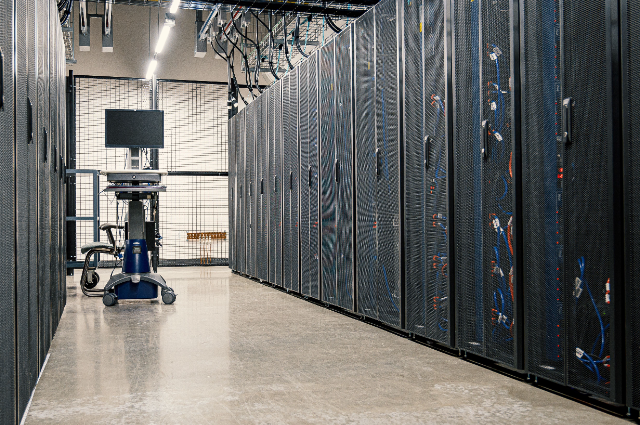
The phrase “cloud computing” has always hidden a physical reality. There is no cloud in the sky carrying our photographs, documents and AI conversations. There are servers housed in buildings, connected by networks and kept within operating temperatures by cooling equipment. The International Energy Agency estimates that servers account for around 60 per cent of electricity consumption in modern data centres on average, while cooling can account for anything from about 7 per cent in efficient hyperscale facilities to more than 30 per cent in less efficient enterprise facilities.
Water adds another layer to the picture. The amount used is not the same at every facility. It depends on the cooling technology, the climate, the design of the building and the source of electricity. Some systems rely heavily on air cooling. Others use water in cooling processes. There is also an indirect water footprint associated with electricity generation and the manufacture of semiconductors.
The IEA estimated global water consumption associated with data centres at around 560 billion litres in 2023 and projected that it could reach around 1.2 trillion litres a year by 2030 in its base case. Those are global estimates, not measurements of India’s data centres, and they should not be transferred mechanically to an Indian facility. What they demonstrate is the scale of a resource question that is becoming difficult to ignore.
For India, the more relevant issue is not a single global number. It is where new computing capacity is being placed and what kind of water system already exists there.
THE MAP CHANGES EVERYTHING
A May 2026 analysis by WRI India provides one of the clearest reasons for looking at the geography of India’s data-centre growth. More than half of the country’s data centres are located in regions classified as water-stressed, WRI India reported. It also found that 75 per cent of the country’s data centres were concentrated in five states: Maharashtra, Tamil Nadu, Karnataka, Telangana and Uttar Pradesh.
The finding does not establish that data centres caused water shortages in those states. Water stress has many causes, including population growth, agriculture, industrial demand, rainfall variability, groundwater depletion and urbanisation. Nor does the presence of a data centre in a water-stressed region automatically mean that its water use is unsustainable. It does, however, make location an important part of the conversation.
Consider the difference between a data centre being built in a region with abundant and reliable water and one being built in an area where households, farms and existing industries already depend on a limited supply. The same quantity of water can have very different consequences in those two places. That is why the debate needs to move beyond the question, “How much water does AI use?”
The more useful question is, “How much water does this facility use, where does that water come from, and what else depends on the same source?”
THE GOVERNMENT'S POSITION
The Indian government has not ignored the issue. It has also not described data centres as a uniform water burden. In a March 2026 Rajya Sabha reply, the Ministry of Electronics and Information Technology said that the water requirement of data centres depends on the cooling technology used. It pointed to direct-to-chip liquid cooling, adiabatic cooling and immersion cooling as technologies being adopted to reduce water use. It also referred to groundwater-extraction guidelines issued by the Ministry of Jal Shakti.
In August, the government again said the industry was adopting newer systems, including closed-loop liquid cooling, and that the Energy Conservation Building Code and Energy Conservation and Sustainable Building Code include provisions relevant to energy efficiency and water conservation. That is an important part of the story because technology can change the environmental profile of a data centre. A facility using a more water-efficient cooling system cannot simply be treated as equivalent to one using a more water-intensive design.
But technology does not remove the need for scrutiny. It makes accurate measurement more important. The public conversation would be stronger if information about water withdrawal, water consumption, recycling, cooling systems and the source of water were consistently available for large facilities, particularly in areas facing significant water stress. Without that information, broad claims about either environmental harm or environmental sustainability are difficult to test.
THE NUMBER THAT MATTERS
The most widely circulated emissions figure from the New York confrontation was the protester’s reference to 15 million tonnes of carbon dioxide attributed to NVIDIA. This article does not present that figure as an established NVIDIA emissions figure. NVIDIA’s FY26 Sustainability Report records 10,390 metric tonnes of market-based Scope 1 and Scope 2 emissions combined, and 10,700,940 metric tonnes of Scope 3 emissions. Scope 3 represents emissions across the company’s wider value chain and should therefore not be described as emissions directly released by NVIDIA’s own facilities. The categories are not interchangeable, and the distinction is important when discussing corporate environmental responsibility.
This distinction is more than accounting language. It changes what the number means. Environmental reporting is particularly vulnerable to large figures being detached from the category in which they were measured. Once separated from their definitions, emissions, water use and energy figures can become ammunition for an argument rather than evidence for one. The environmental footprint of AI is significant enough that it does not need inflated numbers.
There is already a well-documented case to examine. The IEA has reported rapidly growing electricity demand from data centres globally. WRI India has identified the concentration of Indian data centres in water-stressed regions. The Indian government itself has acknowledged that electricity and water are important infrastructure considerations for the sector. The evidence is sufficient. There is no need to make it larger than it is.
NVIDIA AND THE QUESTION
There is also an important distinction between NVIDIA and the data centres that use NVIDIA technology. NVIDIA develops chips, systems and software used in AI computing, but the company does not own or operate every facility in which its technology is deployed. The Government of India states that data centres in the country are mainly developed, owned and operated by private companies, which choose locations based on factors including demand, power availability and business viability. The operator of a particular facility therefore has a central role in decisions about its cooling system, water sourcing and day-to-day resource use. It would be incorrect to attribute the water consumption of every NVIDIA-enabled data centre directly to NVIDIA without facility-specific evidence.
The electricity provider and the regional energy mix also influence the environmental footprint associated with operating a data centre. NVIDIA publishes sustainability information about its own operations and product value chain, while the environmental performance of an individual data centre depends on the operator, location, technology and energy sources involved. Josh Parker, NVIDIA’s head of sustainability, has also discussed the need for greater transparency around the impacts associated with data-centre infrastructure. That position does not resolve the wider environmental debate, but it reinforces why responsibility should be examined at the appropriate level rather than attributed to a technology supplier without evidence about a specific facility.
The company also reports efforts to improve energy efficiency and reduce the environmental footprint of its products and operations. Those statements do not settle the environmental debate. They do, however, make the discussion more useful when placed beside independent evidence rather than presented as a simple contest between a corporation and its critics.
INDIA'S WATER CANNOT BE ABSTRACT
India’s water problems are older than artificial intelligence. Villages have lived through failed monsoons and falling groundwater tables. Cities have rationed supply. Farmers have watched reservoirs decline. Industries have competed for water with agriculture and households. Some parts of the country have too much water at one time of the year and too little at another.
This history matters because the arrival of a new industrial demand does not happen on a blank page. A data centre comes into an existing district, not an empty map. It shares an environmental system with the people who already live there. The significance of its water consumption therefore depends partly on the condition of that system.
This is particularly relevant to cities such as Chennai, Bengaluru, Hyderabad and Mumbai, all of which are important centres of India’s digital economy and have experienced serious questions around water security at different times. The solution is not to declare every data centre a threat. Nor is it to assume that every new facility will have no local effect.
The sensible approach is more demanding: assess the resource before approving the infrastructure, disclose the relevant numbers, use the least water-intensive practical technology, and make local water conditions part of investment and planning decisions rather than treating them as an issue to be considered after construction.
THE ELECTRICITY BEHIND AI
Water is only one side of the infrastructure question. Electricity is the other. In March 2026, the Union government told the Rajya Sabha that electricity demand from data centres was estimated to reach 13.56 GW by 2031–32. The International Energy Agency has also warned that data-centre electricity demand is growing rapidly as AI adoption increases.
India is trying to meet that demand while expanding renewable energy and strengthening the electricity system. An official Climate Week NYC event on September 23, organised by the India Energy & Climate Centre and the Consulate General of India in New York, specifically examined how India could provide round-the-clock clean power as electricity demand from data centres, advanced manufacturing and industry grows.
The connection is important. The environmental footprint of AI cannot be reduced to the water flowing through a cooling system. The source of electricity matters too. So does the efficiency of the hardware. So does the design of the building. So does the number of computing hours being demanded. A more efficient chip can reduce electricity use per unit of computing. A different cooling system can reduce direct water use. Renewable electricity can reduce emissions associated with power generation. Better siting can reduce pressure on a stressed local water system.
None of these measures makes the problem disappear. Together, however, they show why the debate is more complicated than the viral video suggests.
THE PRICE OF DIGITAL GROWTH
India has every reason to pursue artificial intelligence. It can support research, create new industries and improve services in fields ranging from agriculture and healthcare to education and public administration. The IndiaAI programme is explicitly intended to widen access to computing and encourage the development of Indian AI capabilities. The environmental question should therefore not be framed as a demand to choose between technology and nature.
It is a question of what kind of technology infrastructure India wants to build. Previous generations of infrastructure often taught the same lesson. A road is valuable, but its drainage matters. A factory can create employment, but its waste cannot be ignored. A power plant can provide electricity, but the environmental costs of generating it remain part of the calculation.
Data centres belong in the same conversation. Their output may be digital, but their requirements are physical. That is why the phrase “digital economy” can sometimes be misleading. The economy may operate through screens and networks, but it rests on concrete buildings, transmission lines, cooling equipment, fibre cables, semiconductor factories and increasingly sophisticated power systems.
The cloud has no fixed border. Water, however, remains local.
AFTER THE VIRAL MOMENT
The Indian student who confronted NVIDIA did not establish that the company caused his family’s drought, and this article makes no such claim. What the incident did was bring a personal account into a much wider discussion about the physical requirements of AI infrastructure. The emotional force of the encounter explains why it attracted attention, but the larger questions require evidence from data-centre operators, government records, environmental assessments and independent research. The viral moment is therefore a starting point for inquiry, not proof of a particular causal relationship.
India is increasing its data-centre capacity. The government is building access to AI computing. Electricity demand from data centres is expected to rise. WRI India has found that more than half of the country’s data centres are in water-stressed regions. The government says cooling technology is evolving to reduce water requirements. The IEA has shown that the global resource footprint of data centres extends beyond direct cooling to electricity and semiconductor manufacturing.
India’s expansion of data-centre infrastructure can therefore be examined without assuming that digital growth and environmental protection are automatically incompatible. The more useful questions are practical and measurable: where a facility is built, what water source it uses, how much water it requires under normal conditions, how its requirements change during drought, how much water can be recycled, how much electricity it consumes, where that electricity comes from, and what information is publicly available for local communities and regulators to examine. These are questions about individual projects and systems, and they can be answered more reliably through site-specific evidence than through broad claims about AI or any single technology company.
Those are not anti-technology questions. They are infrastructure questions. And they are increasingly Indian questions.
THE GROUND BENEATH THE CLOUD
The most revealing part of the Climate Week confrontation was not the accusation itself, but the distance between the place where it happened and the place invoked by the person making it. New York was the stage. India was the reference point. The AI economy can cross that distance in seconds, but the water, electricity, land and infrastructure that sustain it remain firmly on the ground.
India’s digital future will be measured not only by the GPUs installed, the data centres built or the investments attracted, but by how carefully that growth is rooted in the realities of the places where it takes shape. The cloud may be digital. What holds it up is not. And beneath every cloud, there is ground.