
When Damage Does Not Announce Itself
Disasters are expected to be loud. They arrive with collapsing buildings, sirens, and headlines that demand immediate attention. Environmental disasters, however, rarely behave this way. They do not explode into existence. They seep, accumulate, and normalise themselves over time. By the time their effects become visible, the damage has already embedded itself into water, soil, ecosystems, and human lives.
This is the real story of a river that did not die suddenly. It weakened slowly chemically, biologically, and socially until one summer it could no longer pretend to survive. This article is not about a famous river or a nationally protected ecosystem. It is about an ordinary river flowing through ordinary districts, sustaining ordinary people, and suffering an ordinary fate: neglect.
Grounded in environmental research, pollution control data, legal records, and community experiences, this story examines how environmental collapse is rarely caused by a single act. Instead, it results from repeated choices to ignore warnings, postpone accountability, and accept harm as inevitable. The river did not fail on its own. Human systems failed it first.
A River That Functioned as a Living System
For decades, the river functioned not as a resource but as a living system. It replenished groundwater, regulated local temperature, enriched soil fertility, and supported diverse aquatic life. Seasonal flooding, though inconvenient, was understood as part of its natural cycle. Farmers planted crops around it. Fishermen followed its rhythms. Villages evolved with their flow.
The river carried memory. Its bends responded to rainfall patterns, vegetation density, and sediment load. Its banks filtered runoff naturally. Long before pollution parameters existed, balance was maintained through ecological interaction rather than regulation.
What the river lacked was political importance. It was not sacred enough to protect, not large enough to monitor aggressively, and not visible enough to matter.
Industrial Growth Without Environmental Exit Planning
In the late 1990s and early 2000s, industrial development expanded upstream. Textile dyeing units, chemical processors, metal workshops, and small manufacturing plants emerged rapidly. Employment increased. Migration followed. Economic optimism replaced agrarian uncertainty.
Environmental Impact Assessments were conducted as legally required. Effluent Treatment Plants were installed. Pollution Control Board approvals were granted.
On paper, compliance was complete.
Oversight was weak. Inspections were predictable. Monitoring systems relied heavily on self-reporting. Untreated effluents were often released at night or during monsoon seasons when dilution concealed contamination.
The river absorbed industrial waste quietly, without protest.
The Science of Invisible Degradation
Pollution does not always announce itself visually. Early damage is biochemical. Between 2003 and 2012, multiple studies recorded rising Biological Oxygen Demand (BOD) and Chemical Oxygen Demand (COD) levels in the river. These indicators measure the oxygen required to break down organic and chemical pollutants. Elevated values signify declining capacity to support life.
Sediment analysis revealed the presence of heavy metals such as chromium, lead, and cadmium, elements known for their toxicity and persistence. These metals accumulate in riverbeds, enter aquatic organisms, contaminate crops irrigated with polluted water, and eventually reach human bodies.
The data existed. It was documented, filed, and archived.
Action did not follow.
When Illness Becomes Normalised
Communities downstream noticed subtle changes long before official recognition. Fish populations declined steadily. Skin rashes became common among those bathing in the river. Livestock developed unexplained illnesses. Borewell water acquired metallic tastes.
Local healthcare systems treated symptoms independently. Gastrointestinal disorders, dermatological conditions, and respiratory issues were addressed as isolated cases. No systemic environmental link was publicly acknowledged.
Illness became routine. When suffering progresses slowly, it becomes invisible.
Economic Dependency and Enforced Silence
Many families depended on nearby industries for income. Speaking against pollution felt dangerous. Complaints were filed anonymously or withdrawn. Employment security outweighed environmental concern.
Environmental sociology identifies this pattern clearly: communities most affected by industrial pollution are often the least able to protest due to economic vulnerability. Harm becomes an accepted cost of survival.
Silence, in this context, was not consent. It was coercion masked as choice.
Data Without Accountability
Between 2005 and 2015, multiple water quality assessments classified several stretches of the river as critically polluted. According to Central Pollution Control Board standards, water quality in certain zones fell below levels suitable even for agricultural use.
The information was publicly available.
Governance failed due to fragmented responsibility. Pollution Control Boards monitored. District administrations licensed. Industries self-reported. No authority addressed cumulative impact.
Environmental collapse occurred through administrative diffusion.
Psychological Distance from Environmental Harm
Environmental damage often feels abstract until it becomes personal. The river’s deterioration did not provoke immediate outrage because its consequences were unevenly distributed. Urban beneficiaries remained insulated. Rural communities bore the cost.
Psychological research shows humans respond more urgently to immediate threats than to slow systemic decline. This cognitive bias allowed neglect to continue unchallenged.
The river’s suffering did not scream. It seeped.
The Summer the Illusion Collapsed
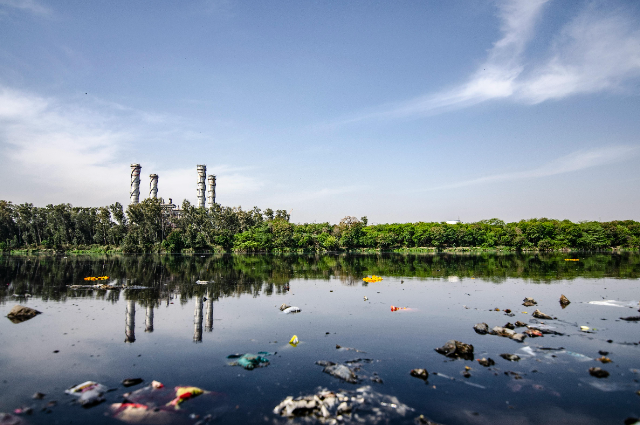
In the summer of 2016, water levels dropped sharply. High temperatures reduced dilution. Within days, thousands of dead fish surfaced. The water turned dark and foul-smelling. Livestock refused to drink from it. Children developed acute illnesses after contact.
What had long been invisible became undeniable.
Local media reported the incident. Images circulated. Activists arrived. National attention followed.
The river had spoken back.
Emergency Responses and Performative Action
Authorities reacted swiftly visibly, if not effectively. Factories were temporarily shut. Committees were formed. Notices were issued. Water tankers were deployed.
But environmental damage does not reverse on command.
Scientific assessments confirmed extensive sediment contamination. Aquatic ecosystems had collapsed entirely in certain stretches. Groundwater contamination extended beyond riverbanks.
Emergency responses addressed optics, not outcomes.
Legal Intervention Without Ecological Recovery
Public Interest Litigations reached the environmental courts. Industries were fined. Compliance deadlines were mandated.
Legal accountability addressed violation, not restoration.
Environmental law remains reactive. It penalises after damage rather than preventing it. Restoration requires long-term investment, ecological expertise, and political will resources that remained insufficient.
The river remained biologically dead in parts for years afterwards.
Human Lives Altered Permanently
Fishing communities' livelihoods are lost without compensation. Agricultural yields declined due to contaminated irrigation. Medical expenses increased, deepening cycles of poverty.
Environmental collapse disproportionately affects those least able to adapt.
This is not collateral damage. It is structural injustice.
Crossing the Irreversibility Threshold
Environmental science identifies tipping points beyond which recovery becomes improbable. Once heavy metals bind to sediments, removal becomes technically complex and economically prohibitive.
The river crossed that threshold.
Even if pollution ceased entirely, recovery would require decades.
Why Early Warnings Failed
This was not ignorance. It was prioritisation.
Short-term economic growth overshadowed long-term ecological stability. Political incentives favoured visible development over invisible preservation.
Environmental harm was tolerated because consequences were delayed.
Until they arrived.
A Pattern Repeated Across the Nation
This story mirrors countless others across India, from industrial belts to mining zones to urban rivers. The pattern repeats: delayed action, fragmented responsibility, irreversible damage.
Real stories reveal systemic failure, not isolated accidents.
Community Awakening After Loss
Only after the collapse did citizen action intensify. Youth groups began monitoring water quality. Awareness campaigns emerged. Scientific collaborations were sought.
But restoration costs far exceeded prevention.
Environmental justice delayed is justice denied.
Rethinking the Meaning of Development
Economic growth that externalises environmental cost is not growth; it is debt. Nature eventually collects, with interest.
Sustainable development must integrate accountability, transparency, and enforcement. Without these, progress becomes an illusion.
Listening Before Silence Becomes Permanent
The river did not fail.
Human systems failed it.
Real environmental stories are not warnings of the future. They are records of ignored presents. They document what happens when data is dismissed, suffering is normalised, and silence is mistaken for stability.
If societies continue treating natural systems as expendable, more rivers will speak back.
And fewer will survive long enough to be heard.