
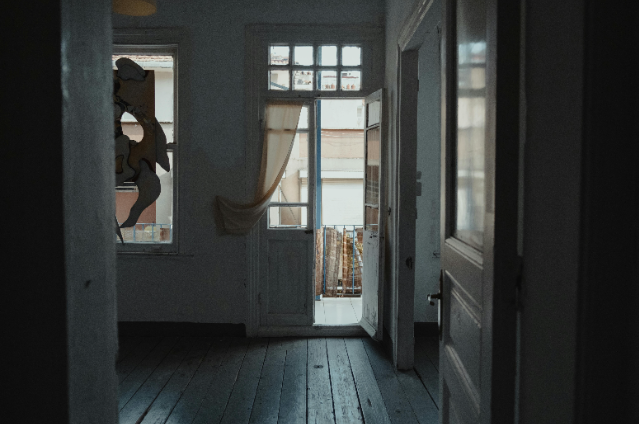
A reflection on how silence and denial allow sexual violence within families to persist—and why truth is the beginning of safety.
The Walls That Hide
Home is supposed to be the first word that means safety.
It’s where we learn to laugh without watching our back, where we’re told that love is automatic and unconditional. Yet for too many people, that promise breaks long before they even understand what safety means.
I used to think danger had a shape—a stranger, a dark street, a warning whispered by someone older. But danger can wear a familiar face. It can share meals with you, ask about your grades, or tell you to smile more. It can sit in the same room while pretending nothing is wrong.
That’s the cruelty of abuse within families—it hides behind the illusion of protection.
You’re taught to trust, to obey, to respect your elders. You’re not taught what to do when the hands that hold you start to hurt you.
And even if you sense that something is wrong, the language for it rarely exists in households where “good families don’t have such problems.”
Over the years, I’ve met people—women, men, and those who don’t fit either label—who’ve whispered stories that sound heartbreakingly alike. Each one starts with disbelief and ends with silence. They talk about the confusion of being hurt by someone they were supposed to love. They talk about how the silence around them made them question whether what happened counted.
The National Crime Records Bureau (NCRB) data confirms what so many survivors already know: most sexual assaults are committed not by strangers, but by people the victim knows. The World Health Organisation estimates that one in five women and one in thirteen men globally experience sexual abuse before age eighteen, most often within familiar spaces. Yet, statistics can’t capture the ache of betrayal—the kind that makes every wall in your home feel like it’s listening.
Writing this isn’t about reopening wounds; it’s about exposing how ordinary this horror has become. Abuse doesn’t thrive on evil alone—it survives on silence. On cultural obedience that tells children to stay quiet. On the fear that speaking out will ruin families instead of saving them.
But silence doesn’t preserve families. It fractures them in secret.
And every time one person breaks that silence, it doesn’t just heal them—it begins to heal the culture that raised them.
Maybe the real work of reform isn’t in laws alone—it’s in unlearning the idea that protecting reputation is more important than protecting a person.
The Reality We Don’t Want to See
It’s easier to believe that monsters live far away.
That if you lock your doors and walk home early, you’ll be safe.
But the truth is, the most dangerous people are often the ones who already have the keys.
Every country has its numbers, and they’re all devastatingly similar. The UNICEF Global Report on Violence Against Children (2023) found that over 80% of child survivors worldwide knew their abuser personally. In India, recent cases under the POCSO Act revealed that in more than half of them, the accused was a relative or close acquaintance. The National Family Health Survey (NFHS-5) noted that while thousands of women reported sexual violence, most said the perpetrator was not a stranger but someone they trusted.
Behind every statistic is a face we could recognise — a classmate, a cousin, a colleague. And behind each face, a system that prefers silence to discomfort.
In middle-class homes, abuse hides behind politeness. “Don’t talk about such things.”
In poor households, it hides behind dependence. “We can’t afford to make trouble.”
In wealthy families, it hides behind pride. “People like us don’t have these problems.” Different excuses, same silence.
The cost of that silence is immeasurable. Survivors grow up doubting their own memories, learning to minimise what happened: It wasn’t that bad. Maybe I misunderstood. Maybe it was my fault.
That self-doubt isn’t accidental — it’s taught. Families often react to a confession not with comfort, but with denial. “He didn’t mean it,” they say. “Don’t ruin his life.” “Be strong and forget.”
For boys and men, the silence is even heavier. Society still treats male vulnerability like weakness, and male victims are rarely believed. I’ve watched friends who were hurt as children laugh it off decades later, still calling it a “weird experience” instead of what it was. They were never told they could name it, let alone heal from it.
This isn’t a woman’s problem or a man’s problem — it’s a cultural problem.
We built families on obedience instead of empathy, hierarchy instead of honesty.
We taught children to respect authority more than they respected themselves.
And in doing so, we gave abusers power and victims guilt.
Some people say, “Things are changing.” And yes, there are new laws, new campaigns, louder conversations. But law can only reach where culture allows it. It can punish an act; it can’t repair a mindset that still measures a family’s honour by how well it hides its pain.
When someone finally speaks out, they aren’t just telling their story — they’re breaking generations of learned silence. They’re saying, No more pretending. They’re refusing to let shame change address from the abuser to the abused.
The first time I heard a friend talk about their experience — a boy who’d been assaulted by a cousin — I remember the look in his eyes when he said, “I thought it only happened to girls.” That sentence has stayed with me. Because behind it was the weight of a world that told him his pain didn’t fit the narrative.
We can do better.
We can start by changing the stories we tell our children.
We can teach them that boundaries are not disrespect. That “no” is sacred. That love is supposed to feel safe, never secret.
When we say protect family values, maybe we should remember that safety and truth are the highest values a family can hold.
Every time a survivor chooses to speak, something shifts. The silence that once protected the abuser begins to crumble, and in its place grows something radical — accountability.
And accountability is love in its most honest form.
Because real love doesn’t hide the truth. It faces it.
A real family doesn’t silence pain. It listens, it believes, and it begins again.
Why Silence Persists
Silence is rarely empty—it’s heavy, calculated, inherited. It passes down like an heirloom we never asked for.
In most families, silence begins with love. Or rather, what we’ve been taught to call love. We’re raised to protect the ones who feed us, to forgive the ones who raise their voice, to keep family secrets because “outsiders won’t understand.” When that teaching collides with betrayal, the result is confusion so thick that words can’t get through it.
I’ve learned that people don’t stay quiet because they want to; they stay quiet because they’re afraid of losing what little sense of belonging they have left. Breaking the silence means challenging the hierarchy that defines home—the older over the younger, the male over the female, the powerful over the dependent. In cultures built on obedience, speaking up feels like rebellion. And rebellion, especially within the family, is treated as betrayal.
Then there’s the fear of blame. Victims are asked what they were wearing, how they behaved, and whether they misunderstood affection. Instead of asking why it happened, society asks why you didn’t stop it. That question alone keeps thousands of people quiet for years.
Silence also comes from exhaustion. It takes enormous strength to tell a story you’ve spent years trying to forget. Many survivors test the water by sharing fragments—watching to see if someone will believe them. Too often, they’re met with disbelief, pity, or worse, the demand to “move on.” So they stop talking.
And sometimes silence isn’t just personal—it’s structural.
When schools don’t include consent education, when workplaces don’t train people to respond to disclosure, when media stories sensationalise instead of empathise, the message is clear: your pain is entertainment, not evidence.
But silence has another face—the silence of bystanders. The friend who suspects but never asks. The relative who notices something odd but decides it’s “none of their business.” Every unspoken word gives the abuser another day of freedom and the survivor another night of doubt.
We often think breaking the silence means shouting, but sometimes it starts smaller—with the courage to name what happened, even privately. With the decision to listen without judgment when someone else does. By asking uncomfortable questions instead of accepting convenient lies.
The moment one person chooses truth over reputation, the pattern weakens. The myth that families must stay flawless begins to unravel, thread by thread.
Silence may protect families from gossip, but truth protects people from harm. And the more we choose truth, the less power shame has to shape our stories.
The Psychological Echo
What happens after silence breaks is not always relief. Sometimes it’s just… quiet again, but a different kind — the kind that hums inside your head long after the noise has stopped.
Abuse doesn’t end when the act stops; it lingers in the body like a language it didn’t choose to learn. You start noticing how certain sounds, smells, or phrases feel sharper than they should. A door creaks. A raised voice. A certain time of day. Your body remembers what your mind tried to forget.
That’s what trauma really is — memory that refuses to obey time. It’s not weakness; it’s your mind’s way of protecting you, even when it feels like punishment. Survivors often live with anxiety, guilt, insomnia, dissociation — things they can’t quite explain to anyone who hasn’t lived inside that fog.
And yet, what hurts most isn’t always the memory of the act — it’s the betrayal that came with it. The feeling that love turned predatory. That safety was a lie. That the world looked away. It’s the echo of being told to stay silent, to protect the person who caused the pain. It rewires the way you trust, love, and even perceive yourself.
I’ve heard survivors describe it in different ways — one said it feels like “living in a house with invisible cracks.” Another said, “It’s like everyone else got a map of life, and mine’s torn in the middle.”
It’s grief for something you can’t name — the loss of an unbroken childhood, the loss of uncomplicated love, the loss of believing that home meant safe.
The sad truth is that trauma doesn’t just shape individuals; it echoes through generations. A child grows up watching their parent hide pain and learns that silence is survival. Another learns to mistrust affection because it once came with danger. Without healing, pain becomes an inheritance.
But the same way trauma travels through generations, so can healing. It begins the moment someone says, “It wasn’t your fault.” Or “I believe you.” It grows every time a teacher talks about boundaries, every time a parent listens instead of scolds, every time a survivor learns to breathe without shame.
Therapy, awareness campaigns, survivor support groups — these are not luxuries. They’re lifelines. And they work. Neuropsychology now shows that trauma can be rewired; with consistent care, the brain can form new associations, new safety pathways. The body learns that touch can mean comfort again. That love doesn’t always hurt.
But healing doesn’t mean forgetting. It means remembering without breaking. It means saying, “It happened, and it doesn’t own me anymore.”
For many survivors, speaking out is the first act of reclamation. For others, healing happens quietly — through art, writing, prayer, therapy, or simply choosing to keep living. There’s no single path, only forward motion in whatever form feels possible.
If trauma teaches us fear, then healing teaches us power — not the power to erase the past, but the power to walk through it and still choose light.
Because every survivor who heals changes the blueprint.
They prove that the cycle can end with them.
The Path Toward Healing and Prevention
Healing begins when a secret meets sunlight. It’s rarely easy, never tidy, but it’s the only way forward. For every person who chooses to speak, there’s another still trapped between fear and loyalty, wondering if the world will believe them. The answer to that question decides whether silence wins again.
That’s why listening is the first step of prevention. Believing survivors—without interrogation, without judgment—creates the safety that families failed to give. When someone speaks, they’re not demanding pity; they’re testing whether the world has changed enough to hold them. The least we can do is hold steady.
Education matters just as much. Real safety doesn’t start with security cameras or warning posters; it starts with conversation. Schools that teach consent, personal boundaries, and safe-touch awareness build generations that can recognise danger before it becomes trauma. Countries that make such lessons mandatory have already seen abuse reporting rise and long-term violence fall.
Families, too, need to relearn what love means. Love that hides truth is not love—it’s fear wearing tradition’s mask. Parents who model open communication teach children that respect isn’t silence; it’s honesty. Asking difficult questions about trust and safety should be as normal as asking about grades.
Communities can support healing by building accessible mental-health spaces—trained counsellors in schools, survivor networks, and helplines that answer with empathy instead of bureaucracy. In India, initiatives like Childline 1098 and NGO programs such as Rahi Foundation and Arpan have shown that sustained outreach and trauma-informed counselling can turn fear into recovery. These are not abstract policies; they’re the difference between someone giving up and someone beginning again.
The law has its place too. Acts like POCSO and The Criminal Law (Amendment) Act 2013 exist to protect, but they work only when communities use them. Reporting abuse shouldn’t feel like betrayal; it should feel like protection. Police and judicial systems need consistent sensitivity training so that survivors aren’t retraumatised while seeking justice.
Yet no reform will last unless culture evolves. Healing is deeply personal, but prevention is collective. It happens when neighbours speak up, when friends refuse to stay neutral, when social media campaigns move beyond hashtags and into real conversations at home.
Change starts small: a teacher noticing discomfort in a child’s eyes, a friend refusing to laugh off an inappropriate joke, a parent teaching that apologies must be followed by accountability. Each small act builds a world where respect is reflex, not rarity.
And maybe that’s the real hope—that one day, home will mean safety again. Not because danger vanished, but because truth finally became welcome at the dinner table.
Healing is slow work, but it’s also contagious. When one person chooses truth over silence, others find their voice. When one family chooses accountability over denial, the pattern weakens. The echoes of pain begin to fade, replaced by something quieter and steadier—trust rebuilding itself, one honest word at a time.
The real story we need to hear
Every society has its forbidden rooms—the topics we walk past quietly so the walls don’t echo back at us.
Abuse within families is one of those rooms. Everyone knows it’s there, but opening the door means shattering the myth that all families are safe. Yet, until we open it, nothing inside can breathe.
The real story isn’t about monsters. It’s about ordinary people in ordinary homes where safety turned conditional. It’s about how shame grows faster than compassion, and how silence feeds it. It’s about the boys who learned that crying makes them weak, the girls who were told to stay quiet for the family’s sake, and the adults who carry both of those lessons into parenthood.
But it’s also about resistance—the quiet kind that starts with one person refusing to stay invisible. Every survivor who speaks, writes, seeks therapy, or simply refuses to let guilt live rent-free in their mind becomes a small revolution. Healing may not make headlines, but it rewrites history one household at a time.
When I think about the phrase “family values,” I imagine something different now. Not obedience or reputation, but kindness that leaves no one afraid of their own home. The measure of a good family isn’t how perfect it looks from the outside—it’s how safe it feels on the inside.
The real story we need to hear is that abuse does not define a person’s worth; silence does not protect anyone; and love, in its truest form, is accountability.
If we can make those truths louder than the fear that hides them, maybe the next generation will grow up knowing that safety isn’t a privilege—it’s a promise.
Because change doesn’t come from strangers fixing the world.
It starts right here, in our homes, with the courage to listen, to believe, and to begin again.