
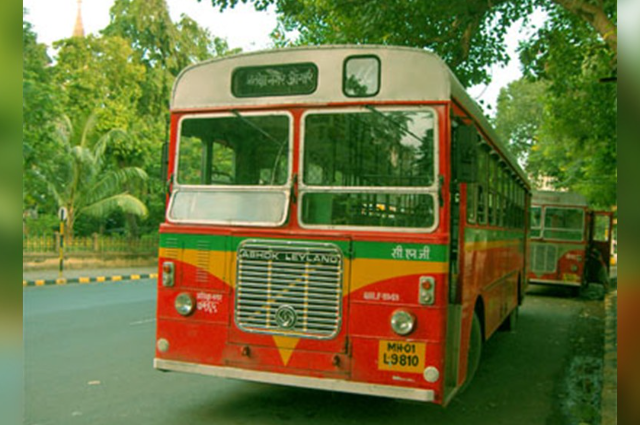
Suppose you wake early in the morning on the first day of your work. You go to the bathroom and freshen up. Then, you get ready, have your breakfast and rush but you realise that your car is not in a working condition and then you go looking for the options of public transport like rickshaw or taxi but they charge you a lot, Finally, there is a ray of hope when you find a bus stop near your house and see that there is a bus going towards the area in which your office is located. The bus arrives, and then you get in, grab a seat, and take a ticket. The bus is going at a normal speed, but then it suddenly breaks down midway, and here comes the biggest problem. You are early but late due to the bus breaking down, and you don’t find any other way to reach the office because even if you take a shortcut and go, it will also be of no use. You are very tense and uncertain about losing your first job, and don’t know what is going to happen next, but then, to whom would you blame for this situation of yours? The bus driver, you, or your fate. There is no answer to this question, but B.E.S.T, also known as Brihanmumbai Electric & Supply Transport, is the 2nd public transport lifeline of Mumbai after local trains. Travelling in these buses is a necessity for every Mumbaikar, whether they are travelling for work, education, or leisure, as they provide affordable and accessible transportation. However, in recent years, issues such as road accidents, overcrowding, traffic congestion, financial losses, poor maintenance, and operational inefficiencies have raised serious concerns about passenger safety and service quality. These problems have sparked a debate on whether B.E.S.T buses continue to be the lifeline of Mumbai or have become a threat to the city’s public transport system. This paper argues that while B.E.S.T buses remain an essential component of Mumbai’s transportation network, urgent reforms in safety measures, management, infrastructure, and modernisation are necessary to ensure they serve the public effectively rather than becoming a source of danger and inconvenience.
History
Going back in the history of B.E.S.T, it dates back to the period of British rule in India. The concept of introducing a large-scale public transport system in Bombay was first proposed in 1865 by an American company that sought permission to operate a horse-drawn tramway service in the city. Although the company was granted a licence, the project could not be implemented because Bombay was facing an economic downturn after the end of the American Civil War. During the war, the city experienced rapid economic growth by exporting cotton and textile products to international markets. However, with the collapse of this boom, the proposed tramway project lost support, and the tender was eventually withdrawn in 1871. The Bombay Tramway Company Limited (BTC) was officially established in 1873. Following an agreement between BTC, the municipal authorities, and the firms Stearns and Kitteredge, the Bombay Presidency passed the Bombay Tramways Act of 1874, granting the company permission to operate a horse-drawn tram service within the city. On 9 May 1874, Bombay witnessed its first horse-drawn tram running on the Colaba to Pydhonie route through Crawford Market, while another route connected Bori Bunder to Pydhonie via Kalbadevi. The original fare was fixed at three annas (15 paise), and tickets were not issued during the early days of operation. As the tram service gained popularity among the public, the fare was later reduced to two annas (10 paise). By the end of the same year, tickets were introduced to prevent the growing problem of passengers travelling without payment. At the time of its launch, Stearns and Kittredge reportedly maintained around 900 horses to support the tram operations.
In 1882, the Bombay municipality signed an agreement with the Eastern Electric Light and Power Company to introduce electric lighting at Crawford Market and on selected roads in the city. However, the company went into liquidation the following year, forcing the market to return to gas lighting. In 1899, BTC proposed the introduction of electrically operated trams and requested permission from the municipality. Since electrification required heavy investment, the company suggested that the Bombay Municipal Corporation (BMC) waive its legal right to take over the tramways in 1901 under the Bombay Tramways Act. Instead, the BMC decided to acquire the company itself, although the move led to several legal complications. Later, in 1904, the British Electric Traction Company applied for a licence to supply electricity to Bombay, with the Brush Electrical Engineering Company acting as its agent. On 31 July 1905, the “Bombay Electric License” was officially granted through an agreement signed by BTC, the Bombay municipality, and the Brush Electrical Company.
In 1905, the Bombay Electric Supply & Tramway Company Limited (BEST) was established and received exclusive rights to provide electricity and operate electric tram services in Bombay. The company acquired the assets of the Bombay Tramway Company for ₹98.5 lakh. Two years later, in 1907, Bombay introduced its first electric tram, marking a major advancement in the city’s public transport system. During the same year, a steam-powered generator with a capacity of 4,300 kilowatts was set up at Wari Bunder to support the growing electricity demand. By 1916, the Tata Power group began supplying power, and by 1925, the entire responsibility for power generation had been transferred to Tata.
As Bombay’s population and traffic increased over the years, rush-hour congestion became a serious challenge. To manage the growing number of passengers, double-decker trams were introduced in September 1920. Around the same period, the company also explored the possibility of launching a motorised bus service. Although concerns were raised because of the high accident rates associated with similar services in London, the company eventually approved the idea on 10 February 1926. Bombay’s first bus service was launched on 15 July 1926, operating between the Afghan Church and Crawford Market.
Despite strong protests from taxi operators, the bus service quickly gained public acceptance and carried nearly 600,000 passengers within its first year. By the following year, passenger numbers had increased dramatically to 3.8 million. Responding to requests from the government and the Bombay Municipal Corporation, BEST expanded its services to the northern parts of the city in 1934.
However, the company also faced several difficulties during this period. The Indian freedom movement, which promoted nonviolent protests and civil disobedience, often disrupted transport services and caused major financial losses in 1929. The situation became even worse during the Great Depression, which severely affected the company’s stability. To survive economically, BEST introduced discounted fares on shorter routes and further expanded its services to the northern suburbs of Bombay. In 1937, the introduction of double-decker buses became highly successful and soon emerged as a popular feature of the city’s transport system.
Under the provisions of the concession agreement granted to the Bombay Electric Supply and Tramways Company Limited, the Bombay Municipal Corporation (BMC) officially took over the company’s assets on 7 August 1947. This included the operation of tram services and the distribution of electricity in Bombay as an active and functioning enterprise. Through mutual agreement, the corporation also assumed control of the bus services previously managed by the company. Following this transition, the organisation was renamed the Bombay Electric Supply & Transport (BEST) undertaking.
As BEST expanded over the following decade, its fleet size grew significantly from 242 buses to 582 buses. In 1949, the organisation acquired the Bandra Bus Company, which had been operating services in Bombay’s suburban areas. Technological improvements also became a major focus for the undertaking. In 1951, the electricity division shifted from direct current (DC) to the more efficient alternating current (AC) system. BEST further expanded its transport operations into the eastern suburbs in 1955.
During the same period, BEST sought legal action against private bus operators, demanding exclusive rights to operate bus services in Greater Bombay. The legal battle continued for nearly four years before the Supreme Court of India ruled in favour of BEST, granting it a monopoly over bus transportation in the region. However, rising operational expenses and declining public support eventually forced the organisation to discontinue its historic tram services in 1964. By 1961, BEST had expanded its operations significantly, with its bus fleet surpassing 1,000 vehicles and supported by a growing network of bus depots across the city. Twenty years later, in 1981, the organisation achieved another major milestone, as BEST buses handled approximately 42.95 lakh one-way passenger journeys, reflecting their crucial role in Mumbai’s public transport system.
BEST continued modernising its services in the decades that followed. In 1974, it became the first organisation in India to introduce computerised billing systems. One of the most prominent chairmen of BEST during the 1970s was Kisan Mehta, who was widely recognised for his contributions to social activism and public welfare initiatives.
Later, in 1994, electronic meters were introduced to replace the older and less accurate electricity meters. After the city officially changed its name from Bombay to Mumbai in 1995, the undertaking adopted the new name Brihanmumbai Electric Supply & Transport (BEST). In the years that followed, BEST modernised its fleet by gradually replacing older buses with newer vehicles that met Euro III emission standards, in accordance with directives issued by the Supreme Court. A significant technological milestone was achieved on 19 November 2004, when passengers travelling on Route SPL 8 between Churchgate and the World Trade Centre were able to use cashless smart cards for automated fare payment, marking the introduction of electronic fare collection on BEST buses.
The BEST Transport Museum, presently housed at the Anik Bus Depot in Wadala, serves as a valuable repository of Mumbai’s public transport heritage. Originally established at the Kurla Depot in 1984, the museum was relocated to its current premises at Anik Depot in 1993 to accommodate its growing collection and historical exhibits.
Situated in a relatively lesser-known part of the city, the museum chronicles the remarkable journey of the Brihanmumbai Electric Supply and Transport (BEST) undertaking, highlighting its transformation from a horse-drawn tramway system in the nineteenth century to the modern fleet of electric buses operating today. Through an extensive collection of photographs, archival records, models, and transport memorabilia, visitors gain insight into the evolution of one of Mumbai’s most iconic public institutions.
The museum has also become an important educational resource for students, researchers, and history enthusiasts. One such visit was organised by the Mumbai Research Centre of the Asiatic Society of Mumbai as part of an educational programme exploring the development of transportation in the city. Guided by museum curator Yatin Pimpale, participants were introduced to the historical milestones that shaped Mumbai’s transport network. The visit complemented an earlier lecture series conducted in 2020 on the history of urban transportation, helping participants understand the close relationship between Mumbai’s transport systems and the city’s growth from the colonial era to the modern age.
Through carefully curated visual displays and detailed explanatory notes, the museum vividly narrates the story of BEST and its enduring contribution to Mumbai’s development.
B.E.S.T Structure
By 1936, the undertaking operated a fleet consisting of 433 trams and 128 buses, reflecting the growing importance of public transport in the city.
Over the decades, BEST expanded and modernised its operations significantly. As of May 2023, its fleet comprised 3,228 buses, including diesel, compressed natural gas (CNG), and battery-electric vehicles. The fleet consisted of 525 diesel single-decker buses, 2,250 CNG buses, 406 electric single-decker buses, 45 diesel double-decker buses, and 7 electric double-decker buses. In line with the Government of India's National Vehicle Scrappage Policy, which mandates the retirement of government-owned vehicles older than 15 years, BEST began replacing ageing buses with newer and more environmentally sustainable alternatives from April 2023 onward.
A major step toward fleet electrification came in May 2022 when BEST awarded a contract worth ₹36.75 billion to Olectra Greentech for the supply and maintenance of 2,100 electric buses over twelve years. Further advancing its green mobility initiatives, BEST introduced India's first air-conditioned electric double-decker bus in February 2023 on Route A-115. The vehicle was part of an order for 200 Switch EiV 22 buses supplied by Switch Mobility. The organisation has set an ambitious goal of operating a completely electric bus fleet by 2027.
In addition to passenger services, BEST manages a variety of specialised vehicles, including goods carriers, breakdown recovery vans, sightseeing coaches, party buses, tree-maintenance double-decker vehicles, and driver-training buses. Modern technology has been integrated across the fleet, with GPS-based tracking systems enabling real-time monitoring and passenger information services. LED display panels inside buses provide route details, destinations, and upcoming stop announcements.
In April 2022, BEST introduced the “Tap In–Tap Out” ticketing system, making Mumbai the first Indian city to implement a fully digital bus-ticketing network.
BEST's bus network covers the length and breadth of Mumbai and also provides connectivity to the adjoining urban centres of Navi Mumbai, Thane, and Mira-Bhayandar, making it one of the largest public transport systems in the Mumbai Metropolitan Region.
By 2021, the undertaking operated nearly 3,800 buses across 443 routes, serving approximately five million passengers every day. The organisation employed around 38,000 personnel, including nearly 22,000 drivers and conductors who formed the backbone of its daily operations.
Apart from road transport services, BEST has also managed a ferry service since 1981 across Manori Creek in northern Mumbai. These ferry barges operate at regular intervals, providing an important link between Manori and Marve and offering a convenient alternative to road travel in the area.
The organisation has faced security challenges over the years. Two separate bomb attacks targeting BEST buses occurred on 6 December 2002 and 28 July 2003, resulting in the loss of six lives. In response to growing security concerns and the threat of terrorism, BEST strengthened safety measures by introducing public payphone facilities and installing closed-circuit television (CCTV) cameras on its buses in August 2006 to enhance passenger security and emergency communication.
BEST offers passengers multiple fare-payment options to suit different travel needs. Traditional paper tickets, issued and validated by conductors during the journey, remain available for single trips. In addition, commuters can make use of modern digital payment methods such as the Chalo mobile application, the Chalo Card, and the National Common Mobility Card (NCMC).
Ticket prices are determined by factors such as the distance travelled and the type of service used. While paper tickets are valid only for a single journey, BEST also provides a range of travel passes for frequent commuters. These include daily passes, distance-based passes, and zonal passes that allow greater flexibility and convenience.
To encourage the use of public transport, concessionary fares are available for certain passenger groups. Students can avail themselves of discounted monthly and quarterly passes, while senior citizens are entitled to reduced fares on weekly, fortnightly, monthly, and quarterly pass schemes.
Present Conditions of the Buses
However, the past decade has witnessed a marked decline in the visibility and influence of BEST buses across Mumbai. Burdened by recurring financial difficulties, rising deficits, and a shrinking fleet, the Brihanmumbai Electric Supply and Transport (BEST) Undertaking has struggled to maintain its position as a defining symbol of the city's public transport system. As Mumbai continued to expand, its transport network came under increasing pressure. The rapid growth in private vehicle ownership during the early twenty-first century far outpaced the expansion of road infrastructure, resulting in severe traffic congestion across the city. Consequently, bus services experienced significant delays, with average operating speeds in certain areas dropping to as low as six kilometres per hour.
Ridership figures during this period reflected a notable stagnation. In 2007–08, average daily one-way passenger trips remained slightly below the historic peak of 42.95 lakh recorded in 1980–81. Annual patronage stood at 155.3 crore passengers in 2007–08, marginally lower than the 156.77 crore passengers carried in 1980–81, before recovering modestly to 159.86 crore in 2008–09. This limited growth becomes particularly significant when viewed against Mumbai's rapidly rising population. The city's population increased from approximately 82.4 lakh in the early 1980s to nearly 1.2 crore by the 2001 Census and exceeded 1.5 crore in the following decade.
At the same time, the undertaking faced mounting financial challenges. Employee-related expenditure increased substantially, while fuel efficiency declined gradually. Although accident rates remained relatively controlled, ensuring passenger and road safety continued to demand constant attention. Furthermore, the declining staff-to-bus ratio highlighted emerging concerns regarding workforce morale, operational pressures, and overall working conditions.
The Brihanmumbai Municipal Corporation (BMC) has extended financial assistance to the BEST Undertaking since 2013. In a significant step toward stabilising the financially distressed transport service, the budgets of BEST and the BMC were integrated in 2019. Despite this intervention, the level of budgetary support provided to the undertaking has remained relatively limited and has fallen short of expectations.
Since the integration of the BEST and BMC budgets in 2019, the transport undertaking has received only a small fraction—between 2 and 5 per cent—of the funds allocated to major road infrastructure projects. Much of this expenditure has been directed toward improving conditions for private vehicle users rather than strengthening public transport. At present, BEST operates a fleet of 2,792 buses, a figure that falls well short of the city's requirements. While population-based estimates suggest that Mumbai would need nearly 12,000 buses to provide adequate coverage, transport officials believe that a fleet of at least 7,000–8,000 buses is necessary for efficient operations. To address this shortfall, BEST plans to induct approximately 2,512 electric buses by the end of the year, followed by an additional 1,500 buses by 2027. However, achieving this expansion will require an estimated investment of at least ₹4,000 crore in fleet procurement.
There is a depletion (decrease) in the fleet since buses from old times are now being scrapped and replaced by the so-called EV buses. Introduced in 1937, the iconic double-decker buses of the BEST Undertaking became one of Mumbai's most recognisable symbols and remained immensely popular for several decades. However, as the city expanded and traffic conditions became increasingly congested, the ageing double-decker fleet proved less practical for modern operational requirements. Consequently, these buses were gradually phased out and replaced by more flexible single-decker, midi, and mini buses better suited to the evolving urban landscape.
The structure of the fleet has also undergone significant changes. Of the current fleet of 2,792 buses, only 249 are directly owned by BEST, while the majority operate under a wet-lease arrangement. Under this model, private contractors supply the buses as well as operating personnel, including drivers and conductors, while BEST manages route planning and service delivery.
Despite efforts to modernise operations, the overall fleet strength has continued to decline. In 2022, BEST operated approximately 3,400 buses and had announced plans to induct an additional 3,000 electric buses by the end of 2023. The undertaking also outlined an ambitious vision of converting its entire fleet to electric propulsion by 2027 and expanding the total fleet size to around 10,000 buses.
However, by 2025, the fleet stood at only 2,855 buses, of which 920 were owned by BEST. Nevertheless, the organisation remained committed to its objective of achieving a fully electric fleet by 2027. To facilitate this transition, orders were placed with four contractors for the supply of 4,750 air-conditioned single-decker electric buses and 200 electric double-decker buses. Significantly, after years of absence, double-decker services were reintroduced on select routes in South Mumbai during 2021–22 following favourable feasibility assessments, marking a revival of a cherished element of the city's transport heritage. To date, BEST has taken delivery of 938 electric buses, including 154 double-decker units, with the remaining vehicles scheduled to arrive in phases during 2026 and 2027. At present, the undertaking operates 1,324 electric buses, of which 50 are double-deckers. Mumbai's BEST bus network has come under intensified public and administrative scrutiny following a recent fire involving an electric double-decker bus and the discovery of significant defects in 13 wet-lease vehicles. These incidents have raised serious concerns regarding vehicle maintenance standards, inspection procedures, and the overall safety framework governing the undertaking's operations. Following a recent fire that destroyed one double-decker electric bus, the operational double-decker fleet has been reduced to 49 vehicles. Not only this incident, but a lot of other incidents have taken place with BEST buses, including even terrorist/bomb attacks, which were in the past; now most of the bus accidents take place either due to faulty technology or due to the driver’s fault. Once you sit in a BEST bus, you cannot imagine whether you will reach your home dead or alive.
Despite ongoing fleet modernisation efforts, passenger patronage has continued to decline. This trend can be attributed not only to the limitations in fleet expansion and service availability but also to the growing popularity of private automobiles and alternative modes of transport, including app-based taxi services, shared cabs, and autorickshaws, which have intensified competition for urban commuters.
Seeing the current situation, the BEST Undertaking has proposed the induction of 9-metre-long CNG buses into its fleet, which would operate in conjunction with the existing 12-metre electric buses serving Mumbai's public transport network.
To improve services in congested and narrow-road corridors, BEST has approved the procurement of 500 air-conditioned CNG buses measuring 9 metres in length. Their compact size will enable easier navigation through densely built-up areas, including locations such as the roads surrounding Bhandup railway station. In addition to serving Bhandup, these buses are expected to operate in Powai, Vikhroli, and Kanjurmarg, while also strengthening last-mile connectivity between residential neighbourhoods and metro stations.
At present, Mumbai's bus network includes 625 wet-leased midi buses of the 9-metre category, along with 37 non-air-conditioned yellow Tejaswini buses of similar dimensions. The last of the BEST-owned midi buses were withdrawn from service in November 2025, marking the end of an era for this segment of the undertaking's directly operated fleet.
Despite the growing demand for public transport services, twenty newly acquired electric buses, made by Olectra, intended for induction into the Brihanmumbai Electric Supply and Transport (BEST) fleet, have remained parked at the Shivaji Nagar depot for the past two weeks. Their delayed deployment has drawn attention, particularly at a time when commuters continue to face difficulties arising from an insufficient number of buses operating on city routes.
According to BEST officials, these buses have not yet entered service because certain finishing works remain incomplete.
A BEST spokesperson explained that the contractor is currently carrying out final stencil and branding work, including the marking of bus numbers, installation of informational signage such as reserved seating indicators for women, and the addition of other operational details inside the vehicles. The buses are expected to be inducted into service once these tasks have been completed.
However, sources within the undertaking indicated that the formal launch of the buses is also linked to the constitution of the new BEST committee, which will consist of recently elected corporators. According to a senior official, who spoke on condition of anonymity, the committee is expected to be formed within the next seven to ten days, following which all twenty buses are likely to be introduced into service simultaneously.
Conclusion
If the objective is to restore the BEST Undertaking to a position of strength, the path forward requires a well-planned and comprehensive strategy. Such an approach should build upon the organisation's greatest assets—its experienced workforce and long-standing institutional expertise—while drawing on sustained financial assistance from the Brihanmumbai Municipal Corporation (BMC) and the Maharashtra government. By doing so, BEST can be revitalised as a reliable and affordable pillar of Mumbai's public transport system, complementing the suburban railway and metro networks. The potential for success remains significant, as strong public demand for bus services continues to exist, supported by the enduring trust and goodwill that BEST enjoys among the city's residents. The history of the Brihanmumbai Electric Supply and Transport (B.E.S.T.) Undertaking reflects both its indispensable contribution to Mumbai and the challenges that threaten its future. For decades, B.E.S.T. buses have served as an affordable, accessible, and reliable mode of transport, connecting millions of residents across the city and earning the title of Mumbai's lifeline. However, declining fleet strength, financial difficulties, maintenance concerns, operational inefficiencies, and recent safety incidents have raised serious questions about the system's ability to meet contemporary urban mobility needs. While these shortcomings have led some critics to view the service as increasingly unsafe, they do not diminish its fundamental importance to the city's public transport network. Rather than being regarded as "killing machines," B.E.S.T. buses should be seen as a vital public asset in need of modernisation, stronger safety oversight, and sustained investment. With adequate financial support, fleet expansion, technological upgrades, and improved maintenance standards, B.E.S.T. can continue to play a central role alongside Mumbai's suburban rail and metro systems. Ultimately, the future of Mumbai's mobility depends not on abandoning B.E.S.T., but on revitalising and strengthening it for the generations to come. The red BEST bus remains an enduring emblem of affordable and accessible mobility in Mumbai. As the city continues to grow, the critical question is not the future viability of BEST, but whether Mumbai's transport network can effectively function without the indispensable role that BEST has historically played.
References
- https://questionofcities.org
- https://mumbaimirror.indiatimes.com
- https://www.smartcitiesdive.com
- https://en.wikipedia.org
- https://theprint.in/india
- https://timesofindia.indiatimes.com
- https://www.hindustantimes.com
- https://www.hindustantimes.com