
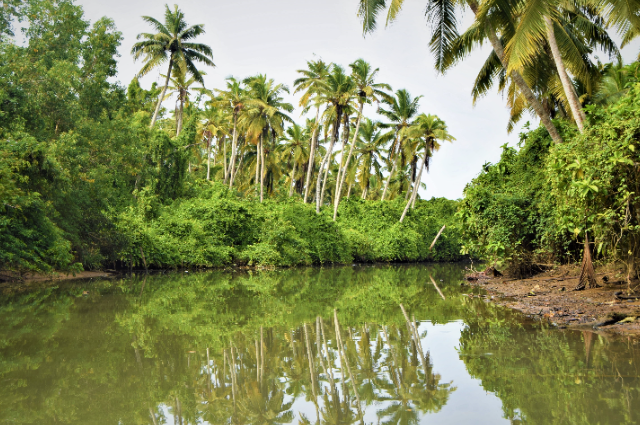
Whenever we visit Kerala, there are a lot of renowned places that we can visit, and we do not even need a list for that; the places are unlimited. But today, I am going to tell you about two very special places which will amaze everyone, and it is near the state capital, Thiruvananthapuram. One place is called Vagamon, and the other place is called Poovar Island. So, let us learn more about these two places and their specialities. We will first start with Poovar Island.
Poovar island
Poovar Island is a picturesque coastal island in Kerala, celebrated for its tranquil shores, lush coconut groves and historic structures that reflect the region’s rich past. Surrounded by the beauty and calmness of nature, the island offers a peaceful escape for both solo explorers and families looking to unwind away from the bustle of everyday life. Being a popular tourist destination located in the Neyyattinkara tehsil of Thiruvananthapuram district in Kerala, southern India, it is situated close to the southernmost edge of the Thiru,vananthsituatedegion, the village occupies a distinctive location along Kerala’s southern coastline. Just beyond Poovar lies Pozhiyoor, which marks the southern end of Kerala and forms the final village before the state’s boundary. The 56-kilometre-long Neyyar River flows through Neyyattinkara Taluk before eventually meeting the Arabian Sea near Poovar. Close to Poovar lies Pozhikkara Beach, a scenic coastal stretch located in the neighbouring village of Pozhiyoor.
Poovar has a fascinating maritime history. In earlier times, it served as an important trading and shipping centre, with goods such as timber, ivory, spices and other commodities being transported through its port. Today, its natural charm and historical significance make it an appealing destination for travellers seeking both relaxation and a glimpse into Kerala’s coastal heritage.
A visit to Poovar Island offers travellers plenty of opportunities to relax, explore and experience the region’s natural charm. From peaceful beaches to scenic surroundings, the destination provides a refreshing break from the routine of everyday life. Its pleasant atmosphere, greenery and tranquil coastal landscape create an inviting setting for those looking to slow down and enjoy a quieter holiday.
For those who enjoy waking up early, the beach is an ideal place to begin the day. A peaceful walk along the shore while watching the sunrise can be a memorable experience, especially because the beaches generally remain relatively quiet. While exploring the coastline, visitors can also see traditional fishing boats and trawlers used by local fishermen. Depending on the circumstances and the willingness of the boat operators, tourists may even get an opportunity to accompany local fishermen on the water, offering a closer look at the coastal community and its way of life.
Poovar has a long and fascinating history as a coastal trading settlement. In earlier centuries, it was known for the trade of valuable commodities such as timber, sandalwood, ivory and spices. Some historical accounts have even associated Poovar with the ancient land of Ophir, a place mentioned in connection with the voyages of ships belonging to King Solomon of Israel. However, this identification remains a matter of historical debate.
The village also developed as one of the early Muslim settlements along the western coast of India. The central mosque at Poovar is traditionally attributed to Malik Deenar, an eighth-century Islamic preacher associated with the early spread of Islam along the Malabar Coast. During the period of the Chola dynasty, Poovar is believed to have functioned as an important port and trading centre. Ancient and medieval accounts have also described maritime links between the region and trading networks extending towards Greece and Rome.
The story behind Poovar's name is closely connected with the history of Travancore and the ruler Marthanda Varma. Before it came to be known as Poovar, the settlement was reportedly called Pokkumoosapuram. During the 18th century, a prominent merchant named Pokku Moosa Maraikkar lived in the area at Kallaraickal Tharavad. He is believed to have migrated from the Malabar region, near present-day Kozhikode, in search of trading opportunities and eventually settled in Poovar. Local traditions associate him with the lineage of the Kunjali Maraikkars, the renowned maritime leaders of the Malabar Coast.
Kallaraickal and its residents are also said to have maintained strong connections with Travancore's royal family. During periods of political unrest, the residence reportedly provided shelter to Marthanda Varma, who was seeking refuge from his opponents, including the Ettuveetil Pillamar, or Lords of the Eight Houses. Poovar itself had commercial links with overseas markets and is traditionally said to have possessed a trained force and several boats. Local accounts further associate the Kallaraickal forces with the Travancore army during conflicts such as the Battle of Colachel and the Battle of Kayamkulam against the Dutch East India Company.
According to a popular legend, the modern name "Poovar" also originated during one of Marthanda Varma's visits to the area. While fleeing political enemies, the king reached Poovar during the spring season. The banks of the Neyyar River were covered with flowering trees, and numerous blossoms had fallen into the river, creating a beautiful and colourful scene. Captivated by the sight, Marthanda Varma is said to have described the place as "poo-var"—a combination of the Malayalam words associated with "flower" and "river." Over time, this expression is believed to have evolved into the name Poovar.
Poovar enjoys convenient connectivity with several major towns and transport hubs in southern Kerala. The coastal destination is situated around 30 kilometres from Thiruvananthapuram, the state capital, and approximately 12 kilometres from the popular beach destination of Kovalam. Its location makes it relatively easy to reach by air, rail and road.
Air Connectivity
The nearest major airport is Trivandrum International Airport, which is approximately 26 kilometres from Poovar. Travellers arriving by air can reach the destination by road from the airport.
Railway Connectivity
Poovar does not have its own railway station. The nearest railway station is Neyyattinkara, located about 12 kilometres away. Thiruvananthapuram Central Railway Station is another major option and lies roughly 28 kilometres from Poovar, offering connections to several cities across India.
Road Connectivity
Poovar is accessible by road and is situated around 6 kilometres from National Highway 66 and approximately 12 kilometres from the nearest state highway. The Kerala State Road Transport Corporation (KSRTC) operates regular bus services linking Poovar with Thiruvananthapuram, Neyyattinkara and other nearby towns and transportation centres. Local taxis and other road-based transport options also make it possible for visitors to travel between Poovar and surrounding destinations.
There are a lot of places in this area which are more interesting than the island. They are:
Poovar Beach
Poovar Beach is a beautiful coastal retreat situated where the Neyyar River meets the Arabian Sea. The shoreline is surrounded by lush coconut palms, traditional huts and remnants of old structures, giving the landscape a distinctive and charming character. Since the beach can be reached only by water taxi, the journey itself becomes part of the experience. Away from the crowds and everyday bustle, Poovar Beach offers a peaceful setting where visitors can sit back, enjoy the scenery and spend some quiet time by the sea.
Kovalam Beach
Kovalam Beach is one of Kerala’s best-known coastal destinations, offering visitors a lively combination of seaside recreation, water-based activities and wellness experiences. Located in the town of Kovalam, the beach is complemented by the famous lighthouse that rises around 30 metres above the coastline and provides striking views of the Arabian Sea.
For much of its history, Kovalam remained a modest fishing village. Its character began to change towards the end of the 1970s, when it gained popularity among international travellers and gradually developed into a prominent tourist destination. The town continues to attract visitors from different parts of the world, particularly from Europe and Israel.
Travellers can enjoy a variety of water sports along the coast or simply spend time relaxing beside the sea. Kovalam is also well known for its Ayurvedic wellness centres and massage establishments, where visitors can experience traditional therapies and treatments designed to promote relaxation and rejuvenation.
Vizhinjam
Vizhinjam is a well-known coastal settlement situated near Thiruvananthapuram and is traditionally associated with fishing and maritime activities. The shoreline is often filled with colourful fishing boats, creating a distinctive coastal scene and offering visitors a glimpse into the everyday life of the local fishing community.
The location of Vizhinjam has also given it considerable importance as a natural harbour. Its deep waters and favourable geography have contributed to the development of the Vizhinjam International Seaport, which has emerged as a major maritime infrastructure project in Kerala.
Beyond its significance as a port, Vizhinjam is also home to fascinating historical and religious attractions. The area contains ancient rock-cut temples featuring shrines associated with Lord Shiva and Goddess Parvati. These historic monuments are of considerable cultural and religious importance and attract both devotees and visitors interested in Kerala's heritage.
Another attraction in the area is the marine aquarium, where visitors can observe a variety of colourful fish and other forms of marine life. Together, Vizhinjam's fishing traditions, maritime importance, historical monuments and marine attractions make it an interesting place to explore near Poovar.
Vagamon
Another famous place, Vagamon is considered the heavenly abode of Kerala, where one experiences the cloudiness and extreme cold in the place. It is like you are travelling towards heaven.
Vagamon is a scenic hill station and revenue village situated in the Western Ghats of Kerala. The region extends across Peerumedu Taluk in Idukki district as well as Meenachil and Kanjirappally taluks in Kottayam district. Located around 25 kilometres east of Erattupetta, close to the Kottayam–Idukki district boundary, Vagamon is renowned for its peaceful surroundings, rolling hills and lush natural landscapes.
The hill station is particularly popular among travellers seeking a break from crowded urban destinations. Its pleasant climate, green valleys and picturesque mountain scenery have helped establish Vagamon as one of Kerala's notable highland tourist destinations. The Vagamon Glass Bridge is another major attraction in the area and is recognised as India's longest cantilever glass bridge, offering visitors a unique experience above the surrounding landscape.
For a long period, Vagamon remained a relatively remote and little-known region. Although the British had established plantations in the surrounding hills, the area began attracting greater attention after Walter Duncan and Company introduced tea plantations there in 1926. During the 1930s, additional tea estates were established, gradually transforming the landscape and contributing to the development of the region's plantation economy.
From the 1940s onwards, Vagamon witnessed an increase in migration. People from different parts of the former Travancore region and the Madras Presidency, particularly present-day Tamil Nadu, began settling in the area. Following the formation of the state of Kerala in 1956, migration from various parts of Kerala further contributed to the growth of Vagamon's local communities.
A significant development in Vagamon's history took place in 1955 with the establishment of Kurisumala Ashram, a Trappist monastic community. The ashram subsequently became an important spiritual destination and added another dimension to Vagamon's cultural identity.
Another notable chapter began in 1963 when Dr Elizabeth Baker and renowned architect Laurie Baker, who was later honoured with the Padma Shri, established a hospital and rural service centre at Kurishumala. The initiative was intended to provide healthcare and support to tea-plantation workers and rural communities living in the Idukki highlands. Known as Mitraniketan, the project is regarded as one of Laurie Baker's early works in Kerala and reflects his distinctive approach to affordable, environmentally responsive architecture. His work emphasised the use of locally available materials, practical construction techniques and designs suited to the region's climate.
Vagamon is a picturesque hill station situated in the Western Ghats at an elevation of approximately 1,100 metres above sea level. Its high-altitude location gives the region a pleasant and relatively cool climate. During summer, daytime temperatures generally remain around 10°C to 23°C, making Vagamon a refreshing escape from the warmer lowland areas of Kerala.
According to the 2011 Census of India, Vagamon recorded a population of 14,641 people, comprising 7,212 males and 7,429 females. The village covers an area of approximately 78.3 square kilometres and was home to around 3,816 households at the time of the census.
Vagamon recorded a sex ratio of 1,030 females for every 1,000 males, which was below Kerala's state average of 1,084. Children below the age of six accounted for around 9% of the total population. The village also reported a literacy rate of approximately 90.9%. While this was considerably higher than India's national literacy average of 74%, it remained below Kerala's overall literacy rate of 94% at the time.
Vagamon is celebrated for its striking natural surroundings, where rolling green hills, expansive tea estates, pine-covered slopes and open grasslands come together to create a picturesque landscape. Perched at an elevation of approximately 1,100 metres above sea level, the hill station enjoys a refreshing climate that makes it an attractive destination throughout the year. Mist frequently settles over the hills during the mornings and evenings, adding a peaceful and almost dreamlike quality to the scenery. The combination of greenery, mountains and changing weather also makes Vagamon an appealing destination for photographers and nature lovers.
The expansive grasslands are among the most distinctive features of Vagamon. Stretching across the undulating terrain, these open meadows are occasionally dotted with wildflowers and bordered by gently rising hills. Their peaceful atmosphere makes them suitable for leisurely walks, spending time with family and friends, enjoying a picnic or simply sitting outdoors and taking in the surrounding scenery.
Beyond its natural beauty, Vagamon has developed into a popular destination for outdoor adventures. Its open landscapes, elevated terrain and favourable weather conditions create excellent opportunities for activities such as paragliding. Soaring above the hills provides participants with impressive aerial views of the valleys, plantations and surrounding mountain ranges, making it an exciting experience for adventure enthusiasts.
Trekking is another popular way to explore Vagamon's countryside. Several trails pass through forests, tea plantations, grasslands and elevated viewpoints, allowing visitors to experience the region at a slower pace. The trek towards Kurisumala, often referred to as the "Mountain of the Cross," is particularly notable. Apart from offering panoramic views from the higher slopes, Kurisumala is also an important pilgrimage destination for Christians.
Vagamon's rocky terrain also provides opportunities for activities such as rock climbing and rappelling. Natural cliffs and rocky formations offer challenging settings for these adventure sports, while organised activity centres may provide trained instructors, equipment and safety guidance. These experiences allow visitors to explore a more adventurous side of the hill station while enjoying its dramatic natural surroundings.
Tea cultivation is an important part of Vagamon's landscape and local economy. The hills are covered with carefully maintained tea gardens, where rows of lush green bushes create an attractive pattern across the slopes. Visitors can explore some of the plantation areas and, where tours are available, learn about the different stages involved in growing, harvesting and processing tea. The surrounding hills and plantations also provide excellent opportunities for enjoying the scenery and taking photographs.
The pine forests are another distinctive attraction of Vagamon. Towering pine trees line the forested areas, creating a cool, quiet and refreshing environment. The shaded pathways are ideal for peaceful walks, nature photography and spending time away from the noise of busy tourist areas. The combination of tall trees, fresh mountain air and soft natural light gives the forests a particularly tranquil character.
Vagamon is not only known for its landscapes and adventure activities but also for its diverse spiritual traditions. The hill station is home to several religious sites, meditation spaces and places associated with contemplation and pilgrimage. Among the most prominent is Kurisumala Ashram, a Christian monastic centre founded by Belgian monk Father Francis Acharya. Surrounded by the hills, the ashram provides an atmosphere of prayer, simplicity and reflection and welcomes visitors looking for a peaceful retreat.
Another important spiritual landmark is Thangalpara, a rocky hill associated with the tomb of Sheikh Fariduddin, a respected Sufi saint. The site attracts Muslim pilgrims as well as travellers interested in the area's cultural heritage. Besides its religious importance, Thangalpara is known for its distinctive rocky terrain and elevated location, which provides expansive views of the surrounding hills and valleys.
Vagamon has convenient road connections with several important towns and cities in Kerala as well as neighbouring states. Kottayam is one of the closest major urban centres and is situated roughly 65 kilometres from the hill station. Travellers arriving by train can use Kottayam Railway Station as a major railhead, while those travelling by air can fly to Cochin International Airport and continue the journey by road.
Visitors to Vagamon can choose from a variety of accommodation options to suit different budgets and preferences. The area offers everything from affordable hotels and guesthouses to upscale resorts and environmentally conscious homestays. Many properties are located amid the hills and provide attractive views of the surrounding valleys and greenery.
Food is another part of the Vagamon experience. Local restaurants and small eateries serve a selection of traditional Kerala dishes, allowing visitors to sample regional flavours while exploring the hill station. The combination of scenic accommodation, local cuisine and peaceful surroundings makes Vagamon a comfortable destination for a relaxing getaway.
Poovar Islands and Vagamon represent two very different yet equally captivating sides of Kerala. Poovar charms visitors with its tranquil beaches, backwaters, coconut-lined shores, fishing traditions and rich maritime history, while Vagamon offers a refreshing mountain escape surrounded by rolling hills, tea plantations, pine forests, misty landscapes and peaceful valleys. Together, they showcase the remarkable geographical diversity of Kerala, where the coast and the highlands can offer completely different experiences within the same state.
Beyond their scenic beauty, both destinations have strong cultural and historical identities. Poovar reflects Kerala's coastal heritage and traditional way of life, whereas Vagamon combines plantation history, religious traditions, rural communities and adventure tourism. Whether one seeks solitude beside the sea, a peaceful walk through the hills, an adventurous outdoor experience or simply an escape from the routine of everyday life, these destinations have something to offer.
Ultimately, Poovar Islands and Vagamon are more than just tourist attractions. They are places where nature, history, culture and tranquillity come together. Their unique landscapes and peaceful atmosphere make them worthy of being described as the heavenly abodes of Kerala, leaving visitors with memorable experiences and a deeper appreciation for the state's extraordinary natural and cultural heritage.